Open Science News

Embracing Open Science: A Practical Approach in Laboratories and Classrooms
Embracing Open Science: A Practical Approach in Laboratories and Classrooms 626 626 Open and Universal Science (OPUS) Project

In the ever-evolving landscape of scientific research and education, the concept of open science has gained significant attention. Open science is a movement that promotes transparency, collaboration, and accessibility in the scientific process. This article explores the practicality of implementing open science principles in both laboratories and classrooms, shedding light on the benefits and challenges associated with this approach.

The Basics of Open Science:

At its core, open science emphasizes making research findings, data, and methodologies openly available to the public. This stands in contrast to traditional practices where research processes and results are often confined within the walls of academic institutions. The aim of open science is to foster collaboration, accelerate the pace of discovery, and increase the reproducibility of scientific experiments.

Practical Benefits in Laboratories:

  1. Accelerated Discovery: Open science encourages researchers to share their findings promptly. This accelerates the pace of scientific discovery, as others can build upon existing knowledge rather than starting from scratch. This collaborative approach can lead to breakthroughs that might not be possible in a closed system.
  2. Enhanced Reproducibility: Transparency in methodologies and data facilitates the reproduction of experiments. Reproducibility is a cornerstone of scientific integrity, and open science ensures that others can verify and build upon published results. This contributes to the overall reliability of scientific findings.
  3. Resource Optimization: By sharing resources, such as research tools, materials, and equipment, open science promotes efficiency in resource utilization. Laboratories can avoid duplicating efforts and allocate resources more effectively, ultimately maximizing the impact of research endeavors.

Challenges and Solutions:

  1. Intellectual Property Concerns: One major concern with open science is the protection of intellectual property. Researchers may be hesitant to share their work openly due to fears of losing credit or potential commercial applications. Creative licensing and clear communication about ownership can help address these concerns.
  2. Cultural Shift: Embracing open science requires a cultural shift within the scientific community. Traditional reward systems often prioritize individual achievements, whereas open science values collaboration. Institutions can play a role in promoting this cultural change by recognizing and rewarding collaborative efforts.

Practical Implementation in Classrooms:

  1. Student Engagement: Introducing open science concepts in classrooms fosters a sense of engagement and participation among students. Encouraging them to share their research findings with peers and even the broader scientific community provides valuable experience and prepares them for real-world collaboration.
  2. Access to Learning Resources: Open science extends beyond research; it also includes open educational resources. Teachers can utilize freely available materials, such as open-access journals and online databases, to enhance the learning experience for students without financial constraints.

A Paradigm Shift in Laboratories and Classrooms:

The practicality of open science in laboratories and classrooms lies in its potential to transform the scientific landscape. By fostering collaboration, transparency, and accessibility, open science can lead to more robust research outcomes and a more inclusive learning environment. While challenges exist, the benefits far outweigh them, making the adoption of open science principles a worthwhile endeavor for the advancement of science and education.

Photo via Pinterest

The Power of Social Media in Making Science and Research Accessible to All
The Power of Social Media in Making Science and Research Accessible to All 150 150 Open and Universal Science (OPUS) Project

In a world where information is at our fingertips, social media has emerged as a powerful tool that transcends borders and brings people together. Beyond its role in connecting friends and sharing memes, social media has become a game-changer in the realm of science and research, making these complex topics more accessible and open to everyone.

Breaking Down Barriers

Traditionally, scientific knowledge was confined to academic journals and conferences, creating a barrier between researchers and the general public. Social media has shattered these barriers, allowing scientists to communicate directly with a global audience. Platforms like Twitter, Facebook, and Instagram provide researchers with the opportunity to share their work, discoveries, and insights in a language that everyone can understand.

Connecting Scientists and Enthusiasts

Social media acts as a virtual bridge, connecting scientists with science enthusiasts, students, and curious minds from all walks of life. This direct interaction fosters a sense of community, encouraging conversations and collaborations that might not have been possible otherwise. The exchange of ideas becomes a two-way street, benefiting both researchers and the public.

Real-Time Updates and Engagement

One of the remarkable aspects of social media is its real-time nature. Researchers can share updates on their experiments, findings, and breakthroughs as they happen. This instant dissemination of information not only keeps the public informed but also allows for immediate feedback and discussion. The ability to engage with an audience in real-time promotes a more dynamic and interactive scientific community.

Educational Opportunities

Social media serves as an educational platform, offering bite-sized, easily digestible information about complex scientific concepts. Scientists can use visuals, videos, and infographics to simplify their research, making it more engaging and understandable for a broader audience. This democratization of knowledge helps break down the misconception that science is only for the elite few.

Crowdsourcing and Citizen Science

Through social media, researchers can tap into the collective intelligence of the online community. Crowdsourcing initiatives and citizen science projects leverage the power of social networks to gather data, conduct experiments, and solve scientific challenges. This collaborative approach not only accelerates the pace of research but also involves the public directly in the scientific process.

Global Advocacy and Awareness

Social media provides a platform for scientists to advocate for their fields and raise awareness about critical issues. Researchers can share insights on topics like climate change, public health, and emerging technologies, sparking conversations and encouraging collective action. This global outreach fosters a sense of shared responsibility for scientific advancements and the challenges they bring.

Challenges and Ethical Considerations

While the power of social media in science communication is undeniable, it comes with its own set of challenges. The spread of misinformation, the need for concise messaging, and the potential for sensationalism are all concerns that need to be addressed responsibly. Researchers must navigate the digital landscape with a commitment to accuracy and transparency.

Social media has transformed the landscape of science and research, making it more accessible, interactive, and inclusive. By breaking down barriers, connecting diverse communities, and fostering real-time engagement, social media has become a catalyst for a new era of open science. As we navigate this digital age, embracing the power of social media can pave the way for a more informed and scientifically literate society.

Photo via arrival

The Real Cost of Publishing Without Open Access in the World of Open Science
The Real Cost of Publishing Without Open Access in the World of Open Science 1024 536 Open and Universal Science (OPUS) Project

In the vast realm of scientific research, the traditional way of publishing often comes with a hidden price tag. While the spirit of Open Science encourages sharing and collaboration, understanding the actual costs of publishing without open access is essential. Let’s take a stroll through the pages of traditional publishing and unveil the financial aspects that often stay behind closed doors.

The Traditional Publishing Journey:

In the days of yore, researchers would conduct experiments, uncover mysteries, and eagerly draft their findings into scientific papers. These papers found homes in academic journals, but there was a catch. These journals would lock away this knowledge behind paywalls, and anyone wanting to read them would need to open their wallets.

Unwrapping the Costs:

  1. Subscription Fees: Imagine wanting to read your favorite book, but the library asks you to pay every time you open it. That’s a bit like how traditional publishing works. Institutions, like universities and libraries, pay hefty subscription fees to access these journals. This cost burden often falls on academic institutions, limiting access to those with deep pockets.
  2. Individual Purchases: If you’re not part of an institution with a fat wallet, you might have to buy access to individual papers. This pay-per-view system means researchers or curious minds must shell out money for each article they want to read. It’s like paying for each chapter of a book separately.
  3. Limited Accessibility: Traditional publishing builds walls around knowledge, restricting access to those who can afford it. This exclusivity hampers the principle of Open Science, which strives for openness and sharing.

The Hidden Costs:

  1. Restricted Collaboration: Imagine if superheroes worked in isolation instead of forming epic teams like the Avengers. Traditional publishing’s pay-to-read model limits collaboration, hindering the sharing of ideas and slowing down the pace of scientific progress.
  2. Inequality in Knowledge Sharing: Knowledge is power, but what if only a few have access to it? Traditional publishing creates a gap, where those without financial resources miss out on valuable insights. This inequality goes against the inclusive spirit of Open Science.

Embracing Open Science for a More Inclusive Tomorrow

The traditional route of publishing without open access carries a significant financial weight, making knowledge a commodity rather than a shared resource. As Open Science gains momentum, understanding the true cost of traditional publishing is crucial. It’s not just about money; it’s about breaking down barriers, fostering collaboration, and making sure that the magic of scientific discovery is accessible to all. So, as we venture forward, let’s keep our eyes on the horizon of Open Science, where knowledge knows no bounds.

Photo via eBility

A Simple Guide to Open Science: Your Checklist for Transparent Research
A Simple Guide to Open Science: Your Checklist for Transparent Research 1024 717 Open and Universal Science (OPUS) Project

Science is all about discovery, innovation, and the pursuit of knowledge. In recent years, there has been a growing movement towards making the scientific process more transparent and accessible to everyone. In this article, we’ll explore the concept of Open Science and provide you with a simple checklist to ensure your research aligns with its principles.

What is Open Science?

Open Science is a philosophy that promotes the sharing of scientific knowledge, methods, and data with the global community. The goal is to make research more transparent, collaborative, and accessible. Open Science encourages researchers to share their findings, methodologies, and even raw data openly, allowing others to scrutinize, reproduce, and build upon their work.

The Open Science Checklist:

  1. Open Access Publications:
    • Publish your research in open-access journals or repositories, making it freely available to the public.
    • Consider the accessibility of your work, ensuring that anyone with an internet connection can read and download your research.
  2. Open Data:
    • Share your raw data in a publicly accessible repository. This allows others to verify your results, explore alternative analyses, and reuse the data for new studies.
    • Provide clear documentation to help others understand your dataset, including how it was collected, processed, and any limitations.
  3. Open Source Code:
    • If your research involves software or code, make it open source. Share your code on platforms like GitHub to allow others to review, modify, and use it for their research.
    • Include documentation to help users understand how to use your code and reproduce your analyses.
  4. Preprints:
    • Share a preprint of your research before formal peer review. This allows for rapid dissemination of your findings and invites early feedback from the scientific community.
    • Use preprint servers like arXiv, bioRxiv, or others relevant to your field.
  5. Open Peer Review:
    • Consider participating in open peer review, where the review process and comments are made public. This enhances transparency and helps readers evaluate the credibility of the research.
  6. Collaboration and Networking:
    • Actively collaborate with other researchers and share your expertise within the scientific community.
    • Attend conferences, workshops, and seminars to stay connected and contribute to the broader scientific dialogue.
  7. Transparent Methodology:
    • Clearly describe your research methods in your publications. This includes experimental design, statistical analyses, and any potential biases.
    • Provide enough information for others to replicate your study.
  8. Licensing:
    • Clearly specify the licensing terms for your work. This ensures that others know how they can use, share, and build upon your research.

A Pathway to a More Inclusive and Impactful Research Community

Adopting Open Science practices not only benefits the broader scientific community but also enhances the credibility and impact of your research. By following this simple checklist, you can contribute to a more transparent, collaborative, and accessible scientific landscape, ultimately advancing knowledge for the benefit of all.

Photo via WildApricot

Demystifying the Buzzwords of Open Science
Demystifying the Buzzwords of Open Science 940 626 Open and Universal Science (OPUS) Project

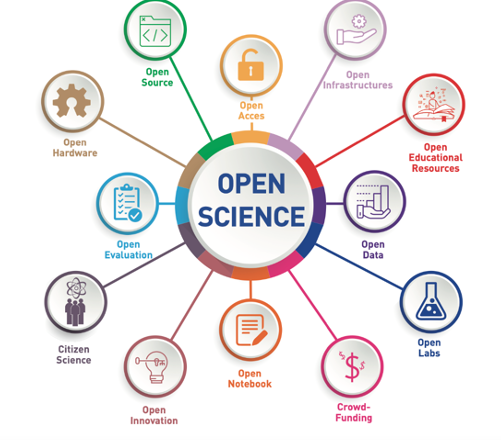
Open science is a term buzzing around the world of research and innovation. It represents a shift in how we do science, making it more collaborative, accessible, and transparent. However, the world of open science comes with its fair share of buzzwords that might sound complex. Let’s unravel these terms to understand the essence of open science and why it matters.

  1. Open Access:
    • Buzzword Breakdown: This term refers to making research articles and findings freely accessible to everyone. No paywalls, no restrictions – just knowledge available to anyone with an internet connection.
    • Why it Matters: Open access democratizes information, ensuring that anyone, anywhere, can benefit from and build upon scientific discoveries.
  2. Citizen Science:
    • Buzzword Breakdown: Citizen science involves regular folks (that’s us!) participating in scientific research. It’s about everyone contributing data, observations, or even getting hands-on with experiments.
    • Why it Matters: More people involved mean more data, diverse perspectives, and a broader understanding of scientific issues. Citizen science turns everyone into a scientist.
  3. Open Data:
    • Buzzword Breakdown: Open data means sharing the raw information – like research findings, experiment results, or survey data – without any restrictions. It’s about letting others see the nitty-gritty details.
    • Why it Matters: Open data allows transparency and helps researchers verify and build upon each other’s work. It’s like showing your work in math class but on a global scale.
  4. Preprints:
    • Buzzword Breakdown: A preprint is a version of a scientific paper before it undergoes formal peer review. It’s like a sneak peek into the researcher’s work before it gets the final stamp of approval.
    • Why it Matters: Preprints speed up the sharing of new discoveries. Researchers can share their findings quickly, getting input from the scientific community before the formal publication process.
  5. Open Source:
    • Buzzword Breakdown: Open source means making the source code of software or tools freely available. It’s like sharing the recipe for a dish, allowing others to modify and improve it.
    • Why it Matters: In the scientific world, open-source tools foster collaboration. Researchers can use, adapt, and enhance tools collectively, making science more efficient.
  6. Collaborative Platforms:
    • Buzzword Breakdown: These are online spaces where researchers can work together, share data, and collaborate on projects. Think of it as a virtual meeting place for scientists.
    • Why it Matters: Collaborative platforms break down geographical barriers. Researchers from different corners of the world can come together, bringing diverse expertise to solve complex problems.

Exploring the Building Blocks of Open Science: Buzzwords Unveiled

Understanding the buzzwords of open science is like unlocking the keys to a treasure trove of knowledge. Open access, citizen science, open data, preprints, open source, and collaborative platforms are not just fancy terms – they represent a new era of science that’s inclusive, transparent, and accessible to all. So, the next time you hear these buzzwords, remember, they’re not just jargon; they’re the building blocks of a more open and collaborative scientific community.

Photo via Shine

Understanding Different Types of Research Assessment
Understanding Different Types of Research Assessment 1024 651 Open and Universal Science (OPUS) Project

Research is a crucial component of academic and scientific progress, contributing to the expansion of knowledge and the improvement of various fields. To evaluate the quality and impact of research, different types of research assessments are employed. These assessments help researchers, institutions, and funding bodies gauge the significance and reliability of studies. In this article, we will explore some common types of research assessment in simple terms.

  1. Peer Review:

One of the most traditional and widely used methods is peer review. When a researcher submits their work for publication, experts in the same field review the study for its validity, methodology, and overall contribution. This ensures that only high-quality research gets published, as peers evaluate the work’s strengths and weaknesses before it reaches the wider audience.

  1. Bibliometric Analysis:

Bibliometric analysis involves evaluating the impact of research based on citation metrics. The number of times a research paper is cited by other researchers can indicate its influence and importance in the field. Journals, articles, and even researchers themselves may be ranked based on these citation metrics.

  1. Altmetrics:

Altmetrics, or alternative metrics, go beyond traditional citation counts. They consider the broader impact of research in the digital age, including social media mentions, downloads, and online discussions. Altmetrics provide a more comprehensive view of how research is being disseminated and discussed outside of academic circles.

  1. Research Impact Assessment:

Research impact assessment looks at the real-world outcomes and applications of research. It evaluates how research has influenced policies, practices, or communities. This type of assessment helps determine the practical significance of a study beyond academic circles.

  1. Funding and Grant Evaluation:

When researchers apply for funding, their proposals undergo evaluation to assess the feasibility, significance, and potential impact of the proposed research. Funding bodies use various criteria to ensure that resources are allocated to projects with the most promising outcomes.

  1. Institutional Evaluation:

Institutions themselves are often subject to assessment, especially in the context of research. This involves evaluating the overall research environment, infrastructure, and support systems in place. Institutional evaluations help maintain and improve the quality of research conducted within academic settings.

Institutional Excellence in Research

Research assessment is a multifaceted process that ensures the reliability and impact of scholarly work. From traditional peer review to modern altmetrics, these assessments play a vital role in maintaining the integrity of the scientific community and fostering continuous improvement. Understanding these assessment types is essential for researchers, institutions, and anyone interested in the progress of human knowledge.

Photo via UXtweak

Unveiling the Rise of Open Science: Why Everyone’s Talking About It
Unveiling the Rise of Open Science: Why Everyone’s Talking About It 502 441 Open and Universal Science (OPUS) Project

In recent years, you may have heard a lot about the Open Science movement. But what exactly is it, and why is it gaining so much attention? Open Science refers to a collaborative and transparent approach to scientific research, where findings, data, and methodologies are shared openly with the public. The movement has been steadily gaining momentum, and there are several key reasons behind its increased visibility.

  1. Democratizing Knowledge:

One of the primary reasons for the growing prominence of Open Science is its commitment to making knowledge accessible to everyone. Traditional scientific research often involves paywalls and restricted access to research papers, limiting the reach of valuable information. Open Science seeks to break down these barriers, allowing anyone with an internet connection to benefit from and contribute to scientific knowledge.

  1. Accelerating Innovation:

Open Science encourages collaboration among researchers, regardless of geographical location or institutional affiliation. By sharing data and methodologies openly, scientists can build on each other’s work more efficiently. This accelerates the pace of innovation, as researchers can avoid duplicating efforts and collectively tackle complex challenges facing our world.

  1. Enhancing Reproducibility:

Reproducibility is a cornerstone of good scientific practice. Open Science promotes transparency by making research materials, data, and code openly available. This makes it easier for other researchers to reproduce experiments and validate results, contributing to the reliability and credibility of scientific findings.

  1. Addressing the Replication Crisis:

In recent years, concerns have been raised about the reproducibility of scientific studies, leading to what is often referred to as the “replication crisis.” Open Science aims to address this issue by promoting transparency and providing a platform for researchers to share both successful and unsuccessful attempts to replicate studies. This helps the scientific community learn from failures and refine their approaches.

  1. Harnessing Technological Advancements:

Advancements in technology have played a significant role in the rise of Open Science. The internet, collaborative platforms, and digital tools have made it easier than ever for researchers to share and access information. Additionally, new tools for data analysis and visualization enhance the efficiency and effectiveness of Open Science practices.

  1. Meeting Funding Agency Requirements:

Many funding agencies are now emphasizing the importance of Open Science in their grant requirements. Researchers who want to secure funding are increasingly motivated to adopt open practices, including sharing data and making research outputs publicly accessible. This shift in funding priorities has contributed to the widespread adoption of Open Science principles.

Embracing a New Era of Scientific Discovery through Open Science

The increased visibility of the Open Science movement is a testament to its potential to transform the way we conduct and benefit from scientific research. By fostering collaboration, transparency, and accessibility, Open Science is not just a buzzword but a movement that holds the promise of advancing knowledge for the benefit of society as a whole. As more researchers, institutions, and funding agencies embrace the principles of Open Science, its impact on the scientific landscape is likely to continue growing.

Photo via Enlight-EU

Strengthening the Trust in Research: The Power of Peer Review
Strengthening the Trust in Research: The Power of Peer Review 1024 738 Open and Universal Science (OPUS) Project

Research is like a journey into the unknown, with scientists exploring new territories to unlock the mysteries of the world. To ensure that these explorations are trustworthy and reliable, scientists rely on a process called “peer review.” This essential step in the research journey plays a crucial role in upholding the integrity of scientific investigations.

What is Peer Review?

Peer review is like having a team of experts check the work of other scientists before it gets published. Imagine you’ve written a story, and before it goes into a book, a group of people who really understand stories reads it. They make sure your story makes sense, that you used the right words, and that your ideas are clear. Peer review does something similar for scientific research.

How Peer Review Works:

  1. Submit and Check: When scientists finish their research, they send it to a scientific journal. The journal editor then chooses other scientists, called peers, to review the work.
  2. Expert Evaluation: These peers are experts in the same field as the research. They carefully read through the research, checking if the methods are sound, the results make sense, and the conclusions are supported by the evidence.
  3. Feedback and Improvement: The peers provide feedback to the original scientists. This feedback helps improve the research, ensuring it’s accurate and reliable. It’s like having a friendly guide suggest ways to make your journey smoother.
  4. Decision Time: After any necessary changes are made, the editor decides whether the research is ready to be shared with the world. This process adds a layer of quality control, making sure that only the best and most trustworthy research is published.

Benefits of Peer Review:

  1. Quality Assurance: Peer review acts as a filter, making sure that only high-quality and well-conducted research gets published. This helps prevent the spread of misinformation and ensures that new discoveries are based on solid ground.
  2. Spotting Mistakes: Having multiple sets of eyes on a piece of research increases the chances of spotting mistakes. This collaborative effort helps catch errors, improving the accuracy of the findings.
  3. Building Trust: When research undergoes peer review, it gains credibility. Other scientists and the public can trust that the work has been thoroughly examined and meets the standards of good science.
  4. Encouraging Improvement: Peer review is not just about saying yes or no. It’s about helping researchers make their work even better. This constructive criticism fosters a culture of continuous improvement in scientific exploration.

Challenges and Evolving Practices:

While peer review is a powerful tool for ensuring research integrity, it’s not without its challenges. Some argue that the process can be slow or that biases may exist. Scientists are exploring new ways to make peer review more efficient and inclusive, such as open peer review and post-publication review.

Peer Review as the Compass for Trustworthy Research

In the vast landscape of scientific exploration, peer review stands as a beacon of trust and reliability. By enhancing research integrity through this collaborative and rigorous process, scientists contribute to the collective knowledge that shapes our understanding of the world. As we continue to refine and adapt peer review practices, we strengthen the foundation upon which scientific progress stands, ensuring that the journey into the unknown is guided by the principles of honesty, accuracy, and excellence.

Photo via The Conversation

GISAID – Advancing Global Health Through Open Data Sharing
GISAID – Advancing Global Health Through Open Data Sharing 680 240 Open and Universal Science (OPUS) Project

In the realm of infectious diseases, particularly influenza, the Global Initiative on Sharing All Influenza Data (GISAID) stands as a shining example of the positive impact of open science.

Background:

In 2008, amidst concerns about the rapid spread of avian influenza (H5N1) and the potential for a global pandemic, a group of scientists recognized the need for real-time, global sharing of influenza data. Traditional practices involved delayed publication in scientific journals, hindering swift responses to emerging threats.

Concrete Achievements:

  1. Real-Time Data Sharing: GISAID established an online platform that allows researchers and laboratories worldwide to share and access influenza-related data in real time. This includes genetic sequences of the virus, clinical data, and epidemiological information. By breaking down traditional barriers to data sharing, GISAID significantly accelerates the global response to influenza outbreaks.
  2. Pandemic Preparedness: During the H1N1 influenza pandemic in 2009 and later during the COVID-19 pandemic, GISAID played a pivotal role in providing crucial information to scientists, public health officials, and policymakers. Rapid access to genetic sequences enabled researchers to study the virus, develop diagnostic tools, and design vaccines with unprecedented speed.
  3. Global Collaboration: GISAID promotes collaborative efforts among scientists and institutions globally. Researchers from diverse backgrounds and regions can contribute to a collective understanding of influenza viruses. This collaborative model ensures that insights gained in one part of the world can benefit others, fostering a united front against infectious diseases.
  4. Open Access to Data: GISAID operates on the principle of open access, allowing any researcher to freely access and use the shared data. This not only promotes transparency but also empowers scientists in resource-limited settings to contribute to and benefit from global research efforts.

Open Science’s Ongoing Impact and Future Potential

The success of GISAID illustrates how open science, in this case, open data sharing, can have tangible and life-saving impacts on global health. By fostering collaboration, providing real-time information, and promoting open access, GISAID exemplifies the concrete achievements of open science for the benefit of society, particularly in the realm of public health and infectious disease control.

Photo via Wikidata

The Importance of Grants for Early Career Researchers and Open Science
The Importance of Grants for Early Career Researchers and Open Science 900 600 Open and Universal Science (OPUS) Project

In the dynamic world of research, the journey of an early career researcher is both exciting and challenging. One key factor that significantly influences their ability to make groundbreaking discoveries is access to funding. Grants play a pivotal role in supporting these budding scientists, fostering innovation, and promoting the principles of open science.

The Foundation of Exploration: Imagine a world where curious minds are stifled due to lack of resources. Grants serve as the foundation upon which early career researchers build their projects. These financial injections empower scientists to delve into uncharted territories, explore novel ideas, and contribute to the ever-expanding realm of knowledge.

Supporting Innovation: Innovation thrives when researchers are free to pursue unconventional ideas without the burden of financial constraints. Grants provide the necessary resources to experiment, test hypotheses, and develop groundbreaking technologies. This support encourages researchers to take risks and push the boundaries of conventional thinking, fostering a culture of creativity and innovation.

Nurturing Talent: Early career researchers represent the future of scientific progress. Grants not only fund specific projects but also nurture the talent behind them. By investing in these researchers, funders contribute to the development of a skilled and diverse scientific community. This investment pays dividends as these individuals grow into seasoned scientists who continue to make significant contributions throughout their careers.

Open Science: A Collaborative Approach: Open science emphasizes transparency, collaboration, and the sharing of research outputs with the global community. Grants play a crucial role in promoting open science by supporting projects that prioritize accessibility and openness. When researchers have the financial backing to make their findings freely available, the entire scientific community benefits. This collaborative approach accelerates the pace of discovery and ensures that knowledge is disseminated widely and rapidly.

Breaking Down Barriers: Financial barriers should not impede the progress of science. Grants provide an avenue for early career researchers, often facing limited resources, to overcome these barriers. By offering financial support, grants create a level playing field, allowing talented individuals from diverse backgrounds to contribute to scientific advancements.

Building Networks and Partnerships: Grants not only provide financial support but also facilitate the building of networks and collaborations. Early career researchers often receive mentorship and guidance from established scientists, fostering a sense of community within the scientific ecosystem. These collaborations enhance the quality and impact of research, creating a ripple effect that extends beyond individual projects.

Innovative Horizons: In the ever-evolving landscape of scientific exploration, grants serve as catalysts for progress. For early career researchers, these financial lifelines unlock doors to innovation, support talent development, and promote the principles of open science. As we recognize the vital role of grants in shaping the future of research, it becomes clear that investing in the next generation of scientists is an investment in the collective knowledge and well-being of society.

Photo via Civitas Strategies Early Start

Privacy Preferences

When you visit our website, it may store information through your browser from specific services, usually in the form of cookies. Our Privacy Policy can be read here.

Here you can change your Privacy preferences. It is worth noting that blocking some types of cookies may impact your experience on our website and the services we are able to offer.

Click to enable/disable Google Analytics tracking code.
Click to enable/disable Google Fonts.
Click to enable/disable Google Maps.
Click to enable/disable video embeds.
Our website uses cookies, mainly from 3rd party services. Define your Privacy Preferences and/or agree to our use of cookies.