Open Science News

GraspOS Community of Practice Event Highlights: Exploring Context in Responsible Research Assessment
GraspOS Community of Practice Event Highlights: Exploring Context in Responsible Research Assessment 1024 576 Open and Universal Science (OPUS) Project

Today, the GraspOS Community of Practice held an online event from 10:00 to 11:30 CET, focusing on the role of context in Responsible Research Assessment. The session was chaired by Clifford Tatum from CWTS/GraspOS and included presentations by Laura Himanen from CSC/GraspOS. A panel discussion featured diverse perspectives from Karen Stroobants (CoARA), Gareth O’Neill (Technopolis Group/OPUS), James Morris (Science Europe), and Sarah de Rijcke (Leiden University).

Introduction and Observations

The event began with Clifford Tatum introducing the role and implications of context in research assessment. He emphasized the need for assessment practices to respect the variety of scientific disciplines and research types, acknowledging the importance of multi-, inter-, and trans-disciplinary approaches. Laura Himanen presented the observed diversity in the GraspOS pilots, highlighting how these pilots initially classified by type offered little practical value due to their diverse contexts. This realization led to a focus on how contextual factors shape research assessment reforms.

Panel Discussion

The panel discussion explored diverse approaches to research assessment and their implications for reform. Karen Stroobants introduced the call for assessment reform that emphasizes being “as aligned as possible, but as diverse as necessary,” reflecting on the motivation behind this principle. Gareth O’Neill shared observations on the role of context and comparability in relation to OPUS pilots, focusing on how these elements are crucial for evaluating researchers based on the diversity of their contributions and incentivizing Open Science practices.

James Morris provided an RFO perspective on context and comparability in assessing grant proposals, highlighting the challenges and opportunities in implementing these principles in funding decisions. Sarah de Rijcke offered an RPO perspective, discussing how research assessment should be conducted commensurately to the specific nature of scientific disciplines and research missions.

What has been presented from the OPUS project

Gareth O’Neill, a member of the OPUS team and Principal Consultant on Open Science at Technopolis Group, presented the OPUS project. The OPUS project is designed to reform the assessment of research and researchers by developing coordination and support measures that incentivize and reward Open Science practices. At its core, OPUS aims to create a comprehensive set of indicators for research performing organizations (RPOs) and research funding organizations (RFOs), applicable across countries, disciplines, and organizations.

OPUS combines both quantitative and qualitative assessment methods, focusing primarily on the assessment of researchers and their projects. It covers the full spectrum of activities conducted by researchers, offering both generic and specific frameworks to assess researcher activities, including Open Science activities. The project distinguishes between processes, outputs, and outcomes in assessment, phrasing indicators to guide implementation while allowing flexibility. Ultimately, the selection, refinement, and prioritization of indicators are left to RPOs/RFOs.

The OPUS project involves several pilot organizations, including Nova University of Lisbon, University of Cyprus, University of Rijeka, and others. These pilots aim to evaluate researchers based on the diversity of their contributions and incentivize Open Science practices. For instance, Nova University of Lisbon is focusing on the Global Health and Tropical Medicine Research Centre and the Information Management Research Centre, while the University of Cyprus is working with the KIOS Research and Innovation Centre of Excellence.

Brief Overview of GraspOS and GraspOS Community

The GraspOS project supports emerging policy reforms towards an Open Science-aware Responsible Research Assessment system by developing and operating an open and trusted federated infrastructure for next-generation research metrics. The GraspOS Community of Practice facilitates discussions and collaborations among stakeholders to advance these goals.

In summary, the GraspOS project and community focus on reforming research assessment to align with Open Science principles, while the GraspOS Community of Practice provides a platform for stakeholders to discuss and implement these reforms.

OdgovorProslijediDodavanje reakcije
European Rights Retention Community of Practice: Third Meeting on Researcher Advocacy
European Rights Retention Community of Practice: Third Meeting on Researcher Advocacy 900 506 Open and Universal Science (OPUS) Project

The European Rights Retention Community of Practice will hold its third meeting on Thursday, March 20, 2025, at 12:00 CET, organized by SPARC Europe under the Retain project as part of the Knowledge Rights 21 program.

This session will focus on Researcher Advocacy, bringing together experts from Italy and the UK to share their experiences in promoting rights retention among researchers.

Speakers & Key Topics

  • Silvana Mangiaracina & Stefania Marzocchi (Copyright Law and Access to Knowledge Policies Group – CLAKP)
    • Advocacy efforts for rights retention in support of Italian researchers.
  • Stephen Eglen (University of Cambridge)
    • Raising awareness among researchers.
    • Cambridge’s policy development approach.
    • Strategies to engage faculty and senior leadership.

The event offers expert-backed insights and practical guidance for those seeking to engage researchers in their communities. Participants will also have the opportunity to share their experiences and perspectives.

Who should attend?

  • Academic institution staff
  • Funders
  • Open Science policymakers

Join the discussion and contribute to advancing researcher advocacy in rights retention.

Horizon Europe Open Science Requirements: Understanding Compliance in Practice
Horizon Europe Open Science Requirements: Understanding Compliance in Practice 800 533 Open and Universal Science (OPUS) Project

Researchers and project coordinators working under Horizon Europe (HE) grants must adhere to Open Science requirements, including Open Access to publications and Research Data Management. To clarify these obligations, OpenAIRE is hosting a dedicated webinar on March 14, 2025, from 12:00 PM to 1:30 PM (UTC), offering expert guidance and practical solutions.

Key Topics:

  • HE Open Science Requirements – Mandatory and recommended practices.
  • Open Access Compliance – Ensuring publications meet HE mandates.
  • Research Data Management – Best practices for managing and sharing data.
  • Data Management Plans & Reporting – Properly documenting and reporting research outputs.
  • OpenAIRE Tools & Services – Supporting HE projects with compliance solutions.

Speakers:

  • Gabriella Leo, Policy Officer – National Seconded Expert, European Commission
  • Jonathan England, Open Science Training Specialist, OpenAIRE
  • Maja Dolinar, User Engagement & EOSC Liaison, OpenAIRE

Who Should Attend?

This webinar is designed for Project Coordinators, Researchers, Research Managers, Librarians, and Data Stewards looking to understand HE Open Science policies and streamline compliance efforts.

As a not-for-profit organization, OpenAIRE supports HE-funded projects by making Open Science practices more accessible and manageable. Don’t miss this opportunity to get your questions answered and explore the tools that can help you meet HE requirements efficiently.

Upcoming Webinar: Enhancing Repository Management: Workflows, Metrics, and Accessibility
Upcoming Webinar: Enhancing Repository Management: Workflows, Metrics, and Accessibility 570 350 Open and Universal Science (OPUS) Project

EIFL repository webinar series continues with an insightful second session on March 12, 2025, at 9:00 UTC, focusing on repository workflows, daily tasks of repository managers, and accessibility challenges. This session will also tackle two key community questions:

  • What metrics can be used to track repository performance?
  • How can repository users be kept engaged?

Expert Insights from Industry Leaders

Panel of experts will share their knowledge on critical aspects of repository management:

  • Ljiljana Radisavljević, Repository Manager at the Institute for Vegetable Crops, Serbia, will provide a detailed overview of repository workflows, covering training and advocacy, content recruitment, deposit and review processes, quality assurance, and user management.
  • Iryna Kuchma, EIFL Open Access Programme Manager, will discuss repository metrics and how to measure repository performance effectively.
  • Milica Ševkušić, EIFL Open Access Programme Project Coordinator, will explore user engagement strategies and introduce the Sienna Accessibility Widget, which has been implemented in over 40 repositories in Serbia to enhance accessibility for visually impaired users.

Join the Discussion

This session is a must-attend for repository managers, researchers, and anyone involved in open access and digital preservation.

📅 Date & Time: March 12, 2025, at 9:00 UTC
🔗 Register here: Zoom

Don’t miss this opportunity to gain valuable insights and improve your repository’s impact!

Call for Submissions: SciDataCon 2025 at International Data Week
Call for Submissions: SciDataCon 2025 at International Data Week 900 506 Open and Universal Science (OPUS) Project

CODATA and the World Data System (WDS) are excited to announce the Call for Sessions, Presentations, and Posters for SciDataCon 2025, part of International Data Week (IDW) 2025. The conference, themed “Data for Positive Change,” will take place from October 13–16, 2025, in Brisbane, Australia.

Call for Submissions

Researchers, data professionals, and policymakers are invited to submit proposals for sessions, presentations, and posters that address critical data-related challenges in research and innovation.

  • Session and Presentation Deadline: April 15, 2025 (23:59 AEST)
  • Poster Submission Deadline: May 15, 2025 (23:59 AEST)

Submit your proposal here: SciDataCon Submission Portal

About International Data Week & SciDataCon

IDW is a leading global event on research data, co-organized by CODATA, WDS, and the Research Data Alliance (RDA). It provides a platform for discussions on open science, FAIR data, AI, and interdisciplinary collaboration. SciDataCon focuses on advancing data-driven research, policies, and best practices.

The 2025 themes include:
🔹 Indigenous Data Governance
🔹 FAIR Data and AI in Scientific Research
🔹 Open and Interoperable Data in Research
🔹 Data Infrastructure and Global Collaboration
🔹 The Role of Data in Sustainable Development Goals

How to Participate

Participants can propose sessions, present research findings, or showcase their work in a poster format. Sessions can take various formats, including panel discussions, interactive workshops, and research presentations.

Key Guidelines:
✔ Abstracts should clearly outline the research, practice, or policy relevance (300-900 words).
✔ At least one author per accepted submission must attend in person.
✔ Selected abstracts will be featured in the SciDataCon 2025 collection.

Important Dates

📅 January 14, 2025 – Call for Submissions Opens
📅 April 15, 2025 – Deadline for Sessions & Presentations
📅 May 15, 2025 – Deadline for Posters
📅 June 16, 2025 – Full Conference Program Published
📅 July 15, 2025 – Speaker Registration Deadline
📅 October 13–16, 2025 – SciDataCon 2025 at IDW2025

Join in Brisbane and contribute to shaping the future of research data! 🚀

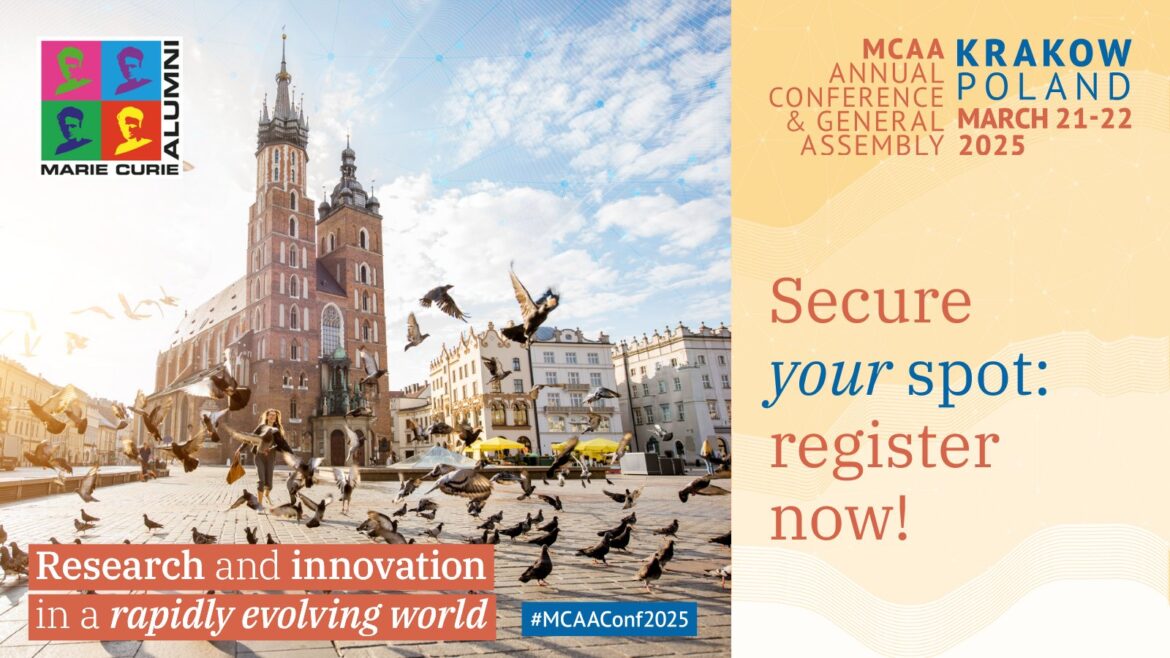
MCAA Annual Conference and General Assembly 2025: Join MCAA in Krakow!
MCAA Annual Conference and General Assembly 2025: Join MCAA in Krakow! 1024 576 Open and Universal Science (OPUS) Project

The Marie Curie Alumni Association (MCAA) Annual Conference and General Assembly will take place on March 21–22, 2025, in Krakow, Poland, bringing together researchers, policymakers, and industry professionals from around the world.

A Flagship Event for Research and Innovation

This event is a key gathering for the global research community, offering discussions on topics shaping the future of research, science policy, and innovation. It provides a unique platform for networking, collaboration, and knowledge exchange.

Register Now!

  • Annual Conference: Open to all participants. Secure your spot today!
  • General Assembly (March 22, 14:15–17:30): Exclusive to MCAA members. Separate registration is required.

Satellite Events on March 19–20

Ahead of the main conference, satellite events will take place, offering additional opportunities for engagement.

Discover Krakow

As Poland’s historic capital, Krakow is a vibrant center of culture, tourism, and innovation. The AGH University of Krakow will serve as the venue, providing a dynamic setting for this prestigious event.

Don’t miss out – register now and be part of this global research community!

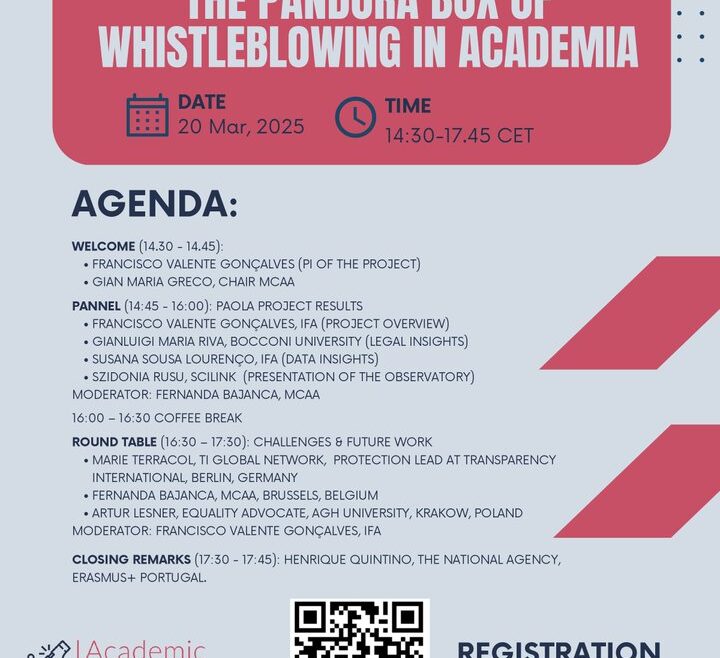
Academia & Whistleblowing: What’s Next? – Final Conference of the PAOLA Project
Academia & Whistleblowing: What’s Next? – Final Conference of the PAOLA Project 720 900 Open and Universal Science (OPUS) Project

Join for the Final Conference of the PAOLA Project on March 20, 2025, at the AGH University of Krakow in Poland, where experts and participants will discuss the future of whistleblowing in academia.

📅 Date: 20th March 2025
🕒 Time: 14:30 – 17:45 CET
📍 Location: AGH University of Krakow, Building B8, Krakow, Poland

This event, part of the PAOLA project – PAndora bOx of Whistleblowing in Academia, is financed by the Erasmus+ Program. The conference will address key issues surrounding the challenges and developments in the field of whistleblowing within academic institutions.

All registered participants will receive updates about the event via email. Don’t miss out on this opportunity to engage with experts and shape the future of whistleblowing in academia.

For more information and registration, please click here.

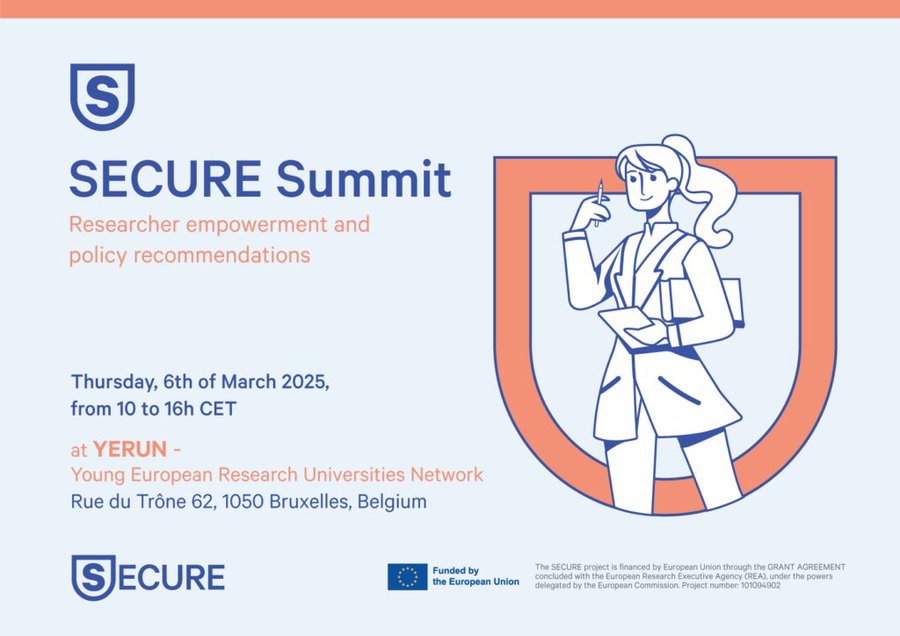
Join the SECURE Summit and Shape the Future of Research Careers
Join the SECURE Summit and Shape the Future of Research Careers 900 636 Open and Universal Science (OPUS) Project

The SECURE Summit is set to take place on March 6th, 2025, in Brussels, Belgium, at the Young European Research Universities Network (YERUN) headquarters, located at Rue du Trône 62, 1050 Ixelles. This hybrid event will bring together researchers, policymakers, and research institutions to explore sustainable research career pathways in Europe, offering both in-person and online participation options.

The summit will feature key findings from the Research Career Framework (RCF), Tenure Track-Like (TTL) models, and the SECURE project’s trials. It will offer valuable insights into how different approaches can improve career stability and progression for researchers across Europe.

Participants will have the opportunity to engage in expert-led discussions, institutional perspectives, and policy recommendations that aim to support research talent and enhance career opportunities. Key topics include:

  • Strategies for research career sustainability and job trajectories
  • Lessons learned from RCF and TTL models and related policies
  • Institutional approaches to talent retention and mobility
  • The role of policy recommendations in shaping future research careers

Throughout the event, attendees can take part in roundtable discussions, presentations, and networking opportunities, gaining valuable insights and practical solutions for research institutions across Europe.

To learn more and register, visit the SECURE Summit Registration page. Don’t miss the chance to be part of this important conversation and contribute to shaping the future of research careers in Europe.

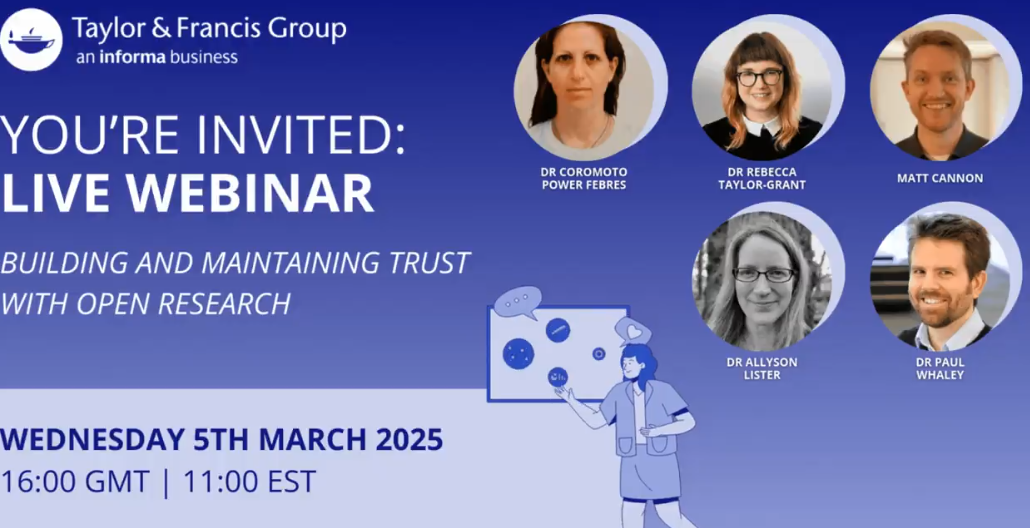
Webinar: Building and Maintaining Trust with Open Research
Webinar: Building and Maintaining Trust with Open Research 1024 525 Open and Universal Science (OPUS) Project

Date & Time:

📅 Wednesday, March 5, 2025
⏰ 16:00 GMT
📍 Location: Online

Why Trust in Open Research Matters

In an era of rising misinformation, maintaining trust in scholarly literature is more critical than ever. Open research practices offer transparency and accountability, strengthening the credibility of academic publishing.

Join us for an insightful webinar on Building and Maintaining Trust with Open Research, where expert speakers will discuss how researchers can enhance the trustworthiness of their work through open science principles.

What to Expect

This session will feature individual presentations by leading experts, followed by a structured discussion on fostering transparency, reliability, and credibility in research. Key topics include:

  • How open research practices can build trust.
  • The role of transparency in countering research integrity issues.
  • Best practices for ensuring reproducibility and responsible publishing.

Meet the Speakers

🔹 Matt Cannon – Head of Open Research, Taylor & Francis; expert in journal policies and research transparency.
🔹 Dr. Rebecca Taylor-Grant – Head of Open Data Initiatives, Taylor & Francis; advocate for FAIR data sharing and open science policies.
🔹 Dr. Coromoto Power Febres – Research Integrity Manager, Taylor & Francis; specialist in research ethics and integrity.
🔹 Dr. Allyson Lister – FAIRsharing Content & Community Lead, University of Oxford; expert in data standardization and semantic integration.
🔹 Dr. Paul Whaley – Honorary Researcher, Lancaster University; Editor-in-Chief of Evidence-Based Toxicology and advocate for evidence-driven decision-making.

This event is open to researchers and academics from all disciplines who are committed to upholding integrity in their work.

👉 Register now to secure your place!

Publishing Research from Your COST Action on Open Research Europe
Publishing Research from Your COST Action on Open Research Europe 900 450 Open and Universal Science (OPUS) Project

Are you a COST Action-funded researcher looking for an open-access platform to share your work? Open Research Europe (ORE), the European Commission’s dedicated open-access publishing platform, offers COST Action researchers a seamless way to publish and disseminate their research.

Join us on Tuesday, March 4, from 11:00 AM to 12:30 PM CET for an introductory webinar where the ORE team will provide insights into the platform, guide you through the submission process, and answer any questions regarding potential submissions.

Why Publish on ORE?

  • Open Access: Free and immediate access to your research.
  • Compliance: Fully aligned with the European Commission’s open science policies.
  • Visibility: Increased exposure within the scientific community.
  • Rigorous Peer Review: Transparent and post-publication peer review process.

Speakers

  • Kelly Woods – Publisher
  • Emma Smith – Associate Publisher, F1000
  • Lorna Stokes – Digital Communications Officer
  • Jacques van Lankveld – Emeritus Professor of Clinical Psychology

This online event is an excellent opportunity to learn how ORE can enhance the visibility and impact of your research.

👉 Register now to secure your spot!

Privacy Preferences

When you visit our website, it may store information through your browser from specific services, usually in the form of cookies. Our Privacy Policy can be read here.

Here you can change your Privacy preferences. It is worth noting that blocking some types of cookies may impact your experience on our website and the services we are able to offer.

Click to enable/disable Google Analytics tracking code.
Click to enable/disable Google Fonts.
Click to enable/disable Google Maps.
Click to enable/disable video embeds.
Our website uses cookies, mainly from 3rd party services. Define your Privacy Preferences and/or agree to our use of cookies.