
Open Science News

Looking Back at the History and Forward to the Future of Research Assessment
Looking Back at the History and Forward to the Future of Research Assessment 1 1 Open and Universal Science (OPUS) Project

DORA, the San Francisco Declaration on Research Assessment, will be 10 years old in May 2023 and is planning a weeklong celebration to mark the occasion. To celebrate its 10th anniversary, DORA will host two plenary online sessions and a global program of local or regional events. The celebration aims to promote conversations on what DORA has accomplished and what remains to be done in research assessment all over the world.

The two plenary sessions are scheduled to capture as many time zones as possible and to ensure community participation worldwide. The Asia-Pacific Plenary will be held on May 16, 2023, at 12AM UTC, and will feature introductory statements from DORA’s Vice-Chair, Ginny Barbour (Open Access Australasia), a keynote address by Mai Har Sham (The Chinese University of Hong Kong), and a panel discussion with experts from across the globe. The Africa, Americas, Europe Plenary will be held on May 16, 2023, at 12PM UTC, and will feature introductory statements from DORA’s Chair, Stephen Curry (Imperial College London), a keynote address by Sarah de Rijcke (Leiden University), and a panel discussion with experts from across the globe.

The global program of local or regional events will take place during one week in May 2023 and aims to highlight reform efforts, innovation in evaluation, research into evaluation systems, and more. DORA encourages community members across the globe to organize their own events on responsible research assessment during the week of May 15-19th, 2023. DORA will promote these events on its website and is calling for organizers who will lead virtual, hybrid, or in-person events on responsible research assessment.

DORA will accept event proposals from anyone interested in good research assessment, including academic staff or faculty, researchers studying biases in evaluation, librarians, research managers, early career researchers, bibliometricians, funders, initiatives for responsible research assessment, publishers, and societies. Events can be of any format, including webinars, conferences, seminars, and workshops. The deadline for submission is April 3, 2023. Once the proposal is accepted, DORA will reach out to the organizer for further information about the event to feature on the DORA website, including registration and related links. Organizers will also be invited to submit a blog summary of their event to be featured on the DORA website.

To read more and register for the event, click here.
Opportunities, Shortcomings and Challenges of Open Science in the EU
Opportunities, Shortcomings and Challenges of Open Science in the EU 150 150 Open and Universal Science (OPUS) Project

On February 8, the third and final day of the informal meeting of the Competitiveness Council (COMPET) in Stockholm, Minister for Education Mats Persson and his ministerial colleagues engaged in policy discussions on how to strengthen and develop the use of research data from research infrastructures to better address societal challenges and enhance competitiveness. They also discussed open access to scientific publications and the impact of digitalization on the scientific publication system.

Sweden, which currently holds the presidency of the Council of the European Union, made research infrastructures and open science the focus of the meeting attended by ministers for research. The meeting followed up on the joint priorities of the France, Czech Republic, and Sweden trio. The Swedish presidency proposed that ministers prioritize data-driven research infrastructures to facilitate the research process and transfer of knowledge into practice. This requires investment in data capacity and creating a system that follows the Findable, Accessible, Interoperable, and Reusable (FAIR) principle, allowing research data to be easily found, accessed, reused, and made interoperable between different systems. Coordination between EU Member States, the European Commission, and stakeholders in this area is primarily through the European Strategy Forum on Research Infrastructures (ESFRI) and the European Open Science Cloud (EOSC).

To realize open science, EU Member States mentioned various framework conditions that need to be established, including reforming the system of research assessment to encourage a research culture of open science, creating incentives for data sharing, integrating research infrastructures (including data infrastructures) into the EOSC and coordinating EU Member States through the Cloud, training researchers to implement the FAIR principle, and developing appropriate data management plans and a framework for monitoring success in achieving these objectives.

The Minister of Higher Education of Slovenia reported on the successful planning of research infrastructures using the VEGA supercomputer as an example, which involved all relevant stakeholders and enabled almost 100% of its use to be exploited, even by businesses. The Minister also outlined Slovenia’s plan to set up two big data centers using national funds and Recovery and Resilience Plan funds, emphasizing the need for a pan-European approach through the EOSC for connected and compatible data infrastructures.

Regarding open science, ministers responsible for research highlighted challenges such as the rising cost of open access, a scientific culture that values publishing in prestigious journals, the protection of intellectual property rights, and the reluctance of publishers to change their current business model. To transition to full open access, the majority of ministers proposed joint negotiations with major publishers, reforming the system for evaluating research and researchers, changing the regulatory framework to ensure that researchers’ copyrights are retained, limiting the costs charged by publishers for processing and publishing articles, and establishing alternative public repositories of scientific publications and data.

Following the debate, the Swedish presidency will prepare a proposal of conclusions on open science publishing to be presented to the Council of the European Union in the Working Party on Research.

Can Science Be More Equitable So That Everyone Enjoys the Benefits? Open Science is the Answer
Can Science Be More Equitable So That Everyone Enjoys the Benefits? Open Science is the Answer 150 150 Open and Universal Science (OPUS) Project

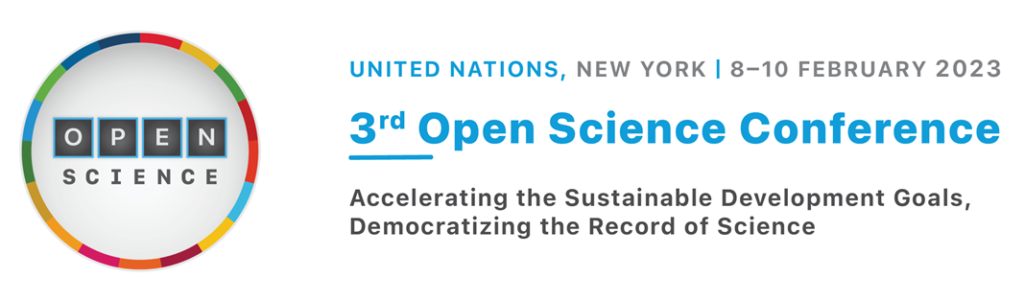
The concept of open science is gaining increasing recognition as a way to accelerate progress towards the Sustainable Development Goals. From 8 to 10 February 2023, policy-makers, researchers, scholars, librarians, publishers and others have met in New York at the third United Nations Open Science Conference to discuss how open science can drive progress towards achieving these goals. This conference was organized by the Dag Hammarskjöld Library in collaboration with UNESCO and the UN Department of Economic and Social Affairs.

The conference focused on a burning question: how can we make the practice of science more equitable and more transparent to ensure that everyone enjoys the benefits? Despite the best intentions of individual researchers and institutions, most new knowledge is available to a minority of readers and the scientific process itself is often opaque. Investment in research infrastructure, research funding processes and research prioritization are all masked within boundaries set by disciplines or institutional and national practices, with limited transparency and engagement.

Over 60% of research articles published over the past decade on the topic of climate change and nearly 50% of those related to biodiversity are still locked behind paywalls, even though climate change and biodiversity loss are considered existential challenges for humanity. This creates a paradox, as the right to access science and its benefits was set out in the 1948 Universal Declaration of Human Rights. Despite more than 70 years having passed since the declaration was made, science is still struggling to meet its social contract.

A growing number of scientists and non-scientists now acknowledge that this barrier is not only holding back individual scientists but is also holding back scientific progress and the vital solutions needed to tackle climate change, biodiversity loss, health pandemics, and other pressing challenges. Scientists and non-scientists from all over the world have endorsed the idea of a global transition to open science.

Audrey Azoulay, Director-General of UNESCO, has observed that “Today, closed science models no longer work because they amplify inequalities between countries and researchers and because they only make scientific progress available to a minority.” She made this point in a Joint Appeal for Open Science with UNESCO, the World Health Organization, and the United Nations High Commissioner for Human Rights on 27 October 2020.

In 2020, at the start of the COVID-19 pandemic, Azoulay launched an ambitious global effort to establish the Recommendation on Open Science, the first international framework on open science. This was adopted by 193 member states in November 2021. The UNESCO Recommendation defines the norms, values, principles, and actions for achieving open science for all. Before the Recommendation, there was no universal definition of open science, and standards existed only at regional, national or institutional levels. Now, we have a shared framework and a set of actions to take across the four key pillars of openness: open scientific knowledge; open science infrastructures; open engagement of societal actors; and open dialogue with other knowledge systems.

Open science means opening up among scientists, across borders, between disciplines and beyond single communities. Bringing this vision to reality requires coordinated efforts by all. To support these efforts, UNESCO launched in December 2022 its Open Science Toolkit, a collection of resources designed to support the implementation of the UNESCO Recommendation on Open Science.

Open science has real costs, just like standard science. Ensuring that those costs are not passed onto marginalized scientists and do not disproportionately affect low-resource regions will require extra attention. Yet, none of those costs are insurmountable, particularly when funds are redirected from closed to open scientific practices.

The COVID-19 pandemic demonstrated that the scientific community can come together and beat paywalls to share science. Several institutions, major publishers, and governments acted swiftly to share publications, databases, methods, and tools in order to overcome the challenge and help the humanity.

Click here to read more by Shamila Nair-Bedouelle, Assistant Director-General for Natural Sciences, UNESCO

The 3rd United Nations Open Science Conference 
The 3rd United Nations Open Science Conference  405 408 Open and Universal Science (OPUS) Project

The 3rd United Nations Open Science Conference from 8 to 10 February 2023 (9.00 a.m. to 1.30 p.m. New York Time) is organized by the Dag Hammarskjöld Library of the United Nations Department of Global Communications in collaboration with the Department of Economic and Social Affairs, Division of Sustainable Development Goals, and UNESCO’s Division of Science Policy and Capacity-Building. 

In observance of the International Day of Women and Girls in Science (11 February), policy makers, IGO representatives, researchers, scholars, librarians, publishers and civil society will engage in a dialogue about the opportunities and challenges of practicing open science.  

Under the theme “Accelerating the Sustainable Development Goals, Democratizing the Record of Science”, panels and keynotes will focus on three streams: 

  • Equity in open scholarship 
  • Reforming scientific publishing 
  • Strengthening the science-policy-society interface 

More information, including the concept note, registration and detailed programme, is available on the Conference website: https://www.un.org/library/OS23 

Hear more about ground-breaking open access initiatives, learn about new perspectives of scholarly communications and participate in lively discussions about the present and future of open science practices for the SDGs. 

UNESCO Open Science team 

#OpenScienceUN

Science Diplomacy — the use of science to advance diplomatic goals
Science Diplomacy — the use of science to advance diplomatic goals 1024 683 Open and Universal Science (OPUS) Project

The International Science Council (ISC) published on World Science Day for Peace and Development an article by its President, Sir Peter Gluckman.

Science diplomacy — the use of science to advance diplomatic goals — is critical for addressing challenges to the global commons such as climate change and pandemics. Beyond the formal processes of science diplomacy, scientists and scientific organizations can play important informal diplomatic roles.

Depending on the context, individuals, institutions, scientific organizations including academies and scientific unions can all contribute to science diplomacy. Any form of scientific collaboration can have diplomatic spillovers, but in order to engage beyond capricious impacts, it is important to understand the science–diplomatic interface just as with other aspects of the science–policy interface. Universities can have a critical role in bridging the science, public policy, and diplomatic communities as well as offering research and training opportunities in science diplomacy.

Organizations such as the International Network for Governmental Science Advice (INGSA), GESDA, American Association for Advancement of Science (AAAS) in conjunction with The World Academy of Sciences (TWAS), and an increasing number of universities provide short courses or summer schools that are aimed at early career scientists. Many diplomatic academies have extended their training beyond diplomats and promoted science diplomacy with the science community (e.g., Diplomatic Academy of Vienna). Some countries have followed the example of the National Academies of Sciences, Engineering, and Medicine’s Jefferson Science Fellowships and the AAAS’s Science and Technology Policy Fellowships, which allow scientists to work within foreign ministries. Such experiential engagement, perhaps through an internship, gives a greater understanding of the 2 cultures.

Science diplomacy has its own online journal for researchers (Science Diplomacy). The European Commission has supported major collaborative research efforts to develop and understand science diplomacy. Moreover, the same tools of science diplomacy need not refer only to nation-to-nation interactions, but also to cities and regions (e.g., the Barcelona SciTech DiploHub).

Read the full article and access references at:
Gluckman PD (2022) Scientists and scientific organizations need to play a greater role in science diplomacy. PLoS Biol 20(11): e3001848. https://doi.org/10.1371/journal.pbio.3001848

World Science Forum 2022: “Science for Social Justice”
World Science Forum 2022: “Science for Social Justice” 1024 433 Open and Universal Science (OPUS) Project

World Science Forum 2022 will be held from 6 to 9 December 2022 in Capetown, South Africa, a forum on the social and economic relevance, influence and responsibilities of science.

Our project will also be presented by ICoRSA (OPUS consortium partner) at the side event “SCIENTIFIC FREEDOM AND THE RRING COMMUNITY WORKING WITH UNESCO ON THE RECOMMENDATION ON SCIENCE AND SCIENTIFIC RESEARCHERS” which will be held in Exhibition Hall 1&2 of CTICC (Cape Town International Convention Centre)

WSF 2022

In these unprecedented times, marked by global challenges such as the COVID-19 pandemic, climate change, and persistent poverty, science is called upon to make a critical contribution to creating a more equal, fair and just world. This call for action informed the theme proposed by South Africa for the 2022 Forum as “Science for Social Justice”. Debates at WSF 2022 will therefore interrogate what role science should play in ensuring resources, opportunities and privileges in society are accessible to all and distributed in a fair manner.

The WSF 2022 will therefore discuss how the production and application of new knowledge could and should challenge inequality, injustice, environmental destruction and marginalization. The Forum will not only consider the role of science in advancing social justice, but also how the values of social justice, such as greater transparency and inclusivity, should transform the nature of the scientific enterprise to make it more responsive to the needs of society. Topics such as Open Science, research integrity as well as ethics and technology governance will be in the spotlight at the Forum.

International cooperation will be crucial to advance the cause of science for social justice, as it is for the response to all societal challenges. Science Diplomacy will, therefore, as is traditional, be an important focus of the WSF 2022. In this regard, special attention will be paid to the African agenda for science, technology and innovation and promoting greater participation by developing countries in global science.

The 2022 programme of WSF will provide an opportunity for the considerations of scientists, policy-makers, society, industry and science communicators to be challenged from a comprehensive standpoint in the plenary sessions, and allow for more technical debates over issues of science in thematic sessions.

Find out more about the program.

OpenSciComm 2022, Belgrade, Serbia
OpenSciComm 2022, Belgrade, Serbia 1024 409 Open and Universal Science (OPUS) Project

Open Science Communication Conference – OpenSciComm 2022 will be held on November 24-25, 2022 in Belgrade, Serbia.

The OpenSciComm 2022 conference is initiated to present effective and reliable practices of science communication, to show their potential in different environments and tackling critical subjects and topics, and to facilitate the exchange of ideas and approaches among peers and practitioners. The conference will contribute to the CPN’s mission to bring together the scientific community and society at large through creative and valuable dialogue, enabling active networking and fostering public understanding of science by leveraging technology.

The OpenSciComm 2022 conference will connect complex research concepts and topics with the concepts that are familiar to the public such as climate change, artificial intelligence, cutting-edge technologies, etc. The main goal of the conference is the presentation of recent, novel and inspirational practices, exchange of ideas and approaches, and networking between international peers.

In the scope of the OpenSciComm, another one-day conference will be held at the Yugoslav Film Archive. Namely, the two H2020 projects RRI2SCALE and TeRRIFICA are organising together their joint final event on November 23, entitled “EmbeddingRRIfor smart and climate resilient European regions”, which will include presentations of both projects, interactive sessions, open roundtables, as well as inspiring talks about RRI and regional climate developments. Attendance at the conference is free of charge, but with a limited capacity. Information about the conference is available here, together with the registration form.

Open Science Communication Conference – OpenSciComm 2022

November 24-25, 2022
Yugoslav Film Archive
Belgrade, Serbia
Working language: English

Open Science and Science Communication

In a knowledge-based society, citizens are able to make decisions based on the reliable and relevant information delivered by science. Open Science and Science Communication refers to public communication presenting science-related topics, not only among scientists, but primarily targeting all social strata. The basis is in strengthening understanding of science and increasing scientific literacy as an indispensable part of everyday life.

Science Communication refers to public communication presenting science-related topics not only among scientists but primarily targeting all social strata. The communication of science to diverse audiences and the engagement of scientists with all parts and aspects of society, including policymakers, are key factors in this process. Science Communication as an academic discipline is taught across the globe, however it isn’t yet recognised as such in the Republic of Serbia. There are no related study programmes nor thematic courses at the universities in Serbia.

Open Science is based on the principle of openness and transparency in the whole research cycle. It fosters and reinforces core academic values, such as research integrity, cooperation and knowledge sharing, while making scientific research and its dissemination accessible to all levels of society, amateur or professional. Open Science is also key to increasing public trust in science and as a means to spark interest and foster the public’s participation in research activities. As a European concept/policy it was first introduced in 2016, further strengthening and improving since. The Republic of Serbia adopted the Open Science Platform in 2018.

Source: Center for the Promotion of Science

MCAA’s role in the OPUS Project
MCAA’s role in the OPUS Project 520 226 Open and Universal Science (OPUS) Project

‘Open Science’ encompasses all of the practices providing open access to research outputs, early and open sharing of research, participation in open peer-review, measures to ensure reproducibility of results, and involving all stakeholders in co-creation. Although the emergence of an Open Science culture in research was embraced enthusiastically by many early-career researchers, progress towards full Open Access to research outputs was quite slow. In 2018, research funders launched Plan S, an initiative that aimed to accelerate the transformation of academic publishing by making substantial demands on publishers, researchers and research organisations to ensure full and immediate Open Access to scientific publications.

As a response, MCAA, Eurodoc and the Young Academy of Europe issued a Joint Statement on Implementation Guidance for Plan S that offered a general welcome to Plan S and the associated Coalition S framework. Nevertheless, the associations representing early-career researchers expressed concern that “institutions and funders should modernise their researcher evaluation”. The primary objective of the Open and Universal Science (OPUS) project is to respond to this concern by working to develop and implement strategies and policies that reward the practice of Open Science in the evaluation of research and researchers. The project will recommend best practices to Research Performing Organisations (RPOs) and Research Funding Organisations (RFOs) and other stakeholders. This project is very pertinent at a time when many stakeholders throughout Europe are joining together as part of the Coalition for Advancing Research Assessment (CoARA) to implement assessment primarily on qualitative judgement that avoids irresponsible use of journal- and citation-based metrics.

MCAA is one of 18 partners in the OPUS project that will develop coordination and support measures to reform the assessment of research and researchers towards a system that incentivises and rewards researchers to take up Open Science practices. The 36-month project, with a budget of almost 2 million euros is funded by the Horizon Europe framework and coordinated by the Oceanic Platform of the Canary Islands (PLOCAN). As a strong supporter of Open Science which actively promotes it among its members, researchers and the wider society, the MCAA contributed to the development of the successful proposal. 

The project’s focus

OPUS has a specific focus on reforming the research(er) assessment system to incentivise and reward researchers to take up these practices. The project employs a three-tiered approach to ensure representation and consensus building of key stakeholder groups in the Open Science ecosystem: 

  1. The large project consortium consists of researcher organisations, RPOs, RFOs, industry organisations, and experts in project management, public relations, and Open Science 
  2. A series of stakeholder engagement sessions will be held with the broader community to gather input and validate key project deliverables 
  3. An Advisory Board of key representatives will ensure expert oversight and links to the community.

The project’s objectives.

The OPUS project has six objectives, namely:

  1. Conduct a comprehensive state-of-the-art on existing literature and initiatives for Open Science
  2. Develop a comprehensive set of tools to implement Open Science at RPOs and RFOs
  3. Develop realistic indicators and metrics to monitor and drive Open Science at RPOs and RFOs
  4. Test the interventions and indicators and metrics via action plans in pilots at RPOs and RFOs
  5. Utilise a stakeholder-driven feedback loop to develop, monitor, refine, and validate actions
  6. Synthesise outcomes into policy briefs and a revised Open Science Career Assessment Matrix for research(er) career assessment

MCAA’s role

MCAA will collaborate on assessing the state of the art on Open Science incentives, metrics, and indicators, as well as in drafting and disseminating policy recommendations.  The project has 7 work packages  of which MCAA is taking part in 6. In this project, MCAA will contribute to drafting and disseminating a revised Open Science Career Assessment Matrix for research(er) career assessment that aims to provide the benchmark process for reforming career assessment of researchers. The project will provide a way for MCAA members to give feedback on researcher career assessment and this is likely to be part of the MCAA Annual Conferences in coming years.

International Open Access Week Open Science Café: selecting journals for publishing papers
International Open Access Week Open Science Café: selecting journals for publishing papers 720 568 Open and Universal Science (OPUS) Project

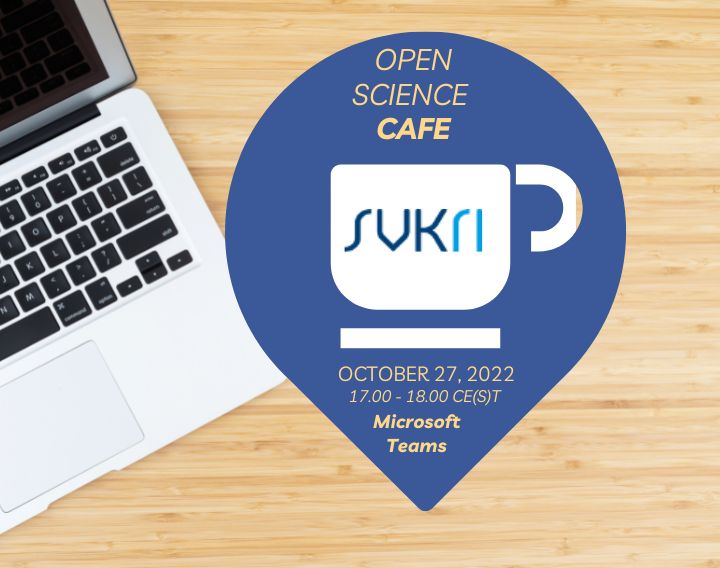
The Center for Open Science and Management of Scientific Information at the University Library of Rijeka is organising the second in a series of Open Science Cafes as part of International Open Access Week ( October 24-30, 2022) on October 27, 2022 from 17.00 to 18.00 CE(S)T on the Microsoft Teams platform. The event is organised for researchers from the University of Rijeka.

The Open Science Cafe is open to all researchers of University of Rijeka interested in the topic of selecting a journal for publication. We’ll discuss journal selection criteria, publishing in open-access journals, and predatory journals.

The University of Rijeka (UNIRI) is one of the 3 pilot RPOs where OPUS will test interventions, indicators, and metrics for Open Science.
Founded in 1973, the University of Rijeka has matured into a modern European university and a centre of excellence whose impact extends beyond the region. It is a research, science, and education-oriented university that supports social and economic development in its community and the wider region.

It is the first university in Croatia to be assigned the “HR Excellence in Research Award” in 2010 while in 2021 the Open Science Policy of the University of Rijeka was adopted and the University signed The Declaration on Research Assessment (DORA).

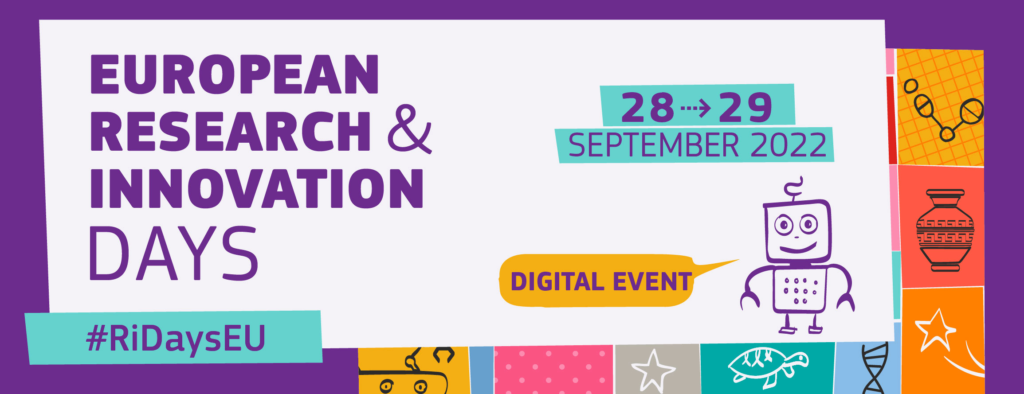
European Research and Innovation Days 2022
European Research and Innovation Days 2022 1024 818 Open and Universal Science (OPUS) Project

28 and 29 September 2022

Let’s shape the future together: registration is open!

European Research and Innovation Days is the European Commission’s annual flagship Research and Innovation event, bringing together policymakers, researchers, entrepreneurs and the public to debate and shape the future of research and innovation in Europe and beyond.

The event will take place online on 28 and 29 September 2022, allowing everyone to get involved from anywhere.

Register here >

This year’s European Research and Innovation Days gives you the opportunity to discuss and shape new solutions to strengthen Europe’s resilience and its strategic autonomy. Join us to debate how research and innovation deliver on the European Commission’s priorities.

This is your chance to discuss the new European Innovation Agenda, the European Year of Youth, the richness of European cultural creativity, the EU Missions and many more topics.

Explore the programme, discover the sessions for you and get ready to discuss the future of research and innovation with participants from across Europe and beyond.

Register here and stay tuned for more news und updates! by following us on Twitter @EUScienceInnov and join the conversation on #RiDaysEU.

Privacy Preferences

When you visit our website, it may store information through your browser from specific services, usually in the form of cookies. Our Privacy Policy can be read here.

Here you can change your Privacy preferences. It is worth noting that blocking some types of cookies may impact your experience on our website and the services we are able to offer.

Click to enable/disable Google Analytics tracking code.
Click to enable/disable Google Fonts.
Click to enable/disable Google Maps.
Click to enable/disable video embeds.
Our website uses cookies, mainly from 3rd party services. Define your Privacy Preferences and/or agree to our use of cookies.