OPUS News

OPUS at the upcoming EOSC Symposium 2023
OPUS at the upcoming EOSC Symposium 2023 1024 558 Open and Universal Science (OPUS) Project

Gareth O’Neill, Principal Consultant on Open Science and a valuable member of the OPUS team, will share insights in two pivotal sessions at the upcoming EOSC Symposium 2023: “EOSC Future” and “OPUS and EOSC-A”.

From 20-22 September 2023, the EOSC Symposium will take place in Madrid, in the context of the Spanish Presidency of the Council of the European Union. The EOSC Symposium is organised by the EOSC Future project, together with the EOSC Tripartite collaboration (the EOSC Association, the EOSC Steering Board and the European Commission).

This year’s event will be fully hybrid, facilitating broader exchanges between stakeholders from ministries, policy makers, research organisations, service providers, research infrastructures and research communities driving the development of – and engagement with – the European Open Science Cloud. In the context of the EOSC Future project, the EOSC Symposium will also be a critical platform to showcase project achievements and key exploitable results.

The conference sessions will take place on Thursday 21 September, from 15.40-18.00 CEST. The unconference sessions are only available to in-person attendees.

*REMINDER: Registration for in-person attendance is closed, but you can still register as an online participant here*

8 NEW (UN)CONFERENCE SESSIONS

A few months ago they launched a vote for session proposal submissions on big issues, involving compelling speakers and perspectives from the EOSC community. They opened the vote up to registered in-person participants. Now the votes are in, and they are pleased to announce that we’ve selected not 6, but 8 unconference sessions to add to the event programme!

1 – Exploring the role of nodes in relation to the EOSC platform (EOSC Association)

This is a timely opportunity to explore the role of nodes in the EOSC platform and the interaction between architecture and policies. This session will use the following example questions as a means of focusing the discussion on the role of nodes in relation to the EOSC platform:

  • What is the definition of a node? What must a node contain and what is optional? What defines the boundaries of one node from another?
  • How do the different layers of policies for EOSC participation foreseen by the RoP task force map on to nodes?
  • What policies need to apply at the EOSC platform level and what policies may vary by node?
  • Who is responsible for such policies, how are they enforced and monitored?
  • Who decides if a node can be admitted or excluded to the federation and on what basis?
  • Are EOSC core and Exchange services common to the whole EOSC platform or does their implementation and access vary across nodes?

2 – Trust in Sharing Sensitive Data (University of Oslo & Nordic e-Infrastructure Collaboration (NeIC))

Trusted Research Environments are highly relevant when discussing the legal and technical challenges of implementing sensitive data use cases. Bringing together different stakeholders for a fruitful discussion and producing a set of recommendations is particularly useful for the community and would provide useful input for the EOSC association. We would provide answers on the data governance and legal framework for lawful and ethical data sharing among TREs, technical solutions for security, and trust between stakeholders. NeIC has extensive experience with TREs, and coordinated three sensitive data services projects, in addition to EOSC-Nordic.

3 – Data spaces in dialogue: Cultural heritage data as an essential resource for humanities research (Europeana Foundation)

This session aims to explore the interconnections between the common European data space for cultural heritage and EOSC, considering how EOSC itself can be seen as a Data Space for Research and Innovation, and giving the Social Sciences and Humanities domain more visibility within EOSC. Cultural heritage data is humanities research data and therefore, the common European data space for cultural heritage is essential for (digital) humanities research. The common European data space for Cultural Heritage will be increasingly a source of data also for EOSC, both in the form of datasets and research outputs resulting from computational analysis of cultural heritage data. Connecting data spaces is the way forward, and the sooner collaboration starts, the better interoperability is ensured.

4 – Digital twins and EOSC – Insights from BioDT (CSC – IT Center for Science)

BioDT is one of several projects aiming to establish a new type of platform based on digital twins to address important societal challenges, in the wider context of the EU Green Deal, Destination Earth and the EU Biodiversity Strategy specifically. It aims to provide a platform comprising digital twins to drive long-term biodiversity research and facilitate science-driven policy and rapid-response actions.
The proposed session will provide an opportunity to push the integration of these platforms with EOSC,
as BioDT in particular and various digital twins in general can strongly benefit from an integration in e-infrastructures.

5 – EOSC Symposium Community workshop – EOSC Node Value Proposition (SWITCH)

Recently the EC introduced in the technical specifications of the EOSC Procurement the concept of an ‘EOSC Node’, which is not well defined and has raised many questions in the community. This unconference workshop will focus on understanding what values an EOSC node could offer. The aim is not to address specific operational aspects, but on agreeing on a common understanding on what capabilities an ‘EOSC node’ could offer and how they can interact and federate with the EOSC EU node. The workshop will provide an opportunity to articulate a consolidated Value Proposition for different sets of stakeholders. The feedback is aimed to be from the widest possible range of stakeholders and those who were not able to contribute fully to other fora. This is your opportunity to contribute to the added value, definition and ideas around EOSC Nodes in an open forum.

6 – Leveraging global data communities in regional initiatives and cross-border infrastructures (Uppsala University / ELIXIR Sweden / NBIS, SciLifeLab)

This session will showcase how you can leverage global data organisations in the Data Together coalition, such as the Research Data Alliance (RDA), to strengthen and increase the impact of activities across your research organisation, infrastructure or EOSC project. It offers opportunities to exchange knowledge and discuss methods to support collaborations, identify bi-directional opportunities, and help in developing synergies. You will have the opportunity to outline and refine your own liaison strategies and to identify gaps and priorities for future work in this space.

7 – Harmonised PID practices for protected data (CSC – IT Center for Science)

When access has to be controlled to data, and sometimes even metadata, trustworthy identification of digital objects is crucial for robust and secure data management. Good PID management is extra important when dealing with sensitive data. PIDs for sensitive data have also been identified as an important question for the realisation of a FAIR EOSC. The session would dig into relevant use cases in the FAIR-IMPACT project and discuss our work regarding lifecycle, access and rights management and how this affects PIDs. In our use cases we bring together solutions from different domains to share knowledge and learn from each other to achieve interoperable, yet context friendly solutions. This is an excellent opportunity to get to know our work and to discuss this hot topic in EOSC.

8 – Why are Public Authorities not (yet) a relevant user group for EOSC, and what can we do to foster this? (EGI Foundation)

Despite public investment on EOSC development, the uptake to the wider public sector is not yet in the spotlight. The market potential from public authorities is huge and includes different types of users
ranging from small municipalities or regional administrations to the biggest national and transnational initiatives. In order to bring the user community closer to EOSC, DECIDO is setting up an EOSC Competence Center for Public Authorities and is collecting lessons learned from use cases from early adopters. Learn and discuss how public authorities can become a relevant user group for EOSC services, why this is important for EOSC, and what you can do to help to foster this.

KEYNOTE SPEAKERS IN OPEN SCIENCE AND ARTIFICIAL INTELLIGENCE

Two experts in their field have been selected to kick off this year’s Symposium:

  • Joaquin Tintoré, Research Professor from the Spanish Research Council (CSIC) and Director of SOCIB, the Coastal Ocean Observing and Forecasting System of the Balearic Islands (SOCIB) will guide us through the ‘Open Science principles applied to SOCIB’s Research infrastructure ocean observing activities and data’.
  • Emanuela Girardi, founder and president of Pop AI (Popular Artificial intelligence), an association that investigates the impact that AI has on people’s daily lives and raises awareness among the public and companies on the benefits and potential risks of AI technologies. She is also the President of the ADRA (AI, Data, Robotics Association) and co-author of the Italian national AI strategy as a Member of the High-Level Expert Group of the Italian Ministry of Economic Development. Emanuela will reflect on the potential impact of AI on research.

MAKING SPACE FOR DATA: JOINT SESSION ON EOSC & DATA SPACES

The Second EOSC and Data Spaces joint session will take place on Friday 22 September. Online attendance is open…and free! You’ll find the session description in the agenda, along with registration information, here.

CHECK OUT THE FINAL PROGRAMME

From keynote, big-picture plenaries, to more focused thematic sessions, it lists varied and thought-provoking sessions by speakers offering a wide array of perspectives, and a wealth of insights and knowledge-sharing opportunities that promise to address the key challenges for EOSC on the road ahead.

Find the full agenda now on the EOSC Symposium website!
OPUS Research Assessment Framework (RAF)
OPUS Research Assessment Framework (RAF) 1024 436 Open and Universal Science (OPUS) Project

The OPUS team has dedicated months of work to develop the first version of the OPUS Research Assessment Framework (RAF). This cutting-edge framework offers a comprehensive suite of indicators and metrics, designed specifically for research-performing organizations (RPOs) and research-funding organizations (RFOs), to assess researchers for career progression and grant applications. By implementing the OPUS RAF, RPOs and RFOs can now effectively evaluate the impact and quality of research while promoting the principles of Open Science.

The RAF incorporates an Open Science dimension, providing explicit recognition and incentives for Open Science practices. It comprises a carefully crafted set of indicators and interventions aimed at fostering Open Science practices within research organisations: RPOs and RFOs. As part of the OPUS project Work Package 2  (WP2) – Interventions for Open Science (Rewards and Incentives for Researchers) and Work Package 3 (WP3) – Indicators and Metrics for Open Science (Rewards and incentives for Researchers), two separate deliverables have been finalized to propel this transformative initiative forward:

The developers of the RAF have outlined ten guiding principles that will shape its implementation, ensuring a transformative impact on research evaluation practices across geographical boundaries and disciplinary constraints. Unlike traditional approaches, the RAF focuses on assessing individual researchers rather than teams or groups and combines both quantitative and qualitative assessment methods.

The RAF itself offers a comprehensive array of interventions, indicators and metrics to facilitate researcher assessment in RPOs and RFOs, covering a wide range of activities undertaken by researchers. These activities are categorized into research, education, leadership, and valorization, allowing organizations to tailor their assessment systems to their specific requirements. The framework encompasses two dimensions: a generic approach and a dedicated Open Science focus, ensuring the appropriate recognition and reward of both types of activities.

The OPUS Project Research Assessment Framework (RAF) Interventions (Deliverable D2.1: Pilots Put to the Test)

The OPUS project marks a significant milestone in research evaluation, promising to transform the research landscape. By offering a framework and practical interventions, the project empowers RPOs and RFOs to embrace Open Science practices, fostering a culture of transparency, collaboration, and progress. 

To support the implementation of the RAF, Deliverable D2.1 presents a range of interventions to be tested during the project’s pilot phase. These interventions, outlined in detail, offer practical support for RPOs and RFOs and can be used along with the RAF framework. Through pilot initiatives at three RPOs and two RFOs within the OPUS project, selected interventions, indicators and metrics from the RAF will undergo testing to ensure their effectiveness and suitability.

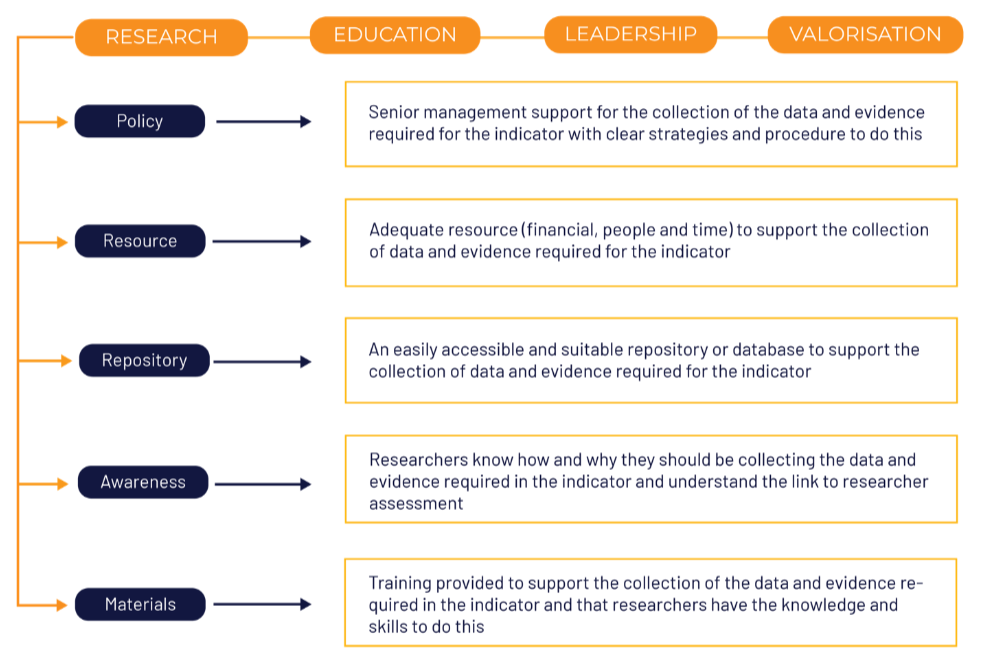
The interventions within the OPUS RAF are structured based on the dimensions of the main framework, which consists of five assessment categories with subcategories. This structured approach enables a clear and cohesive implementation of the RAF. 

To ensure the successful implementation of the RAF, five categories of interventions have been identified: Policy, Resource, Repository, Awareness Raising, and Training. These interventions emphasize the need for senior management support, clear strategies, procedural guidelines, adequate resources, easily accessible repositories, education for researchers on data collection, and training initiatives to equip researchers with necessary skills.

The OPUS Research Assessment Framework (RAF) Indicators (Deliverable D3.1: Putting Indicators to the Test)

Deliverable D3.1 provides in-depth insights into the guiding principles, structure, and implementation of the RAF, featuring generic indicators in Section 3 and Open Science indicators and metrics in Section 4. The report concludes with a discussion on future steps and the role of the OPUS project. For a detailed overview, including all generic and Open Science indicators and metrics, Appendix 1 presents the full RAF.

A notable strength of the OPUS RAF is its ability to encompass the entire spectrum of researchers’ activities, extending beyond research-related endeavours. The framework accommodates both open and non-open activities undertaken by researchers, emphasising the importance of transparency and collaboration in the research landscape. It even includes a dedicated framework for evaluating Open Science activities, reflecting the growing significance of openness and collaboration in the scientific community.

To capture the comprehensive nature of researchers’ activities, the OPUS RAF incorporates three types of indicators: process, output, and outcome indicators. Process indicators track ongoing or developing activities, while output indicators measure tangible products or clear endpoints resulting from those activities. Finally, outcome indicators assess the immediate or short-term results generated by the outputs.

Figure 1 showcases the categories, subcategories, and indicator groups that form the Researcher Assessment Framework.

Research Assessment Framework Indicators

Each indicator group within the framework is accompanied by quantitative metrics and comprises three types of indicators. Process indicators track activities in progress, output indicators measure concrete outcomes, and outcome indicators provide insight into immediate or short-term results stemming from outputs.

The OPUS RAF empowers RPOs and RFOs to select, refine, and prioritise indicators and metrics based on their specific contexts and goals. By adhering to the guiding principles and utilising the structured interventions, organisations can confidently adopt the OPUS RAF, leading to a more comprehensive and accurate assessment of researchers.

A Collaborative Journey Towards RAF Enhancement Persists

While the OPUS Research Assessment Framework (RAF) is ready for initial implementation, it is important to note that it is still in its early draft stage. 

The development of the RAF draws inspiration from influential policy developments and existing frameworks such as the San Francisco Declaration on Research Assessment (DORA), Leiden Manifesto for Research Metrics, Hong Kong Principles, and Recommendations by the Open Science Policy Platform (OSSP), among others. By incorporating elements from these important documents, the RAF aims to create a comprehensive assessment tool that combines both quantitative and qualitative approaches, encompasses research and non-research activities, and caters to the unique needs of RPOs and RFOs.

Throughout the development process, key stakeholders in research assessment and Open Science have played an integral role. Partners within the OPUS project, pilot organisations, and the Advisory Board have provided valuable insights and expertise. Collaboration with external stakeholders, including the GraspOS project and other relevant entities, has further contributed to shaping the RAF. Additionally, input from pilot initiatives, targeted stakeholder feedback, and an open consultation with the wider research community will inform future iterations and enhancements of the RAF.

The OPUS team members recognise the need for further refinement to enhance its effectiveness. Over the next eighteen months, pilot institutions will have the opportunity to thoroughly test the framework and provide valuable feedback on both the indicators and interventions.

Simultaneously, a comprehensive sector-wide consultation will be conducted, involving key organisations, projects, and sector partners. This ongoing collaboration will ensure that the final output of the OPUS framework becomes a practical and user-friendly tool for European RPOs and RFOs.

During the development process, certain points for consideration and improvement have emerged. The framework aims to be comprehensive yet customisable, allowing organisations to prioritise specific areas while still covering all essential aspects. Feedback on whether any important areas have been overlooked and whether the chosen categories and indicator groups are appropriate will be crucial.

As the implementation of the OPUS RAF commences, it holds the potential to transform research evaluation practices, promoting a culture of excellence, accountability, and transparency. Institutions embracing this groundbreaking framework will drive positive change in the research community. 

OPUS Research Assessment Framework (RAF): Changing the Way We Evaluate Research
OPUS Research Assessment Framework (RAF): Changing the Way We Evaluate Research 1024 821 Open and Universal Science (OPUS) Project

The OPUS team has been hard at work for months, creating the first version of the OPUS Research Assessment Framework (RAF). This innovative tool is set to change the way we evaluate research. The framework provides a range of indicators and metrics specifically designed for research organizations and funding bodies to assess researchers for career advancement and grant applications. By using the OPUS RAF, research organizations can effectively evaluate the quality and impact of research while promoting the principles of Open Science. It’s important to note that the RAF also includes a focus on Open Science practices, providing recognition and incentives for these important aspects.

As part of the OPUS project, two key documents have been finalized to drive this initiative forward. Deliverable D.2.1 outlines interventions to test in pilot programs, focusing on rewards and incentives for researchers. Deliverable D.3.1 presents indicators to test in these pilot programs, covering metrics for Open Science practices.

The development of the RAF takes inspiration from influential policies and existing frameworks like the San Francisco Declaration on Research Assessment (DORA), Leiden Manifesto for Research Metrics, Hong Kong Principles, and Recommendations by the Open Science Policy Platform (OSSP), among others. By incorporating elements from these important documents, the RAF aims to create a comprehensive assessment tool that combines both quantitative and qualitative approaches, covers research and non-research activities, and meets the unique needs of research organizations and funding bodies.

Throughout the development process, key stakeholders in research assessment and Open Science have played a crucial role. Collaboration with partners within the OPUS project, pilot organizations, the Advisory Board, and external stakeholders has helped shape the RAF. Input from pilot initiatives, targeted stakeholder feedback, and an open consultation with the wider research community will guide future improvements to the RAF.

The RAF offers a comprehensive set of indicators and metrics to assist in researcher assessment within research organizations and funding bodies. These activities are categorized into research, education, leadership, and valorization, allowing organizations to customize their assessment systems to their specific needs. The framework covers a broad range of activities and includes a dedicated focus on Open Science to ensure that both types of activities receive appropriate recognition and rewards.

Important Deliverables

Two separate deliverables under the OPUS project, Work Package 2 (WP2) – Interventions for Open Science (Rewards and Incentives for Researchers), and Work Package 3 (WP3) – Indicators and Metrics for Open Science (Rewards and Incentives for Researchers), have been finalized:

  • D.2.1 Interventions to Test in the Pilots to support the implementation of the RAF, Deliverable D2.1 outlines various interventions available for testing during the pilot phase of the project. These interventions provide practical support for research organizations and funding bodies and can be used alongside the RAF framework. The indicators and metrics from the RAF will undergo rigorous testing in selected pilot organizations to ensure their effectiveness.
  • D.3.1 Indicators to Test in the Pilots: Deliverable D3.1 provides in-depth insights into the guiding principles, structure, and implementation of the RAF. It features generic indicators and metrics in Section 3 and Open Science indicators and metrics in Section 4. The report concludes with a discussion on future steps and the role of the OPUS project. For a detailed overview, including all indicators and metrics, you can refer to Appendix 1, which presents the full RAF.

What’s Next?

With the finalization of these two critical deliverables, the OPUS project has achieved a significant milestone in research evaluation. To enhance its effectiveness, the developers will conduct comprehensive testing and gather feedback over the next eighteen months. Valuable feedback on potential areas for improvement, as well as the appropriateness of chosen categories and indicators, will refine the framework.

Pilot institutions will play a crucial role in thoroughly testing the framework and providing valuable feedback on both the indicators and interventions. This iterative process ensures that the OPUS RAF becomes a practical and user-friendly tool for European research organizations and funding bodies.

A sector-wide consultation will engage key organizations, projects, and sector partners, gathering insights and perspectives from various stakeholders in the research community. By involving diverse voices, the final version of the OPUS framework will be more comprehensive and relevant.

As the OPUS RAF undergoes further refinement and collaboration, it holds the promise of shaping research evaluation practices in a profound way. The project’s dedication to continuous improvement and engagement with stakeholders ensures that the final version of the OPUS RAF will meet the needs of the research community, driving positive change and progress.

Stay tuned for updates as the OPUS project takes research assessment into a new era of transformation. We will provide detailed insights into each deliverable, giving you a comprehensive understanding of the progress made and the significance of these developments. Keep an eye out for more information on each deliverable in the coming days.

Eurodoc Conference 2023 represented OPUS in discussions about sustainable conditions for doctoral candidates and early-career researchers
Eurodoc Conference 2023 represented OPUS in discussions about sustainable conditions for doctoral candidates and early-career researchers 878 494 Open and Universal Science (OPUS) Project

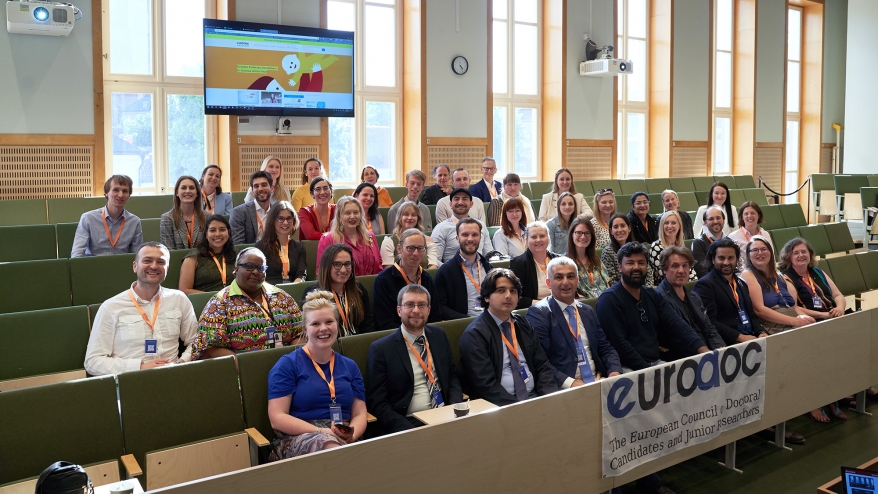
At the Eurodoc Conference 2023 “A Sustainable Academia,” in Uppsala, Sweden, Sebastian Dahle spoke on behalf of OPUS, linking the project’s work on reforming research assessment to the broader challenge of creating sustainable conditions for doctoral candidates and early-career researchers (ECRs) in academia.

The two-day event, held in a hybrid format on 7–8 June, 2023 brought together a mix of practitioners, ECR representatives, researchers, and stakeholders focused on improving the working environment within academia. Organised by Eurodoc in partnership with Swedish student and postdoctoral associations, the conference centred on the question of how to build a sustainable academic environment that supports young professionals.

Throughout the conference, panel sessions and keynote talks highlighted the critical role that doctoral candidates and early-career researchers play in driving sustainable change in academic workplaces. Participants shared best practices from across Europe aimed at fostering healthier, more supportive conditions for ECRs and identified key knowledge gaps, setting the stage for future research on this vital topic.

Dealing with precarity: Employment conditions of post-docs

A Sustainable Academia

The Assessment of the Academic Career – a Key to Open Science

A Timely and Relevant Doctoral Education

A Sustainable Academic Psychosocial Work Environment

In addition, a special session on the state of Ukrainian academia underscored ongoing challenges faced by institutions and researchers in times of geopolitical uncertainty.

As an annual gathering focused on the experiences and needs of early-career researchers, the Eurodoc conference continues to provide a vital forum for discussion, collaboration, and advocacy, ensuring that sustainability remains at the heart of academic development.

OPUS presented at the 2nd Researcher Career Summit
OPUS presented at the 2nd Researcher Career Summit 1024 487 Open and Universal Science (OPUS) Project

The International Consortium of Research Staff Associations (ICoRSA) organised its 2nd Researcher Career Summit online, bringing together international stakeholders to discuss the state of research careers in Europe and Africa.

During the event, Gordon Dalton and Dragana Mitrović presented the OPUS project alongside the SECURE project, focusing on issues of research precarity and the pressing need for structured career progression for researchers. The summit emphasised global perspectives on research careers across both continents, underlining challenges such as precarious employment, restricted career development opportunities, and the urgent requirement for sustainable frameworks to improve the attractiveness and stability of research careers worldwide.

The summit featured keynote presentations, survey findings, policy debates and collaborative initiatives designed to improve career prospects for early- and mid-career researchers. Despite numerous initiatives and policy proposals spanning recent decades, participants agreed that progress has been limited and that research careers are, in many respects, becoming less appealing.

Key Highlights and Presentations

  • A Manifesto for Early Career Researchers: Opening the summit, Monica Dietl (Initiative for Science in Europe) outlined efforts to strengthen research career frameworks at the European level, focusing particularly on the manifesto calling for reforms to better support early-career researchers.
  • Precarious Careers in ResearchJürgen Janger (Austrian Institute of Economic Research, WIFO) examined insecurity within the research sector, presenting policy options to address instability and researcher burnout.
  • Science-for-Policy InitiativesMathieu Denis (International Science Council, ISC) stressed the importance of embedding research careers within global science–policy frameworks, fostering international collaboration and knowledge exchange.
  • Research Careers in AfricaMartiale Gaetan Zebaze Kana (UNESCO Regional Office for Southern Africa) shared insights into both the opportunities and challenges facing African researchers, presenting the SEDA project on Responsible Research in Africa, which seeks to strengthen long-term career support and international partnerships.
  • Sustainable Careers for Researcher Empowerment (SECURE) ProjectGordon Dalton (SECURE Project Coordinator, PLOCAN) highlighted the EU-funded project’s work to establish a unified Research Career Framework, offering long-term solutions to structural precarity in the sector.
  • ICoRSA Survey on Research Career ProgressionDragana Mitrović (ICoRSA) presented the latest findings of ICoRSA’s annual survey. The results showed that inadequate salaries, short-term contracts, and unsustainable workloads continue to drive researchers away from long-term academic careers. Respondents expressed the need for more permanent positions and better balance between teaching, research, and administrative responsibilities.
  • Joint Statement on Researchers in IranSebastian Dahle (Eurodoc and University of Ljubljana) introduced the joint declaration by ICoRSA, Eurodoc, the Marie Curie Alumni Association (MCAA), and the Young Academy of Europe (YAE). The statement condemned restrictions on academic freedom in authoritarian contexts and urged international solidarity with researchers under political pressure.

Summit Format and Discussions

The summit concluded with breakout sessions, which examined the realities of research careers in Europe and Africa separately. The discussions highlighted systemic challenges such as reliance on short-term contracts, weak career progression pathways, and limited mobility, as well as specific issues in Africa, including fragile institutional support and insufficient funding streams.

Participants agreed that, despite numerous reforms and proposals over the past decade, the overall attractiveness and sustainability of a research career have not substantially improved. However, large-scale collaborative efforts, including the SECURE and OPUS projects, the Early Career Researchers Manifesto, and ICoRSA’s longitudinal career survey, were recognised as practical instruments capable of driving meaningful reform.

Learn More

OPUS First Newsletter Unveils Inaugural Release: Dive into the Latest Open Science Insights
OPUS First Newsletter Unveils Inaugural Release: Dive into the Latest Open Science Insights 1024 530 Open and Universal Science (OPUS) Project

OPUS Newsletter has recently released its first edition, packed with insightful reviews of Open Science initiatives and literature. The newsletter’s State-of-the-Art analysis covers key experts, organizations, networks, and projects associated with Open Science. Additionally, the literature review not only critiques but also initiates the development of a framework to promote and reward the transition to Open Science.

Furthermore, the newsletter also features Open Science blog articles, such as “Why Do We Need Research Assessment?” The article highlights the crucial role of research assessment in promoting transparency and integrity in Open Science. Another blog article, “Methods of Research Assessment,” explores the various methods for evaluating the quality and impact of research.

The newsletter also includes event announcements, such as the upcoming Research Career Progression Survey, which aims to examine researcher career progression and precarity issues. Additionally, the 2nd Researcher Career Summit, taking place on April 20, 2023, will feature key speakers and representatives from research staff associations who will discuss national challenges and impacts on researcher careers.

To stay updated on the latest Open Science news and daily blog updates, readers can follow OPUS Newsletter on Twitter and LinkedIn. With its comprehensive insights and engaging content, the OPUS Newsletter is a valuable resource for anyone interested in the world of Open Science.

Discussion on How Can We Reward Researchers for Open Science at the MCAA Annual Conference
Discussion on How Can We Reward Researchers for Open Science at the MCAA Annual Conference 1024 768 Open and Universal Science (OPUS) Project

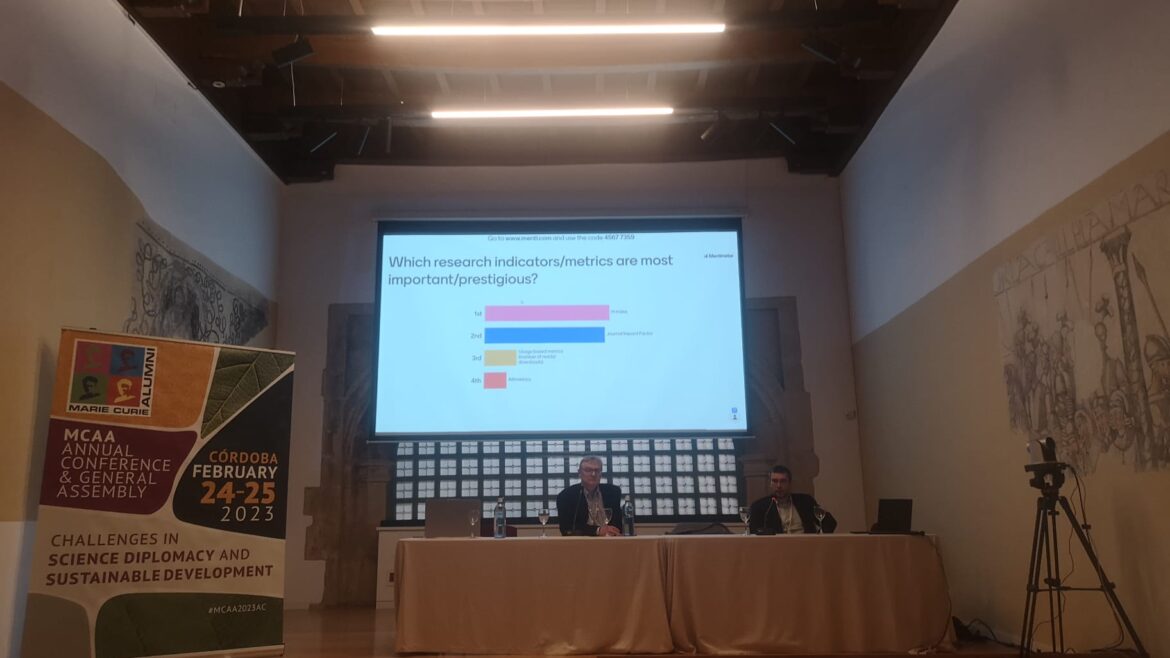
Open science is a movement that promotes transparency, collaboration, and sharing of research data and results. The aim is to make science more accessible and reproducible, which in turn accelerates scientific progress. However, one of the biggest challenges facing open science is the lack of incentives for researchers to engage in open practices. This issue was addressed at the MCAA Annual Conference by representatives of the OPUS project, Gareth O’Neill (Technopolis Group), Clare Viney (Vitae), Brian Cahill (MCAA), and Sebastian Dahle (Eurodoc), in a panel discussion on “How Can We Reward Researchers for Open Science?”

During the session, various questions were discussed, including the precarity of a research career, the obstacles for Research Assessment, and indicators and metrics on how researchers should be rewarded for Open Science. The team members presented the activities of the OPUS project, which is currently developing a set of interventions and metrics for Open Science towards a system that incentivizes and rewards researchers to take up practices of providing open access to research outputs, early and open sharing of research, participation in open peer-review, measures to ensure reproducibility of results, and involving all stakeholders in co-creation.

Insights from the audience during the session

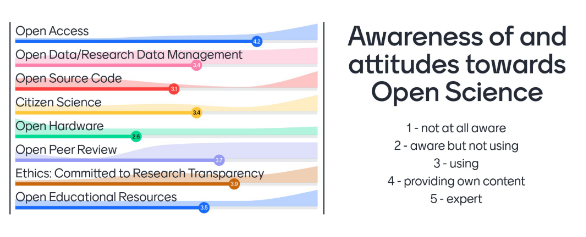
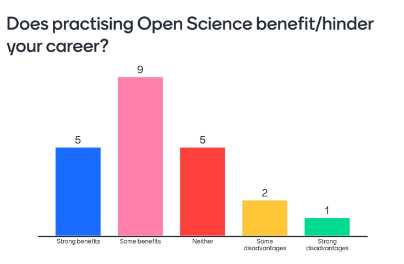
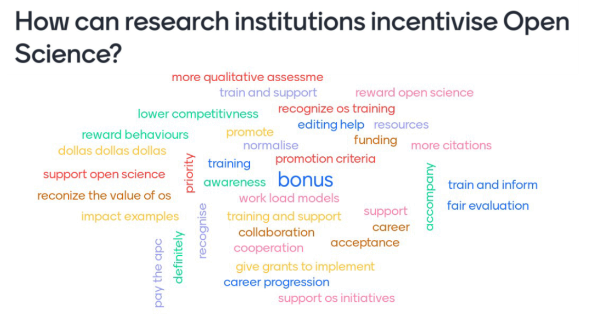
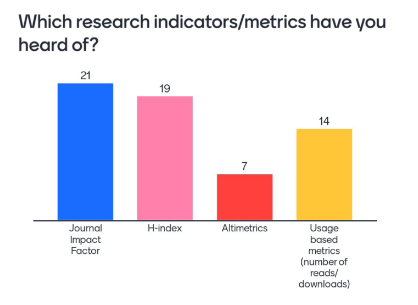
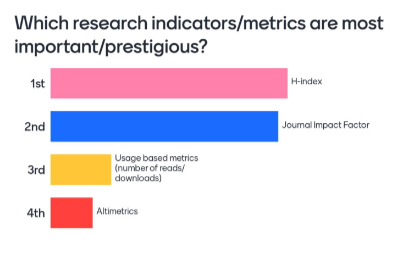
During the session, the audience was asked to participate with feedback on specific questions regarding open science and research assessment. Some results are
presented below.

Some ideas on how researchers can be rewarded for practicing

Financial suppport

The discussion highlighted some ways in which researchers can be rewarded for practicing open science. Financial support is one of them, where funding agencies and research institutions can provide financial incentives to researchers who engage in open science. Institutions could also reward researchers who publish in open-access journals by providing additional funding or recognition. These financial incentives can motivate researchers to embrace open science and make their research more accessible to the wider scientific community.

Academic promotions and awards

Researchers can also be recognized for their contributions to open science through academic promotions and awards. Institutions could create specific awards for researchers who engage in open science, such as the “Open Science Award” or “Open Data Award.” These awards could be given to researchers who have made significant contributions to open science, such as sharing data, developing open-source software, or publishing in open-access journals. Furthermore, institutions could consider open science activities when making academic promotions and tenure decisions.

Collaboration and opportunities for networking

Collaboration and opportunities for networking are also essential rewards for researchers. Open science practices can facilitate collaboration between researchers, as open data and research findings are more accessible to others in the scientific community. Institutions could provide researchers with opportunities to network and collaborate with others who share their open science values. This could be achieved through organized events, such as workshops and conferences, or through online communities, such as social media groups or open science forums.

Public engagement and outreach

Lastly, researchers could be rewarded through increased public engagement and outreach. Open science practices can help to increase the public’s understanding and appreciation of scientific research. Institutions could recognize and reward researchers who engage in open science practices that promote public engagement, such as communicating their research findings to the media or presenting at public events.

What are the next steps and how can OPUS help?

The OPUS project is currently developing a researcher assessment framework together with interventions to support the implementation of the framework at research-performing organizations and research-funding organizations. The framework will provide a comprehensive suite of indicators for these organizations to incentivize and reward their researchers for Open Science. The draft framework will be shared with key stakeholders and the research community for feedback through a public consultation in 2023.

In conclusion, by rewarding researchers for their contributions to open science, we can incentivize more researchers to embrace open science practices, leading to more accessible and reproducible research, and ultimately, scientific progress. The OPUS project is working towards this goal, and it is hoped that the researcher assessment framework developed by the project will help organizations to incentivize and reward their researchers for Open Science practices.

Open Science Literature Review
Open Science Literature Review 1024 776 Open and Universal Science (OPUS) Project

The team behind the OPUS project examined literature on Open Science. This has been conducted (and will later be updated) as part of state-of-the-art on literature to reform research(er) assessment and incentivize and reward Open Science, to stay up-to-date on research assessment reform and encourage Open Science practices.

Open Science (OS) has emerged as an inclusive movement that aims to make scientific knowledge multilingual, openly available, accessible, and reusable for everyone. The movement also seeks to increase scientific collaborations and sharing of information, and to open the processes of scientific knowledge creation, evaluation, and communication to societal actors beyond the traditional scientific community. To achieve these goals, the research community needs to reform the researcher assessment system and incentivize and reward OS practices. The OPUS project was initiated to address this need, and it has three main components: incentives for OS, metrics and indicators for OS, and pilots to implement and monitor OS.

The first component, incentives for OS, involves a review of the existing literature on researcher assessment and the incentivization of OS practices. The review found that the current assessment system focuses too much on bibliometrics, which involves peer-reviewed publications and citations in top journals. To promote OS, the research community needs a more comprehensive approach that includes research/non-research, open/closed, and quantitative/qualitative dimensions. The literature also suggests several proposals for frameworks, including principles, guidelines, support, and indicators/metrics to reform researcher assessment.

The second component, metrics and indicators for OS, involves the identification of key metrics and indicators that can measure the impact of OS practices. This component is crucial for incentivizing and rewarding OS, as it enables the research community to measure the impact of OS practices and their contribution to the scientific community and society. The OPUS project is currently developing a framework of indicators/metrics for researcher assessment, including OS, to promote the adoption of OS practices in research-performing and research-funding organizations.

The third component, pilots to implement and monitor OS, involves the implementation of the framework developed in the second component in research-performing and research-funding organizations. The pilots will test the effectiveness of the framework and identify any areas that require improvement. The ultimate goal of the pilots is to promote the adoption of OS practices and reform the researcher assessment system to incentivize and reward OS practices.

In conclusion, the OPUS project is a vital initiative that seeks to promote OS practices, reform the researcher assessment system, and incentivize and reward OS practices. The project’s three components, incentives for OS, metrics and indicators for OS, and pilots to implement and monitor OS, provide a comprehensive approach to promoting OS and ensuring its adoption in the research community. Ultimately, the adoption of OS practices will enable the research community to increase scientific collaborations, sharing of information, and open engagement of societal actors, leading to greater trust in science by researchers and the public.

Initial State of the Art on Open Science Initiatives
Initial State of the Art on Open Science Initiatives 1024 776 Open and Universal Science (OPUS) Project

As an important initiative that aims to help reform research assessment and incentivize researchers to practice Open Science, the OPUS project has started with Work Package 1 (WP1) State-of-the-Art which conducted an analysis of initiatives and literature related to Open Science.

In simple terms, the OPUS project team members analysed Open Science initiatives and literature that encourage researchers to practice Open Science. The first task (Task 1.1 within WP1) run by our team members was a State-of-the-Art analysis on Open Science initiatives, that covered an analysis of projects linked to Open Science and key experts, organizations, and networks associated with Open Science. It also produced a stakeholder engagement plan, focusing on means of engaging key target actors to support their input in the other two work packages of the project: WP2 (developing interventions for RPOs and RFOs to implement a reformed research(er) assessment system that incentivises and rewards Open Science) and WP3 (developing indicators and metrics for a reformed assessment system at RPOs and RFOs that incentivises and rewards Open Science).

Deliverable 1.1 “Initial State of the Art on Open Science Initiatives” aims to provide an initial structured input to the project’s overall objective to develop coordination and support measures to reform the assessment of research and researchers at Research Performing Organisations (RPOs) and Research Funding Organisations (RFOs) towards a system that incentivizes and rewards researchers to practice Open Science.

OPUS Workshop in Brussels: How do we transform open science principles into practical researcher assessment frameworks that institutions can actually implement? 
OPUS Workshop in Brussels: How do we transform open science principles into practical researcher assessment frameworks that institutions can actually implement?  1024 768 Open and Universal Science (OPUS) Project

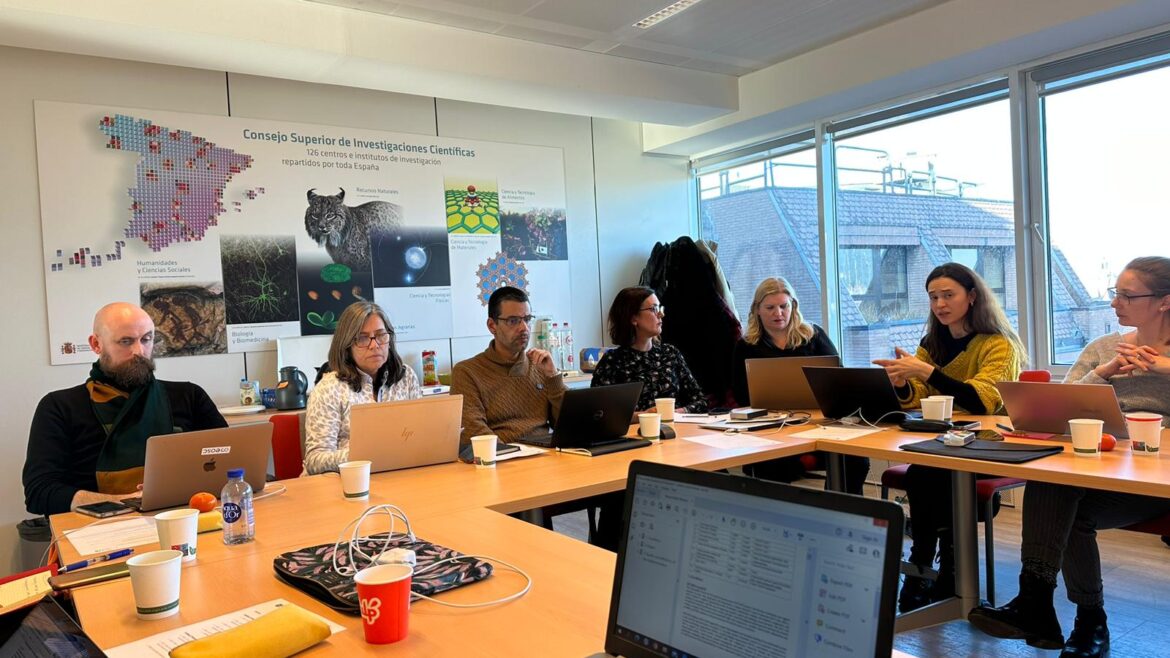
On 6-7 February 2023, OPUS project consortium members gathered in Brussels for an intensive two-day workshop centred on one fundamental question: how can open science principles be transformed into practical researcher assessment frameworks that institutions can genuinely implement?

The workshop brought together pilot organisations from across Europe, including research performing organisations (RPOs) and research funding organisations (RFOs), to move beyond theoretical discussions and tackle the real-world challenges of integrating open science into researcher evaluation processes.

Setting the Stage to Establish a Researcher Assessment Framework

The OPUS Brussels workshop wasn’t just another project meeting. It represented a critical juncture where high-level policy ambitions meet institutional reality. As coordinator’s opened the session, three key objectives were laid out:

  1. Assess the current status of open science practices across pilot partners through comprehensive questionnaire results
  2. Develop practical frameworks for interventions and indicators that institutions could realistically implement
  3. Create actionable templates for Action Plans that would guide pilot organisations through their open science transformation

The ultimate goal was ambitious yet practical: to establish a researcher assessment framework that could bridge the gap between open science policy and everyday academic practice.

The Questionnaire Revelations

The morning session revealed fascinating insights from the pilot organisations, each representing different national contexts and institutional approaches to open science.

Universidade Nova de Lisboa (UNL) showcased Portugal’s emerging approach: while research data management remained largely at the recommendation stage, there was clear intention to formalise policies through the OPUS project. The institution had promising citizen science initiatives but lacked comprehensive policy frameworks. Perhaps most intriguingly, they were planning internal monetary awards for open science practices and had established a social science faculty group to drive institution-wide engagement.

University of Cyprus (UCY) presented a more developed landscape with budget provisions for open access and data curation already in place. Their commitment to implementing CoARA principles (Coalition for Advancing Research Assessment) demonstrated serious institutional buy-in, though they acknowledged resistance from senior researchers and the need for carefully targeted communication strategies.

University of Rijeka (UNIRI) brought the Croatian perspective, benefiting from strong national open science infrastructure. As early signatories of both DORA and CoARA, they had already established an open science policy adopted by the university senate. Their diamond access model for nationally funded journals and dedicated Centre for Open Science within the library showed institutional commitment in action.

Research Council of Lithuania (RCL) highlighted the challenges facing research funders, particularly around predatory journal identification and the practical difficulties of implementing guidelines. Their involvement in multiple EU projects (RESTORE, FOSTER, OpenAIRE) demonstrated extensive experience, though resource constraints remained a significant barrier.

Romanian Executive Agency for Higher Education, Research, Development and Innovation Funding (UEFISCDI) represented national-level coordination, with a comprehensive R&I strategy mandating open access for publicly funded publications and FAIR data principles. Their involvement in Coalition S and multiple international initiatives showed commitment, though implementation challenges persisted.

Framework Development: From Theory to Practice

The afternoon session tackled the complex task of developing practical frameworks. The consortium agreed on a three-step approach:

  1. Create a researcher assessment framework with concrete indicators
  2. Develop targeted interventions based on these indicators
  3. Establish metrics to measure intervention effectiveness

A key insight emerged: rather than reinventing the wheel, OPUS would build upon existing frameworks like OS-CAM (Open Science Career Assessment Matrix), incorporating principles from DORA, the Leiden Manifesto, and CoARA to create something both comprehensive and implementable.

Connecting Concept to Reality

The second day focused on the crucial challenge of connecting framework concepts to institutional reality. A pragmatic approach emerged: start with existing activities within institutions, monitor what’s already happening, then strategically add new elements.

Gordon’s insight from the GRRIP project (Gordon Dalton, GRRIP Project Coordinator) proved invaluable: institutions should focus on “low-hanging fruit” rather than attempting overly ambitious transformations. The most successful institutional changes came from selecting achievable interventions and building momentum through early wins.

Cultural Change as the Foundation

A critical discussion emerged around the role of cultural change in open science adoption. John Crowley’s contribution highlighted the theory of change: awareness → engagement → institutional and individual transformation. This insight shaped OPUS’s focus on the first two stages, recognising that lasting change requires more than policy mandates.

The workshop identified trust-building as essential, recommending dedicated working groups involving representatives across seniority levels and departments, researchers, administrators, librarians, and management.

Action Plan Development

The final session tackled the practical matter of the OPUS Action Plan templates. Key elements emerged:

  • Institutional context descriptions, including roles in researcher assessment
  • Logic explanations for intervention choices
  • Resource allocation (often limited to staff time rather than additional budget)
  • Risk assessment and mitigation strategies
  • Industry engagement components for sustainability

A crucial decision was made to keep Action Plans concise and focused, building on existing institutional structures rather than requiring wholesale system overhauls.

Key Insights and Takeaways

The Implementation Reality Check

Perhaps the workshop’s most valuable contribution was its honest assessment of implementation challenges. Participants acknowledged that:

  • Many institutions already have open science interventions but haven’t integrated them into researcher assessment
  • Senior researcher resistance remains a significant barrier requiring strategic communication
  • Resource constraints limit what pilot organisations can realistically achieve
  • Cultural change takes time and requires carefully planned, trust-building approaches

Building on Existing Foundations

Rather than starting from scratch, the workshop emphasised building on existing initiatives. This pragmatic approach recognised that sustainable change comes from enhancing current practices rather than replacing entire systems.

The Power of Mutual Learning

The mutual learning approach emerged as a key success factor. Institutions facing similar challenges could learn from each other’s experiences, share practical solutions, and build collective momentum for change.

From Brussels to Implementation

The Brussels workshop established the foundation for OPUS’s practical phase. The frameworks developed would undergo monthly iterations with pilot feedback, ensuring they remained grounded in institutional reality while advancing open science goals.

Most importantly, the workshop demonstrated that meaningful change is possible when policy ambitions are matched with practical wisdom, institutional commitment, and realistic timelines. The pilot organisations left Brussels not just with frameworks and templates, but with a shared understanding of how to make open science researcher assessment a reality.

The journey from policy to practice had begun in earnest, with Brussels serving as the crucial waypoint where ambitious visions met implementable realities.


The OPUS Brussels workshop exemplified collaborative policy development at its best, bringing together diverse stakeholders, acknowledging real constraints, and focusing on achievable solutions that could create lasting change in how we assess and reward researchers in the open science era.

Privacy Preferences

When you visit our website, it may store information through your browser from specific services, usually in the form of cookies. Our Privacy Policy can be read here.

Here you can change your Privacy preferences. It is worth noting that blocking some types of cookies may impact your experience on our website and the services we are able to offer.

Click to enable/disable Google Analytics tracking code.
Click to enable/disable Google Fonts.
Click to enable/disable Google Maps.
Click to enable/disable video embeds.
Our website uses cookies, mainly from 3rd party services. Define your Privacy Preferences and/or agree to our use of cookies.