OPUS News

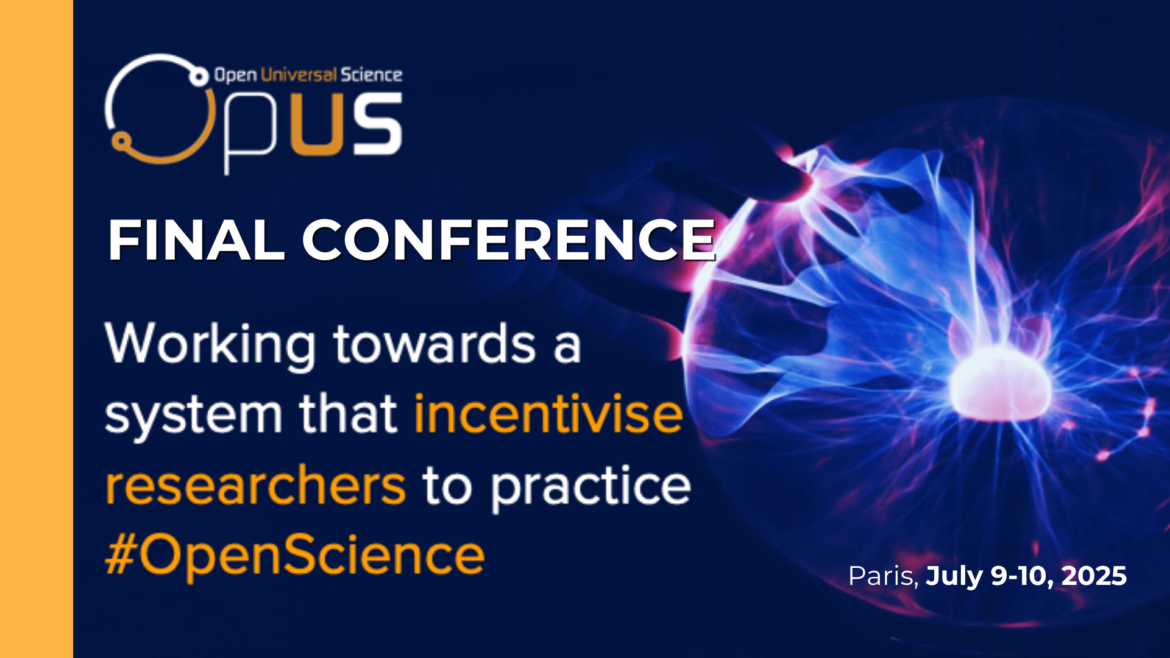
Save the Date: July 9, 2025 OPUS Final Conference
Save the Date: July 9, 2025 OPUS Final Conference 1024 512 Open and Universal Science (OPUS) Project

The Open and Universal Science (OPUS) project is excited to announce its final conference, set to take place in Paris on July 9-10, 2025. This landmark event will highlight the transformative achievements of OPUS, focusing on the development of a comprehensive researcher assessment framework, innovative indicators, and key interventions that promote Open Science.

As OPUS aims to transform research assessment, the conference will feature a detailed presentation of the project’s approach to incentivising and rewarding Open Science practices. Key highlights include new assessment indicators, real-world pilot implementations, and impactful interventions at Research Performing Organisations (RPOs) and Research Funding Organisations (RFOs).

Register here!

Key Themes & Topics

1. Assessing Researchers and Incentivising Open Science
OPUS introduces a set of indicators and metrics that monitor and encourage the adoption of Open Science. Topics will include open access to research outputs, early and open sharing, open peer review, reproducibility, and stakeholder engagement.

2. The Generic Researcher Assessment Framework (RAF)
This framework provides a holistic evaluation system for researchers based on four key categories: Proposal Development, Methods Development, Research Outputs, and Research Impact. It focuses on Open Science contributions and offers a comprehensive system for researcher assessment.

3. Piloting Research Assessment Reforms
The conference will showcase real-world experiences from OPUS pilot programs at three RPOs (Nova University of Lisbon, University of Cyprus, and University of Rijeka) and two RFOs (UEFISCDI in Romania and the Research Council of Lithuania). These pilots, running from January 2024 to June 2025, assess the effectiveness of new metrics and methodologies.

4. Interventions for Open Science Adoption
OPUS has created a series of interventions, including policy changes, resource allocation, repository development, awareness campaigns, and training programs. The impact of these initiatives on fostering Open Science cultures will be evaluated within pilot organisations.

5. Current Progress & Future Steps
As OPUS nears its conclusion in August 2025, the conference will offer insights into the ongoing implementation of Open Science reforms, the development of updated Open Science indicators, and the creation of the Open Science Career Assessment Matrix (OS-CAM2). Policy briefs and recommendations aimed at integrating Open Science into mainstream research assessment practices will also be discussed.

This final conference provides a unique opportunity for policymakers, researchers, and institutional leaders to engage in discussions about the future of research assessment and how to ensure the sustainability of Open Science initiatives in Europe and beyond.

Don’t miss out on this exciting event that will shape the future of research assessment!

Register here!

OPUS at the YERUN Open Science Awards 2024 Ceremony
OPUS at the YERUN Open Science Awards 2024 Ceremony 1024 494 Open and Universal Science (OPUS) Project

At the YERUN Open Science Awards 2024 ceremony, OPUS was featured as part of YERUN’s commitment to advancing Open Science practices. The event celebrated outstanding projects that embody transparency, accessibility, and collaboration in research, with OPUS serving as an example of transformative research assessment reform.

The YERUN Open Science Awards 2024 Ceremony took place virtually, recognising outstanding projects that exemplify the spirit of Open Science by advancing collaboration, innovation, and accessibility in research, education, and public engagement.

The event commenced with a warm welcome from Silvia Gomez Recio, Secretary General of YERUN, who highlighted YERUN’s firm commitment to fostering Open Science across its network. Following this, Mariangela Boe, YERUN Communications Officer and Network Coordinator, provided a brief history of the awards and their core principles.

Special appreciation was extended to the final evaluation panel members whose expertise was crucial in selecting this year’s winners:

  • Ms Chiara Colella, former YERUN colleague, now at the European Commission
  • Dr Inma Andrés, Master’s Programmes Manager, Department of Chemistry, Imperial College London
  • Mr Tiago Guedes, Head of the Research Information Management Office, NOVA University Lisbon

Award-Winning Projects Showcase Innovation and Impact

The ceremony spotlighted the remarkable initiatives driving open science forward:

  • VINCULUM, led by Maria de Lurdes Rosa from NOVA University Lisbon, engages schools and communities with academic research through local heritage projects under the motto “YOU CAN BE A HISTORIAN.” It fosters a unique model linking rigorous research with humanities education, using tailored research data to inspire students. Presentation here.
  • Diverse Dissemination and Public Engagement Activities: Perspectives from Ireland, submitted by Ann-Marie Creaven of the University of Limerick, focuses on embedding sustainable open science practices within existing initiatives to ensure lasting impact. Details available here.
  • The Bremer Open Science Initiative at Faculty 11, led by Julia Stern, University of Bremen, strengthens open science in research, teaching, and committee work. The project supports researchers at all career stages in publishing open data, preregistering studies, writing registered reports, and adopting open-source software alongside integrating open science into teaching and supervision. Presentation accessible here.
  • NODES – Task Force Neuroendocrinology Open Data Exchange Standard, coordinated by Maria Meier at the University of Konstanz, is creating a community-driven standard data format aimed at seamless data sharing in psychoneuroendocrinology. Supported by web applications for dataset restructuring and validation, it aims to normalise open data practices in the field. More information here.

Expert Insights and Closing Remarks

The ceremony was enriched by Mr Javier Lopez Abacete, Policy Officer at the European Commission’s Unit on Open Science, DG RTD, who shared updates on the new ERA Policy Agenda and the future direction of Open Science in Europe.

In her closing remarks, Silvia Gomez Recio thanked the audience for their engagement and enthusiasm and encouraged institutions to consult the many open access materials available on the YERUN website, valuable tools for advancing open science initiatives locally and globally.

Heartfelt congratulations were extended to all award winners. Special recognition was also given to two highly commended projects:

  • NATIEV from NOVA University Lisbon, which develops computational tools for reusing and exploring extensive extracellular vesicle (EV) datasets, deepening understanding of cell-to-cell communication in health and disease.
  • The Munin Conference on Scholarly Publishing by UiT The Arctic University of Norway, a longstanding and evolving platform promoting open access, research reproducibility, equitable science, and open education across multiple disciplines and countries.

Together, these initiatives underscore a collective commitment to building a more open, transparent, and collaborative research culture in Europe and beyond.

6 Months from the Finish Line: What OPUS Has Achieved So Far to Transform Research Assessment
6 Months from the Finish Line: What OPUS Has Achieved So Far to Transform Research Assessment 1024 507 Open and Universal Science (OPUS) Project

The OPUS (Open and Universal Science) project is a Horizon Europe initiative designed to redefine how researchers are assessed, prioritising Open Science (OS) practices and fostering a research ecosystem—encompassing open-access publications, FAIR data, and citizen science—where transparency, collaboration, and accessibility become standard.

Launched on 1 September 2022 and concluding on 31 August 2025, OPUS brings together stakeholders from academia, funding bodies, and industry to establish systemic incentives that encourage transparency, collaboration, and accessibility in research.

Key Focus Areas

  • Developing interventions (e.g., policy changes, training) and indicators/metrics to monitor Open Science adoption at research-performing organisations (RPOs) and research-funding organisations (RFOs).
  • Piloting these reforms at three RPOs—University of Cyprus (UCY), University of Rijeka (UNIRI), and Universidade NOVA de Lisboa (UNL)—by implementing OS training, open-access mandates, FAIR data repositories, and citizen science integration.
  • Additionally, two RFOs—the Research Council of Lithuania (Lietuvos mokslo taryba) and UEFISCDI (Romania)—are testing real-world implementations such as rewarding OS compliance in grant evaluations and developing OS-aligned funding criteria.
  • Producing policy briefs and a revised Open Science Career Assessment Matrix (OS-CAM2) to guide institutional reforms.

OPUS’s Six Core Objectives

  1. Conduct a state-of-the-art review of existing OS literature, policies, and initiatives.
  2. Develop interventions (e.g., training, policy reforms) for RPOs and RFOs.
  3. Design indicators/metrics to track OS adoption (e.g., open-data deposits, pre-registrations).
  4. Pilot interventions at three RPOs and two RFOs.
  5. Refine frameworks through stakeholder feedback loops.
  6. Synthesise outcomes into policy briefs and the Open Science Career Assessment Matrix 2 (OS-CAM2).

Why OPUS Exists

Traditional research assessment systems prioritise metrics such as journal impact factors, which disincentivise Open Science practices like open-access publishing, FAIR (Findable, Accessible, Interoperable, Reusable) data sharing, and citizen science.

OPUS aims to address this by:

  • Rewarding OS practices: Aligning researcher incentives with Open Science, thereby improving research quality, collaboration, and public trust.
  • Reducing precarity: Ensuring OS activities contribute to career progression for early-career researchers, counteracting the disincentives created by traditional bibliometric assessments.
  • Building trust: Enhancing reproducibility and public engagement through transparent research workflows.

Progress to Date

OPUS is structured around seven work packages (WPs) and aims not only to reward Open Science but to establish it as the norm. By aligning career incentives with transparent practices, it fosters a research culture where knowledge sharing is central.

Since its launch, OPUS has achieved the following milestones:

  • WP1 (State-of-the-Art Review): Identified gaps in existing OS frameworks, mapping 34 networks, 36 Horizon projects, and 47 experts. Analysed 129 academic papers, 25 policy documents, and 34 OS initiatives, highlighting gaps in gender equality, industry collaboration, and trust-building.
  • WP2 (Interventions): Developed actionable policies, such as OS training programmes and institutional mandates, embedding OS into research organisations and funding bodies. Piloted over 40 interventions, including mentorship schemes. Partner organisations, including Vitae and UNESCO, are leveraging their networks to disseminate OPUS outputs and train researchers.
  • WP3 (Indicators/Metrics): Created tools to monitor OS adoption, including open-data deposits and public engagement tracking. Developed a draft framework integrating quantitative (e.g., open-access publications) and qualitative metrics (e.g., public engagement).
  • WP4 (Pilots): Pilots commenced in 2024 to refine these metrics and interventions at five institutions. Testing interventions at three RPOs and two RFOs, with early results indicating increased OS training uptake and FAIR data compliance.
  • WP5 (Policy Synthesis): Drafting OS-CAM2, a revised career assessment matrix incorporating OS metrics, expanding the 2017 matrix to include citizen science and open peer review. OPUS published an initial policy brief aligning with global initiatives such as UNESCO’s Open Science Recommendation and the Coalition for Advancing Research Assessment (CoARA).

Challenges and Innovations

OPUS addresses systemic challenges head-on:

  • Precarity and OS: No direct correlation has been found between short-term contracts and OS uptake, underscoring the need for institutional support.
  • Gender equality: While OS does not inherently address gender gaps, tailored interventions, such as mentorship for open-data initiatives, are being tested.
  • Industry collaboration: Developing frameworks that balance open collaboration with commercial interests.

A significant innovation is the Open Science Career Assessment Matrix 2 (OS-CAM2), which builds on earlier models to include new metrics such as citizen science participation and open peer review.

Next Steps

In 2025, the OPUS team will finalise OS-CAM2 and the Researcher Assessment Framework (RAF) based on feedback from the pilot phase. As part of its stakeholder engagement efforts, OPUS will broaden consultations with research-performing organisations (RPOs), research-funding organisations (RFOs), and research institutions. The final stage will focus on policy advocacy, presenting findings to EU policymakers, including the European Commission and CoARA, to integrate Open Science incentives into mainstream research assessment frameworks.

Join the OPUS Journey

OPUS is more than a project—it is a movement. Researchers, institutions, and policymakers can get involved by:

  • Exploring resources: Accessing the RAF draft and policy briefs at opusproject.eu.
  • Participating in events: Engaging with pilot results and contributing to OS-CAM2 development. Attend the Final OPUS Conference in July 2025 to help shape the future of OS reforms.
  • Following updates: Subscribing to the OPUS newsletter for insights on Open Science reforms.

Together, we can build a research ecosystem where openness drives excellence.

Consortium Partners

The OPUS consortium comprises 18 partners spanning academia, funding bodies, and global networks:

  • PLOCAN (Oceanic Platform of the Canary Islands): Project coordinator.
  • RESOLVO SRL: Project management support.
  • TGB (The Guild of European Business-Friendly Universities): Scientific coordination.
  • CRAC-Vitae: Career development expertise.
  • ICoRSA (International Consortium of Research Staff Associations): Researcher advocacy.
  • UNESCO: Global policy alignment.
  • JISC: Digital infrastructure support.
  • YERUN (Young European Research Universities Network): Work with pilots and network dissemination.
  • Eurodoc (European Council of Doctoral Candidates and Junior Researchers): Early-career researcher insights.
  • Pilot RPOsUniversity of Cyprus, University of Rijeka, Universidade NOVA de Lisboa.
  • Pilot RFOsResearch Council of Lithuania (Lietuvos mokslo taryba), UEFISCDI (Executive Agency for Higher Education, Research, Development and Innovation Funding, Romania).
Advancing Knowledge: NOVA University Lisbon’s Commitment to Open Science
Advancing Knowledge: NOVA University Lisbon’s Commitment to Open Science 634 326 Open and Universal Science (OPUS) Project

To aid researchers in embracing Open Science, NOVA University Lisbon (one of the OPUS pilots) has developed an extensive guide. Tailored to assist academics across disciplines, this guide is a roadmap for navigating the key concepts, tools, and best practices in Open Science.

Open Science: A New Research Paradigm

NOVA University Lisbon recognises Open Science as more than a methodology; it is a guiding principle that champions transparency, collaboration, and inclusivity in research. This approach ensures that scientific knowledge benefits society as a whole, while fostering partnerships between researchers, civil society, and other knowledge systems.

By adopting frameworks such as the FAIR (Findable, Accessible, Interoperable, Reusable) and CARE (Collective Benefit, Authority to Control, Responsibility, Ethics) principles, NOVA is creating an ecosystem where research results can be accessed, reused, and built upon with ease. Through initiatives like citizen science and open educational resources, the university is actively bridging the gap between academic research and public engagement.

A Guide to Open Science

NOVA’s guide is designed to support researchers at every stage of their work, providing tools and practices to make research processes more open and sustainable. Each chapter focuses on a specific aspect of Open Science, offering practical advice for implementation.

Key Features of the Guide:

  1. Foundations of Open Science
    • Explains what Open Science is and why it matters.
    • Introduces the FAIR principles and Creative Commons licences.
  2. Open Access to Publications
    • Provides guidance on how to publish openly, including information on preprints, transformative agreements, and copyright retention strategies.
  3. Open Research Data
    • Outlines best practices for managing and sharing research data in compliance with FAIR principles.
  4. Open Research Software
    • Offers advice on licensing and best practices for open-source software.
  5. Citizen Science
    • Highlights the benefits of involving the public in research to enhance impact and inclusivity.

The guide aligns NOVA with international and national frameworks, including the UNESCO Recommendation on Open Science, the Portuguese Science Law, and guidelines from the European Commission. This ensures that NOVA’s practices meet global standards while addressing local needs.

Driving Change in Research Practices

NOVA University Lisbon is leading the way in normalising open, immediate access to research publications and data, fostering reproducibility, and promoting knowledge preservation. The university is also committed to building the necessary infrastructures and providing the skills and incentives required to support Open Science.

Through this guide, NOVA is not only supporting its researchers but also inspiring the wider academic community to adopt more open and transparent research practices. By sharing knowledge freely and engaging with society, the university is contributing to a future where scientific discoveries can have a greater and more equitable impact.

This guide is a valuable resource for researchers seeking to share their work more widely and make their research processes more transparent. By adopting the principles of Open Science, academics can create a collaborative and inclusive research environment that benefits everyone.

Explore the guide below.

Insights from OPUS Mutual Learning Exercises and the Researcher Assessment Framework
Insights from OPUS Mutual Learning Exercises and the Researcher Assessment Framework 1024 768 Open and Universal Science (OPUS) Project

The OPUS project’s Mutual Learning exercises have become a vital component for fostering collaboration, innovation, and transformative change among participating research-performing organisations and research-funding organisations. Over the initial nine months of pilot operations, five organisations—three research-performing organisations (NOVA University of Lisbon, University of Cyprus, University of Rijeka) and two research-funding organisations (Executive Agency for Higher Education, Research, Development and Innovation Funding of Romania and the Research Council of Lithuania)—embarked on a collective journey to test the Researcher Assessment Framework and its tailored interventions.

Understanding the Researcher Assessment Framework and Open Science

At the core of the OPUS project lies the Researcher Assessment Framework, a comprehensive framework designed to reform research assessment by recognising and rewarding researchers’ contributions to Open Science. The Researcher Assessment Framework is structured around categories such as research, education, leadership, and valorisation, each encompassing specific indicators supported by tailored interventions. These interventions range from policy amendments to resource allocation, training, and awareness campaigns. The primary objective is not only to assess researchers fairly but also to deeply embed Open Science principles into institutional cultures. By promoting practices like Findable, Accessible, Interoperable, and Reusable data management, open-access publishing, and citizen science, the Researcher Assessment Framework aligns with global and European Open Science standards.

Lessons Learnt After Nine Months of Pilot Activities and Best Practices in Open Science Implementation

As institutions and organisations strive to adopt OS principles, valuable insights have emerged from recent pilot programmes. This article highlights key lessons learnt and best practices for both Research Performing Organisations (RPOs) and Research Funding Organisations (RFOs) in their journey towards implementing Open Science.

Planning Phase

For Research Performing Organisations (RPOs)

Securing Leadership Support
Early involvement of university leadership is essential for gaining trust and buy-in from researchers. Clear communication about the benefits and professional development opportunities encourages participation and helps overcome scepticism towards Open Science

Leveraging Internal Expertise
Utilising internal expertise, such as librarians who understand OS and have experience working with researchers, can be invaluable in overcoming resistance to change

Effective Coordination
Clear definition of roles and responsibilities among all actors is key to ensuring smooth progress of the action plan. Prioritising high-impact interventions within available resources is crucial for success

Communication and Engagement
Transparent communication builds trust and facilitates successful engagement. Careful planning of meetings, considering researchers’ schedules, enhances participation. Allocating sufficient time to explain the complexity of the Research Assessment Framework (RAF) is essential for ensuring understanding.

For Research Funding Organisations (RFOs)

Securing Approval for OS Practices
Aligning institutional and national policies with evolving OS requirements can be challenging. Gaining management support requires clear articulation of the strategic importance and benefits of implementing OS practices

Creating Dedicated Task Forces
Bringing together diverse expertise and ensuring continuity by creating dedicated task forces or working groups facilitates the integration of OS principles in funding instruments

Leveraging Existing Expertise
Utilising existing OS expertise within the institution is essential for raising awareness and promoting a shift towards Open Science practices. Collaboration with external experts or recognised European initiatives can also facilitate awareness-raising and capacity-building efforts

Developing and Monitoring Action Plans
Careful selection of interventions and funding programmes ensures alignment with institutional priorities and reduces risks related to implementation delays. Flexibility in the Action Plan to adjust for unforeseen challenges is crucial.

Implementation Phase

For Research Performing Organisations (RPOs)

Policy Development and Alignment
Developing and aligning policies across diverse disciplines is critical. Gaining leadership support and involving all stakeholders early in the pilot and policy-related activities secures broader engagement and legitimacy.

Capacity Consolidation
Leveraging existing expertise through dedicated support centres optimises internal resources. Establishing OS support centres provides training, workshops, and guidance to address limited expertise and financial resources.

Centralising Data Management
Implementing centralised data management systems streamlines data storage and retrieval. Regular updates of Current Research Information Systems (CRIS) and profiles are vital for monitoring OS indicators.

Building Awareness and Sustaining Engagement
A multifaceted approach to raising awareness and providing continuous support is essential. Sharing success stories, piloting small-scale OS initiatives, and actively involving influential figures can help overcome resistance to policy changes.

Streamlining OS Training
Offering short, focused sessions and providing post-workshop support helps researchers stay connected to OS activities while managing other responsibilities. Interactive, role-play-based sessions can make training more engaging and address practical concerns.

For Research Funding Organisations (RFOs)

Implementing OS Indicators
Implementing OS indicators throughout the lifecycle of funding programmes requires a deep understanding of how these indicators affect various phases. Collaboration between programme management, IT teams, and OS experts is crucial

Upskilling Staff
Regularly upskilling staff and providing access to international best practices ensures successful implementation of OS requirements within funding programmes

Updating Internal Processes
Updating internal processes and platforms to accommodate new OS indicators requires both technical updates and timely approval processes. Sufficient time for awareness-raising among staff and decision-makers is necessary

Strengthening Researcher Engagement
Early communication and outreach efforts inform researchers and staff about the benefits of OS. Holding information sessions, inviting external experts, and showcasing successful practices increases interest and participation

Creating Tailored Training and Guidance
Developing tailored training materials and guidance on OS principles is crucial for success. Leveraging established best practices and making resources flexible and user-friendly ensures effective participation from various stakeholders

By implementing these lessons learnt and best practices, both RPOs and RFOs can navigate the complexities of Open Science implementation more effectively, fostering a culture of openness, collaboration, and innovation in research.

The Broader Impact of Mutual Learning

The Mutual Learning exercises fostered trust, collaboration, and shared understanding among pilot organisations. They provided a platform for exchanging practical solutions and highlighted the value of flexibility in addressing real-time challenges. At a broader level, the Mutual Learning sessions demonstrated the potential of Open Science practices to transform research cultures, enhance transparency, and foster collaboration. The first nine months of the OPUS pilots have set a strong foundation for advancing Open Science through the Researcher Assessment Framework. By leveraging the insights gained from Mutual Learning exercises, the participating organisations have not only enriched their institutional practices but also contributed to a global dialogue on sustainable and inclusive research assessment. The journey continues, with lesslearntrned serving as a beacon for others to follow.

How OPUS Pilot Organisations are Transforming Research Through Tailored Action Plans for Open Science
How OPUS Pilot Organisations are Transforming Research Through Tailored Action Plans for Open Science 1024 768 Open and Universal Science (OPUS) Project

The Open and Universal Science (OPUS) project is leading a transformative shift in European research culture, fostering the widespread adoption of Open Science (OS). Central to this initiative is the Researcher Assessment Framework (RAF), designed to evaluate researchers’ contributions while embedding OS practices into research processes. Participating Research Performing Organisations (RPOs) and Research Funding Organisations (RFOs) have developed tailored action plans to test and refine the RAF, creating a framework that incentivises openness and collaboration in research.

This blog explores how these tailored plans are driving OS adoption, detailing the unique strategies, interventions, and innovations employed by each participating institution.

Tailoring Action Plans for Open Science

The action plans follow a shared structure but are customised to address the unique contexts and priorities of each organisation. These plans encompass:

  1. Scope and Cohort Selection
    RPOs often target specific groups, such as early-career researchers, while RFOs select cohorts through project calls. This allows interventions to be focused and impactful, addressing the needs of key stakeholder groups.
  2. Indicator Selection
    Institutions select RAF indicators that align with their strategic goals. These may include open-access publishing, FAIR (Findable, Accessible, Interoperable, Reusable) data management, and public engagement.
  3. Intervention Categories
    Action plans include diverse strategies, such as creating new policies, providing resources, managing repositories, raising awareness, and conducting training sessions. Each intervention is designed to address systemic challenges and foster OS practices.
  4. Monitoring and Evaluation
    Plans include detailed timelines and milestones, typically set at 9 and 18 months, with mechanisms for assessing progress and adapting strategies based on interim results.
  5. Stakeholder Engagement
    By involving researchers, institutional leaders, and library staff, the action plans ensure that interventions are holistic and address the full spectrum of challenges and opportunities in OS adoption.

Pilots Approaches to Driving Open Science

Each institution participating in OPUS has developed a tailored action plan to address its unique challenges and priorities. 

Nova University of Lisbon (UNL): Empowering Early-Career Researchers

At Nova University of Lisbon (UNL), the action plan is centred around early-career researchers, targeting open-access publishing, FAIR data management, and citizen science engagement. Recognising the importance of institutional policies and researcher support, UNL has developed an ambitious framework for OS adoption.

  • Policy Interventions
    UNL has created interim OS guidelines, which will be formalised into a comprehensive OS policy by the project’s end. The policy will align internal procedures with best practices for dataset publication, ensuring researchers have clear guidance.
  • Resource Allocation
    Dedicated library staff provide direct support for OS queries, covering areas such as open-access publishing and data management. This ensures researchers have access to the expertise needed for successful OS implementation.
  • Repository Management
    UNL promotes the use of repositories like Zenodo for data deposition, training researchers to effectively use these platforms. By Month 18, full engagement with Zenodo is expected, ensuring long-term accessibility of research outputs.
  • Training and Awareness
    Hands-on workshops and awareness sessions cover essential topics, including data management, rights retention, and Creative Commons licensing. These sessions equip researchers with the practical skills to adopt OS practices effectively.

University of Cyprus (UCY): Advancing Data Transparency

The University of Cyprus (UCY) integrates OS into the activities of its KIOS Research and Innovation Centre of Excellence. The focus is on enhancing data transparency, open peer review, and capacity building for early-career researchers.

  • Policy Enhancements
    UCY has established a KIOS Open Science Committee to oversee interventions, including updates to career development plans and introducing OS awards. This ensures OS is embedded in institutional processes.
  • Open Science Champions
    Two champions have been appointed to promote OS practices, support researchers, and conduct training sessions. These champions serve as vital resources for navigating OS adoption challenges.
  • Repository Engagement
    Researchers are trained to use platforms like Zenodo, GitHub, and GNOSIS for sharing research outputs. By Month 18, these repositories will be fully integrated into institutional workflows, ensuring transparency and accessibility.
  • Training and Communication
    UCY’s comprehensive training programme includes seminars on OS policies, tools, and repositories, alongside workshops on creating OS-focused CVs. Awareness campaigns leverage newsletters, podcasts, and events to engage the research community.

University of Rijeka (UNIRI): Bridging Academia and the Public

UNIRI takes a distinctive approach by focusing on public engagement and interdisciplinary collaboration. The university’s action plan targets early-career researchers and doctoral students, fostering a culture of openness and community involvement.

  • Policy Foundations
    UNIRI’s Rulebook on Scientific, Artistic, and Innovation Activities includes OS elements, providing a strategic framework for research assessment and OS integration.
  • Support and Resources
    The Centre for Open Science and Scientific Information Management (COZ) serves as a central hub, offering training and support for OS practices. The EduDoc platform specifically addresses the needs of early-career researchers.
  • Awareness and Engagement
    Open Science Cafés and workshops bring researchers and the public together to discuss OS topics. These initiatives encourage dialogue and build researchers’ communication skills.
  • Training for Early-Career Researchers
    Training sessions cover the entire research publication lifecycle, from writing to evaluation. By providing practical tools and guidance, UNIRI equips researchers to adopt OS practices confidently.

UEFISCDI (Romania): Integrating Open Science into Funding

As a research funding organisation, UEFISCDI supports the inclusion of OS principles within funding mechanisms. Its action plan emphasises data management, policy alignment, and community engagement.

  • Policy Integration – FAIR Data Management Plans (DMPs) are now required in for the successful projects in a specific funding instrument (Centres of Excellence), with plans to extend this requirement to other funding instruments.
  • Support Structures – Dedicated DMP contact points and templates guide researchers in implementing FAIR-compliant practices. Training sessions ensure researchers understand the benefits and requirements of DMPs.
  • Awareness Campaigns – Webinars, national events, and guidance through the National Open Science Portal and the National OS Community (part of a broader R&I community – BrainMap promote OS principles and highlight success stories, fostering a shift in research culture.

Research Council of Lithuania (RCL): Incentivising Open Science

The Research Council of Lithuania is redefining grant evaluation by introducing OS indicators. Its action plan focuses on providing researchers with the tools, training, and incentives needed to adopt OS practices.

  • Policy and Templates
    RCL develops FAIR-compliant DMP templates and publishes best practices on its website. This ensures researchers have clear guidelines for data management. RCL has developed FAIR-compliant DMP templates and published best practices on its website. This ensures researchers have clear guidelines for data management.
  • Financial Support
    Funds for open-access publishing and Article Processing Charges (APCs) incentivise researchers to make their work accessible. Creative Commons licensing is also promoted to enhance research visibility and reusability.
  • Training and Awareness
    A “Train the Trainers” programme equips Principal Investigators with OS skills, enabling them to act as ambassadors within their institutions. Regular webinars and workshops address researchers’ concerns and build engagement.

Cross-Cutting Innovations

In addition to institution-specific plans, the OPUS project includes three cross-cutting interventions:

  1. Gender Equality in Research Assessment
    Workshops and discussions ensure OS practices promote gender equality and inclusivity in research.
  2. Building Trust in Open Science
    Using the Tree of Trust model, this intervention addresses trust-related issues to create a supportive OS ecosystem.
  3. Connecting Academia and Industry
    Dialogue between researchers and industry leaders fosters collaboration and enhances the societal impact of OS practices.

Through tailored action plans, the OPUS project is creating a more open, collaborative, and impactful research landscape. By embedding OS principles into institutional policies, funding mechanisms, and researcher training, these initiatives provide a blueprint for transforming research culture across Europe. 

Learn more here.

Gareth O’Neill Highlights OPUS Researcher Assessment Reforms at EU Expert Group Meeting
Gareth O’Neill Highlights OPUS Researcher Assessment Reforms at EU Expert Group Meeting 1024 576 Open and Universal Science (OPUS) Project

Gareth O’Neill, Principal Consultant on Open Science at Technopolis Group Belgium (TGB) and a key contributor to the EU-funded OPUS project, presented the project’s advancements in research assessment reforms during the 11th meeting of the National Points of Reference (NPR) expert group on 12 December 2024. The closed virtual meeting, convened under the European Commission’s Directorate-General for Research and Innovation, focused on aligning national and EU-level policies for open access and scientific information.

Key Focus: OPUS Researcher Assessment Framework

O’Neill detailed OPUS’s progress in developing a Researcher Assessment Framework (RAF) designed to incentivise Open Science practices across European research institutions. The framework, which aligns with the EU’s broader Open Science Agenda, integrates:

  • Dual metrics: A blend of qualitative and quantitative indicators to evaluate researchers’ contributions to Open Science, such as data sharing, public engagement, and transparent peer review.
  • Ten guiding principles including separation of Open Science metrics from traditional bibliometrics and flexibility for institutions to prioritise criteria.

“Reforming research assessment is crucial to making Open Science the default. OPUS equips institutions with adaptable tools to transition equitably while maintaining academic rigour,” emphasised O’Neill. The presentation highlighted ongoing pilots at five institutions, where tailored assessment models are being tested.

NPR’s Role in Open Science Policy Coordination

The NPR meeting aimed to strengthen implementation of the EU’s 2012 Recommendation on access to scientific information, which mandates NPRs to coordinate national open access policies, monitor compliance, and liaise with the Commission Discussions emphasised challenges in harmonising Open Science requirements across Horizon Europe and national R&I programmesO’Neill underscored OPUS’s alignment with EU priorities, including the European Open Science Cloud (EOSC) and reforms to research career frameworks. He noted that OPUS’s policy recommendations, slated for finalisation in 2025, will inform the NPR’s 2025–2030 roadmap for Open Access.

OPUS at the at the Ukrainian Open Science Forum (UOSF-2024)
OPUS at the at the Ukrainian Open Science Forum (UOSF-2024) 1024 558 Open and Universal Science (OPUS) Project

The OPUS project took stage at the Ukrainian Open Science Forum (UOSF-2024), held at Lviv Polytechnic National University from 21 to 23 November. Presented by TGB, OPUS’s outreach highlighted our approaches to research assessment reform, in alignment with CoARA (Coalition for Advancing Research Assessment) principles and the core values of Open Science.

The UOSF-2024, a landmark hybrid event under the EU-funded OPTIMA project, brought together international experts in Open Science, research policy, and academic integrity. The forum was further enhanced by its partnership with the 11th International Youth Science Forum ‘Litteris et Artibus’ and the Kick-Off Conference of the newly-launched Ukrainian Reproducibility Network, making it a dynamic platform for idea exchange, policy dialogue, and international collaboration.

Advancing Transparent and Equitable Evaluation

During the OPUS presentation, TGB underscored the significance of transparent and fair evaluation in the research system. By advocating for assessment reforms guided by CoARA and Open Science, OPUS aims to transform research appraisal culture, moving away from traditional metrics towards values-based, qualitative judgement. This approach, delegates heard, is critical for fostering integrity and innovation within Ukraine’s research ecosystem and for informing broader strategies across Europe.

“Opening up research assessment is a catalyst for excellence and trust in science. OPUS is committed to advancing policies that value openness, transparency and diversity in scientific contributions,” TGB commented during his session.

UOSF-2024: Forging Networks and Shaping Policy

The Ukrainian Open Science Forum gathered participants from the EU, UK, USA and other countries to share perspectives, experiences and best practices. Discussions focused on the implementation of Ukraine’s National Open Science Plan, academic integrity, reproducibility, and strengthening scientific and educational systems through international partnerships.

Of particular note was the launch of the Ukrainian Reproducibility Network, which aims to address global challenges in research reliability and transparency. Forum speakers and panels explored current trends in research assessment, open data, and the future of scholarly communication.

OPTIMA Project: Culmination and Impact

UOSF-2024 marked the culmination of the four-year OPTIMA Project (Erasmus+ CBHE), which has significantly contributed to Ukraine’s science reform agenda by promoting open science principles, ethical standards, and capacity-building initiatives.

As the forum closed, organisers and participants reaffirmed their commitment to building an open and reproducible scientific environment in Ukraine, with the OPUS project at the forefront of research assessment reform.

OPUS Project Showcased at BEAMING Open Science Hybrid Clustering Event
OPUS Project Showcased at BEAMING Open Science Hybrid Clustering Event 1024 535 Open and Universal Science (OPUS) Project

On 18 November 2024, the BEAMING Open Science Hybrid Clustering event brought together experts from various EU-funded projects to discuss advancements in Open Science practices. The event, held in Novi Sad, Serbia, featured presentations from key initiatives, including the OPUS project, which focuses on reforming research assessment to incentivise Open Science.

Gareth O’Neill, Principal Consultant on Open Science at Technopolis Group Belgium and a team member of OPUS, delivered a presentation on the project’s progress in developing a Researcher Assessment Framework (RAF). O’Neill highlighted OPUS’s guiding principles for researcher assessment, emphasising the framework’s adaptability across different countries, disciplines, and organisationsThe presentation showcased the OPUS RAF, which combines quantitative and qualitative metrics to evaluate researchers’ contributions to Open Science. O’Neill stressed the importance of distinguishing between processes, outputs, and outcomes in assessment, while allowing institutions flexibility in implementing the framework.Professor Saša Zelenika from the University of Rijeka (UNIRI) complemented O’Neill’s overview by presenting a detailed case study of UNIRI’s pilot implementation of the OPUS framework. The UNIRI pilot, involving 17 early-career researchers in law and social sciences, aims to integrate Open Science practices into research, education, and valorisation activities over an 18-month period.

The event’s agenda included presentations from other significant projects such as DIAMAS, OSTrails, TIER-2, and PATHOS, fostering a rich environment for knowledge exchange and collaboration. Participants engaged in panel discussions and Q&A sessions, exploring various aspects of Open Science implementation across European institutions.Professor Zelenika later remarked on the event, noting, “The participants showed great enthusiasm and eagerness to adopt Open Science practices, although some face challenges in their local settings.”

The BEAMING event served as a crucial platform for clustering Open Science initiatives, facilitating dialogue between projects, and showcasing best practices in research assessment reform. As the 

OPUS project continues its work towards its conclusion in August 2025, events like these play a significant role in disseminating findings and fostering broader adoption of Open Science principles across the European Research Area.

International Conference on Rethinking Research Assessment Held in Bucharest
International Conference on Rethinking Research Assessment Held in Bucharest 1024 768 Open and Universal Science (OPUS) Project

The Executive Agency for Higher Education, Research, Development, and Innovation Funding (UEFISCDI), in partnership with the Open and Universal Science (OPUS) project, Science Europe, the Coalition for Advancing Research Assessment (CoARA), and the UNESCO Chair on Science and Innovation Policies, hosted the Rethinking Research Assessment conference on 14 November 2024. The event took place at the Central University Library Carol I in Bucharest and was also streamed online, providing accessibility to a broader audience.

The conference addressed the urgent need for innovation in research assessment systems, presenting a multifaceted approach that encompassed the perspectives of policymakers, researchers, and organisations. Amid significant global transformations in research assessment, the event highlighted core principles such as quality, transparency, and societal impact as alternatives to traditional metrics.

The event saw 101 participants engaging in meaningful dialogue, with the recording now available on YouTube. The conference marked a significant milestone for Romanian research, elevating awareness and fostering institutional-level discussions. These conversations are now focusing on actionable steps to be included in the CoARA Action Plan, which is under development. Furthermore, efforts are underway to extend the OPUS research organisation pilots’ requirements to other funding programmes, with strong potential to establish these measures as standard practice.

For the first time in Romania, research assessment was analysed through three distinct lenses:

  • Policies for Research Assessment: Examining the evolution of policies to reflect the diverse values and goals of the contemporary academic landscape.
  • Researchers on Research Assessment: Exploring researchers’ perspectives on current assessment practices and how these practices influence their careers and contributions.
  • Use Cases on Research Assessment: Investigating how research organisations implement and adapt assessment frameworks, addressing challenges and aligning with global standards.

Key sessions discussed thoroughly policies, reforms, and institutional case studies, offering insights from prominent speakers such as Adrian Curaj (Director-General, UEFISCDI), Gareth O’Neill (Technopolis Group, OPUS Project), and Lidia Borell-Damian (Secretary-General, Science Europe). The event also featured contributions from organisations like the European Commission, CNRS, and NWO, ensuring a rich exchange of ideas and strategies.

Privacy Preferences

When you visit our website, it may store information through your browser from specific services, usually in the form of cookies. Our Privacy Policy can be read here.

Here you can change your Privacy preferences. It is worth noting that blocking some types of cookies may impact your experience on our website and the services we are able to offer.

Click to enable/disable Google Analytics tracking code.
Click to enable/disable Google Fonts.
Click to enable/disable Google Maps.
Click to enable/disable video embeds.
Our website uses cookies, mainly from 3rd party services. Define your Privacy Preferences and/or agree to our use of cookies.