OPUS News

Introducing the OPUS Researcher Assessment Framework
Introducing the OPUS Researcher Assessment Framework 975 747 Open and Universal Science (OPUS) Project

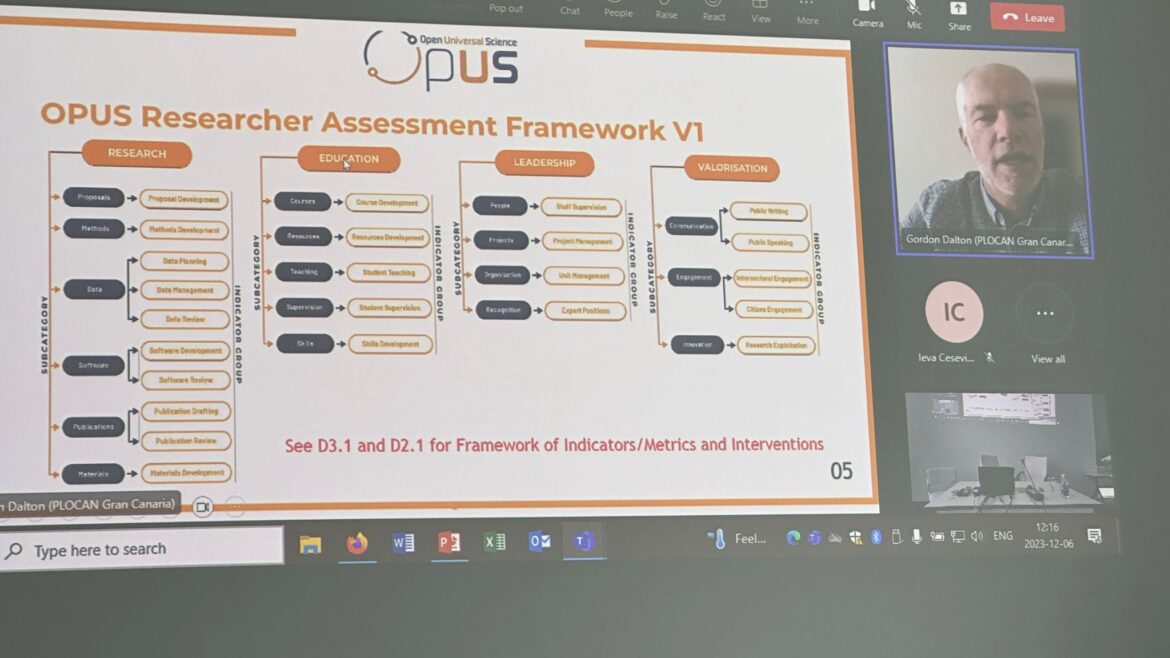
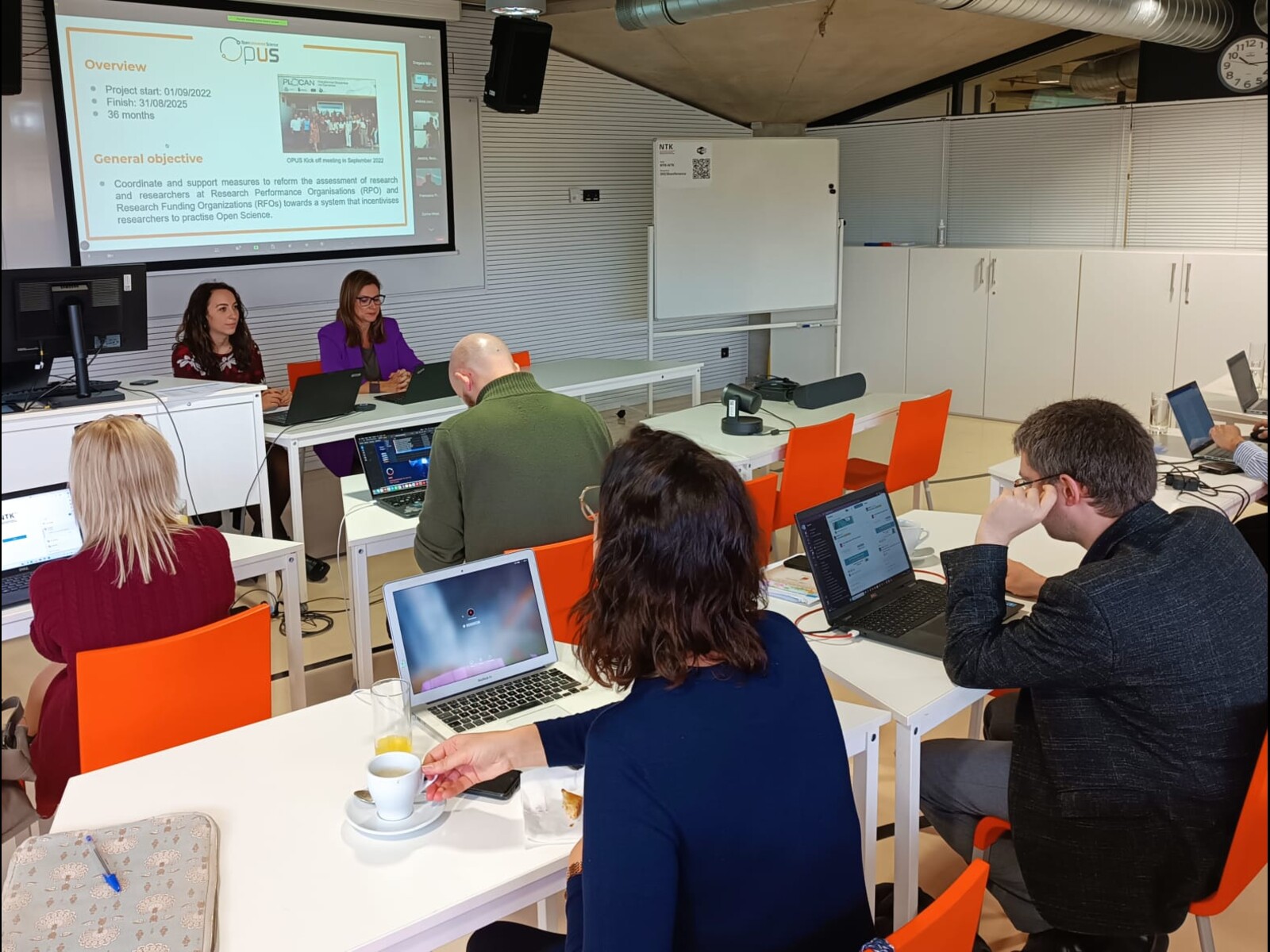
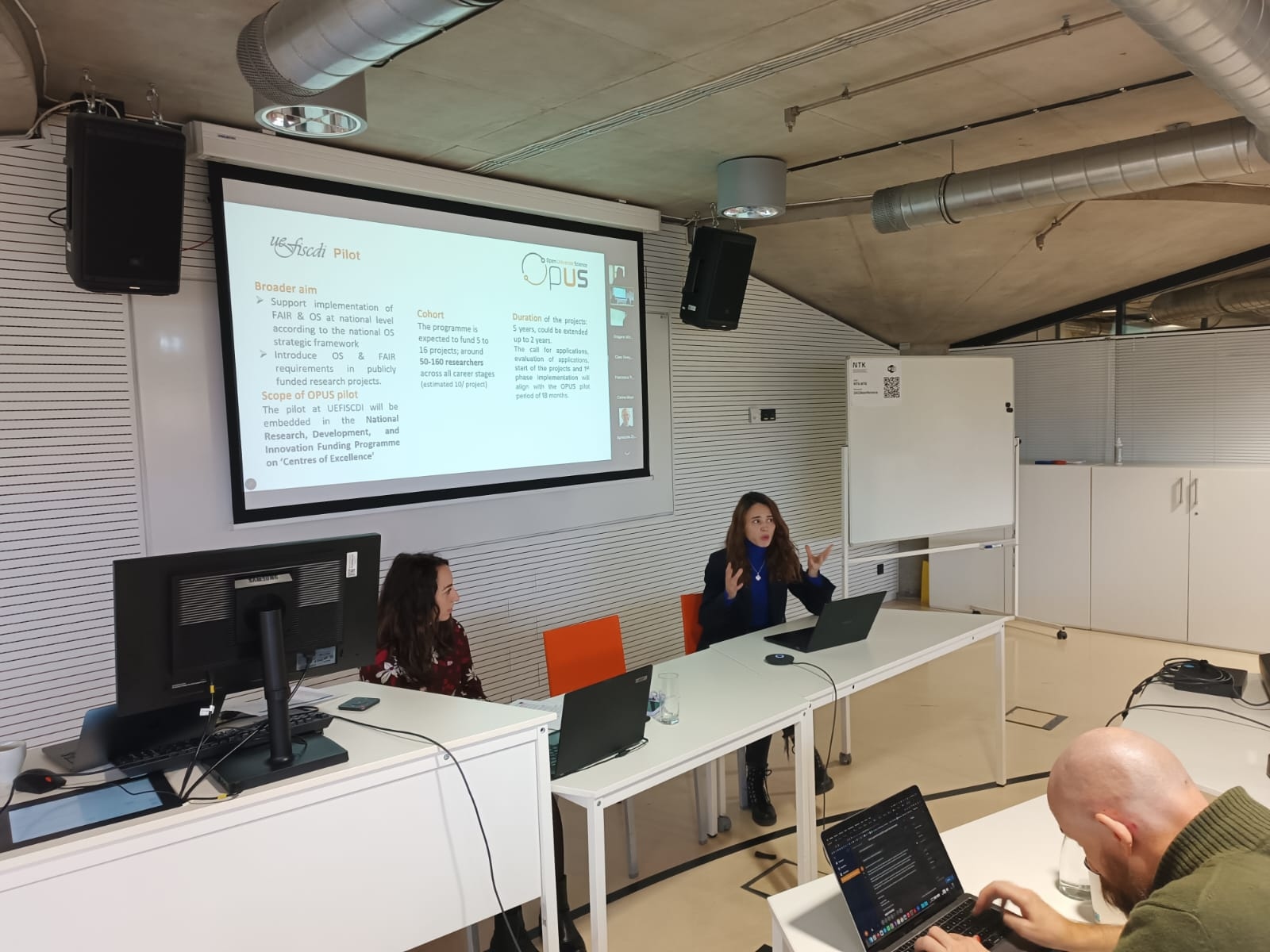
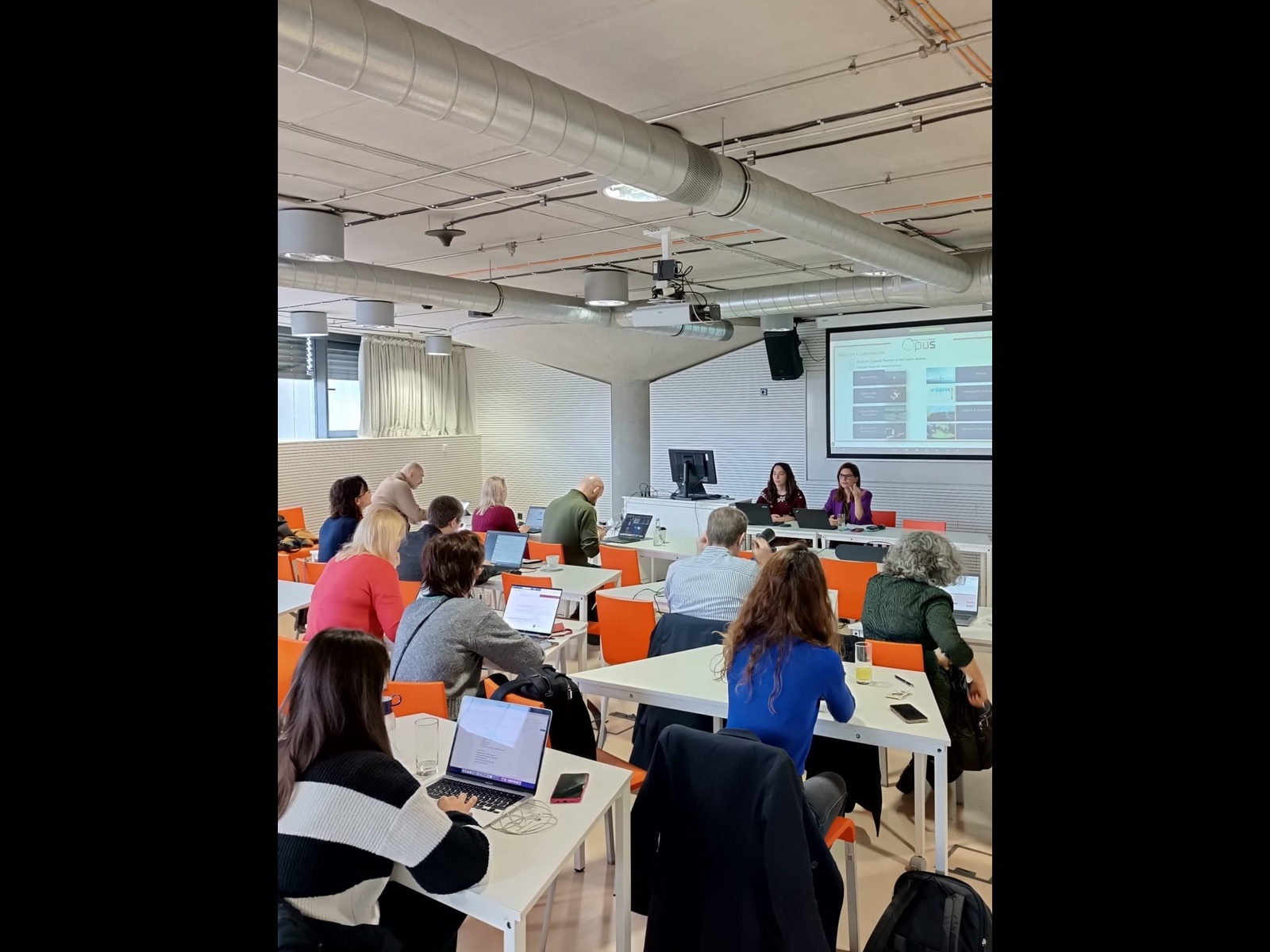
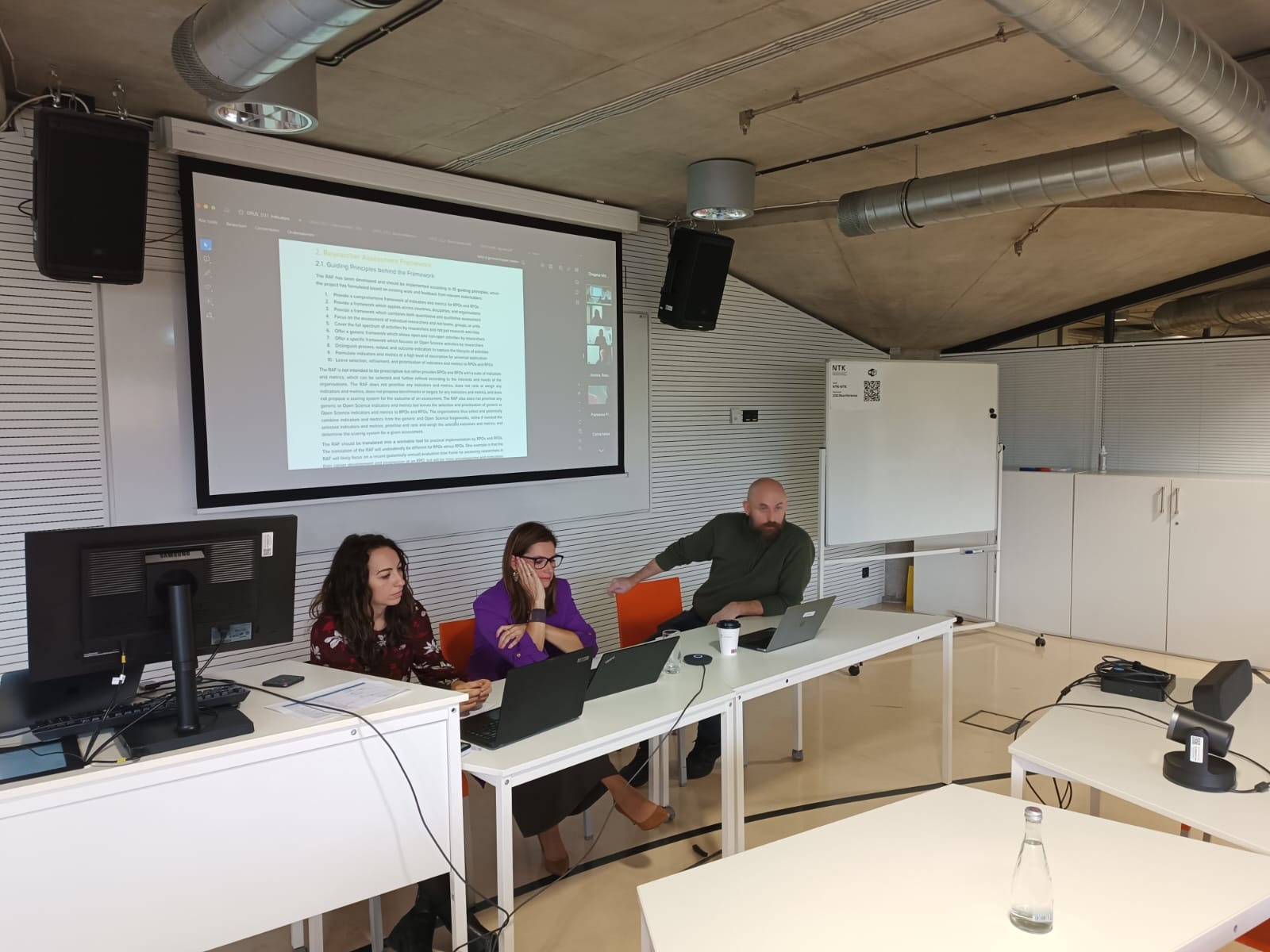
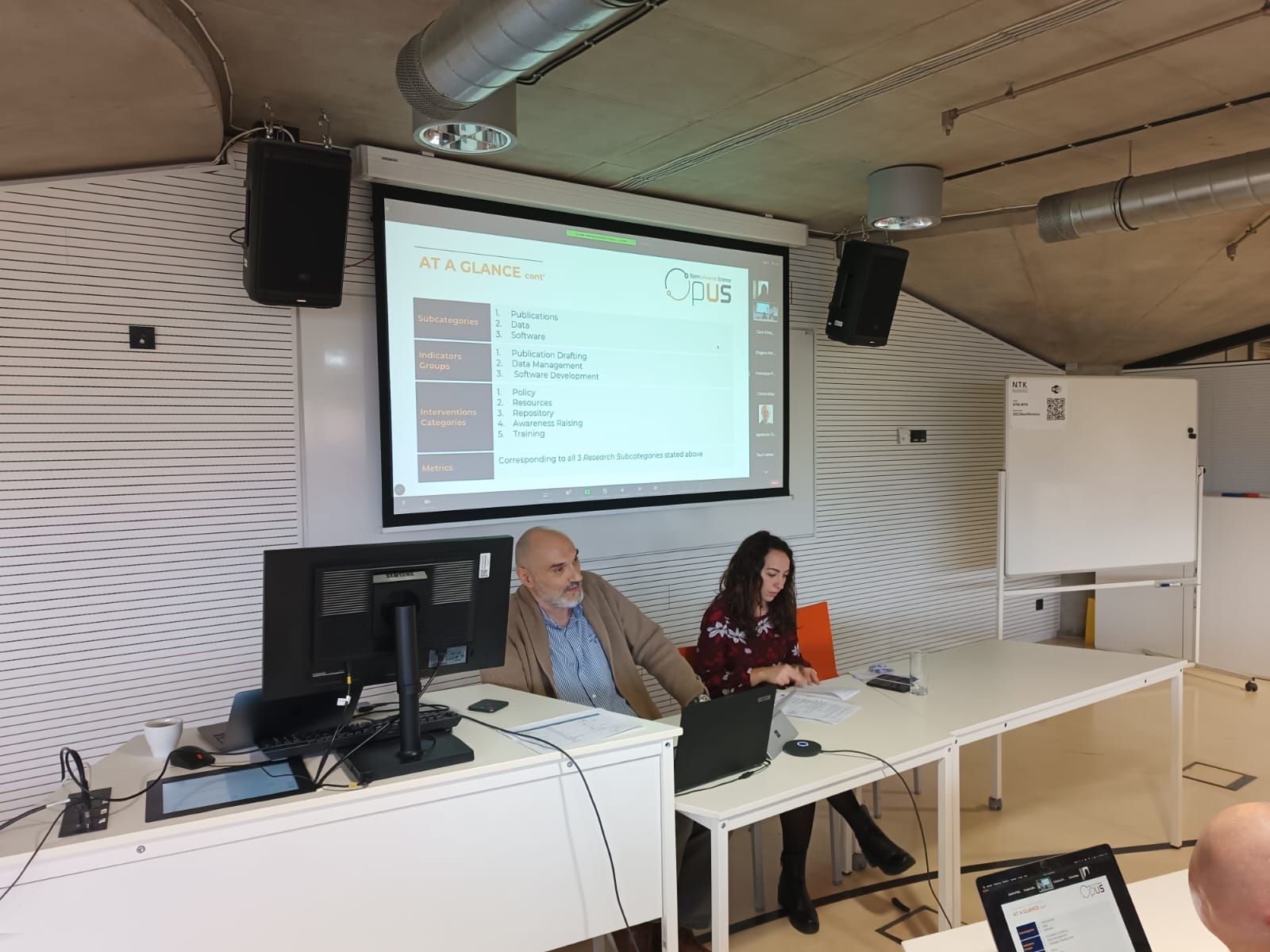
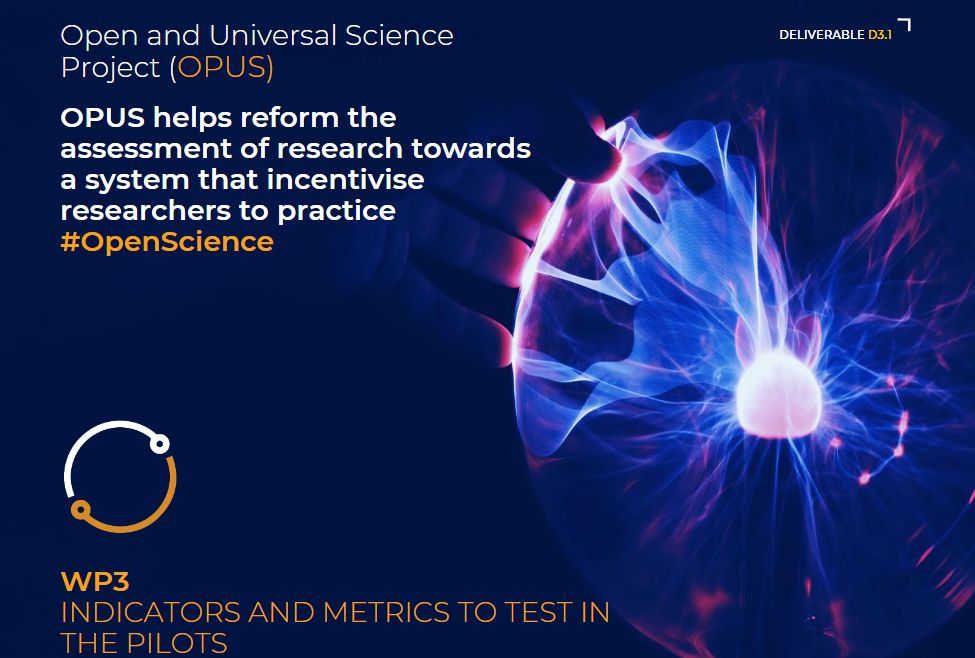
Gareth O’Neill, Principal Consultant on Open Science at Technopolis Group Belgium (TGB), a partner in the OPUS project, presented the Researcher Assessment Framework at the NRFU Council meeting on March 28, 2024.

This framework, developed collaboratively within the OPUS project, aims to redefine standards and methodologies for evaluating researchers in the scientific community. The initial draft includes a comprehensive set of indicators covering various researcher activities, with a focus on Open Science. The draft is openly accessible online in the OPUS Project Zenodo Community

The NRFU Council meeting provides a vital platform for discussions on research standards and practices. Discussion of the OPUS Researcher Assessment Framework will inform the NRFU Council’s perspectives and potential initiatives, potentially contributing to research assessment reform in Ukraine. Continued engagement with stakeholders and consultations with the research community will refine the framework further.
Contributions of early-career researchers to reforming research assessment
Contributions of early-career researchers to reforming research assessment 845 630 Open and Universal Science (OPUS) Project

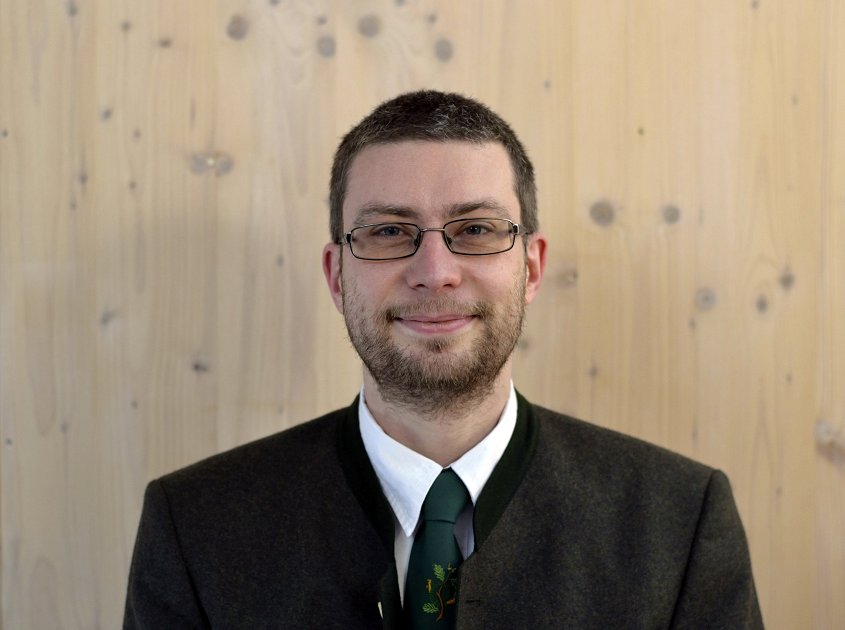
Sebastian Dahle from Eurodoc (an OPUS partner) will present on “Contributions of early-career researchers to reforming research assessment via OPUS, SECURE, and CoARA” at the 11th UNICA Scholarly Communication Seminar!

The 11th UNICA Scholarly Communication Seminar, “Open Science and Academic Libraries: Organisational Challenges in an Evolving Research Landscape,” will be kindly hosted by the University of Ljubljana22-24 April 2024.

About the Seminar

Universities have to address Horizon Europe Open Science policy, legislation updates and policies in the EU Member States, transformative agreements, diamond open access publishing, infrastructures, and other aspects of Open Science. Together with their libraries, they are facing organisational challenges that increasingly involve international environments and cooperation.

The seminar will focus on sharing Open Science good practices related to the management of academic libraries, the role of European Universities alliances, and the reform of research assessment:

  • How can universities and academic libraries best manage Open Science services to support their communities?
  • What are the most significant Open Science initiatives developed within the European Universities alliances in which UNICA member universities are involved?
  • How will COARA and the new research assessment model in the EU help drive Open Science?

Participation is free (no registration fee applies) and open to both UNICA member universities and non-UNICA institutions. 

See more!

OPUS at the MCAA Annual Conference 2024
OPUS at the MCAA Annual Conference 2024 768 1024 Open and Universal Science (OPUS) Project

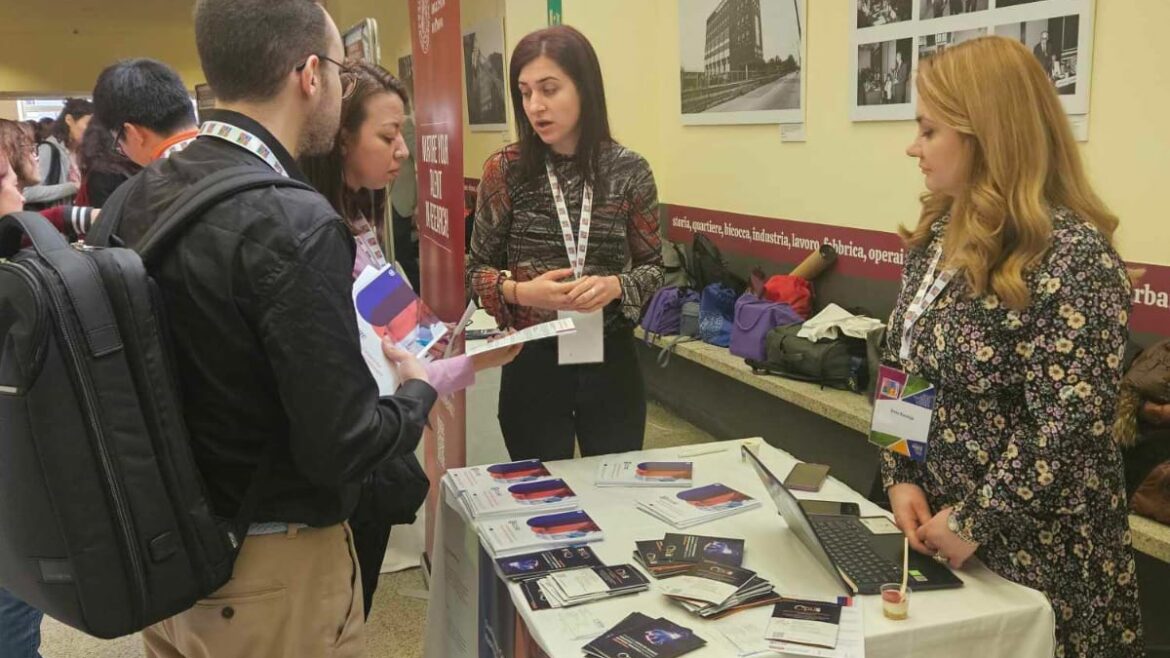
OPUS team members Brian Cahill, Gareth O’Neill, and Clare Viney presented the project’s progress in reforming research assessment to incentivise Open Science practices at the 2024 Annual Conference Marie Curie Alumni Association (MCAA).
The 2024 annual conference and General Assembly of the Marie Curie Alumni Association (MCAA) took place at the University of Milano-Bicocca in Milano, Italy, on 14-16 March 2024. The theme of the conference is 10 Years of MCAA: Past, Present & Future.

The MCAA community brought together researchers from all career stages and scientific disciplines, MSCA project managers and stakeholders. They are encouraging networking and cooperation, making the MCAA a forum of debate between researchers and with the society.

The programme of high-level panels was complemented by training sessions, networking opportunities, and a showcase of the engagement and excellence of MCAA members.

Valuing and Rewarding Open Science in Research Assessment: Insights from the MCAA Annual Conference 2024

How can open science practices be properly recognised and rewarded when evaluating research and researchers? What role do open science activities play in assessment, and which initiatives are currently underway? Where can examples of best practice be found? These central questions were explored by Brian Cahill, Lisanna Paladin, Sam Hall, and Gareth O’Neill in a dedicated session at the MCAA Annual Conference 2024.

The Evolution of Research Assessment

As the conference marked a decade of the Marie Curie Alumni Association (MCAA), Brian Cahill began the session with an overview of policy developments in research assessment over recent years. A notable milestone was the Declaration on Sustainable Researcher Careers, a product of joint efforts between MCAA and EuroDoc, led by Gábor Kismihók in May 2019. This was swiftly followed by the launch of the NewHoRRIzon project in 2019, which examined how to establish sustainable researcher careers, implement career management services, provide training in transferable skills, and foster networking opportunities both within and beyond academia.

NewHoRRIzon led to a policy brief outlining the integration of responsible research and innovation practices in MSCA grants under Horizon 2020. The MCAA played a crucial part in establishing new evaluation criteria for the MSCA call, modernising and broadening the definition of excellence, and delivering training across multiple dimensions of research. Since then, MSCA grants have actively supported knowledge exchange and the development of communities of practice, promoting diverse and inclusive forms of excellence.

The OPUS Project: Advancing Open Science Assessment

This collective endeavour laid the foundations for the Open and Universal Science project (OPUS), which commenced in 2022, with significant involvement from the MCAA. OPUS aims to reform how research and researchers are assessed, moving towards a system that incentivises and rewards the adoption of open science. The project focuses on the development of indicators and interventions to support open science.

Gareth O’Neill, one of the panellists, elaborated, “Research assessment should centre on researchers’ activities and outputs. Fundamental principles for assessment involve redefining and developing new sets of indicators and priorities, covering the full spectrum of research activity, which should be applicable across nations, disciplines, and institutions.”
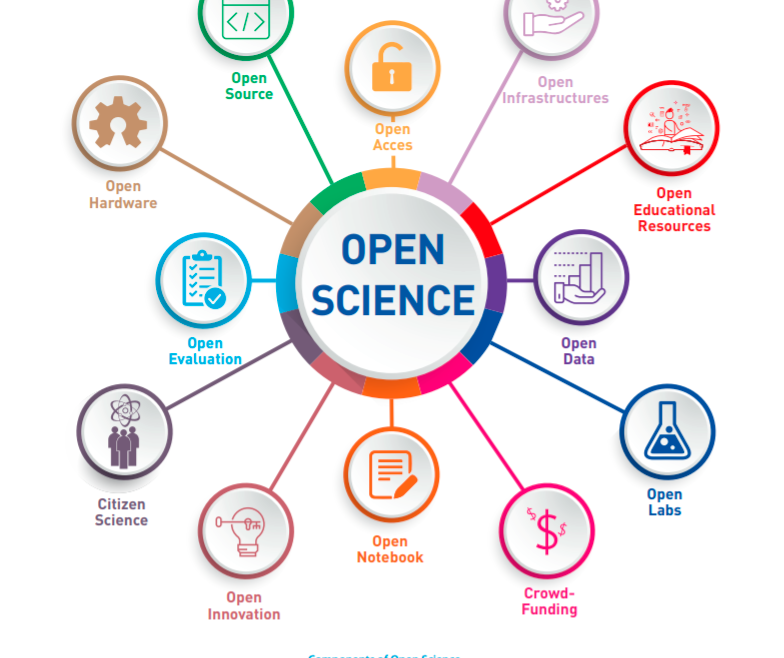
Under OPUS, open science encompasses open access to research outputs, early and open sharing of research, open peer review, reproducibility, and the involvement of all stakeholders in co-creation.

Leading Initiatives and EU Practice

A number of key initiatives now exist across Europe and globally—the most prominent being the Coalition for Advancing Research Assessment (CoARA), driving significant reform in this area. Sam Hall, representing the European Commission, discussed open research projects and their impact on research assessment. He outlined CoARA’s recommended approaches: prioritising qualitative peer review supported by quantitative indicators, maintaining the highest standards of ethics and reproducibility, recognising diverse research outputs, ensuring transparency, valuing teamwork, and supporting varied profiles and career pathways for researchers.

“As a community, we can specifically support research assessment by embracing transparency, reproducibility, and genuine innovation which together enable greater recognition and citable research outputs. Utilising a range of article types can also maximise research contributions,” Sam Hall advised. He further recommended the CRediT taxonomy as an effective tool to capture the specific contributions of each author to a research publication.

See more here.

Two Horizon Europe-funded projects: OPUS and SECURE presented in Croatia
Two Horizon Europe-funded projects: OPUS and SECURE presented in Croatia 1024 498 Open and Universal Science (OPUS) Project

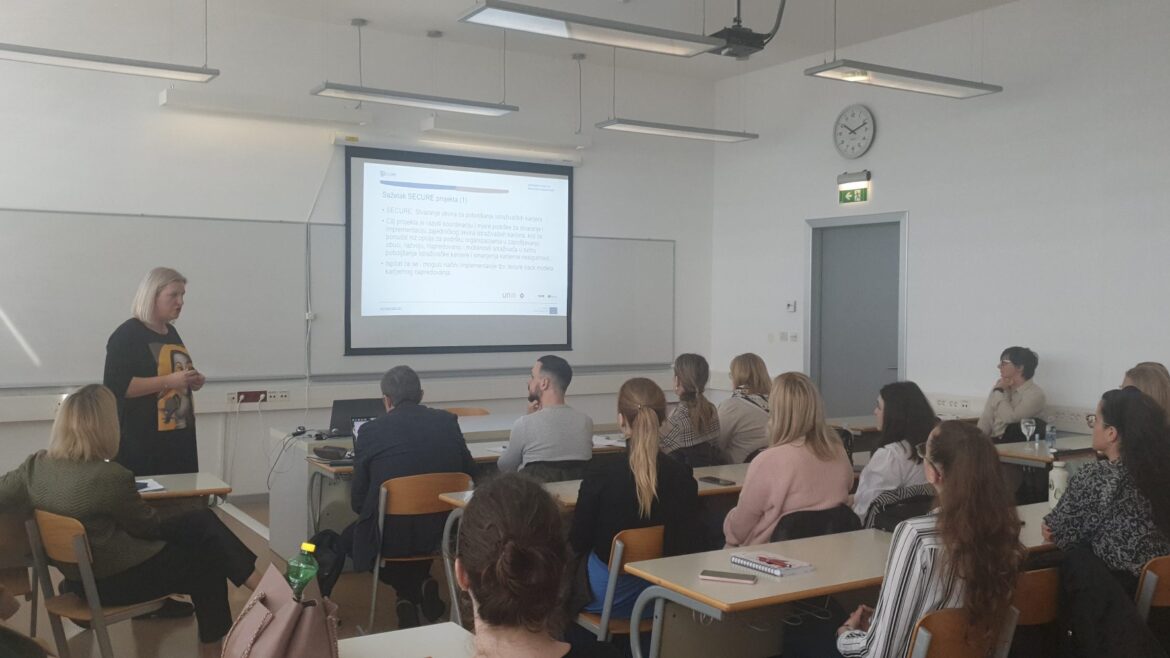
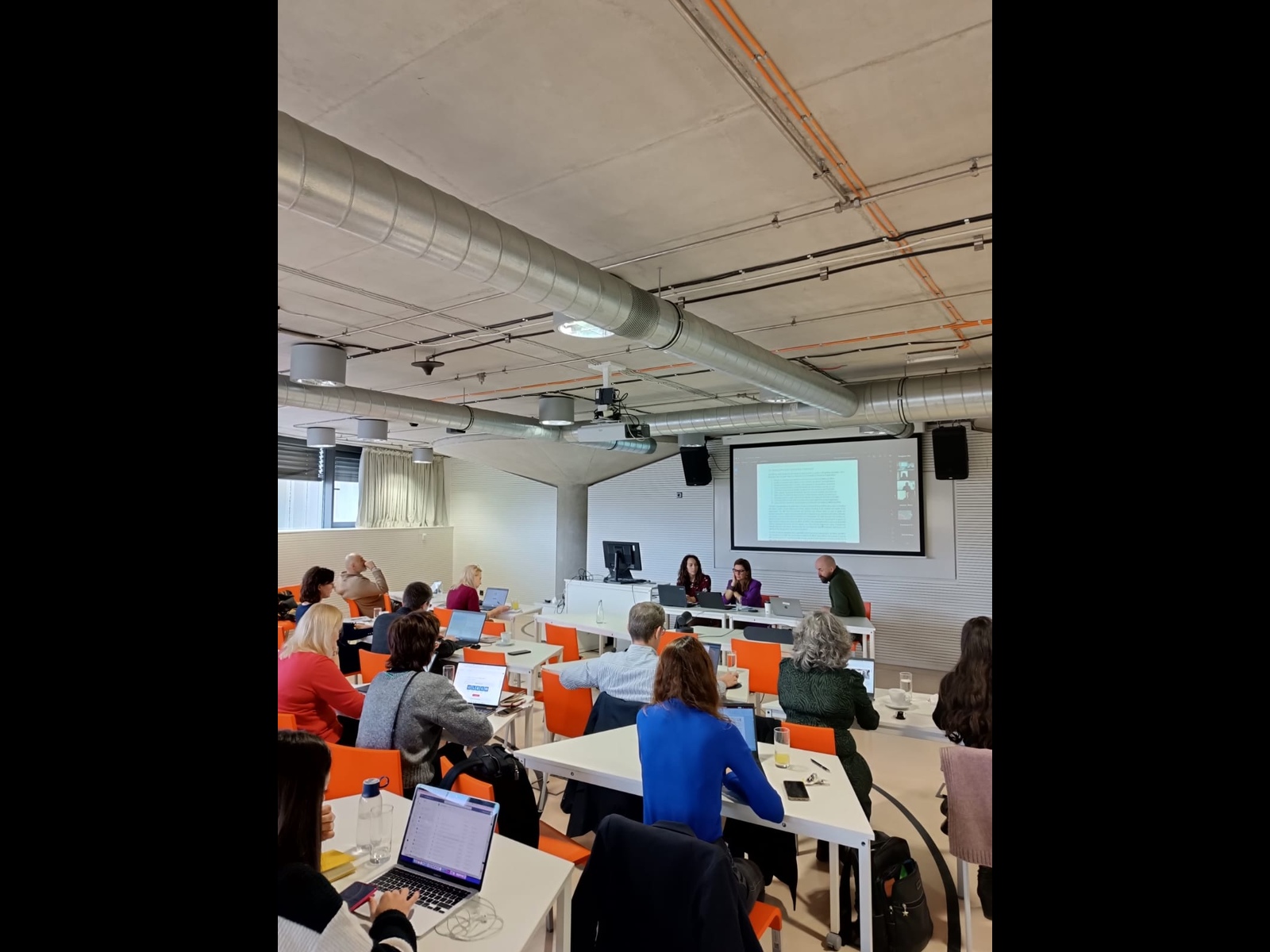
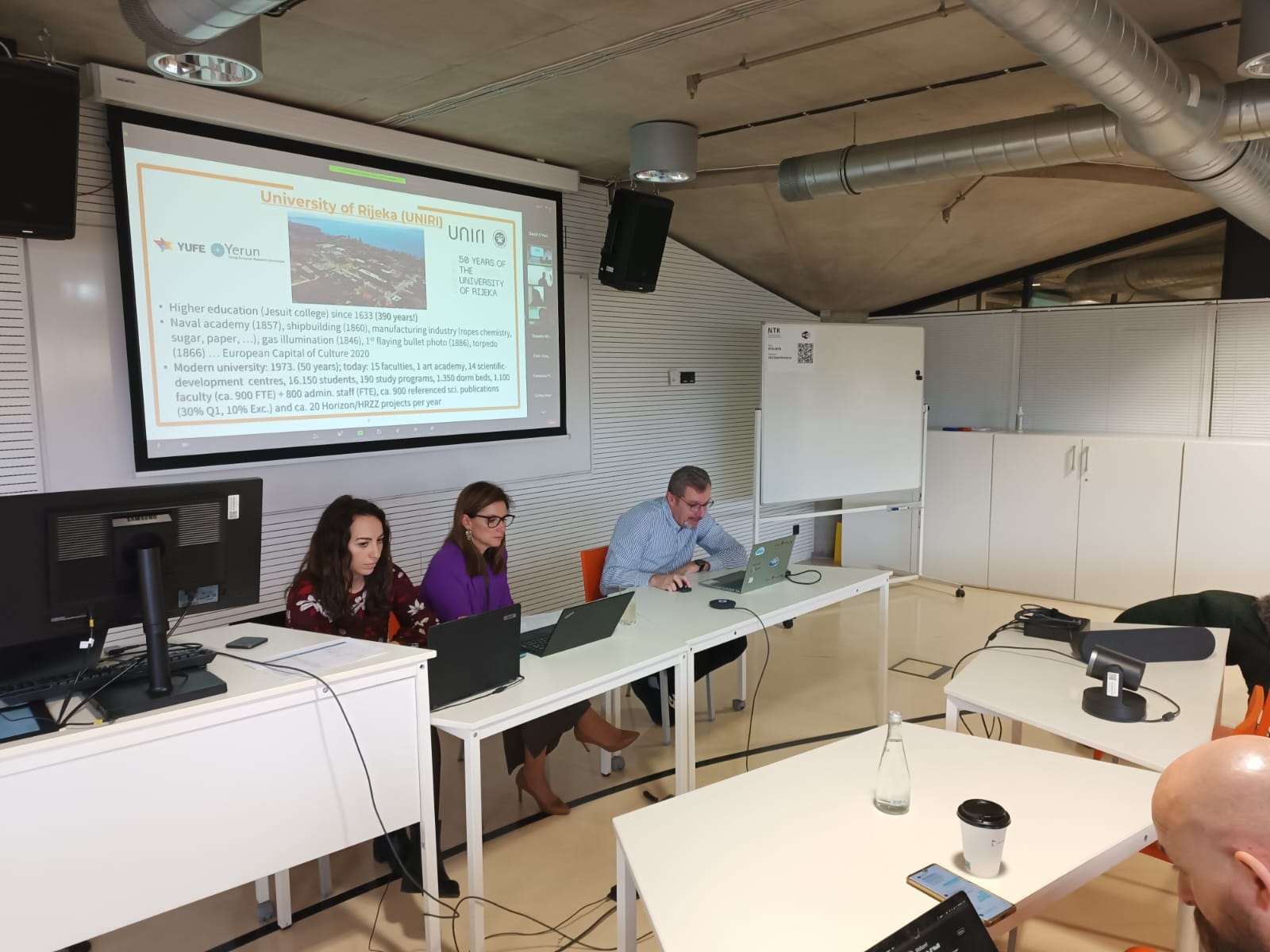
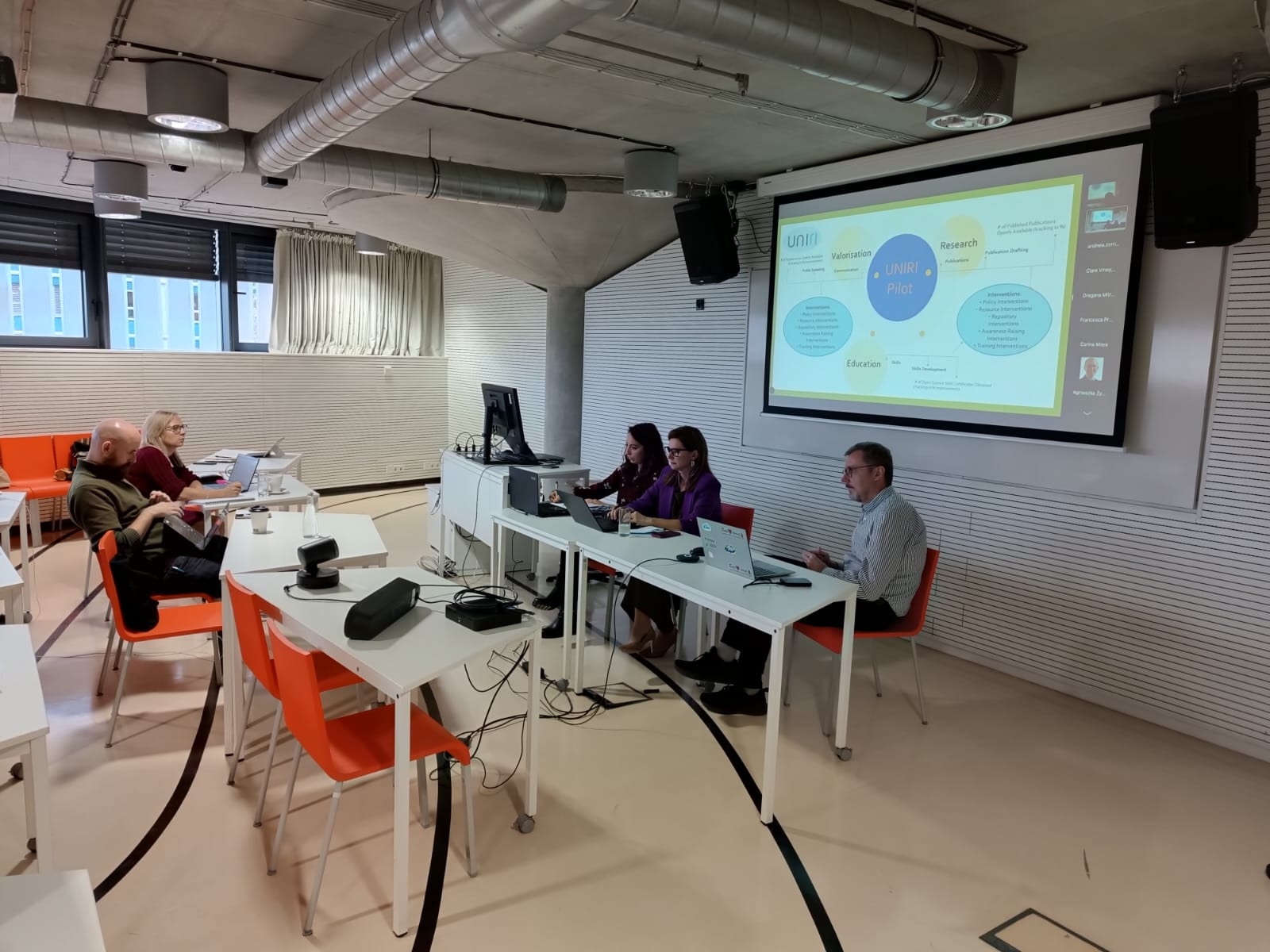
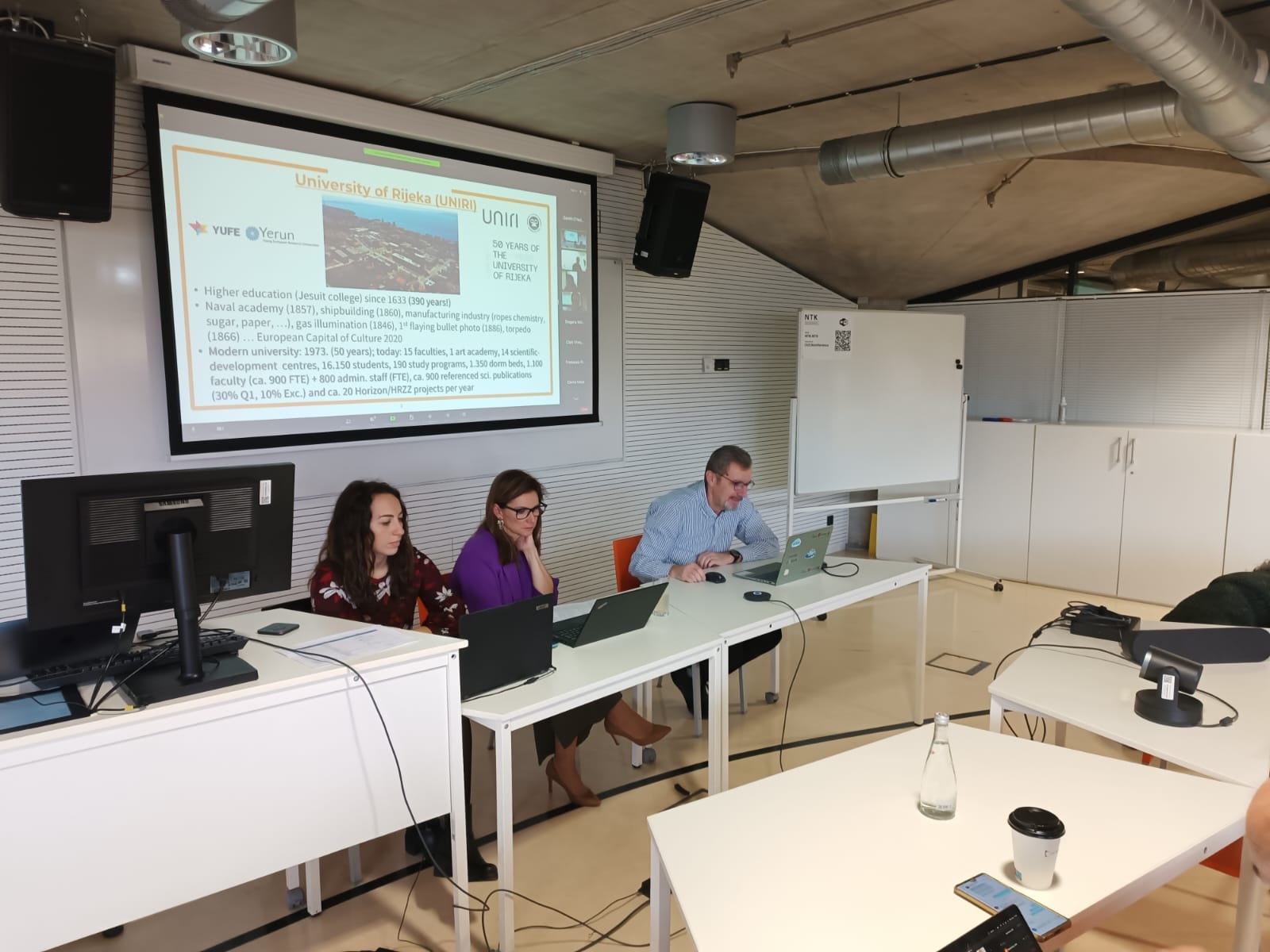
On Friday, 1 March 2024, an event was held at the University of Rijeka Campus to present activities carried out within the framework of two Horizon Europe-funded projects, Open Universal Science (OPUS) and Sustainable Careers for Researcher Empowerment (SECURE).

Nataša Jakominić Marot, MBA, Head of the University Centre for Research and Innovation, opened the event by outlining its purpose alongside the aims and activities of the OPUS and SECURE projects. She highlighted the importance of the OPUS project, which is developing coordination and support measures for reforming the assessment of research and researchers. Its goal is to establish a system that encourages and rewards researchers for adopting open science practices, as well as developing transferable skills such as communication, team leadership, and management.

As she emphasised, projects like SECURE also play a crucial role in creating frameworks to improve research careers. A further focus of this project is supporting organisations in the recruitment, training, development, progression, and international and intersectoral mobility of researchers, with the aim of reducing career insecurity.

Professor Dr Saša Zelenika, Vice-Rector for Strategic Projects, pointed out the obvious challenges presented by the current structure for assessing scientific activity, which raises legitimate questions about the need for reform in research evaluation. Indeed, evaluation is a key process for ensuring quality, not only guaranteeing the creation of new knowledge and public accountability, but also promoting economic and societal progress. However, the present system of assessment is based on the quantity and place of publication of scientific papers, rather than on the quality and usefulness of the research itself.

Ivana Dorotić Malič from the University Library, presenting OPUS activities of the Centre for Open Science and Scientific Information Management, highlighted, among other things, the importance of research into how open science impacts modes of scientific communication and how access to scientific information can be supported through archives and other tools.

Associate Professor Dr Vedrana Mikulić Crnković, Head of the Centre for the Popularisation and Promotion of Science, drew attention to the significance of sharing knowledge and communication, which are increasingly important aspects of modern society in the digital age. In this context, she presented OPUS activities, particularly emphasising the virtual SOCRI as an innovative platform for open scientific communication, designed to stimulate the exchange of best practices, experiences, ideas, and knowledge among scientists worldwide. This platform represents an innovative solution for fostering open scientific dialogue and strengthening the links between researchers and the wider public.

The event concluded with a presentation of OPUS activities by colleagues from the Faculty of Law, where Dr Dejana Golenko and Professor Dr Ivana Kunda outlined the faculty’s activities focusing on open science. They highlighted the views of researchers and information specialists, who believe that e-publishing, online dissemination, databases, and bibliometric indicators will facilitate faster and free dissemination of scientific information.

Learn More

OPUS Project Team Members: FAIR Data Training Course with EMBRC
OPUS Project Team Members: FAIR Data Training Course with EMBRC 990 674 Open and Universal Science (OPUS) Project

Two key members of the OPUS project, Corina Moya Falcon and Silvia Martín from PLOCAN, are actively participating in an exclusive online FAIR training course organised by the European Marine Biological Resource Centre (EMBRC), January 23-25, 2024. The course, spanning today and tomorrow, aims to equip marine biologists with the essential skills to make their data Findable, Accessible, Interoperable, and Re-usable (FAIR).

PLOCAN, as the coordinator of the OPUS project, has taken the initiative to further enhance the capabilities of its team members by enrolling them in this practical and hands-on course. The training, hosted both at the InnovOcean Campus in Oostende, Belgium, and virtually, is focused on empowering marine scientists with the knowledge and tools necessary to optimise the longevity and reach of their data.

The EMBRC course dives deep into the significance of making data FAIR, emphasising the broader audience and extended lifespan that FAIR data can achieve. Participants will be guided through the intricacies of ensuring data is not only accessible to specialists but also to non-specialists. The course will cover the essential aspects of making data Findable, Accessible, Interoperable, and Reusable through a series of practical exercises.

By actively participating in this course, the OPUS team members aim to leverage their newfound knowledge and skills to enhance the quality and impact of the OPUS project.

OPUS Featured at ISC’s Open Science Roundup in December 2023
OPUS Featured at ISC’s Open Science Roundup in December 2023 784 732 Open and Universal Science (OPUS) Project

In the latest edition of our Open Science roundup, the International Science Council and Moumita Koley brings us a celebration of the conclusion of the Year of Open Science and highlights the OPUS project as a key player in reshaping the research landscape.

Explore a thought-provoking editorial discussing the OPUS project and its substantial influence in promoting Open Science practices by clicking here.

The OPUS project, initiated to establish a framework recognising and rewarding Open Science practices, aims to revolutionise how research and researchers are evaluated at Research Performing Organisations (RPOs) and Research Funding Organisations (RFOs). Through its mission, OPUS encourages researchers to engage in practices such as sharing research early, participating in open peer review, and ensuring the reproducibility of results.

Led by The Oceanic Platform of the Canary Islands (PLOCAN) and executed by a consortium of eighteen organizations, OPUS is making waves as a catalyst for change in the world of Open Science. It goes beyond being just a project, actively influencing how research is perceived, evaluated, and rewarded within the Open Science landscape.

Financed by the European Union through a GRANT AGREEMENT with the European Research Executive Agency (REA), OPUS is positioned as a transformative force in the Open Science era. Project number: 101058471.

Gordon Dalton presents OPUS Project and Future Goals at Open Science Event in Vilnius
Gordon Dalton presents OPUS Project and Future Goals at Open Science Event in Vilnius 1024 768 Open and Universal Science (OPUS) Project

Vilnius, Lithuania – Gordon Dalton, the OPUS project coordinator at PLOCAN, took the stage at the “Discover Open Science Activities in Lithuania” event today to showcase the notable achievements of the OPUS project over the past year and shed light on the future of Open Science principles.

In his presentation, Mr. Dalton not only highlighted the project’s accomplishments but also outlined a visionary path where Open Science and researcher assessment frameworks will take center stage. The OPUS team’s efforts, ranging from developing the Researcher Assessment Framework to implementing interventions, were showcased to provide a comprehensive understanding of the project’s trajectory.

OPUS, in collaboration with three Research Performing Organizations (RPOs) and two Research Funding Organizations (RFOs), is actively piloting the implementation of the Research Assessment Framework. The initiative places a strong emphasis on practically integrating Open Science Principles within these pilot organizations, with the aim of influencing other institutions to provide incentives and rewards for researchers embracing Open Science.

During the presentation, Gordon Dalton delved into the complexity of the Researcher Assessment Framework and interventions, setting the stage for the tangible impact that OPUS aspires to make in the academic landscape.

One noteworthy aspect of OPUS is its commitment to action plans and mutual learning exercises. The project is executing testing phases for indicators and interventions within its pilot organizations, a process that will be detailed in Deliverable D4.3 – “Action Plans to Implement the Pilots – Final.” This strategic approach ensures a systematic implementation of the Research Assessment Framework, with OPUS taking on a direct role in providing training and resources while closely monitoring progress and offering ongoing support.

OPUS is committed to advancing Open Science and reshaping academia. The project’s teamwork and hands-on initiatives highlight its dedication to turning Open Science principles into action, benefiting researchers and the wider scientific community.

KRECon 2023: The Future of Research(er) Assessment
KRECon 2023: The Future of Research(er) Assessment 1024 683 Open and Universal Science (OPUS) Project

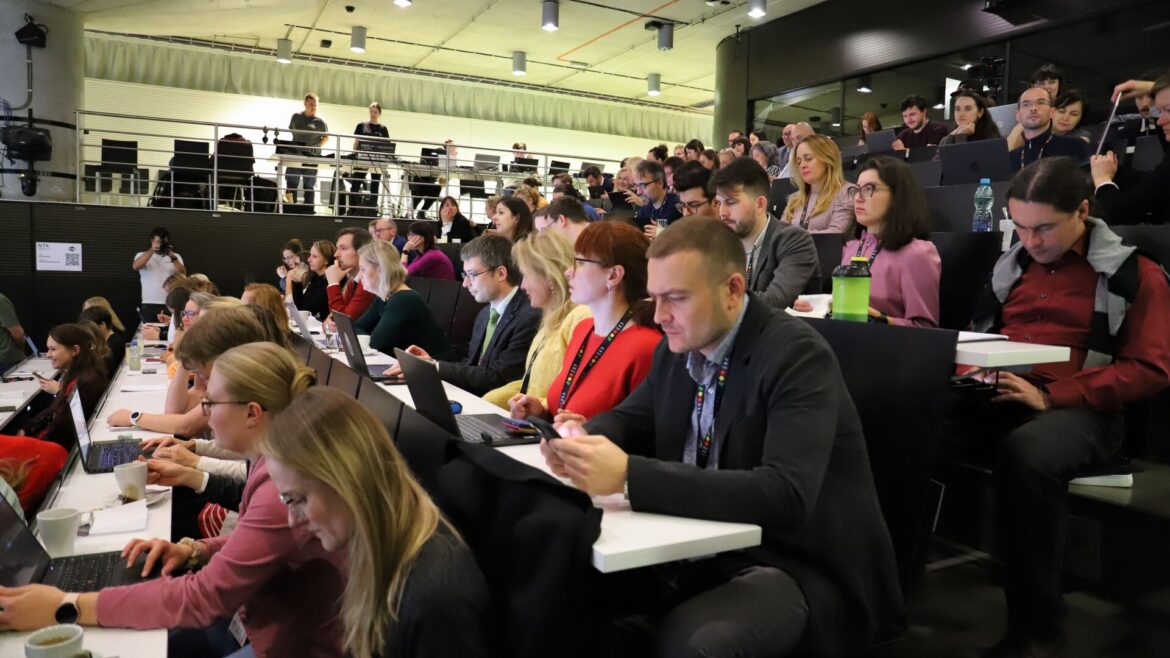
On November 9, 2023, the OPUS Project team joined a vibrant gathering of thought leaders and reform advocates at the annual KRECon conference in Prague. Held in the National Library of Technology, KRECon (Knowledge, Research, Education Conference) has been a cornerstone event since 2010, offering a bold platform for discussing timely and often provocative topics shaping higher education and R&D policy.

This year’s edition “The Future of Research(er) Assessment” was focused squarely on transforming how we evaluate research and researchers. The agenda featured three core sessions on research assessment, research careers, and grant evaluation, capped by a panel discussion envisioning the next decade of researcher evaluation.

OPUS made a strong impression during the pre-conference workshops, where Gareth O’Neill and Emma Day introduced the OPUS Researcher Assessment Framework and outlined innovative interventions for more transparent, inclusive evaluation systems. Their presentation laid the groundwork for deeper reflections throughout the day.

During Session #2: Researcher Career Assessment, several OPUS team members from pilot organisations stepped into the spotlight:

Saša Zelenika delivered a thought-provoking talk titled “Quo vadis, researcher career assessment?”, challenging existing paradigms and calling for systems that support diverse academic pathways rather than rigid hierarchies.

Video recording, Saša Zelenika – Quo vadis, researcher career assessment? ppt

Isabel Rocha offered valuable institutional insights in her presentation “Research Assessment and Research Careers – NOVA’s Experience”, sharing lessons learnt from implementing progressive practices at NOVA University. Video recording

Representing the researcher voice, Brian Cahill from the Marie Curie Alumni Association (MCAA) gave a compelling talk on “Researcher Perspective of Research Assessment”, grounding the discussion in lived experiences and everyday realities of researchers navigating career development.

Video recording

Together, these contributions emphasised a shared commitment to meaningful change, one that places researchers, not just metrics, at the heart of assessment reform.

Open Discussion with speakers and guests: Jan Konvalinka and Martin Loebl

Video recording

As the OPUS Project continues to support co-creation of assessment practices across Europe, KRECon 2023 served as both a sounding board and a springboard—amplifying the call for responsible, values-driven research assessment and reimagined career pathways for the next generation of scholars.

Session #3 Research Grant Assessment

Alina Irimia – Research assessment in the transition to OS – national and funder perspective

Video recording

Petr Baldrian – Grant assessment: Lessons learned, open questions and future directions

Video recording

Sebastian Dahle – Research grant assessment for sustainable researcher careers

Video recording

Open Discussion with speakers and guests: Martin Bunček and Jana Klánová

Video recording

See more resources

Pre-Conference workshops

Gareth O’Neill, Emma Day – Reforming Research(er) Assessment

Melita Kovačević – Research productivity and the demands on PhD researchers and supervisors

Conference Opening and Welcome

Martin Svoboda

Video recording

Pavel Doleček

Video recording

Radka Wildová

Video recording

Session #1 Reforming Research Assessment

Jean-Emmanuel Faure – Reforming research assessment: Rationale, progress made and role of the European Commission

Video recording

Luisa Henriques – Possible impacts of the new approaches to research assessment in the European research careers framework

Video recording

Tomáš Polívka – Research Assessment in Czech Republic: Getting better but not there yet

Video recording

Open Discussion with speakers and guests: Pavel Doleček and Šárka Pospíšilová

Video recording

Panel Discussion: The Future of Research(er) Assessment

Clifford Tatum, Reda Cimmperman, Melita Kovačević, Jiří Homola and Martin Loebl

Video recording

Streams and Photos

OPUS Annual General Meeting 2023: Paving the Way for the Future of Open Science and Research Assessment
OPUS Annual General Meeting 2023: Paving the Way for the Future of Open Science and Research Assessment 1024 768 Open and Universal Science (OPUS) Project

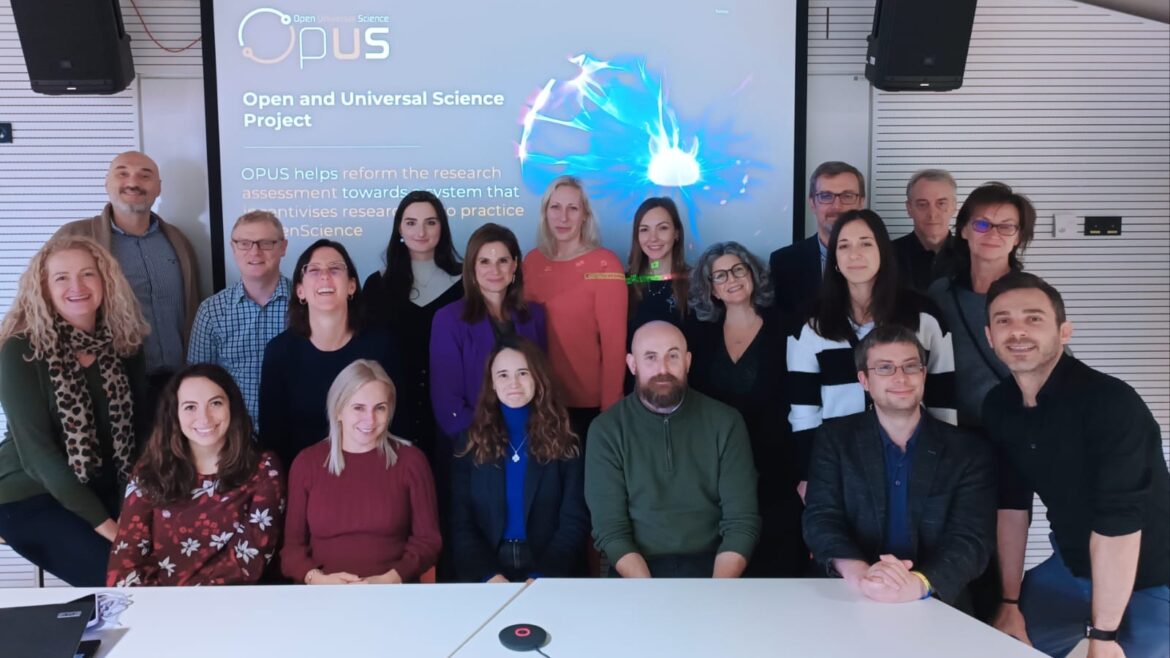
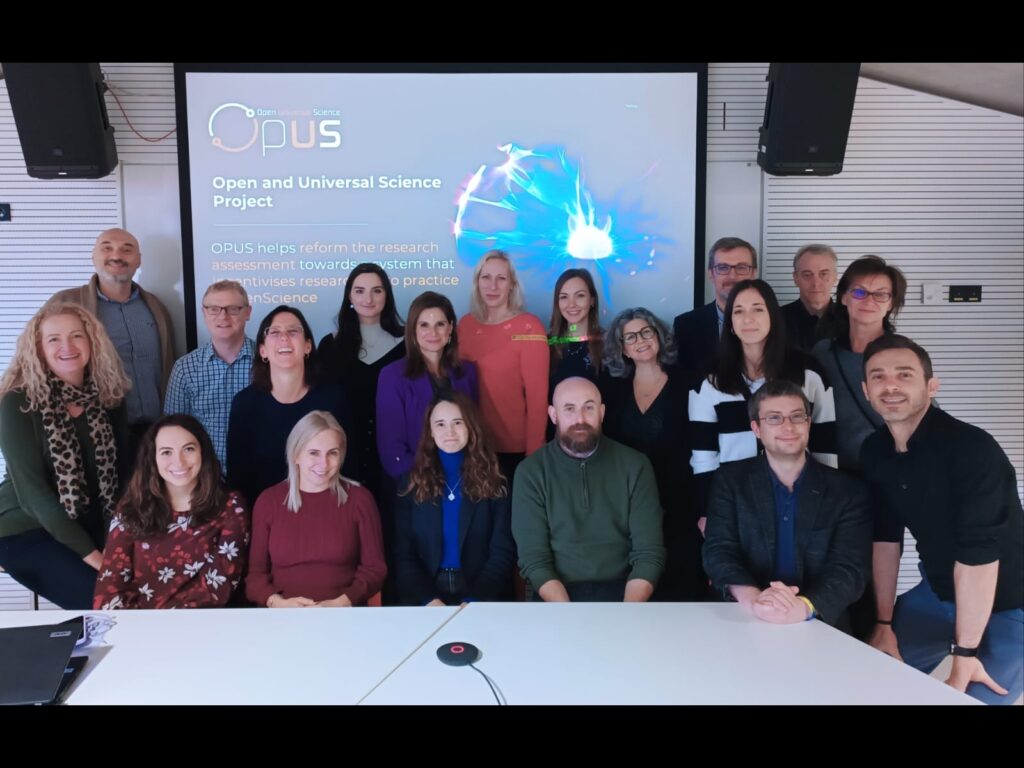
The OPUS team, a collaborative effort in the Open Science field, convened for its Annual General Meeting on November 8, 2023, both physically in Prague and virtually. The OPUS Annual General Meeting showcased not only the achievements of the past year but also set the stage for a future where Open Science principles and researcher assessment frameworks take center stage.
Leaders from each work package showcased their achievements in the project’s first year and laid out a roadmap for the next two years.

OPUS collaborates directly with three Research Performing Organizations (RPOs) and two Research Funding Organizations (RFOs) to pilot the implementation of the Research Assessment Framework. The initiative also focuses on the practical integration of Open Science Principles in these pilot RPOs and RFOs, aiming to influence other organizations in providing rewards and incentives for researchers.

Project Overview: Year 1 Achievements
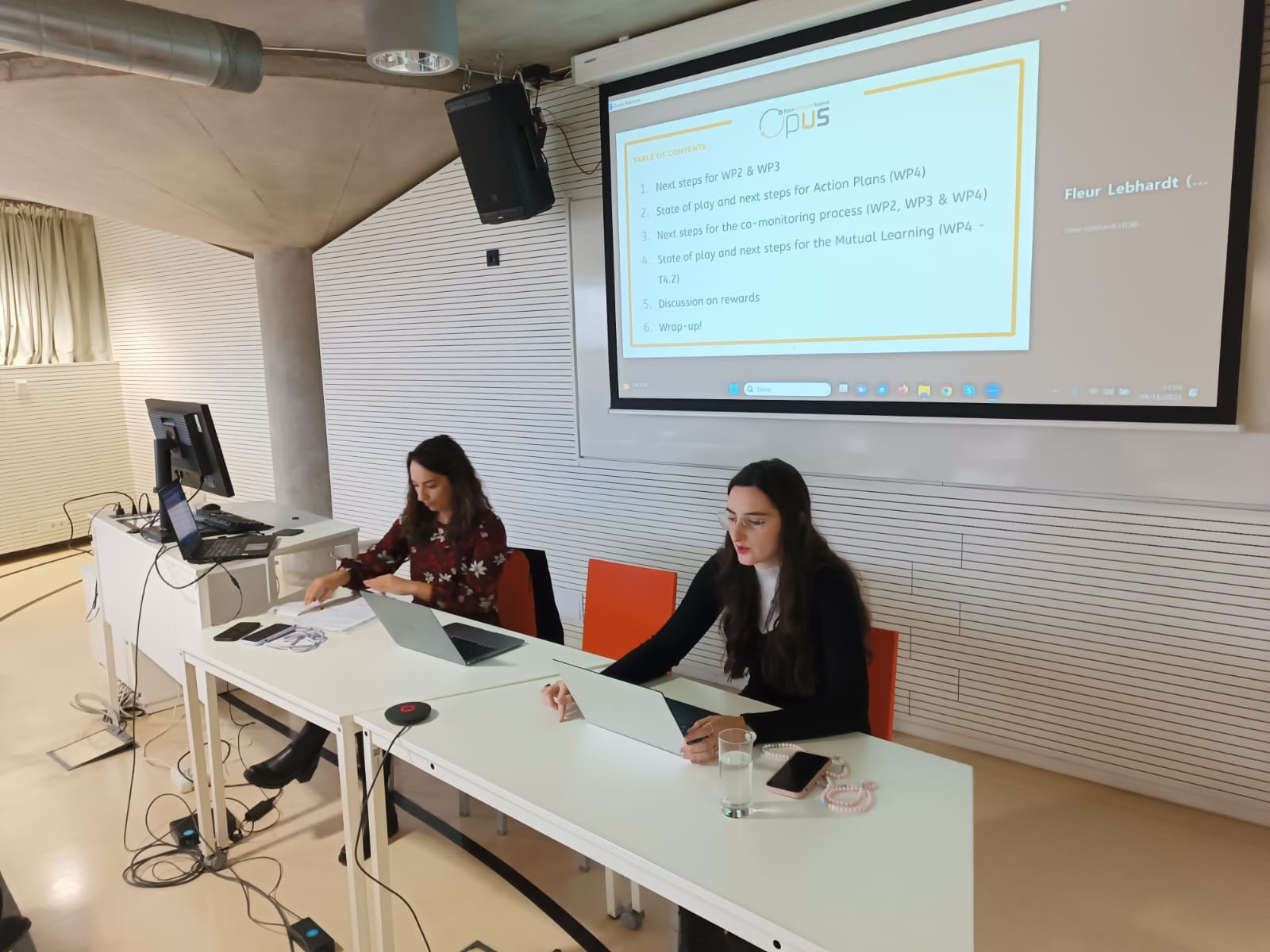
Corina Moya Falcón, Project Coordinator at PLOCAN, kicked off the meeting with an insightful overview of the OPUS project’s first year. The team’s endeavors, ranging from Researcher Assessment Framework to interventions, were highlighted, setting the stage for a comprehensive understanding of the project’s trajectory.

Researcher Assessment Framework and Interventions
Gareth O’Neill, Scientific Coordinator at TGB and Emma Day from Vitae, delved into the intricacies of the Researcher Assessment Framework and interventions. The presentations on the Proposal of Interventions and Indicators/Metrics for Open Science/Researcher Assessment laid the groundwork for the tangible impact OPUS aims to make in the academic landscape.

Pilot Organisations Launch Phase
The OPUS Pilot Organisations Launch Phase saw short presentations from NOVA, UNIRI, and UCY, providing a glimpse into the pilot actions’ initiation. The interactive session allowed for a participative Q&A, fostering engagement and collaboration.

Action Plans and Mutual Learning Exercise
The execution of testing phases for indicators and interventions within OPUS pilot organisations will be detailed in Deliverable D4.3 Action Plans to Implement the Pilots – Final..
OPUS is set to play a direct role in providing training and resources to facilitate the implementation of the Research Assessment Framework, closely monitoring progress and offering ongoing support.

Future Developments: A Glimpse into the Next Phase
Looking ahead, OPUS outlined its plans for the next phase of the project, which includes the development of a Final Policy Brief for Open Science. This document will encapsulate the project’s findings and recommendations, guiding stakeholders on how to leverage OPUS results effectively.

Another significant milestone on the horizon is the release of the Open Science Career Assessment Matrix 2 (OS-CAM2). As the primary outcome of the OPUS project, OS-CAM2 represents an updated and revised version of the Open Science Career Assessment Matrix. Building on the groundwork laid in D2.5 Interventions for Open Science (Rewards WP2 and Incentives for Researchers) and D3.5 Indicators/Metrics for Open Science (Rewards and Incentives for Researchers), the OS-CAM2 is poised to make a lasting impact on how Open Science practices are assessed and recognised.

As the project continues to evolve, the OPUS team remains committed to fostering a culture of openness, collaboration, and innovation in the research community.

OPUS at the 5th National Open Science Forum in Hungary, 25 October 2023
OPUS at the 5th National Open Science Forum in Hungary, 25 October 2023 1024 532 Open and Universal Science (OPUS) Project

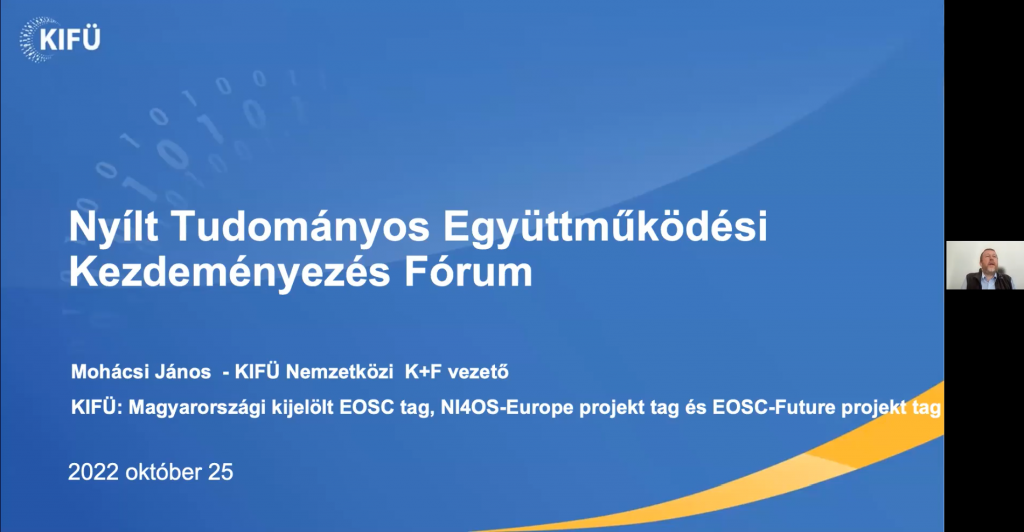
On 25 October 2023, Gareth O’Neill from TGB presented the OPUS project’s recommendations on policy, infrastructure interoperability, and researcher incentives for adopting open practices at the 5th National Open Science Forum in Hungary. Alongside developments related to the European Open Science Cloud (EOSC), national Open Science initiatives, and tools such as the NI4OS-Europe services, the forum served as a platform for knowledge exchange and stakeholder engagement.

Hungary’s Open Science Momentum

Hungary has been actively advancing Open Science initiatives throughout 2023. Notably, in October 2021, the country established a Position Paper on Open Science, driven by the National Research, Development and Innovation Office. The paper continues to gain supporters, with an increasing number of organisations endorsing it as a commitment to open research practices. Hungary also played host to the EOSC Regional Event in September, further underscoring its engagement in this field.

About the Event

The forum took place online with around 50 participants. It opened with a welcome from János Mohácsi (KIFÜ), who provided updates on the EOSC. His presentation covered the development of EOSC’s corporate design, monitoring and survey activities related to Open Science, and an introduction to the EOSC Forum. He also summarised the key outcomes of the EOSC General Assembly held earlier in the year, concluding with a forward look at expected developments in the coming years.

Following this, Judit Fazekas-Paragh highlighted the global Open Access Week, noting its focus this year on climate justice. She then presented the results of the EOSC Regional Conference, emphasising its significance in promoting the practical use of EOSC services. Further, she provided insights into the EOSC Strategic Research and Innovation Agenda (SRIA), with particular attention to the ‘New ways of Science’ section.

The final presentation was given by Chrysovalantis Constantinou, an invited speaker, who demonstrated how to benefit from NI4OS-Europe using the SexEst app. Beginning with an overview of EOSC services and the process of service onboarding, he introduced the NI4OS Catalogue and the associated Open Call. He concluded with a detailed introduction to the web application used for gender predictions, illustrating its application of machine learning technologies.

The session ended with an engaging discussion among attendees, who expressed enthusiasm for the next National Open Science Forum.

Privacy Preferences

When you visit our website, it may store information through your browser from specific services, usually in the form of cookies. Our Privacy Policy can be read here.

Here you can change your Privacy preferences. It is worth noting that blocking some types of cookies may impact your experience on our website and the services we are able to offer.

Click to enable/disable Google Analytics tracking code.
Click to enable/disable Google Fonts.
Click to enable/disable Google Maps.
Click to enable/disable video embeds.
Our website uses cookies, mainly from 3rd party services. Define your Privacy Preferences and/or agree to our use of cookies.