OPUS Final Conference: First Day Resume
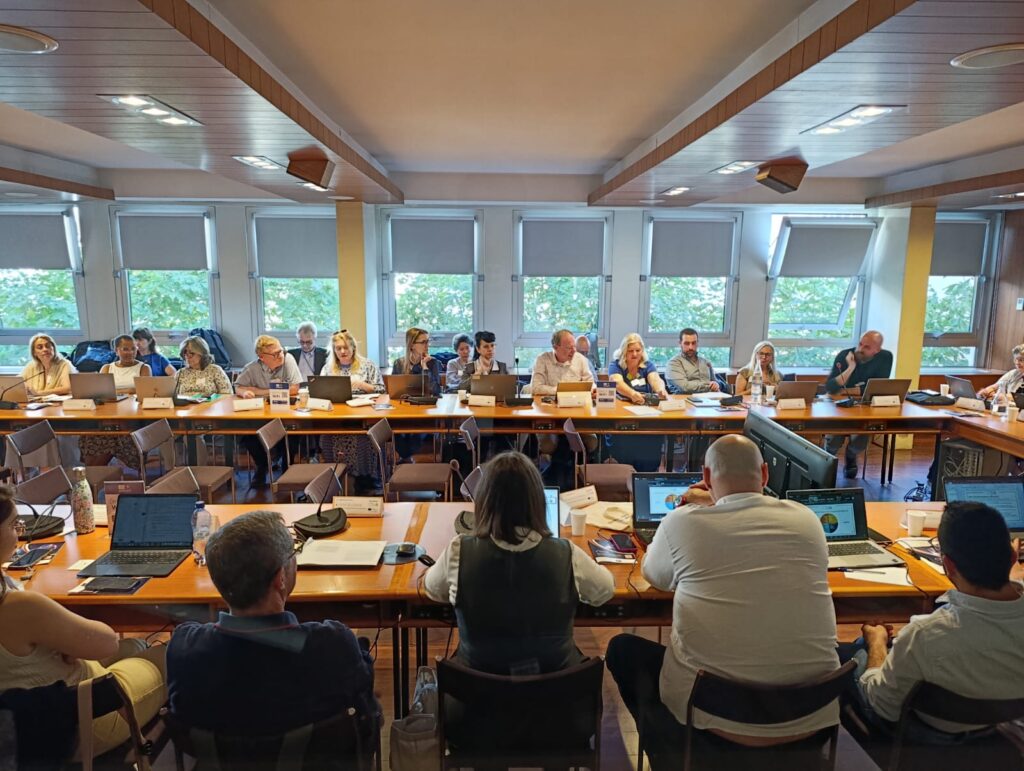
OPUS Final Conference: First Day Resume https://opusproject.eu/wp-content/uploads/2025/07/WhatsApp-Image-2025-07-09-at-1.06.14-PM-1024x771.jpeg 1024 771 Open and Universal Science (OPUS) Project https://opusproject.eu/wp-content/uploads/2025/07/WhatsApp-Image-2025-07-09-at-1.06.14-PM-1024x771.jpegOn July 9, 2025, the OPUS (Open and Universal Science Project) Consortium held its Final Conference at the UNESCO International Institute of Educational Planning (IIEP) in Paris. The event brought together around 100 attendees in-person and online including leading stakeholders from across Europe to reflect on OPUS’s ambitious journey to transform research assessment and incentivize Open Science. Throughout the day, participants explored key themes such as new indicators for assessing researchers, the Researcher Assessment Framework (RAF), pilot actions, targeted interventions, and the future trajectory of Open Science in Europe.
Speaker Highlights
Corina Moya-Falcón, OPUS Coordinator, PLOCAN
Corina Moya-Falcón opened the conference by reflecting on OPUS’s vision to revolutionize research assessment in Europe. She emphasized the consortium’s commitment to fostering a culture of openness, transparency, and collaboration. Corina detailed how OPUS had worked to bridge gaps between institutions, funders, and researchers, highlighting the value of shared learning and collective action.
In her remarks, Corina discussed the strategic approach taken by OPUS to incentivize Open Science. She described the development of new indicators and assessment tools that reward researchers for open practices, such as sharing data and engaging with non-academic stakeholders. Corina also addressed the challenges of changing institutional mindsets and the importance of sustained advocacy.
Concluding her contributions, Corina outlined the next steps for OPUS beyond the project’s formal end. She spoke about PLOCAN’s ongoing initiatives to embed Open Science principles in research management and the broader goal of building a pan-European community dedicated to responsible research assessment.
Gustavo Merino, Director, UNESCO Social Policies Division
Gustavo Merino welcomed participants on behalf of UNESCO, situating OPUS’s work within the global movement for equitable knowledge sharing. He recounted UNESCO’s longstanding commitment to supporting Open Science as a driver of sustainable development and social progress. Gustavo praised OPUS for aligning its objectives with UNESCO’s vision of science as a public good.
He elaborated on the importance of international cooperation in advancing Open Science. Gustavo highlighted the need for harmonized policies, cross-border collaboration, and inclusive frameworks that ensure no researcher or institution is left behind. He cited examples of successful partnerships and underscored the role of UNESCO in facilitating dialogue and knowledge exchange.
In his closing remarks, Gustavo encouraged participants to continue advocating for Open Science at both national and international levels. He stressed that the lessons learned from OPUS could serve as a model for other regions, reinforcing the idea that open and responsible research benefits society as a whole.
Rinske Van Den Berg, REA Project Officer
Representing the European Commission, Rinske Van Den Berg provided a policy perspective on the importance of research assessment reform. She acknowledged the significant progress made by OPUS in developing practical tools and frameworks that align with European priorities for Open Science. Rinske highlighted the critical role of funding agencies in driving systemic change.
Rinske discussed the challenges faced by Research Funding Organisations (RFOs) and Research Performing Organisations (RPOs) in adopting new assessment criteria. She emphasized the need for clear guidance, capacity building, and ongoing support to ensure successful implementation. Rinske also noted the value of pilot programs in testing and refining new approaches.
She concluded by expressing optimism about the future of Open Science in Europe. Rinske called for continued collaboration among stakeholders and reiterated the European Commission’s commitment to supporting initiatives that promote openness, transparency, and societal impact in research.
Gareth O’Neill (TGB) & Emma Day (Vitae): OPUS Researcher Assessment Framework (RAF)
Gareth O’Neill and Emma Day delivered an in-depth presentation on the OPUS Researcher Assessment Framework (RAF). They began by outlining the limitations of traditional assessment metrics and the need for a more holistic approach. Gareth and Emma explained how the RAF was designed to evaluate researchers based on their contributions to Open Science, including open access publishing, data sharing, and public engagement.
They described the four key categories of the RAF, Proposal Development, Methods Development, Research Outputs, and Research Impact, and provided examples of how each category could be assessed using qualitative and quantitative indicators. Gareth and Emma emphasized the flexibility of the framework, noting its adaptability to different disciplinary and institutional contexts.
In the final part of their session, they shared early results from pilot implementations of the RAF. They highlighted positive feedback from researchers and institutions, as well as areas for further refinement. Gareth and Emma concluded by inviting participants to contribute to the ongoing development and scaling of the RAF across Europe.
Raquel Vega (YERUN): Introduction to Pilot Action and Mutual Learning
Raquel Vega introduced the pilot action segment by framing it as an opportunity for mutual learning and practical experimentation. She explained the rationale behind piloting research assessment reforms in diverse settings, emphasizing the importance of context-specific solutions. Raquel highlighted the collaborative spirit that characterized the OPUS pilots.
She provided an overview of the pilot sites and the methodologies used to assess the effectiveness of new indicators and interventions. Raquel stressed the value of open communication and knowledge sharing among participating organisations, which helped to identify best practices and address common challenges.
Raquel concluded by encouraging participants to view the pilot actions as a foundation for broader reform. She called for sustained engagement and the scaling of successful initiatives to ensure lasting impact on research assessment practices.
Alina Irimia, UEFISCDI (Romania) – Pilot Action
Alina Irimia shared Romania’s experience with piloting OPUS’s recommendations at the Executive Agency for Higher Education, Research, Development and Innovation Funding (UEFISCDI). She described the process of integrating Open Science principles into national funding schemes, including the development of tailored indicators and reporting mechanisms.
Alina discussed the challenges encountered, such as resistance to change and the need for extensive stakeholder engagement. She highlighted the strategies employed to overcome these obstacles, including targeted training sessions and awareness campaigns. Alina also noted the importance of aligning national policies with European standards.
In her closing remarks, Alina reflected on the early impacts of the pilot, including increased researcher participation in Open Science activities and improved transparency in funding decisions. She expressed optimism about the long-term benefits of embedding Open Science in research assessment.
Julija Baniukevic, Research Council of Lithuania (RCL) – Pilot Action
Julija Baniukevic presented the Lithuanian pilot action, focusing on the transformation of assessment criteria within the Research Council of Lithuania (RCL). She outlined the steps taken to incentivize open practices among researchers, such as revising grant evaluation guidelines and introducing new performance metrics.
Julija described the collaborative process of engaging with researchers, evaluators, and institutional leaders to ensure buy-in and successful implementation. She emphasized the importance of transparency and consistency in applying the new criteria. Julija also shared examples of positive changes observed in funding decisions and institutional policies.
In her final remarks, Julija highlighted the lessons learned from the pilot, including the need for ongoing dialogue and flexibility. She encouraged other funding agencies to consider similar reforms and to share their experiences for collective advancement.
Isabel L. Nunes, Vice-Rector, University Nova of Lisbon (UNL) – Pilot Action
Isabel L. Nunes detailed the University Nova of Lisbon’s journey towards embedding Open Science in academic evaluation. She described the collaborative process of co-designing new assessment tools with faculty and staff, ensuring that the unique needs of different disciplines were addressed.
Isabel discussed the cultural shifts observed within the university, including increased recognition of open practices and greater collaboration among researchers. She highlighted the role of leadership in championing change and the importance of providing resources and support for implementation.
In her concluding remarks, Isabel reflected on the broader implications of the pilot for Portuguese higher education. She expressed hope that the lessons learned would inspire other institutions to embark on similar journeys towards responsible research assessment.
Nataša Jakominić Marot, Head, University of Rijeka Centre for Research and Innovation (UNIRI) – Pilot Action
Nataša Jakominić Marot recounted the University of Rijeka’s pilot, which focused on fostering innovation and open collaboration within the university’s research ecosystem. She described the steps taken to build support structures for Open Science, such as developing institutional repositories and launching training programs.
Nataša highlighted the challenges of overcoming resistance to change, particularly among established researchers. She shared strategies for engaging stakeholders, including regular workshops and transparent communication about the benefits of Open Science. Nataša also discussed the importance of aligning institutional incentives with desired behaviors.
In her closing remarks, Nataša reflected on the early successes of the pilot, such as increased participation in open initiatives and the establishment of new partnerships. She emphasized the need for sustained investment and leadership to ensure long-term impact.
Panagiotis Moiras, University of Cyprus (UCY) – Pilot Action
Panagiotis Moiras discussed the University of Cyprus’s approach to implementing OPUS-inspired reforms. He described the process of reviewing and updating institutional policies to better support Open Science, including the introduction of new assessment criteria and recognition schemes.
Panagiotis highlighted the importance of aligning incentives with open research practices, such as rewarding data sharing and collaborative projects. He shared examples of increased researcher engagement and the formation of new partnerships as a result of the reforms.
In his concluding remarks, Panagiotis emphasized the value of continuous evaluation and adaptation. He encouraged other institutions to remain flexible and responsive to feedback as they pursue Open Science reforms.
Corina Moya-Falcón, Beyond the Project Pilots: PLOCAN Action
Returning to the stage, Corina Moya-Falcón discussed PLOCAN’s ongoing commitment to Open Science beyond the OPUS project. She outlined future plans for scaling up successful interventions, such as expanding training programs and developing new policy frameworks.
Corina emphasized the importance of building a pan-European community dedicated to responsible research assessment. She called for continued collaboration among institutions, funders, and policymakers to sustain momentum and drive further innovation.
In her closing remarks, Corina reaffirmed PLOCAN’s dedication to fostering a culture of openness and transparency in research.