UEFISCDI Pilot Action (Romania) at the Final Conference
UEFISCDI Pilot Action (Romania) at the Final Conference https://opusproject.eu/wp-content/uploads/2025/07/Alina-1-1024x683.jpg 1024 683 Open and Universal Science (OPUS) Project https://opusproject.eu/wp-content/uploads/2025/07/Alina-1-1024x683.jpgExecutive Agency for Higher Education, Research, Development and Innovation Funding (UEFISCDI) – Pilot Action (Romania)
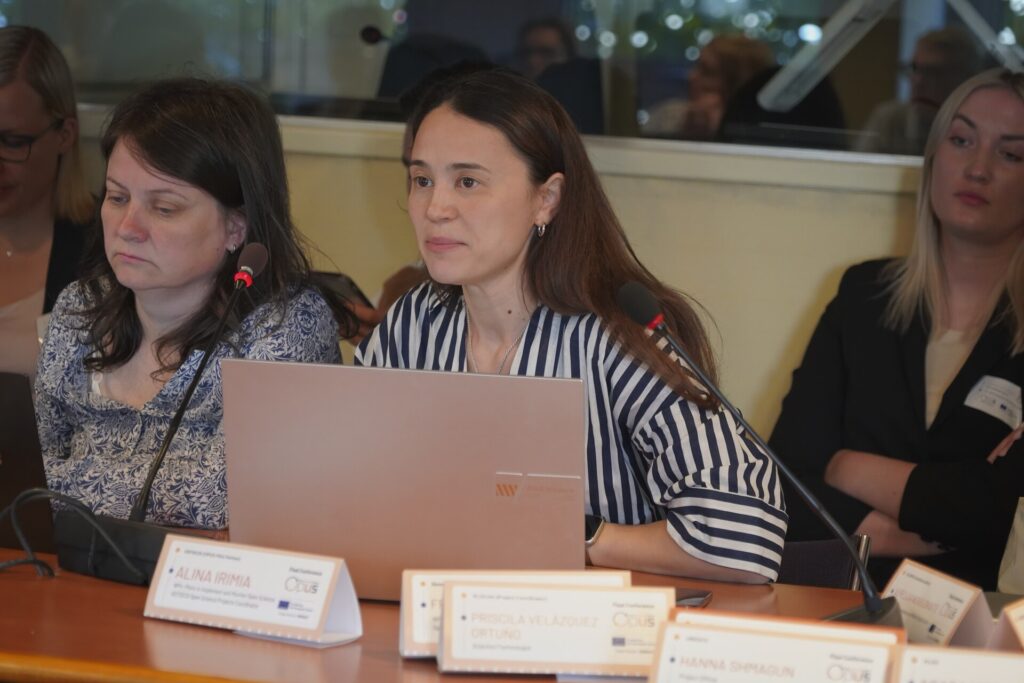
Alina Irimia, Open Science Projects Coordinator at the Executive Agency for Higher Education, Research, Development and Innovation Funding (UEFISCDI), presented Romania’s comprehensive approach to Open Science implementation at the OPUS Final Conference. Irimia showcased UEFISCDI’s strategic alignment with Romania’s National Open Science Strategy, including the implementation of FAIR Data Management Plans.
We tested the OPUS Research Assessment Framework and selected one indicator to implement and test. Ultimately, this turned into an actual implementation, specifically around introducing Data Management Plans (DMPs) into a major national funding instrument in Romania.
The timing of the project was very fortunate, as it coincided with the need to implement a national strategy on open science. These are the first steps in putting that strategy into practice, which states that DMPs should be mandatory for all publicly funded research.
We tested this requirement within a major funding programme, which has a substantial budget of 320 million euros. This programme is being launched for the first time in Romania. The evaluation phase has just concluded, and we expect to fund approximately 2,024 projects. These projects will have a duration of four to five years, with the possibility of extension by up to two years.
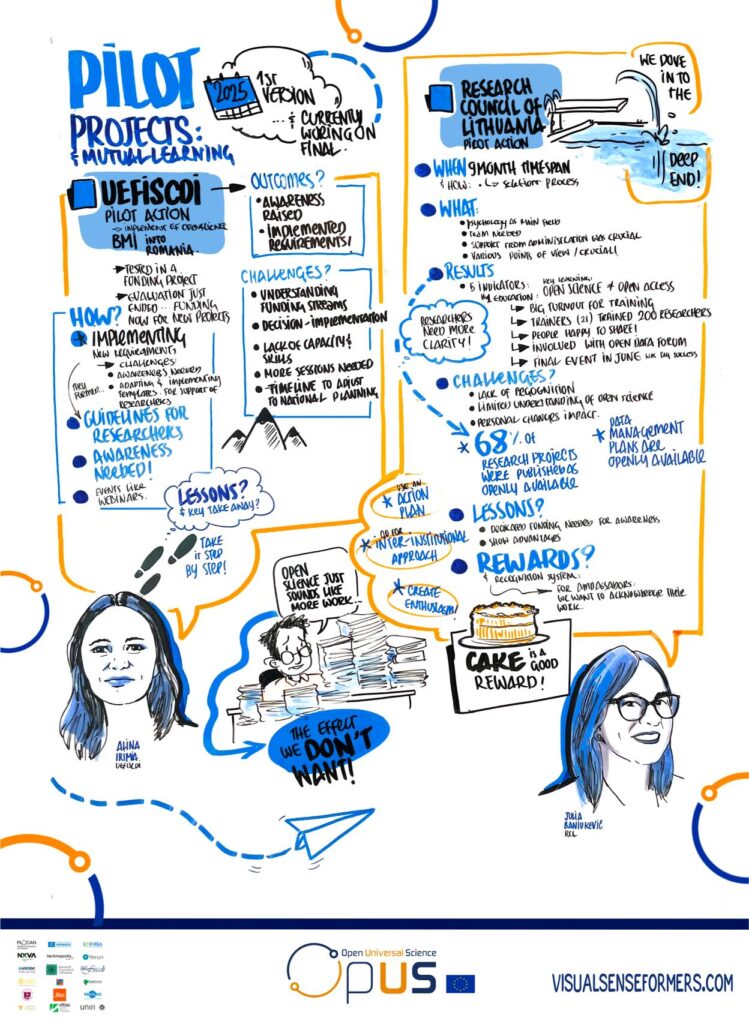
The main interventions focused on implementing these new requirements and evaluation criteria within this funding instrument. We had to introduce these requirements into the information packages for the funding instrument, which raised several challenges. At the institutional level, we were not accustomed to such requirements, and our staff were not fully prepared to implement open science-related obligations.
We needed to raise awareness among our staff, management, and also the Ministry. Although the Ministry had approved the national strategy, it was necessary to inform them about how these requirements would affect funding streams. As a national funding agency, we are not fully autonomous and depend on ministerial decisions regarding funding, so it was essential to have their support for implementation.
There were both policy and resource-related interventions. For example, we needed to develop or adapt a DMP template. In the end, we used the Horizon Europe template and the Science Europe guidelines, adapting them to our context. We provided resources to support both researchers and staff, including guidelines, a blueprint for researchers, and a guideline, translated from the Science Europe guideline, for staff to use when reviewing DMPs. We also provided examples of open DMPs to support researchers, who, to be honest, are already overburdened by this new requirement. Considerable awareness-raising was needed.
We organised a national conference on research assessment and open science, held institutional awareness sessions, and arranged hands-on meetings with staff to discuss specific challenges related to these new requirements. In June, we also held a nationwide webinar for researchers on DMPs. This training session attracted many engaged participants, demonstrating both interest and a need for support.
The indicator we achieved in OPUS was the development of FAIR DMPs. However, regarding the DMPs actually produced in the successful projects, we will only have those results after the projects commence, as the evaluation has only just concluded.
The key outcome of this pilot is that we have moved from testing to full implementation within a major funding instrument. The awareness-raising efforts have been a significant success, leading to the extension of these requirements, and more broadly, open science requirements, to other funding instruments. We are now discussing making these practices and requirements standard for future funding programmes.
There were several challenges. Integrating these requirements for the first time led to changes in our internal processes. We needed to raise awareness and work hands-on to update processes, including IT updates and discussions about future IT needs. There was also a challenge in understanding the open science indicator itself. My institution is fortunate to have an open science team, but many funders do not have such expertise. We supported staff in understanding open science and coordinated with other departments. We also had to understand the funding streams and the impact of open science requirements on these streams.
Policy and process integration presented further challenges, particularly in securing decisions to implement the changes. There was cultural resistance from policymakers, stakeholders, and researchers. There is a lack of capacity and skills related to open science and FAIR DMPs, and we still need to work on building institutional capacity and providing support and training sessions for researchers.
Staff upskilling is essential, as is providing tools and training for researchers regarding DMP adoption. The availability of European-level guidelines and templates, such as those from Science Europe, was very helpful, and we simply adapted them to our context.
A major challenge was coordinating timelines between project requirements and the timelines of the funding streams in our national programme. Delays occurred that were beyond our control, and we had only 18 months to complete all this work. However, these efforts will continue beyond the project’s duration.