YERUN Work with Pilot Organisations
YERUN Work with Pilot Organisations https://opusproject.eu/wp-content/uploads/2025/07/Raquel-1-1024x683.jpg 1024 683 Open and Universal Science (OPUS) Project https://opusproject.eu/wp-content/uploads/2025/07/Raquel-1-1024x683.jpgWork with Pilot Organisations through Pilot Action and Mutual Learning
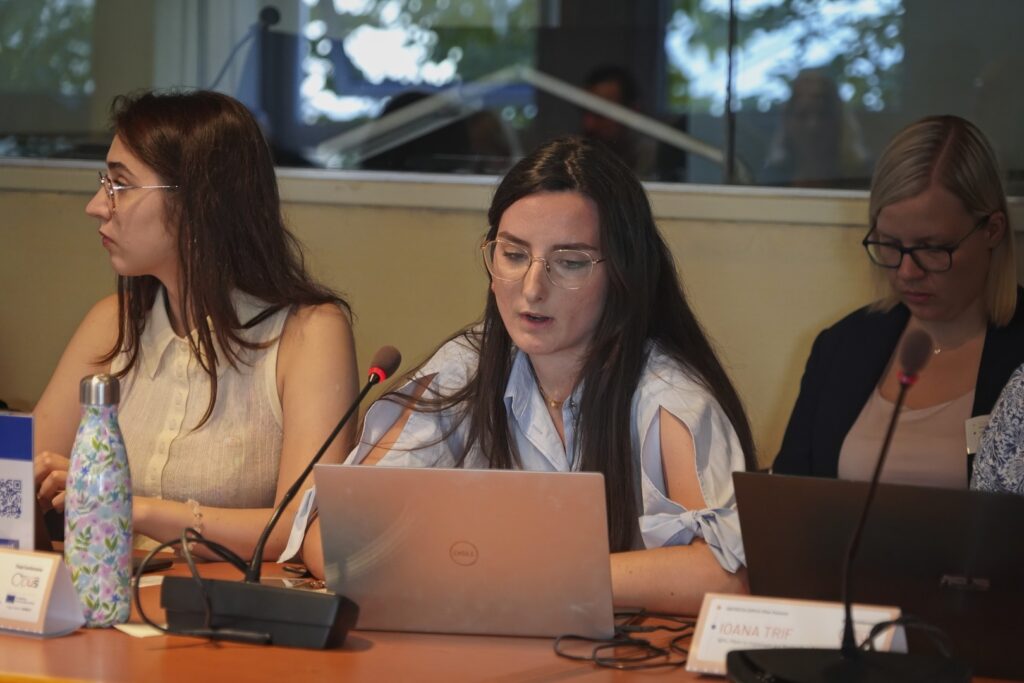
Raquel Vega from the Young European Research Universities Network (YERUN) introduced the pilot action segment at the Final Conference, framing it as an opportunity for mutual learning and practical experimentation. Vega, who serves as Policy and Project Officer at YERUN, emphasised the collaborative effort that characterised the OPUS pilots and the importance of context-specific solutions.
The pilot programme involved five organisations, three Research Performing Organisations (RPOs) and two Research Funding Organisations (RFOs), who tested the RAF through tailored action plans and co-created strategies for meaningful reform. Each pilot organisation brought unique perspectives and challenges to the implementation process.
Raquel Vega: Pilots have done all the work within this work package, working extremely hard
The main goal of WP4 was to design and implement action plans to pilot selected elements of the Research Assessment Framework (RAF), as well as the Open Science Career Assessment Matrix 2 (OSCAM2), through their accompanying interventions in five organisations. In addition, we organised mutual learning sessions to draw out results and lessons learnt.
The main protagonists of WP4 are the pilot organisations themselves. They have done all the work within this work package, working extremely hard. We had three universities and two funding organisations participating as pilots.
Our work followed three main lines. First, we designed the action plans. Second, we implemented and coordinated these action plans over an 18-month period. Third, we collected lessons learnt from mutual learning sessions held throughout these 18 months.
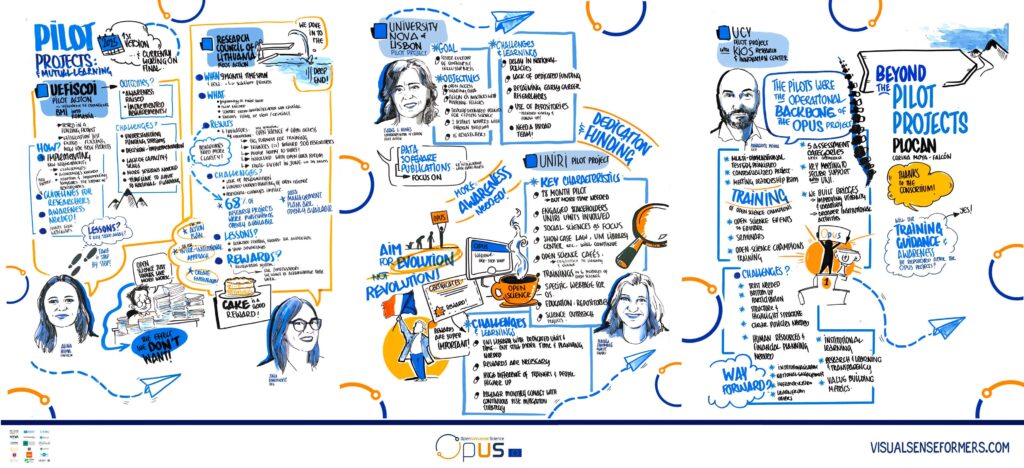
To begin with the design and implementation of the action plans, the pilots had to define, very early on, their cohorts and the units or funding programmes involved. Together with the leaders of Work Packages 2 and 3, we selected the indicators and interventions that best fit each pilot, both from a strategic and feasibility perspective. It is important to mention that, in Work Packages 2 and 3, we also carried out a baseline audit to determine the starting point for each pilot.
The full implementation period lasted 18 months. We began with the first version of the action plans, which we started implementing in January 2024. The pilots ran until June 2025. During the first nine months, we observed what was working and what was not, and we collected those learnings into a revised version of the action plans, which was ready by September 2024. This marked the end of the first stage of implementation.
In addition to the individual interventions chosen by each pilot, we also introduced some common interventions for all pilots. These focused on the links between open science and trust, open science and industry, and open science and gender equality.
Regarding mutual learning, the key process was the bi-monthly mutual learning sessions, which took place both online and in person. These sessions were essential for collecting challenges and recommendations from each pilot organisation regarding their implementation experiences.
From January 2024 until approximately September 2025, we collected all these learnings and, by the end of November 2025, produced the first version of the Mutual Learning collection of recommendations and challenges. In the following nine months, the second stage of implementation, we added further learnings from this later period. We are currently working on the final mutual learning collection of lessons learned.
We monitored progress through a process we called co-monitoring, which we conducted together with the pilots. During the first part of the implementation period, the first nine months, pilots submitted monthly reports. During the second part, reports were submitted bi-monthly. These reports were reviewed by our partner Jisc, led by our colleague Helen Clare. The reports were also instrumental for the mutual learning sessions, as they informed the guiding questions for the various sessions we held.