EU

Developing Countries Embracing Open Science: Fostering Innovation and Collaboration
Developing Countries Embracing Open Science: Fostering Innovation and Collaboration 1024 530 Open and Universal Science (OPUS) Project

Open Science has emerged as a transformative movement that seeks to make scientific research and knowledge accessible, transparent, and inclusive. While its roots lie in developed nations, the paradigm of open science is rapidly gaining momentum in developing countries. Embracing open science principles can prove to be a game-changer for these nations, unlocking the potential for innovation, collaboration, and socioeconomic progress. In this article, we explore how developing countries are actively embracing open science and the positive impact it has on their scientific communities and societies as a whole.

  1. Democratizing Access to Knowledge

One of the core tenets of open science is providing free access to research outputs, including journal articles, datasets, and research findings. For developing countries, where limited financial resources can hinder access to scientific literature, open science offers a transformative solution. Initiatives like open-access journals and repositories enable researchers from these regions to access cutting-edge research and contribute to the global scientific conversation without barriers.

  1. Fostering Collaboration and Partnerships

Open science thrives on collaboration and the free exchange of ideas. By embracing open science principles, developing countries can actively engage with international research communities, fostering valuable collaborations and partnerships. These connections transcend geographical boundaries and enable researchers from different parts of the world to work together, share knowledge, and tackle common challenges collectively.

  1. Enhancing Research Visibility and Impact

Traditional publishing models often favor researchers from well-established institutions in developed countries. In contrast, open science platforms offer a level playing field, providing researchers from developing nations with an opportunity to showcase their work on an equal footing. This increased visibility can lead to greater recognition and impact for their research, potentially attracting more resources and opportunities for further advancements.

  1. Empowering Local Innovations

Open science also empowers local innovations in developing countries. By sharing data openly, researchers and innovators can access a broader range of information, which may inspire new ideas and solutions tailored to specific local needs. Additionally, open-source software and hardware initiatives foster technological advancements and can lead to cost-effective and sustainable solutions for pressing challenges.

  1. Addressing Global Challenges

Developing countries often face unique challenges, such as limited access to clean water, healthcare, and education. Open science promotes collaborative problem-solving, enabling researchers from diverse backgrounds to pool their expertise and resources to address these global challenges effectively. From discovering new treatments to combat infectious diseases to finding environmentally friendly agricultural practices, open science plays a crucial role in creating solutions that benefit humanity as a whole.

  1. Building Research Capacities

Embracing open science encourages developing countries to invest in building their research capacities. This involves promoting open data policies, providing training in data management and sharing, and supporting research infrastructures. As research capabilities grow, these countries become more self-sufficient and contribute significantly to scientific advancements globally.

  1. Encouraging Citizen Science

Open science goes beyond academia and involves citizens actively participating in the scientific process. Developing countries can harness the power of citizen science initiatives to involve their communities in data collection, monitoring environmental changes, and contributing valuable insights to research projects. This engagement fosters a sense of ownership and pride in scientific advancements and encourages young minds to pursue careers in STEM fields.

Developing countries embracing open science is a transformative step towards a more equitable and collaborative global scientific landscape. By democratizing access to knowledge, fostering collaboration, and empowering local innovations, open science enables these nations to actively contribute to scientific advancements and address pressing challenges. Through a commitment to open science principles, developing countries can build stronger research capacities, foster socioeconomic progress, and ultimately create a more inclusive and sustainable future for all.

Headline picture: By Allice Hunter – Blank map: File:World map (Miller cylindrical projection, blank).svgIMF data: World Economic Outlook Database April 2022 — WEO Groups and Aggregates Information. www.imf.org. Retrieved on 2022-06-02.UN list: UN List of Least Developed Countries as of November 2021. www.un.org., CC BY-SA 4.0, https://commons.wikimedia.org/w/index.php?curid=118625873

Sharing Open Science: Fostering Collaborative Knowledge for a Brighter Future
Sharing Open Science: Fostering Collaborative Knowledge for a Brighter Future 1000 600 Open and Universal Science (OPUS) Project

Sharing Open Science is not just a scientific responsibility; it’s a collective endeavor that impacts society as a whole. By embracing open practices and actively participating in the Open Science movement, researchers, educators, and the public can collectively work towards a brighter, more collaborative, and inclusive future. Let us all commit to sharing knowledge openly, breaking down barriers, and accelerating the pace of discovery for the betterment of humanity. Together, we can unlock the full potential of Open Science and shape a world where knowledge knows no bounds.

1. Embrace Open Access Publishing: One of the fundamental principles of Open Science is providing unrestricted access to scientific publications. As a researcher, consider publishing your work in open-access journals or platforms. This enables your research to reach a broader audience, including policymakers, educators, and individuals who may not have access to costly subscription-based journals. By doing so, you can increase the visibility and impact of your research, fostering collaboration and inspiring further discoveries.

2. Share Preprints: Preprints are drafts of research papers made available before formal peer review. Sharing preprints allows researchers to receive feedback from the community, refine their work, and establish priority for their findings. Platforms like arXiv, bioRxiv, and PsyArXiv have become popular choices for disseminating preprints in specific disciplines. By sharing your preprints, you contribute to Open Science’s ethos of open collaboration and knowledge sharing.

3. Open Data Sharing: Data is the backbone of scientific research, and making it openly accessible is critical for reproducibility and collaboration. When publishing your research, consider sharing the underlying data in repositories such as Figshare, Zenodo, or Dryad. By doing so, you enable fellow researchers to validate your findings, build upon your work, and potentially uncover new insights through data reanalysis.

4. Collaborative Tools and Platforms: Embrace collaborative tools and platforms that facilitate Open Science practices. Version control systems like Git enable transparent tracking of changes in code and documents, fostering reproducibility. Additionally, collaborative writing platforms like Overleaf make it easy to work jointly on manuscripts, encouraging knowledge sharing among researchers across geographical boundaries.

5. Engage in Open Peer Review: Traditional peer review is often conducted behind closed doors, limiting transparency and accountability. Open Peer Review, on the other hand, allows reviewers’ comments and the authors’ responses to be openly accessible. By participating in Open Peer Review, you contribute to more constructive feedback, encourage scientific dialogue, and promote greater accountability in the review process.

6. Open Educational Resources (OER): Extend the principles of Open Science to education by creating and sharing Open Educational Resources. OER, such as open textbooks, lecture materials, and educational videos, are freely available for anyone to use, modify, and distribute. By contributing to OER, you enhance the accessibility of knowledge and promote inclusive education worldwide.

7. Participate in Citizen Science: Citizen Science projects involve the public in scientific research, allowing people from all walks of life to contribute to real-world scientific inquiries. Engage in such initiatives, whether by collecting data, analyzing information, or simply spreading awareness about ongoing projects. By involving citizens, we can address complex challenges that require large-scale data collection and foster a sense of community ownership over scientific endeavors.

8. Advocate for Open Science Policies: Support and advocate for policies that promote Open Science at institutional, national, and international levels. Encourage funding agencies, academic institutions, and policymakers to adopt Open Access and Open Data mandates. By voicing your support, you contribute to creating an environment where Open Science is the norm rather than the exception.

Headline picture: Associations Now

Why Open Science: Advancing Knowledge and Collaboration for a Better Future
Why Open Science: Advancing Knowledge and Collaboration for a Better Future 1024 666 Open and Universal Science (OPUS) Project

In the pursuit of scientific progress and societal well-being, the traditional methods of conducting research and sharing findings have been evolving. Open science has emerged as a transformative movement that seeks to make research more transparent, accessible, and collaborative. In this article, we will explore the key reasons why open science is essential for advancing knowledge and fostering a better future.

  1. Accelerating Scientific Discovery

Open science encourages researchers to share their findings openly, making data, methodologies, and research outputs accessible to the broader scientific community. By eliminating barriers to information, researchers can build upon existing work, validate findings, and accelerate the pace of scientific discovery. This increased collaboration and data-sharing can lead to breakthroughs in various fields, ranging from medicine to climate science, benefiting society as a whole.

  1. Enhancing Reproducibility and Transparency

Transparency is a fundamental principle of open science. When research methodologies and data are openly shared, it becomes easier for others to verify and reproduce the results. Reproducibility is a cornerstone of scientific rigor and ensures the reliability of research outcomes. By promoting transparency, open science helps build trust within the scientific community and with the public, fostering confidence in the integrity of scientific research.

  1. Democratizing Knowledge Access

Traditional academic publishing models often place research findings behind paywalls, restricting access to a select few with the means to pay for subscriptions or access fees. Open science challenges this paradigm by making research freely available to everyone, including researchers, students, policymakers, and the general public. Democratizing knowledge access empowers individuals from diverse backgrounds to participate in the scientific discourse, fostering inclusivity and democratization of knowledge.

  1. Addressing Global Challenges

Many of the world’s most pressing challenges, such as climate change, pandemics, and resource sustainability, require collective efforts and multidisciplinary collaboration. Open science facilitates the exchange of ideas and information across borders and disciplines, enabling researchers from different parts of the world to collaborate effectively. This global collaboration enhances our collective ability to address complex challenges and find innovative solutions.

  1. Supporting Data-Driven Policy and Decision Making

Policy and decision making in various sectors, including healthcare, environment, and education, benefit greatly from evidence-based approaches. Open science provides policymakers and stakeholders with access to a wealth of data and research findings, enabling them to make informed decisions that are grounded in scientific evidence. This, in turn, can lead to more effective and impactful policies, positively influencing society and the economy.

  1. Fostering Innovation and Creativity

Open science encourages creativity and innovation by encouraging the sharing of ideas, even if they are preliminary or inconclusive. Researchers can openly discuss their hypotheses, methodologies, and early findings with the community, receiving feedback and suggestions that can lead to new avenues of exploration. By embracing openness, the scientific community can collectively push the boundaries of knowledge and explore uncharted territories.

Open science is more than just a new way of conducting research; it is a transformative movement with far-reaching implications for society. By promoting transparency, collaboration, and knowledge-sharing, open science accelerates scientific discovery, enhances research integrity, and addresses global challenges. It empowers individuals from diverse backgrounds to contribute to the scientific discourse and facilitates evidence-based decision making in policymaking and beyond. Embracing open science is crucial for advancing knowledge, fostering innovation, and building a better future for all. As researchers, institutions, and policymakers increasingly embrace the principles of open science, the potential for positive impact on society becomes ever more promising.

Headline picture: GQ Magazine

Unleashing the Power of Open Science: Exploring Essential Tools and Technologies
Unleashing the Power of Open Science: Exploring Essential Tools and Technologies 784 732 Open and Universal Science (OPUS) Project

Open Science is a transformative movement that aims to make research more transparent, accessible, and collaborative. Embracing the principles of openness, reproducibility, and inclusivity, Open Science seeks to revolutionize the way scientific knowledge is generated and shared. In this article, we will delve into the various tools and technologies that underpin the Open Science movement, empowering researchers and fostering innovation across disciplines.

  1. Open Access Journals and Preprint Repositories

Open Access (OA) journals and preprint repositories are the pillars of open scientific publishing. OA journals make research articles freely accessible to readers without subscription barriers, promoting greater dissemination and impact of research. Additionally, preprint repositories facilitate the rapid sharing of preliminary findings, allowing researchers to receive feedback from peers before formal publication. Prominent OA platforms include arXiv, bioRxiv, and PLOS ONE.

  1. Data Sharing and Data Repositories

Data is the backbone of scientific research, and its availability is crucial for reproducibility and transparency. Data sharing allows researchers to publish their datasets alongside research articles or in dedicated data repositories. Zenodo, Figshare, and Dryad are some of the popular data repositories, enabling researchers to share, cite, and access data across the scientific community.

  1. Open Source Software

Open Source Software (OSS) plays a vital role in Open Science, providing tools for data analysis, simulations, and modeling. Researchers can freely access, modify, and distribute these software packages, ensuring transparency and reproducibility in computational research. Widely used OSS platforms like R, Python, and Jupyter Notebooks empower scientists with powerful data analysis and visualization capabilities.

  1. Research Collaboration Platforms

Collaboration lies at the heart of Open Science. Research collaboration platforms offer online spaces where researchers can work together, share resources, and collaborate on projects irrespective of geographic boundaries. GitHub and GitLab are popular platforms for version control, code sharing, and collaborative development, making it easier for researchers to work collectively on software and data-related projects.

  1. Open Educational Resources (OER)

Open Educational Resources are openly licensed materials that support teaching and learning. OER include textbooks, lecture slides, videos, and other educational content that educators can freely use, adapt, and share with students. Embracing OER reduces costs for students and fosters a more equitable educational landscape.

  1. Citizen Science Platforms

Citizen Science platforms engage the public in scientific research, encouraging non-professional scientists to contribute data and observations. These platforms facilitate large-scale data collection and analysis, enhancing the scope and impact of research projects. Platforms like Zooniverse and iNaturalist enable citizens to participate in various research initiatives, from astronomy to ecology.

  1. Open Hardware and DIY Science

Open Science is not limited to software and data; it also extends to hardware and physical experiments. Open Hardware involves the sharing of design blueprints and specifications, enabling researchers to create, modify, and replicate scientific instruments at a lower cost. DIY Science fosters a hands-on approach to research and learning, democratizing science for enthusiasts and educators.

The tools and technologies of Open Science have revolutionized the research landscape by promoting transparency, accessibility, and collaboration. From open access publishing to citizen science platforms, each tool plays a pivotal role in reshaping the way we generate and disseminate knowledge. As the Open Science movement continues to gain momentum, these tools will further empower researchers, encourage public engagement, and drive innovation across disciplines, ultimately leading to a more inclusive and impactful scientific community.

Headline picture: UNESCO

Open Journal Systems: Empowering Scholarly Communication and Publishing
Open Journal Systems: Empowering Scholarly Communication and Publishing 849 1024 Open and Universal Science (OPUS) Project

In the fast-paced world of academia, the dissemination of research findings and knowledge exchange plays a crucial role in advancing scientific understanding. Open Journal Systems (OJS) has emerged as a powerful and revolutionary tool that fosters open access to scholarly literature, making research accessible to a global audience. In this article, we will delve into the concept of Open Journal Systems, its features, benefits, and its impact on the academic publishing landscape.

Understanding Open Journal Systems (OJS)

Open Journal Systems (OJS) is an open-source software platform designed to facilitate the management, publication, and distribution of academic journals in a digital environment. It was developed by the Public Knowledge Project (PKP), a multi-university initiative dedicated to enhancing the accessibility of academic research. OJS provides an efficient and user-friendly system for journal editors, authors, reviewers, and readers, ensuring a seamless workflow throughout the publishing process.

Key Features of OJS

  1. Journal Management: OJS offers a comprehensive set of tools for journal administrators and editors to manage the entire editorial workflow. From submission and peer review to publication, every step is streamlined, making it easier for journals to maintain quality and timeliness.
  2. Author Submission: OJS simplifies the submission process for authors, allowing them to submit their research papers, articles, and manuscripts online. Authors can track the progress of their submissions and receive timely notifications during the review process.
  3. Peer Review System: OJS facilitates a transparent and efficient peer review system, enabling reviewers to assess the scholarly merits of submitted works. Reviewers can provide constructive feedback, and journal editors can make informed decisions based on these evaluations.
  4. Publishing and Archiving: The platform enables journals to publish articles online with ease, making them accessible to a global audience. Additionally, OJS provides tools for digital archiving, ensuring the long-term preservation of scholarly content.
  5. Indexing and Discovery: OJS supports integration with major indexing services and databases, which increases the visibility and discoverability of published articles, enhancing the impact and reach of the research.

Benefits of Open Journal Systems

  1. Open Access: One of the most significant advantages of OJS is its support for open access publishing. By removing barriers to access, researchers and readers from all corners of the world can freely access scholarly content, accelerating knowledge dissemination.
  2. Cost-Effectiveness: As an open-source platform, OJS significantly reduces the financial burden on institutions and publishers. This accessibility democratizes scholarly publishing, particularly for smaller organizations and scholarly societies with limited resources.
  3. Transparent Peer Review: OJS promotes transparency in the peer review process, allowing authors and reviewers to interact directly, fostering constructive criticism and ensuring the integrity of the publication.
  4. Global Reach: With OJS, academic journals can reach a broader international audience, breaking down geographical boundaries and promoting cross-cultural collaboration in research.
  5. Long-Term Preservation: OJS facilitates digital archiving, safeguarding scholarly content for future generations, and ensuring that research remains accessible and preserved over time.

Impact on Academic Publishing Landscape

Open Journal Systems has significantly transformed the academic publishing landscape. By promoting open access and providing an efficient platform for scholarly communication, OJS has fueled a surge in the number of open-access journals worldwide. This movement has encouraged more researchers and institutions to adopt open access publishing models, leading to greater visibility, citations, and impact for published works.

Furthermore, OJS has encouraged collaborative research efforts and knowledge exchange on a global scale. Academics from different regions can now easily access each other’s work, fostering interdisciplinary studies and accelerating scientific progress.

Open Journal Systems (OJS) has undoubtedly revolutionized scholarly communication and publishing. Through its user-friendly interface, transparent peer review process, and support for open access, OJS has empowered academics to share their research with the world, breaking down barriers and enriching global knowledge exchange. As technology continues to evolve, OJS remains at the forefront of advancing academia, driving open access initiatives, and promoting a more inclusive and collaborative future for scholarly publishing.

Headline picture: Wikipedia

Open Scholarship in the Light of Open Science: Paving the Way for a Transparent and Collaborative Academic Landscape
Open Scholarship in the Light of Open Science: Paving the Way for a Transparent and Collaborative Academic Landscape 950 532 Open and Universal Science (OPUS) Project

In recent years, the scientific community has undergone a profound transformation, catalyzed by the advent of open science principles. As a natural extension of this movement, open scholarship has emerged as a beacon of progress in academia. This paradigm shift aims to redefine the way research is conducted, disseminated, and utilized, fostering transparency, collaboration, and inclusivity. In this article, we explore the concept of open scholarship, its significance in the context of open science, and the potential benefits and challenges it presents for researchers and society as a whole.

Defining Open Scholarship

At its core, open scholarship embodies the idea of making all aspects of scholarly research openly accessible, transparent, and reusable. It encompasses a range of practices, including but not limited to open access publishing, open data, open peer review, and open educational resources. The fundamental principle driving open scholarship is the removal of barriers, both technical and financial, that hinder the flow of knowledge and collaboration.

The Link to Open Science

Open scholarship and open science are closely interconnected, and one can be seen as an extension of the other. Open science promotes the free exchange of scientific knowledge, emphasizing transparency, reproducibility, and accessibility of research findings. Open scholarship takes this philosophy further by incorporating not only the research outputs but also the entire research process. By embracing open scholarship practices, researchers can make their data, methods, and even preliminary findings publicly available, thereby facilitating constructive scrutiny and fostering a culture of collaboration.

Benefits of Open Scholarship

  1. Increased Visibility and Impact: By sharing research outputs openly, scholars can reach a broader audience, transcending traditional publishing barriers. This increased visibility can lead to higher citation rates and greater recognition for their work.
  2. Accelerated Innovation: Open scholarship fosters a collaborative environment, enabling researchers from different disciplines and institutions to build upon each other’s work. This accelerates the pace of innovation and encourages interdisciplinary approaches to solving complex problems.
  3. Public Trust and Engagement: Transparency in research builds public trust in academia and allows society to better understand and engage with scientific discoveries. This, in turn, helps bridge the gap between researchers and the public, promoting science literacy.
  4. Reproducibility and Rigor: Open access to research data and methodologies enables others to reproduce and validate study results, enhancing the rigor of scientific inquiry and promoting the self-correction of errors.

Challenges and Concerns

  1. Sustainability: Transitioning to open scholarship requires significant infrastructural and financial support. Institutions and funders must be committed to investing in the necessary resources to ensure the long-term viability of open scholarship practices.
  2. Quality Control: Critics argue that open scholarship might lead to a proliferation of low-quality research or data misinterpretation if not appropriately vetted. Therefore, robust mechanisms for peer review and data validation become crucial.
  3. Intellectual Property Concerns: The open scholarship movement raises questions about copyright and intellectual property rights. Balancing openness with the protection of researchers’ contributions remains an ongoing challenge.
  4. Cultural Shift: Embracing open scholarship necessitates a cultural shift within academia. Researchers, institutions, and publishers need to embrace the value of openness and collaboration, which may require time and effort.

Open scholarship stands at the forefront of a transformative movement in academia, aligning with the principles of open science to create a more transparent, inclusive, and efficient research landscape. As researchers continue to break down barriers and embrace open practices, the potential benefits for the scientific community and society as a whole become increasingly evident. By fostering collaboration, accelerating innovation, and empowering public engagement, open scholarship paves the way for a brighter and more equitable future for scientific research and discovery.

Headline picture: UTS ePress Blog

Unleashing the Potential: The Transformative Outputs of Open Science
Unleashing the Potential: The Transformative Outputs of Open Science 500 506 Open and Universal Science (OPUS) Project

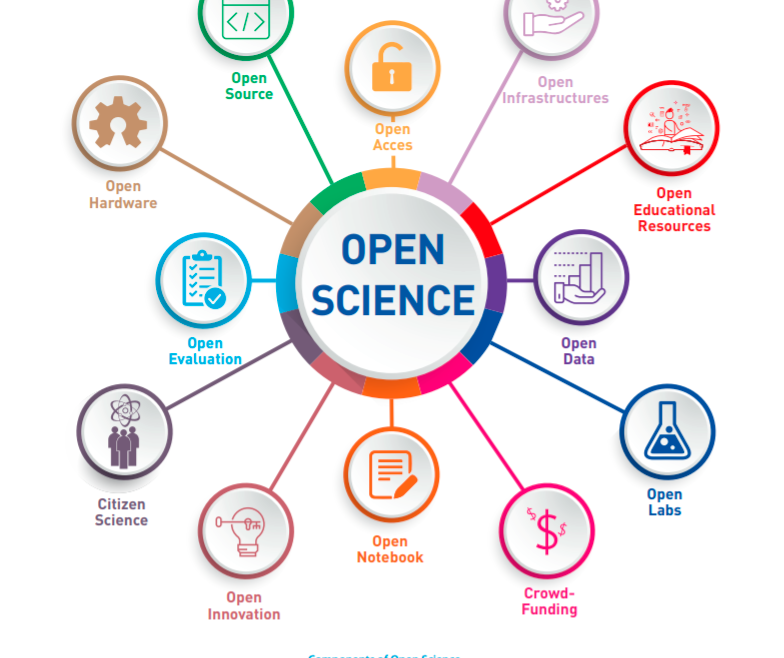
Open Science, a paradigm that advocates for transparent, collaborative, and accessible scientific research, has gained considerable momentum in recent years. By challenging the traditional closed model of science, open science initiatives aim to maximize the societal impact of research, foster innovation, and democratize knowledge. In this article, we will explore the various outputs of open science and how they are revolutionizing the scientific landscape.

One of the core principles of open science is ensuring that scientific research is freely available to anyone, anytime, anywhere. Open access publications eliminate the barriers of costly journal subscriptions, enabling researchers, students, policymakers, and the general public to access and build upon the latest scientific findings. This increased accessibility promotes collaboration, accelerates the pace of discovery, and enhances the potential for interdisciplinary research.

Open science encourages researchers to make their research process transparent and reproducible. Through the publication of detailed methodologies, data, and code, others can replicate and validate scientific findings. This commitment to transparency not only strengthens the rigor of scientific research but also allows for the identification of errors or flaws, ensuring the reliability and integrity of scientific knowledge.

The open science movement emphasizes the sharing and reuse of research data. By making data openly available, researchers can promote data-driven discoveries, facilitate new collaborations, and avoid unnecessary duplication of efforts. Open datasets enable scientists to address complex research questions, validate or challenge existing theories, and uncover new insights. Moreover, sharing data with the broader community allows for the development of innovative applications, tools, and technologies that can benefit society at large.

Open science fosters a culture of collaboration and collective intelligence. Online platforms and tools enable researchers worldwide to connect, share ideas, and work together on projects regardless of geographical boundaries. Collaborative research initiatives, such as citizen science, engage non-professional scientists and the public in the research process, harnessing their expertise, skills, and diverse perspectives. This collaboration leads to the generation of novel ideas, enhances interdisciplinary approaches, and broadens the impact of scientific research.

Open science encourages the exploration of alternative pathways to innovation and entrepreneurship. By providing unrestricted access to research findings and data, open science facilitates the development of new technologies, products, and services. Startups, industries, and entrepreneurs can leverage scientific knowledge and collaborate with researchers to create innovative solutions that address societal challenges. Open science also stimulates open innovation, where ideas and expertise are shared across sectors, leading to a more efficient and effective translation of scientific discoveries into practical applications.

Open science recognizes the importance of engaging the public in scientific research. By involving citizens in the research process, open science initiatives promote a greater understanding of science and its societal impact. Citizen science projects empower individuals to contribute to scientific research, gather data, and participate in decision-making processes. This engagement enhances public trust, encourages evidence-based policymaking, and ensures that research aligns with the needs and values of society.

The outputs of open science are transforming the way we conduct research, disseminate knowledge, and address global challenges. By embracing transparency, collaboration, and accessibility, open science initiatives are democratizing scientific knowledge, accelerating innovation, and promoting the well-being of society. As the open science movement continues to evolve, it holds immense promise for advancing scientific discovery, fostering interdisciplinary collaborations, and creating a more inclusive and sustainable future for all.

Headline picture: Government of Canada

European Commission’s Research & Innovation Careers Observatory: A Step Forward, Yet Improvements Needed
European Commission’s Research & Innovation Careers Observatory: A Step Forward, Yet Improvements Needed 1024 297 Open and Universal Science (OPUS) Project

In response to the pressing need for improved working conditions and career paths for early career researchers, the International Science Council’s (ISE) Manifesto for Early Career Researchers gained widespread support from European and national organizations. Recognizing the significance of this issue, Commissioner Mariya Gabriel declared it a top priority for the European Research Area. As a result, ISE, along with other representative bodies, called for the establishment of a “Research & Innovation Careers Observatory” to monitor and address various aspects of research careers.

The Commission’s Plan

The European Commission responded by announcing its plan to establish the Research and Innovation Careers Observatory (ReICO) through an agreement with the OECD. While the initiative’s launch demonstrates the Commission’s commitment to addressing the concerns raised, there are several shortcomings that need to be addressed.

Shortcomings and Areas for Improvement

  1. Lack of Alignment with European Research Area’s Agenda: The ReICO project, being an OECD initiative, carries a global perspective and expertise but lacks clear alignment with EU frameworks and classifications. It is essential to ensure that the project addresses the specific needs and challenges faced within the European context.
  2. Insufficient Data Quality and Coverage: The ReICO relies on data provided by individual countries, which often lack the required robustness in terms of numbers. This inadequacy includes incomplete information on contract types, social benefits, and pension rights. It is crucial to collaborate with national statistical organizations to obtain more comprehensive and higher-quality data.
  3. Limited Scope: The presentation of ReICO primarily focuses on science, technology, and innovation, omitting the social sciences and humanities entirely. It is important to emphasize that the Observatory should encompass all scientific fields, including societal innovation, to avoid a biased perspective on the role of research in society.
  4. Neglecting Early Career Researchers: The ReICO presentation fails to provide a specific focus on early career researchers, who face significant challenges regarding working conditions and career prospects. It is essential to consider indicators such as mental health issues, quality of doctoral training, and academic freedom restrictions to gain a comprehensive understanding of their experiences.
  5. Inadequate Stakeholder Involvement: The report does not sufficiently emphasize the involvement of organizations representing early career researchers or the research community at large in defining the goals, methods, and indicators of the Observatory. Their input is crucial to ensure the relevance and effectiveness of the project.

Call for Revision and Improvement

Given these limitations, ISE, along with its members and other stakeholders, urges a substantial revision of the ReICO plan. Key areas that require attention include clarifying the aims, governance, and means of implementation of the Observatory. Additionally, it is important to ensure the inclusion of all relevant data to understand the extent of potential career deviations from PhD tracks and academic paths. This revision should facilitate the implementation of a new conceptual framework and research assessment methodologies that prioritize the quality and impact of research results.

The Way Forward

To attract and retain the best minds in research, Europe must take decisive action. The case for such action has been widely articulated in various declarations, recommendations, and reports. ISE proposes a pilot project under Horizon Europe, funded by the DG RTD, to build a partnership that fosters research careers and includes industry collaboration. Co-funding mechanisms by government and regional agencies, along with the clarification of recruitment, career development, and tenure processes for early career researchers, should be integral to this effort.

Final thoughts

While the establishment of the Research and Innovation Careers Observatory represents progress in addressing the challenges faced by early career researchers, improvements are necessary to ensure its effectiveness within the European context. By rectifying the shortcomings and actively involving stakeholders, the Observatory can become a valuable tool for evidence-based decision-making, ultimately enhancing working conditions and career prospects for researchers across Europe.

Source: ISE

Embracing Open Science and Open Access: How Publishing Houses Benefit and Thrive
Embracing Open Science and Open Access: How Publishing Houses Benefit and Thrive 1 1 Open and Universal Science (OPUS) Project

In the rapidly evolving landscape of scholarly publishing, the principles of open science and open access have gained significant traction. Open science promotes transparency, collaboration, and accessibility, while open access ensures that research findings are freely available to the global community. While these concepts initially appeared to challenge traditional publishing models, publishing houses have come to recognize the myriad benefits and opportunities that arise from embracing open science and open access. In this article, we explore the advantages that publishing houses gain by supporting and participating in the open science movement.

  1. Increased Visibility and Impact: Publishing houses play a vital role in disseminating research to a wide audience. By embracing open access publishing, they can significantly increase the visibility and impact of the research they publish. Open access articles tend to receive higher citation rates and broader readership due to their unrestricted availability. This enhanced visibility helps publishing houses to build a strong reputation within the academic community and attract high-quality submissions.
  2. Expanded Readership and Engagement: Open access publishing allows research articles to reach a much broader audience than traditional subscription-based models. By removing paywalls and other barriers, publishing houses can attract readers who would have otherwise been unable to access their content. Open access also facilitates engagement with non-academic readers, including policymakers, journalists, and the general public. This broader readership not only benefits the publishing houses but also contributes to the societal impact of the research they publish.
  3. Collaborative Opportunities: Open science encourages collaboration and knowledge sharing, which can greatly benefit publishing houses. Through open access initiatives, publishing houses can foster collaborations with researchers, institutions, and funding agencies. This collaboration can lead to innovative partnerships, joint ventures, and even new publishing models that align with the principles of open science. By actively engaging with the research community, publishing houses can establish themselves as trusted partners in the scientific ecosystem.
  4. Innovation and Technological Advancements: Embracing open science and open access compels publishing houses to adapt to changing technologies and embrace innovative publishing models. This includes leveraging new tools and platforms for article dissemination, implementing interactive features such as data visualization and multimedia, and exploring alternative metrics to measure the impact of research. By embracing these advancements, publishing houses can stay at the forefront of digital publishing and provide a more enriched reading experience for their audience.
  5. Revenue and Sustainability: While open access publishing may seem contradictory to traditional revenue models, publishing houses can still generate income through various means. This includes offering value-added services like editorial support, peer review, and marketing to authors and institutions. Additionally, publishing houses can explore alternative funding models, such as article processing charges (APCs), institutional memberships, and partnerships with research funders. By diversifying revenue streams and ensuring sustainable operations, publishing houses can thrive in the open access landscape.

As the scholarly publishing ecosystem continues to evolve, publishing houses have realized that embracing open science and open access is not only a necessity but also an opportunity for growth and innovation. By providing greater visibility, expanding readership, fostering collaborations, embracing technological advancements, and exploring sustainable revenue models, publishing houses can position themselves as key players in the open science movement. By championing open access, they contribute to the global dissemination of knowledge, bridge the gap between academia and society, and advance scientific progress for the benefit of all.

Embracing Open Science: A Pathway to an Inclusive and Collaborative Society
Embracing Open Science: A Pathway to an Inclusive and Collaborative Society 1024 683 Open and Universal Science (OPUS) Project

In today’s interconnected world, the concept of open science has gained significant momentum as a means to foster collaboration, transparency, and innovation in research and knowledge dissemination. The open science movement emphasizes the free availability of scientific information, data, and methodologies, allowing researchers, policymakers, and the public at large to actively participate in the scientific process. In this article, we will explore the steps necessary to reach an open science society and discuss the potential benefits it can bring.

  1. Foster Open Access Publishing

One of the fundamental pillars of open science is open access publishing. By making research articles freely available to everyone, regardless of their financial resources, open access facilitates the dissemination of knowledge and ensures equitable access to scientific findings. Researchers can contribute to an open science society by publishing their work in reputable open access journals or by self-archiving preprints in open repositories, making their research accessible to a wider audience.

  1. Share Research Data and Code

Transparency and reproducibility are crucial aspects of open science. Researchers should strive to share their research data and code openly whenever possible. By making datasets and code available, others can validate and build upon existing research, leading to the advancement of scientific knowledge. Establishing data repositories and encouraging the use of standardized data formats can facilitate data sharing and enable meaningful collaborations across disciplines.

  1. Embrace Open Collaboration and Crowdsourcing

In an open science society, collaboration knows no boundaries. Encouraging researchers to collaborate openly by sharing ideas, methodologies, and resources can enhance scientific progress. Crowdsourcing platforms can also be leveraged to engage the public in research activities, allowing citizens to contribute their skills and knowledge to scientific projects. Open collaboration fosters diversity, facilitates interdisciplinary research, and accelerates innovation.

  1. Adopt Open Educational Resources

Education plays a vital role in shaping the future of scientific research. Embracing open educational resources (OER) can democratize access to educational materials and create a level playing field for learners worldwide. By using open textbooks, online courses, and interactive resources, educational institutions can reduce barriers to education and foster a culture of sharing knowledge.

  1. Promote Open Review and Pre-registration

The peer review process is a cornerstone of scientific rigor, but it can be enhanced through openness. Open review systems, where reviewers’ comments are made public, can promote accountability, transparency, and constructive feedback. Pre-registration of research protocols and hypotheses also encourages transparency by reducing biases arising from selectively reporting significant findings, enabling a more comprehensive view of the research landscape.

  1. Advocate for Open Science Policies

Policy changes at various levels are essential to foster an open science society. Researchers can actively engage with policymakers, funding agencies, and institutions to advocate for open science policies. These policies may include mandates for open access publishing, data sharing, and the adoption of open standards. By lobbying for change, scientists can contribute to an environment that rewards openness, collaboration, and transparency.

Conclusion

Transitioning to an open science society is a collective effort that requires the involvement of researchers, policymakers, institutions, and the public. By embracing open access publishing, sharing research data and code, promoting open collaboration, adopting open educational resources, encouraging open review and pre-registration, and advocating for open science policies, we can create a more inclusive, transparent, and collaborative scientific landscape. Embracing open science has the potential to revolutionize research, accelerate scientific discoveries, and address global challenges more effectively. Let us work together to pave the way towards an open science society and unlock the true potential of scientific knowledge for the betterment of humanity.

Privacy Preferences

When you visit our website, it may store information through your browser from specific services, usually in the form of cookies. Our Privacy Policy can be read here.

Here you can change your Privacy preferences. It is worth noting that blocking some types of cookies may impact your experience on our website and the services we are able to offer.

Click to enable/disable Google Analytics tracking code.
Click to enable/disable Google Fonts.
Click to enable/disable Google Maps.
Click to enable/disable video embeds.
Our website uses cookies, mainly from 3rd party services. Define your Privacy Preferences and/or agree to our use of cookies.