Global Leaders Converge in Paris to Chart the Future of Open Science Monitoring
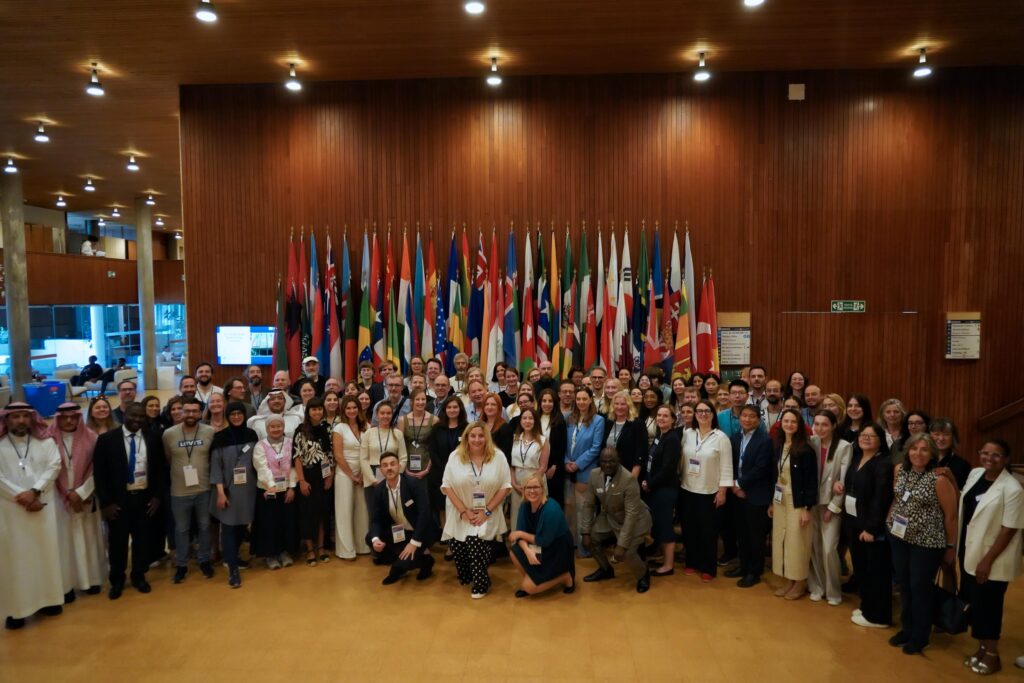
Global Leaders Converge in Paris to Chart the Future of Open Science Monitoring https://opusproject.eu/wp-content/uploads/2025/08/DSC03878-1024x683.jpg 1024 683 Open and Universal Science (OPUS) Project https://opusproject.eu/wp-content/uploads/2025/08/DSC03878-1024x683.jpgThe OPUS team participated at the Open Science: Monitoring Progress, Assessing Impact conference, which took place on 7 & 8 July 2025, at UNESCO Headquarters in Paris.
Over two days at UNESCO Headquarters and online, more than 500 participants from across the globe gathered for the Open Science: Monitoring Progress, Assessing Impact conference, an event uniting policymakers, researchers, and open science practitioners in defining how to track, evaluate, and advance the global shift towards more transparent and equitable research.
Organised by UNESCO, OpenAIRE, PathOS, EOSC Track, the French Ministry of Higher Education and Research, Inria, and OSMI, the conference marked the culmination of the EU-funded PathOS project and showcased the launch of new tools and frameworks set to shape open science policy worldwide.
A Global Call to Action from UNESCO
Opening the event, Lidia Brito, UNESCO’s Assistant Director-General for Natural Sciences, underscored the urgency of building robust, inclusive monitoring systems:
“Open Science is not a choice, it is a necessity for the equitable and sustainable future we seek. Measuring impact is the key to ensuring our efforts truly benefit science, society, and the planet.”
Lidia Brito, UNESCO’s Assistant Director-General for Natural Sciences
Her address set the tone for two intense days blending visionary discussions with concrete tools for policymakers, research institutions, and funders.
PathOS: Evidence, Methods, and Impact Pathways
The PathOS project, a three-year EU-funded project, took centre stage in multiple sessions. Ioanna Grypari (ATHENA RC & OpenAIRE) introduced the project’s innovative evidence base, methodological approaches, and hands-on tools, including real-world case studies revealing both the tangible benefits and persistent blind spots in open science adoption.
Tony Ross-Hellauer (Graz University of Technology) expanded on the project’s strategic lessons, inviting open dialogue on how PathOS findings can translate into actionable policies and clearer pathways for impact.
Turning Indicators into Insights
One of the conference’s key findings came from Vincent Traag, Jessica Catalano, and Louis Colnot, who presented the Open Science Impact Indicator Handbook alongside a Cost-Benefit Analysis Framework. These resources aim to help institutions and governments measure not only the academic but also the societal and economic value of open science, moving debates beyond citation counts to real-world impact.
Setting the Standards: OSMI Principles
In a milestone for global policy coherence, Nicolas Fressengeas and Laetitia Bracco formally launched the final version of the OSMI Principles of Open Science Monitoring, a comprehensive, internationally consulted framework promoting transparency, inclusiveness, and adaptability. The principles are designed to help policymakers, funders, and infrastructures align monitoring systems with shared values while remaining adaptable to local contexts.
Scaling Up: EOSC Observatory 2.0
A standout moment came with the launch of the second phase of the EOSC Open Science Observatory by Stefan Liebler and Tereza Szybisty. This next-generation monitoring platform offers accessible, harmonised data to track open science uptake across Europe, supporting evidence-based policy at both national and continental levels.
UNESCO’s Global Vision and Regional Realities
Rania Sabo presented UNESCO’s first comprehensive global assessment under the Recommendation on Open Science, offering a panoramic view of international progress. The discussion revealed striking variations in national readiness, as well as shared barriers such as resourcing, policy alignment, and researcher incentives.
Connecting Policy to Practice: OPUS Collaboration
A joint session with the Open and Universal Science (OPUS) project brought the conversation to the institutional level. Representatives of research-performing (RPOs) and research-funding organisations (RFOs) examined the tangible challenges of translating policy frameworks into everyday research practice, grappling with data gaps, compliance burdens, and cultural resistance.
Closing with a Vision for the Future
In closing remarks, Ioanna Grypari, Nicolas Fressengeas, and Shaofeng Hu (UNESCO) reiterated that the real challenge ahead lies not only in measuring open science, but in ensuring that these measurements guide meaningful action.
“Monitoring must be a tool for transformation,” Hu emphasised, “not a mere accounting exercise.”
Key Takeaways from Paris
- Evidence matters — Data-driven insights are essential to justify and guide open science policies.
- Principles and flexibility — Monitoring frameworks must balance common standards with local adaptability.
- Beyond academia — Measuring societal and economic benefit is as crucial as scholarly impact.
- Integration across scales — National, institutional, and global efforts must be aligned to avoid duplication and maximise relevance.
With the PathOS legacy cemented, the EOSC Observatory upgraded, and UNESCO’s global vision charted, the Paris conference left participants with both the tools and the mandate to make open science impact assessment a standard — and transformative — part of the research system.
See more:
- Conference materials and recordings: https://pathos-project.eu/materials-recording
- PathOS Zenodo community: https://zenodo.org/communities/pathos/
- YouTube playlist of recorded sessions: https://youtube.com/playlist?list=PL9B43sfXWtGyzSWEMbJtdPqUTulJj5_Ar&si=xYWGz2h29OlxHUrE
- UNESCO article: https://www.unesco.org/en/articles/step-towards-global-open-science-monitoring