LIVE from Paris: The OPUS Final Conference on Redefining Researcher Assessment
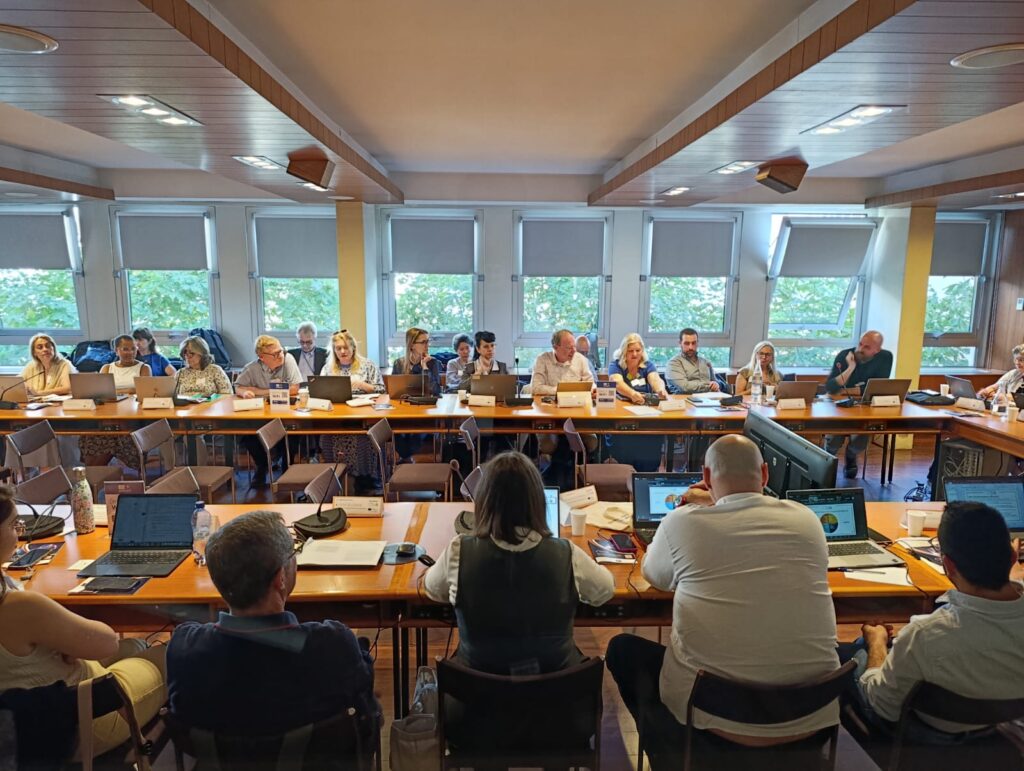
LIVE from Paris: The OPUS Final Conference on Redefining Researcher Assessment https://opusproject.eu/wp-content/uploads/2025/07/WhatsApp-Image-2025-07-09-at-1.06.14-PM-1024x771.jpeg 1024 771 Open and Universal Science (OPUS) Project https://opusproject.eu/wp-content/uploads/2025/07/WhatsApp-Image-2025-07-09-at-1.06.14-PM-1024x771.jpegThe OPUS (Open and Universal Science) Consortium is currently holding its Final Conference at the UNESCO International Institute of Educational Planning (IIEP) in Paris, a key OPUS event bringing together researchers, policy makers, and institutional leaders to shape the future of Open Science and responsible research practices across Europe and beyond.
This important gathering reflects on OPUS’s mission to transform research assessment systems—moving away from traditional metrics towards frameworks that incentivise and reward Open Science practices.
Key highlights from the event so far:
Welcome Remarks and Opening Perspectives
The conference started with welcome remarks from three distinguished leaders who established the importance of inclusive, responsible research ecosystems.
Corina Moya-Falcón, OPUS Coordinator from the Oceanic Platform of the Canary Islands (PLOCAN), opened the proceedings.
Gustavo Merino, Director of UNESCO’s Social Policies Division, delivered keynote remarks positioning OPUS’s work within the global movement for equitable knowledge sharing. Dr Merino, who has served as Director of Social Policies at UNESCO since January 2024, brought his extensive background in strategic planning, policy formulation, and international development to the conference. Previously serving in senior positions within the Mexican government, including Deputy Minister of Social and Human Development, and as Director of the Investment Center Division at the Food and Agriculture Organization (FAO), Merino emphasised UNESCO’s longstanding commitment to supporting Open Science as a driver of sustainable development and social progress.
Representing the European Commission, Rinske Van Den Berg, REA Project Officer, provided crucial policy perspective on the importance of research assessment reform. Van Den Berg, who serves as Project Adviser at the European Research Executive Agency (REA), brings over two decades of experience in project management and partnership development with European universities and organisations. Her background includes significant expertise in ERASMUS+ and HORIZON2020 programmes, making her well-positioned to address the challenges faced by Research Funding Organisations (RFOs) and Research Performing Organisations (RPOs) in adopting new assessment criteria.
OPUS Researcher Assessment Framework (RAF)
New Approach to Research Evaluation
The centrepiece of the conference was the presentation of the OPUS Researcher Assessment Framework (RAF) by Gareth O’Neill from Technopolis Group Belgium (TGB) and Emma Day from Vitae. O’Neill, Principal Consultant on Open Science at Technopolis Group, specialises in the implementation of Open Science across Europe, particularly focusing on sustainable careers for researchers and research assessment reform. His extensive background includes serving as former president of the European Council of Doctoral Candidates and Junior Researchers (Eurodoc) and working as an ambassador for Open Access and Plan S under cOAlition S.
Emma Day, Head of Policy and Engagement at Vitae, brings strategic leadership in policy and advocacy to the RAF development. Together, they presented this modular and flexible framework specifically designed for Research Performing and Funding Organisations (RPOs/RFOs) to embed Open Science into their policies and practices, supporting systemic reform across Horizon Europe and beyond.
The RAF represents a paradigm shift from traditional assessment metrics, offering a comprehensive suite of indicators and metrics that combine both quantitative and qualitative assessment methods. Unlike conventional approaches that focus primarily on publication metrics, the RAF evaluates researchers across four key categories: research, education, leadership, and valorisation activities. Each category includes both generic indicators for activities not specified in terms of openness and Open Science-specific indicators that explicitly recognise and reward Open Science practices.
The framework’s ten guiding principles ensure transformative impact on research evaluation practices across geographical boundaries and disciplinary constraints. These principles emphasise flexibility, allowing organisations to select, refine, and prioritise indicators according to their specific organisational interests and needs whilst maintaining universal applicability across countries, disciplines, and organisation types.
Pilot Actions and Mutual Learning
Raquel Vega from the Young European Research Universities Network (YERUN) introduced the pilot action segment, framing it as an opportunity for mutual learning and practical experimentation. Vega, who serves as Policy and Project Officer at YERUN, emphasised the collaborative effort that characterised the OPUS pilots and the importance of context-specific solutions.
The pilot programme involved five organisations, three Research Performing Organisations (RPOs) and two Research Funding Organisations (RFOs), who tested the RAF through tailored action plans and co-created strategies for meaningful reform. Each pilot organisation brought unique perspectives and challenges to the implementation process.
Romania: National Strategy Alignment
Alina Irimia, Open Science Projects Coordinator at the Executive Agency for Higher Education, Research, Development and Innovation Funding (UEFISCDI), presented Romania’s comprehensive approach to Open Science implementation. Irimia showcased UEFISCDI’s strategic alignment with Romania’s National Open Science Strategy, including the implementation of FAIR Data Management Plans.
UEFISCDI, as Romania’s main funder of competitive research and important policy advisor to both Ministries of Education and Research, Innovation and Digitalisation, has taken a leadership role in developing the National Open Science Strategic Framework. The organisation’s pilot activities focused on analysing, developing, and testing the implementation of the Openness Researcher profile within national platforms, particularly BrainMap, which hosts over 60,000 registered researchers, technicians, and entrepreneurs from around the world.
The Romanian pilot emphasised expanding the definition of valuable research outputs beyond traditional publications and citations to include databases, software, policy briefs, and contributions to public understanding of science. This approach directly aligns with CoARA’s commitment to recognising diverse research outputs and activities whilst supporting the implementation of strategic objectives defined at national level for the transition to Open Science.
Lithuania: Community-Driven Training Excellence
Julija Baniukevic from the Research Council of Lithuania (RCL) presented an exemplary community-driven approach to Open Science implementation. Dr Baniukevic, who serves as OPUS Project coordinator in Lithuania, has extensive experience in bionanotechnology research, policy advocacy, and European science cooperation.
The Lithuanian pilot implemented a comprehensive training programme over nine months, reaching 21 principal investigators from various research fields who subsequently trained 211 researchers in their teams. The programme achieved remarkable engagement levels, with 91% attending on-site training and 20 out of 21 trainers conducting sessions for their teams. Participants showed exceptional commitment, with 68.2% of research outputs made openly accessible and 82.6% of participants initiating open science dialogues in their institutions.
The success of Lithuania’s approach was attributed to strong administrative support, establishment of an advisory board with diverse perspectives, and emphasis on broadening researchers’ understanding of Open Science beyond just open access. The initiative led to wider dissemination of Open Science knowledge, with participants organising full-day conferences and participating in panel discussions at other events.
Portugal: Institutional Policy Design
Prof. Isabel L. Nunes, Vice-Rector of NOVA University Lisbon responsible for Strategic Planning and Quality Management, demonstrated how the RAF guides institutional policy design and provides concrete support to researchers. Prof. Nunes, an Associate Professor with tenure at NOVA FCT, brings extensive expertise in Industrial Engineering, particularly in Ergonomics and Human Factors, with over 100 scientific publications.
NOVA University Lisbon’s implementation focused on translating the RAF into practical institutional policies and procedures. The university’s approach emphasised providing concrete support to researchers whilst ensuring alignment with European initiatives and national strategies. Prof. Nunes’s presentation highlighted successful practices implemented during the university’s participation as a pilot institution, demonstrating the RAF’s practical applicability in higher education settings.
Croatia: Research Centre Excellence
Nataša Jakominić Marot, Head of the University of Rijeka Centre for Research and Innovation (UNIRI), presented the Croatian pilot’s comprehensive approach to Open Science integration. With over two decades of experience in driving innovation and research within academia, Jakominić Marot coordinates teams to achieve impactful results whilst contributing to meaningful societal change.
The University of Rijeka pilot focused on implementing Open Science initiatives across research centres, emphasising practical applications in data management, software development, and publication practices. The University’s approach included developing an Open Science Guide, designating library staff as reference points, and selecting specific repositories for different research outputs. While achieving progress in areas like open access publications and software sharing, the pilot encountered challenges including delays in national policies and difficulty retaining early career researchers.
Cyprus: Technical Innovation Focus
Panagiotis Moiras, MSc, BA (Hons), MCIM, Senior Research and Project Management Specialist at the University of Cyprus (UCY), presented the Cyprus pilot’s focus on integrating the RAF into technical practices. Moiras, who serves as Director of the Research and Innovation Support Service (RISS), brings more than 15 years of professional experience in project management and communications consultation.
The Cyprus pilot, centred on the KIOS Centre of Excellence, focused on integrating the RAF into practices around publication drafting, data management, and software development. The University played a central role in promoting Open Science principles both institutionally and nationally, having become the first institution in Cyprus to sign the Berlin Declaration on Open Access to Knowledge in the Sciences and Humanities in 2008. The pilot’s achievements included instrumental roles in shaping national policy, leading to the approval of Cyprus’s open science frameworks in 2016 and 2022.
Beyond Project Pilots: PLOCAN’s Innovation
Corina Moya-Falcón also presented PLOCAN’s approach that extended beyond the standard pilot framework, embedding Open Science principles in marine data management and software development for cutting-edge marine research. As project coordinator, Moya-Falcón demonstrated how PLOCAN’s action transcended typical pilot limitations by integrating Open Science into core research infrastructure and data management systems.
Policy Implementation and Strategic Insights
Supporting Open Science at Institutional Level
Juliana Chaves Chaparro, Senior Consultant at UNESCO’s Management of Social Transformations Programme (MOST), presented the OPUS Policy Brief on lessons learned for supporting Open Science policies at institutional level. Dr Chaves Chaparro brings nearly 25 years of experience in science-policy-society interface promotion, particularly in the Global South, with an advanced degree in Environmental Sciences and ongoing PhD in Sociology.
Her presentation emphasised the importance of aligning policies across local, institutional, national, and European levels whilst integrating gender equality and diversity measures into Open Science initiatives. The policy brief concluded with recommendations for transforming barriers into policy actions, including developing coherent policies, securing resources, and supporting early career researchers and diversity.
Chaves Chaparro leads UNESCO’s involvement in the OPUS project and has coordinated EU-funded initiatives like GRRIP and RRING. She founded the NGO MiXtura to promote interdisciplinary and responsible science and actively contributes to the European Open Science Cloud and other international science initiatives.
Panel Discussion: Research Assessment and Open Science
Diverse Perspectives on Systemic Reform
The conference featured a distinguished panel discussion on “Research Assessment and Open Science,” led by Gareth O’Neill, OPUS Scientific Coordinator from TGB. The panel brought together leading voices from various sectors to address challenges and opportunities in research assessment reform.
Ana Persic from UNESCO contributed her expertise as Programme Specialist for Science Technology and Innovation Policies and Open Science. Dr Persic, who coordinated the development of the UNESCO Recommendation on Open Science, emphasised that research assessment reform is crucial for enabling Open Science practices, as current incentives and rewards are misaligned with Open Science principles.
James Morris, Senior Policy Officer at Science Europe, shared insights from Science Europe’s membership study, noting that whilst Open Science is included in strategies, there exists a significant gap in practical implementation, especially for emerging Open Science practices. Morris, who works broadly on Research Culture, Research Assessment, and Research Infrastructures, brought valuable perspective on European-level policy coordination.
Louise Bezuidenhout from Leiden University emphasised the importance of considering research culture and impact beyond traditional metrics. Dr Bezuidenhout, a social science researcher specialising in Open Science, data sharing, and access, advocated for reforms that reflect values of equity, fairness, and inclusion. Her research focuses on improving the inclusion of low/middle-income country researchers into the Open Science landscape.
René von Schomberg from RWTH Aachen University contributed his extensive expertise in Responsible Research and Innovation. Dr von Schomberg, who holds PhDs from the University of Twente in Science and Technology Studies and Goethe University in Philosophy, was affiliated with the European Commission from 1998-2022 and is recognised as a leading expert in decision making under scientific uncertainty and the role of scientific advice in policy.
Pil Maria Saugmann, President of Eurodoc, represented the perspective of early and mid-career researchers. Dr Saugmann, who holds a PhD in theoretical physics from Stockholm University, emphasised the importance of addressing systemic barriers, including precarity in academic careers and the exclusion of early career researchers from academic governance.
Wrap-up and Future Directions
Commitment to Continued Reform
The conference concluded with comprehensive wrap-up remarks from three key figures who reinforced the importance of sustained commitment to Open Science reform. Lamine Diagne, Senior Programme Officer from UNESCO’s MOST Section, highlighted the global relevance of the project’s outcomes and committed to disseminating them widely. Diagne, who serves as Programme Specialist and GHA Coordinator in the Social and Human Sciences sector, brings extensive experience in coordinating international programmes and research initiatives.
Rinske Van Den Berg, REA Project Policy Officer, reiterated the European Commission’s ongoing support for initiatives that promote openness, transparency, and societal impact in research. Her concluding remarks emphasised the need for continued collaboration among stakeholders and sustained policy support for research assessment reform.
Corina Moya-Falcón, OPUS Coordinator from PLOCAN, provided final reflections on the project’s achievements and the path forward for implementing Open Science reforms across European research institutions. Her remarks emphasised the importance of maintaining momentum generated by the OPUS project and translating insights into sustainable institutional changes.
Transforming European Research Assessment
The OPUS Final Conference represented more than a project conclusion; it marked the beginning of a new era in research assessment that prioritises Open Science practices, equity, and societal impact. The comprehensive framework developed through the project, tested across diverse institutional contexts, and refined through extensive stakeholder engagement provides a robust foundation for continued reform.
The conference highlighted how the OPUS Researcher Assessment Framework offers a practical, scalable model that helps reshape how we assess, support, and reward researchers in the 21st century. By addressing both research and non-research activities, combining quantitative and qualitative approaches, and providing flexibility for institutional adaptation, the RAF represents a significant advancement in research evaluation methodology.
As participants reflected on the journey from traditional metrics to comprehensive Open Science assessment, the conference demonstrated that meaningful reform requires sustained collaboration between researchers, policymakers, institutions, and funding organisations. The OPUS project’s legacy lies not only in the tools and frameworks developed but in the community of practice established to continue advancing Open Science principles across European research ecosystems.
The Paris conference thus served as both celebration of achievements and launching point for the next phase of research assessment reform, ensuring that Open Science becomes not merely an aspiration but the foundation of how research excellence is recognised and rewarded across Europe and beyond.
As the conversation around Open Science continues to evolve, OPUS is proud to contribute a practical, scalable model that helps reshape how we assess, support, and reward researchers in the 21st century.
Explore our Key Exploitable Results here.
Stay tuned for more updates from the conference and visit opusproject.eu to explore all pilot achievements.