Reflecting on 25 Years of the European Research Area: Insights from Rinske Van Den Berg
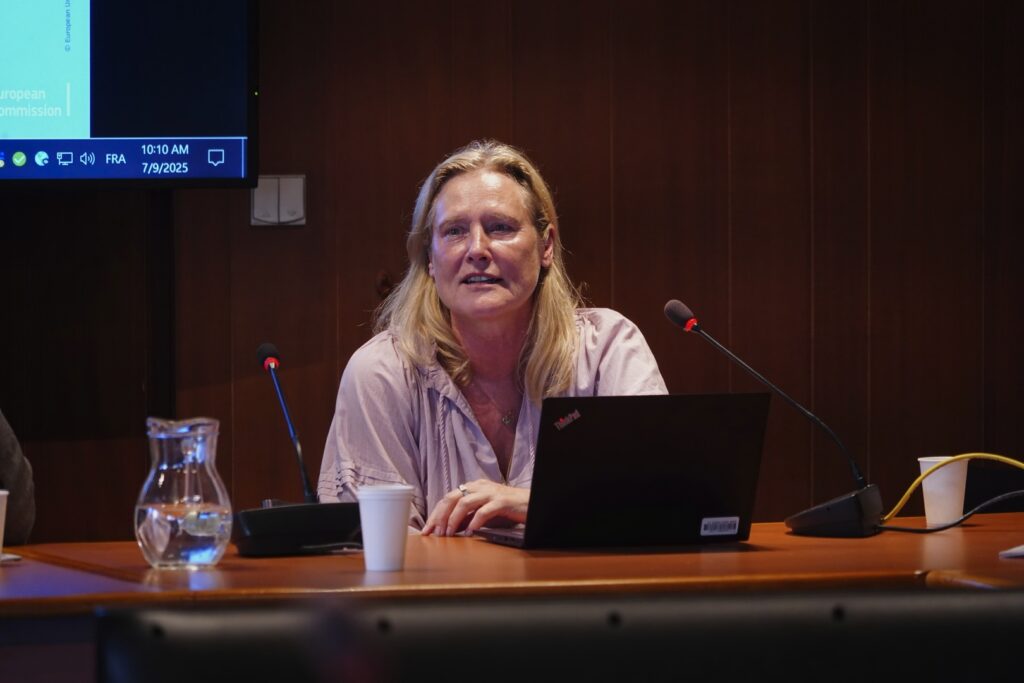
Reflecting on 25 Years of the European Research Area: Insights from Rinske Van Den Berg https://opusproject.eu/wp-content/uploads/2025/07/Rinske-1-1024x683.jpg 1024 683 Open and Universal Science (OPUS) Project https://opusproject.eu/wp-content/uploads/2025/07/Rinske-1-1024x683.jpgAs the European Research Area (ERA) marks its 25th anniversary, it’s clear that the journey is far from over. At the OPUS Final Conference held in Paris in July 2025, Rinske Van Den Berg, Project Officer at the Research Executive Agency, shared her reflections on the evolving landscape of European research and the challenges that still lie ahead.
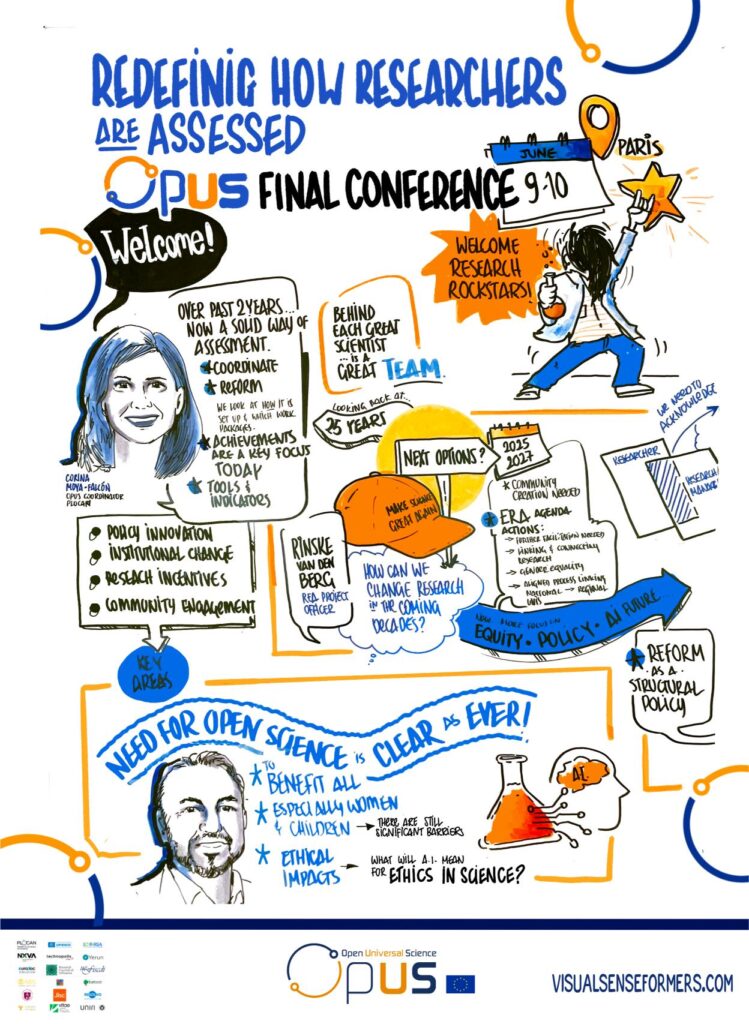
“The ERA agenda is not static. It evolves with the wishes of the Member States, who seek to further develop research, universities, research-performing organisations, and research funding organisations,” she explained. While some elements from previous ERA agendas remain, Van Den Berg emphasised that “these activities still require further implementation or alignment within the Member States. This is essential to facilitate researchers and higher education in Europe.”
Among the priorities, she highlighted two key areas: “Enabling open science and reforming research assessment remain central. We also continue to collaborate on connecting research infrastructures.” There’s a strong focus on gender equality and making research careers more attractive across the continent. “We are striving to connect activities from the European University Alliances with research and innovation, aiming to develop a fully aligned process within Europe. This involves linking local universities with regional and national authorities and connecting these to European policy decisions, forming a coherent triangle,” she said.
“There are new actions on which the ERA will focus in the coming years. You will see further developments in areas such as equity in open science, which will require more attention, and in policy and science-for-policy ecosystems. Another important area is the impact of artificial intelligence on the work and careers of researchers”, Van Den Berg noted.
None of this progress would be possible without the often-unsung heroes of research management. “All this work cannot be achieved without the support of research managers. Many of you are working hard on projects to improve the careers of research managers. From my experience in the Commission, about 80% of the people we met in meetings were not researchers themselves; they simply do not have the time. It takes a whole career to understand the policies developed in Brussels, the calls that are issued, and how to write proposals. This is not usually the work of the researcher alone, but of a dedicated team.”
“Behind every great researcher, in my view, there is a great team of people who assist, especially in matters of open science and research assessment. I am pleased that this remains a focus and is renewed on the agenda. We will continue to work together with our partners to improve the careers of research managers.”
Van Den Berg also touched on the fluidity of career paths in research. “Who in the room considers themselves a research manager rather than a researcher? I see that about 25% of you do, and that is telling. Researchers often move between roles during their careers: starting as master’s students, completing PhDs, teaching at university, perhaps taking time for family, managing teams, and sometimes returning to research. There is an overlap between the roles of researcher and research manager within individuals, and we must strive to make flexible careers possible, supported by the right assessment systems.”
On the policy front, she spoke about ongoing efforts to develop the AOS Federation, which will “enable the exchange and reuse of data, increasing the amount and productivity of FAIR research data in Europe. It is important that results are accessible, archived, and reusable so we do not reinvent the wheel.”
Copyright and data ownership are also on the agenda. “The ERA policy agenda also seeks to develop ideas on copyright, particularly as it relates to open data. Researchers should be able to own their research where necessary. The impact of open science policies and practices on platforms such as the Open Science Intelligence Platform is also being considered.”
Van Den Berg identified the reform of research assessment and open science as the two main topics in the current ERA policy agenda. “The focus for OPUS partners in the coming decade will be on these areas, especially as we approach the final years of Horizon Europe and move towards Framework Programme 10. We are supporting and mapping changes in national frameworks and connecting them with individual research institutions. It is important not only to develop policy but also to ensure real connections between institutional, national, and European developments.”
She concluded by stressing the importance of policy input from the research community: “Policy is developed from all regions and institutions involved in research, innovation, and assessment. We want to hear from projects like yours about your evidence, what you have demonstrated, and what measures you would like us to consider in future work programmes.”
“One of the aims when we started this project was to be practical, ensuring the policy brief would help us draw together all the threads and learnings so we can provide feedback to you and our colleagues at the Commission and UNESCO.”
As the ERA continues to evolve, it’s clear that collaboration, adaptability, and input from across the research community will remain vital to shaping the future of European science.