EU

The Benefits of Open Science are Not Inevitable
The Benefits of Open Science are Not Inevitable 806 746 Open and Universal Science (OPUS) Project

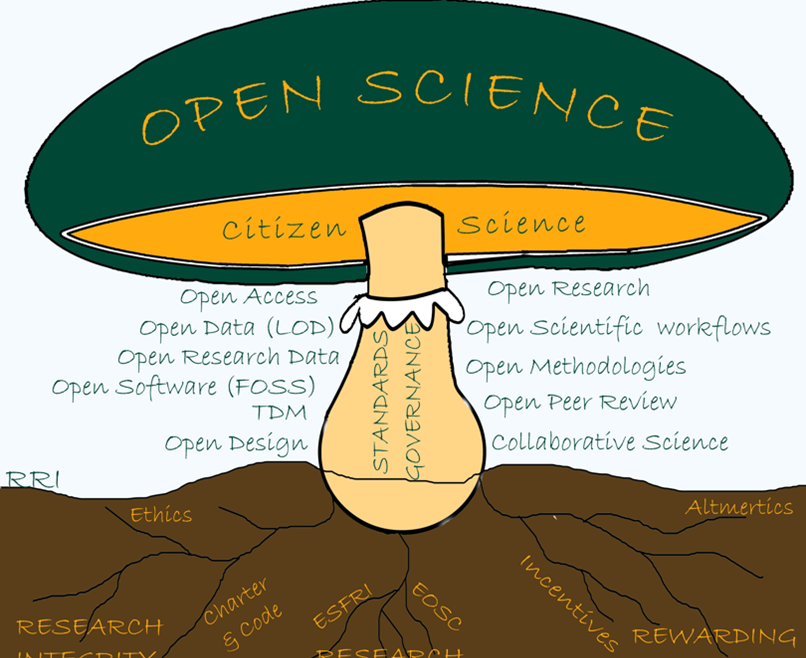
Open Science (OS) has emerged as a pivotal policy focus and a transformative paradigm for scientific research. However, as the momentum behind OS grows, so does the need for comprehensive monitoring frameworks that align with the values driving this shift. Ismael Rafols, Ingeborg Meijer, and Jordi Molas-Gallart advocate for a nuanced approach to monitoring OS, one that goes beyond simplistic metrics to capture the diverse array of practices and their impacts.

Amidst a flurry of policies and investments, monitoring OS progress has become a priority at both European and national levels. Initiatives such as OS monitors in France and Finland, along with projects by the European Commission and UNESCO, underscore the global commitment to advancing OS principles. Yet, monitoring OS presents unique challenges due to its multifaceted nature, encompassing everything from open access publishing to citizen engagement.

Rafols and his colleagues argue that traditional metrics fail to capture the essence of OS, which transcends mere quantification. Instead, monitoring efforts should focus on understanding the trajectories of OS development, including who adopts OS practices and what effects they have. This necessitates a shift from assessing the quantity of OS to examining its quality and diversity.

Drawing parallels with the evolution of science policy models, the authors propose a new monitoring framework aligned with the principles of transformative innovation. Learning, directionality, and outcomes emerge as key pillars of this framework, emphasizing the need for continuous reflection, understanding of trajectories, and assessment of real-world impacts.

In practice, this means adopting a formative approach to monitoring that fosters strategic decision-making and embraces epistemic diversity. Rather than fixating on a narrow set of indicators, monitoring should be pluralistic and adaptable to different contexts. By capturing the trajectories of OS across various dimensions, from open access to open data, monitoring can provide insights into the implications of different approaches.

Furthermore, monitoring should extend beyond outputs to encompass outcomes, examining not just what is being done to support OS, but how it is being used and its broader societal effects. Interviews and surveys play a crucial role in understanding the nuanced ways in which OS is shaping research practices and outcomes.

Ultimately, the goal of monitoring OS is not merely to assess its prevalence but to ensure that it aligns with its ideals of inclusivity and sustainability. By adopting a reflective learning approach, monitoring can guide OS activities towards transformative outcomes that benefit society as a whole.

As OS continues to reshape the scientific landscape, informed monitoring will be essential in realizing its full potential and realizing a future where science truly serves as a global public good.

Article from LSE Blog.

Photo via OpenAire (based on Eva Méndez).
Questionable Research Practices
Questionable Research Practices 800 500 Open and Universal Science (OPUS) Project

Research, a fundamental human endeavor, is susceptible to errors and lapses in judgment. Despite the emphasis on the robustness of research methods, the competitive nature of academia sometimes leads researchers to engage in questionable practices to gain an edge in funding, jobs, or prestige. While research misconduct typically involves clear breaches like data manipulation, fabrication, or plagiarism, it’s essential to recognize a broader spectrum of Questionable Research Practices (QRPs) that can compromise the integrity of scientific inquiry.

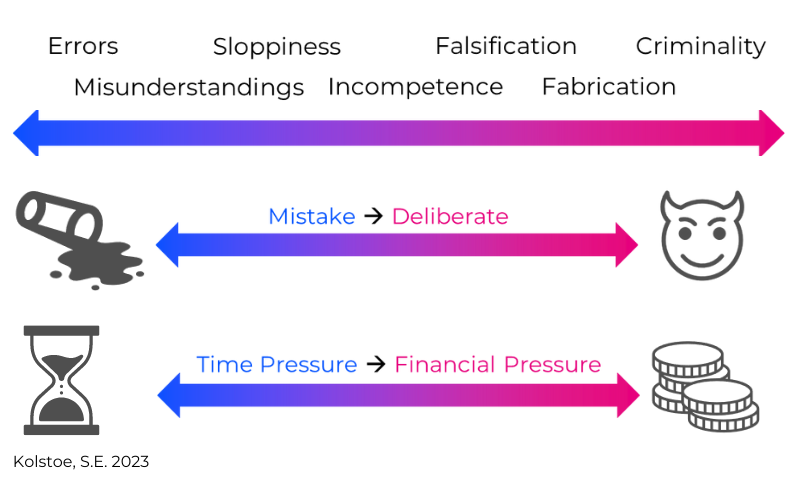
Rather than viewing QRPs as a distinct category from misconduct, it’s more constructive to see them as behaviors ranging along a spectrum from inadvertent mistakes to deliberate malfeasance. This perspective acknowledges that anyone involved in research can, at times, veer into questionable territory. It underscores the collective responsibility of the research community to identify and address QRPs to uphold research integrity.

The spectrum concept elucidates how seemingly innocuous missteps can escalate into serious misconduct. Minor errors, if unchecked, may culminate in attempts to conceal mistakes, leading to fraud or even criminal behavior. Recognizing this progression informs strategies to mitigate QRPs’ impact. Adherence to rigorous methodologies, proficiency in statistical analysis, and transparent data sharing emerge as crucial safeguards against QRPs’ encroachment.

Moreover, understanding the causes of QRPs informs preventative measures. Time constraints may predispose researchers to honest errors, necessitating meticulous methodological adherence. Financial pressures, on the other hand, heighten the risk of more egregious misconduct, necessitating vigilant oversight. By acknowledging QRPs as a continuum, researchers and stakeholders are reminded of the perpetual vigilance required to safeguard research quality.

Addressing QRPs isn’t merely about policing individual transgressions but embodies a collective commitment to fostering a culture of research integrity. By promoting transparency, accountability, and adherence to ethical standards, the research community upholds its commitment to producing reliable and trustworthy knowledge.

This article, distributed under a Creative Commons license, underscores the importance of confronting QRPs as a fundamental aspect of promoting research integrity. Acknowledgments extend to colleagues for their contributions to this discourse.

DOI: https://doi.org/10.37672/UKRIO.2023.02.QRPs

Photo via Simon Kolstoe

15 Million Euro Support for Researchers and Open Science
15 Million Euro Support for Researchers and Open Science 492 691 Open and Universal Science (OPUS) Project

In a significant move towards advancing open science initiatives, Open Science NL has earmarked a substantial sum of 15 million euros for bolstering Local and Thematic Digital Competence Centres (LDCCs and TDCCs). Collaborating with the Netherlands eScience Center, this initiative aims to enhance research software training offerings and invest in research data interoperability expertise.

The decision to allocate these funds stems from the recognition of certain gaps in the current landscape of digital competence centers. While significant progress has been made in augmenting professional capacity for working with research software and data, two critical areas remain under-addressed: research software training and data interoperability.

With research increasingly reliant on computational methods, the need for researchers proficient in digital and computational expertise has become paramount. However, many researchers lack formal training in software development and management, despite their proficiency in their respective fields of research. Consequently, there is a pressing demand for training programs tailored to equip researchers with essential digital skills.

Furthermore, although tools for data sharing and repository creation have proliferated, attention to interoperability aspects lags behind. The absence of comprehensive interoperability compromises the reusability of research data, hindering integration with other data sets and workflows for analysis and processing.

In response to these challenges, Open Science NL’s funding program aims to expand the capacity of LDCCs and TDCCs in two key areas: research software training and ontology/metadata expertise for research data. The program will support the establishment of a national network to facilitate the training of researchers and research support staff in open research software.

The funding program outlines specific points to be covered:

  1. LDCCs: Each LDCC can apply for up to 0.5 Full-Time Equivalent (FTE) trainer capacity per year for open source software skills and up to 0.5 FTE per year for community manager capacity focused on research data interoperability. This will facilitate collaboration with metadata and ontology experts within TDCCs to enhance interoperability aspects of research data.
  2. TDCCs: TDCCs can apply to increase their capacity in domain-specific metadata and ontologies, with a maximum of 2 FTE per year. This will aid in the implementation of domain-specific standards and tools, fostering international alignment and collaboration.
  3. Netherlands eScience Center: The center can apply to appoint up to 1 FTE community management capacity per year to establish a national network of software trainers. This program will include train-the-trainer activities and collaboration on open training material development.

This funding opportunity, although non-competitive, is subject to quality assessment and spans a four-year period. Eligible parties have been invited to submit proposals, marking a significant step forward in advancing open science initiatives and fostering digital competence in research communities.

Find more information here.

MSCA Financial Guide Published
MSCA Financial Guide Published 680 680 Open and Universal Science (OPUS) Project

The Marie Skłodowska-Curie Actions (MSCA) stand as a beacon of opportunity for researchers across Europe, offering avenues for training, innovation, and collaboration. With its varied programs tailored to different career stages, MSCA has become instrumental in fostering a vibrant research landscape. In this guide, we delve into the intricacies of MSCA grants, shedding light on their implementation and the roles of various participants.

1. Introduction: MSCA Grants

MSCA encompasses four main types of actions, each designed to cater to specific objectives:

  • Doctoral Networks (DN): Multi-beneficiary actions aimed at nurturing innovative doctoral candidates and enhancing doctoral training excellence in Europe.
  • Postdoctoral Fellowships (PF): Mono-beneficiary actions focused on empowering researchers with PhDs to acquire advanced skills through international and interdisciplinary mobility.
  • Staff Exchanges (SE): Multi-beneficiary initiatives fostering international collaboration and knowledge exchange across research and innovation domains.
  • COFUND: Mono-beneficiary actions facilitating the co-financing of doctoral and postdoctoral programs at various levels to promote best practices in research training and mobility.

Managed by the European Research Executive Agency (REA), these actions operate under the Horizon Europe Unit Grants Model Grant Agreement (HE Unit MGA), streamlining funding mechanisms to prioritize research outputs and minimize administrative burdens.

2. Categories of Participants

MSCA projects engage diverse entities, each contributing uniquely to project implementation:

  • Beneficiaries: Responsible for project execution, including recruitment, supervision of researchers, and program management.
  • Associated Partners: Collaborators involved in project implementation without signing the grant agreement, contributing to tasks outlined in project proposals.
  • Implementing Partners (specific to COFUND): Organizations receiving financial support from COFUND beneficiaries to execute doctoral or postdoctoral programs.
  • Researchers/Staff: Individuals driving research activities, spanning all career stages and research domains.

3. Recruitment of Researchers and Secondment of Staff

MSCA actions prioritize researcher training, mobility, and career development, with specific guidelines tailored to each action:

  • MSCA Doctoral Networks: Emphasize objective recruitment procedures and fair working conditions for researchers, with requirements for full-time employment contracts or equivalent arrangements.
  • Part-time employment: Permitted under specific circumstances, such as personal or family reasons, subject to prior approval.

Building Bridges

The MSCA grants pave the way for groundbreaking research, fostering a dynamic ecosystem of collaboration, innovation, and knowledge exchange. By understanding the intricacies of these grants and the roles of different participants, researchers can unlock a world of opportunities to propel their careers and contribute to the advancement of science and society.

More info can be found here.

CoARA Webinar on Action Plans
CoARA Webinar on Action Plans 680 680 Open and Universal Science (OPUS) Project

In July 2022, the Agreement on Reforming Research Assessment (ARRA) was unveiled, establishing a unified framework and principles aimed at revolutionizing the evaluation of research, researchers, and research organizations. As dedicated advocates for transformative change in the landscape of research assessment, signatories of ARRA have pledged not only to champion this cause but also to actively spearhead the implementation of ARRA’s core commitments within their respective institutions.

Following the signing of ARRA, signatories are tasked with crafting Action Plans, delineating specific milestones that detail the strategies for reviewing and advancing their assessment criteria, tools, and processes. These Action Plans are pivotal in ensuring the effective execution of ARRA’s objectives within the stipulated timeframe.

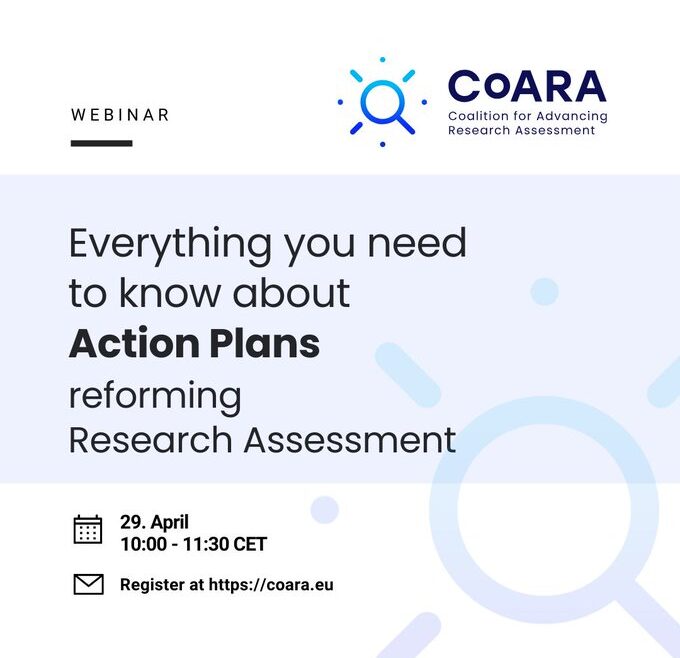
To guide signatories through this crucial phase and to facilitate a robust exchange of insights and best practices, CoARA is delighted to extend an invitation to all signatories and prospective signatories to join us for an enlightening webinar.

Event Details:

  • Date: Monday, April 29th
  • Time: 10:00 AM to 11:30 AM (CEST)
  • Platform: Zoom

During this webinar, participants will have the opportunity to:

  1. Gain insights into the intricacies of designing Action Plans tailored to their institution’s mission and aligned with the commitments of ARRA.
  2. Explore real-life examples and reflections from early adopters to glean inspiration and best practices.
  3. Engage in interactive sessions aimed at fostering dialogue, sharing experiences, and addressing pertinent questions.

Agenda:

  1. Welcome: Dr. Erzsebet Toth-Czifra, CoARA Secretariat
  2. Action Plans: A Roadmap for Signatories to Implement the Agreement – Dr. Karen Stroobants, CoARA Vice Chair
  3. Showcasing Action Plans and Lessons Learnt: University of Rijeka – Prof. Saša Zelenika
  4. Showcasing Action Plans and Lessons Learnt: University of Strathclyde – Dr. Grace Murkett
  5. Reflections on the First Wave of Action Plans: Dr. Erzsebet Toth-Czifra, CoARA Secretariat / Dr. Laurence El Khouri, CNRS
  6. Question and Answer Session

We cordially invite you to register for this webinar by clicking here.

Join to embark on this transformative journey towards reshaping research assessment practices for a more equitable and impactful future.

The British Library Hack is a Warning for All Academic Libraries
The British Library Hack is a Warning for All Academic Libraries 1024 496 Open and Universal Science (OPUS) Project

In a recent cyber incident report released by the British Library, the organization sheds light on the vulnerabilities that led to a devastating ransomware attack by the notorious group Rhysida. Simon Bowie, an expert in the field, argues that this breach underscores the consequences of under-resourced technical teams and the widespread outsourcing of critical infrastructure.

The attack, orchestrated by Rhysida, resulted in significant downtime for many of the British Library’s essential systems, with some remaining inaccessible for months. Additionally, personal data belonging to employees was auctioned off on Rhysida’s dark web platform, exacerbating the fallout from the breach. Despite ongoing efforts to recover, the incident has prompted reflections on the management failures and the undervaluation of technical expertise within the library’s operations—a narrative that resonates across higher education institutions in the UK.

The British Library’s cyber incident review paper identifies several underlying issues that contributed to the breach. Outdated legacy systems, lacking adequate security measures, and an overly complex technological landscape left the institution vulnerable to attack. Furthermore, the absence of multi-factor authentication compounded these vulnerabilities, revealing systemic management deficiencies.

Notably, the report hints at a broader management problem—a shortage of investment in internal technical capabilities. The strain on the IT department, exacerbated by staff shortages and the loss of expertise due to employee turnover, suggests a reliance on outsourcing as a stopgap measure. While the paper does not explicitly state this, it implies that the library’s decision to outsource critical technology functions left it susceptible to exploitation.

The trend of outsourcing is not unique to the British Library but reflects a broader pattern within UK higher education institutions. As budgets dwindle and managerial priorities shift, libraries have increasingly turned to third-party vendors to manage their systems and infrastructure. This divestment in internal expertise, coupled with a pursuit of transient technological trends, has left libraries vulnerable to cyber threats.

Marshall Breeding’s Library Technology Guides corroborates this trend, illustrating how the majority of UK higher education providers outsource their library systems to corporate vendors. The dominance of companies like Ex Libris highlights the financial and strategic implications of this approach, often at the expense of fostering internal technical capabilities.

Bowie argues that this institutional devaluation of technical skills not only consolidates the power of corporate suppliers but also reflects a broader trend of generic management prioritized over specialized domain knowledge. The consequences of this approach were evident in the British Library’s reliance on cloud-based administrative systems, neglecting critical library management functions vulnerable to attack.

The aftermath of the 2023 British Library cyber-attack serves as a cautionary tale for cultural and heritage organizations nationwide. Instead of perpetuating the cycle of outsourcing and dependency on external vendors, Bowie advocates for a renewed focus on investing in internal expertise. By prioritizing the development of resilient IT infrastructures and bolstering library systems with dedicated technical teams, higher education institutions can mitigate the risks posed by cyber threats and safeguard their invaluable resources for generations to come.

Source: LSE Blog

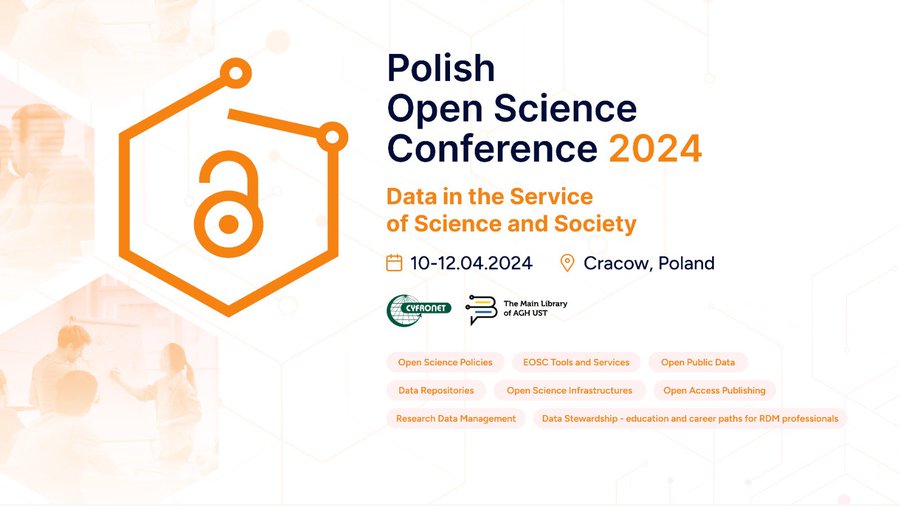
The Polish Open Science Conference 2024
The Polish Open Science Conference 2024 900 506 Open and Universal Science (OPUS) Project

The Polish Open Science Conference stands as an unique opportunity for the Open Science community, fostering dialogue and collaboration among stakeholders dedicated to advancing the principles of openness in research. This pivotal event brings together researchers, librarians, data stewards, infrastructure creators, publishers, and more to delve into the multifaceted realms of Open Science.

Dedicated to delving into various aspects of Open Science, the conference covers a wide array of topics, including data management in research projects, Open Science infrastructure, research data repositories, and the role of Open Science in scientific evaluation. With a focus on sharing experiences, trends, and challenges facing Open Science initiatives globally, the conference serves as a platform for shaping the Open Science landscape not only in Poland but also worldwide.

Building on the legacy of the Pomeranian Open Science Conference, the Polish Open Science Conference continues to evolve, drawing inspiration from six successful editions held from 2017 to 2022. This year’s conference promises to uphold its tradition of excellence, offering participants the opportunity to engage in scientific and professional discussions, exchange experiences, and gain insights into the latest developments in Open Science.

The conference invites submissions for presentations, announcements, and posters under the theme “Data in the Service of Science and Society.” Participants can explore topics such as data analysis, Open Science policy, data stewardship, and Open Access publishing, among others.

Participants can choose from various participation options, including basic, extended, and one-day tickets, with fees covering networking events, sessions, meals, and workshops. Additionally, participants have the option to join a post-conference study tour, further enriching their experience and understanding of Open Science initiatives.

Join us at the Polish Open Science Conference as we come together to explore, discuss, and shape the future of Open Science, driving innovation and collaboration for the betterment of science and society.

For inquiries and submissions, please contact: os-conf-pl@cyfronet.pl

Find out more here.

FAQs about Open Science
FAQs about Open Science 1024 1024 Open and Universal Science (OPUS) Project

Have you ever felt like scientific research is trapped behind a fortress of jargon, paywalls, and exclusivity? Fear not, for the dawn of Open Science, Open Research, and Open Access is upon us! But wait, what exactly are these terms? How do they impact researchers, students, and the curious minds alike? Let’s embark on an exhilarating journey to demystify these concepts and unveil the secrets of the academic realm!

FAQ #1: What is Open Science?

Picture this: a scientific utopia where knowledge flows freely like a pristine river, accessible to all who thirst for understanding. That’s Open Science in a nutshell! It’s a paradigm shift towards transparency, collaboration, and unrestricted access to scientific knowledge. Gone are the days of hoarding data like a dragon guards its treasure; Open Science invites researchers to share their findings, methodologies, and even raw data with the world.

FAQ #2: What about Open Research?

Ah, Open Research, the rebellious cousin of traditional academia! While Open Science focuses on the transparency of the scientific process, Open Research extends its embrace to various scholarly endeavors, including social sciences, humanities, and beyond. Imagine a vibrant marketplace of ideas, where researchers exchange insights, methodologies, and even failures without fear of judgment or exploitation. It’s a celebration of diversity, innovation, and intellectual freedom!

FAQ #3: And what exactly is Open Access?

Imagine stumbling upon a treasure trove of knowledge, unlocked and waiting for you to explore, without the pesky barrier of a paywall. That’s the magic of Open Access! It’s a revolutionary concept that grants unrestricted access to scholarly articles, research papers, and academic resources without charging users for the privilege. No more digging through dusty archives or begging for library access; with Open Access, the world’s knowledge is just a click away!

FAQ #4: How do these concepts benefit researchers?

Ah, the million-dollar question! Open Science, Open Research, and Open Access aren’t just lofty ideals; they’re game-changers for researchers worldwide. By embracing transparency and collaboration, researchers can accelerate the pace of discovery, avoid redundant work, and foster interdisciplinary partnerships. Moreover, Open Access ensures that their findings reach a wider audience, from fellow academics to policymakers and the general public, amplifying the impact of their work beyond the ivory tower.

FAQ #5: What about students and the public?

But of course, the revolution of Open Science, Open Research, and Open Access isn’t limited to academia alone. Students, educators, and curious minds of all stripes stand to benefit from this newfound openness. For students, Open Access means access to a wealth of knowledge without breaking the bank, empowering them to explore diverse perspectives and ignite their passion for learning. As for the public, Open Science bridges the gap between ivory towers and Main Street, inviting citizens to participate in the scientific discourse, make informed decisions, and hold institutions accountable.

FAQ #6: How Does Open Science Promote Collaboration and Innovation?

Open Science fosters collaboration and innovation by breaking down barriers to information sharing and encouraging interdisciplinary cooperation. By making research findings, methodologies, and data openly accessible, researchers can build upon each other’s work more easily, leading to new insights and discoveries. This collaborative approach accelerates the pace of scientific advancement and encourages the development of novel solutions to complex problems.

FAQ #7: What Role Does Open Research Play in Democratizing Knowledge?

Open Research democratizes knowledge by making scholarly resources freely available to all, regardless of geographical location, institutional affiliation, or financial resources. By removing barriers to access, Open Research ensures that knowledge is accessible to a broader audience, including researchers in developing countries, independent scholars, policymakers, educators, and the general public. This democratization of knowledge promotes inclusivity, diversity, and equity in the academic community.

FAQ #8: Navigating the Open Access Landscape: A Treasure Map for the Modern Scholar

Navigating the Open Access landscape requires familiarity with the various models and platforms available for accessing scholarly content. Researchers can explore Open Access repositories, journals, and databases to discover a wealth of freely accessible literature spanning diverse disciplines. Additionally, tools such as the Directory of Open Access Journals (DOAJ) and the Open Access Button can help researchers identify Open Access publications and resources relevant to their interests.

FAQ #9: The Ripple Effect: How Open Science Impacts Society Beyond Academia

Open Science has far-reaching implications beyond academia, influencing policy-making, public discourse, and societal progress. By promoting transparency, accountability, and accessibility in research, Open Science enhances public trust in scientific institutions and facilitates evidence-based decision-making. Moreover, Open Science empowers citizens to engage with scientific knowledge, participate in discussions on important issues, and contribute to the advancement of knowledge for the betterment of society as a whole.

FAQ #10: Embracing Openness: A Call to Action for the Curious Minds of Tomorrow

Embracing Open Science and Open Access is not just a trend but a transformative movement shaping the future of research and scholarship. Researchers, students, educators, policymakers, and citizens alike are encouraged to join this movement by practicing open research methods, advocating for open access policies, and supporting initiatives that promote transparency and collaboration in science. By working together to advance the principles of openness and accessibility, we can build a more inclusive, equitable, and knowledge-rich society for generations to come.

Join the movement:

And there you have it, folks! The enigmatic world of Open Science, Open Research, and Open Access demystified for your enlightenment. No longer confined to the dusty shelves of academia, these concepts are transforming the landscape of knowledge sharing, empowering researchers, students, and the public alike to embark on a journey of discovery without boundaries. So, embrace the spirit of openness, for the quest for knowledge knows no limits!

Photo via HubGem Blog

Institutional Diamond Open Access Publishing
Institutional Diamond Open Access Publishing 679 453 Open and Universal Science (OPUS) Project

In the expansive ecosystem of academic publishing, Institutional Publishers and Service Providers (IPSPs) form a critical cornerstone, facilitating the dissemination of scholarly works through Diamond Open Access (OA) models. However, a comprehensive investigation reveals that there is no one-size-fits-all approach to the tasks undertaken by these institutions. Rather, the landscape is characterized by a diverse array of options and services distributed among the IPSPs, their parent organizations, service providers, and academic personnel.

The sustainability of IPSPs is influenced by various factors, including their missions, size, and service provision capabilities. While some institutions may strive to upscale, others prioritize maintaining their current stature. The funding models utilized by IPSPs vary significantly, with some relying on a mix of subscription fees or Article Processing Charges (APCs) alongside Diamond funding streams. Notably, the role of the parent organization is paramount for providing basic support, often in the form of in-kind assistance such as personnel and services.

Budget management emerges as a secondary concern for IPSPs compared to commercial publishers, though the majority track their expenses and revenues diligently to meet the expectations of funders, sponsors, and donors. However, the reliance on grants can burden IPSPs with administrative tasks and reporting requirements, impacting their operational efficiency.

The workforce within and outside IPSPs plays a pivotal role in their sustainability, yet the organizational structure and contribution of this workforce are often ambiguous. Peer-to-peer collaboration among IPSPs remains rare, with most collaborations occurring asymmetrically between an IP and local service providers or parent organizations.

Looking towards the future, IPSPs identify several challenges, including the need for more financial resources, instability in personnel, and dependence on parent organizations. To address these challenges, recommendations include increasing funding from national and international stakeholders, fostering collaboration among IPSPs, and investing in infrastructure to support the Diamond OA ecosystem.

In conclusion, sustaining the ecosystem of institutional Diamond OA publishing requires a multifaceted approach that involves collaboration, adequate funding, and recognition of the invaluable contributions made by IPSPs, their parent organizations, and supporting institutions. By addressing these recommendations, stakeholders can work towards a more equitable and sustainable scholarly publishing landscape.

Full study here.

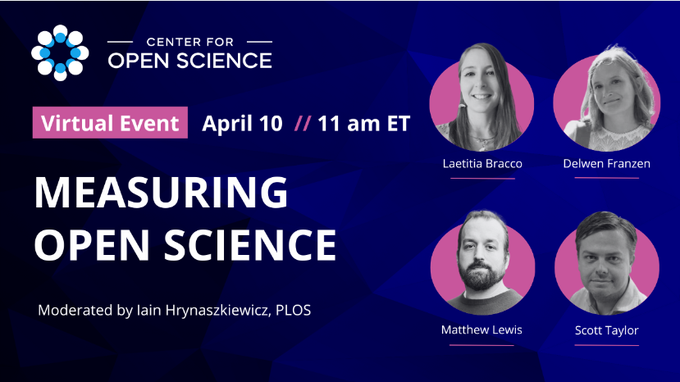
Measuring Open Science
Measuring Open Science 680 382 Open and Universal Science (OPUS) Project

In the pursuit of advancing scientific knowledge and fostering collaboration, the principles of open science have gained considerable momentum in recent years. However, to truly harness the benefits of open science, it is imperative to gauge the extent of its adoption and effectiveness across various research communities. The upcoming virtual symposium, titled “Measuring Open Science,” scheduled for April 10, 2024, at 05:00 PM, aims to address precisely this need.

Open science encompasses a range of practices, including but not limited to sharing research data, protocols, and code, as well as preprint posting and open access publishing. While numerous initiatives advocating for open science have emerged from stakeholders across the research landscape – including funders, researchers, institutions, and publishers – the extent of adoption and its variations across disciplines and geographical regions remain uncertain.

The symposium will highlight various initiatives and tools designed to measure and track progress towards open science adoption. Notable examples include the International Reproducibility Networks, which promote open research practices led by researchers themselves, and Aligning Science Across Parkinson’s, which has implemented stringent open science requirements. Additionally, eLife’s transition towards a preprint-first publishing model underscores the evolving nature of scholarly communication.

Recognizing the need for comprehensive and reliable evidence, efforts have been made to develop metrics and tools for measuring open science practices. The Charite Metrics Dashboard by BIH QUEST, along with tools like DataSeer and SciScore, offer valuable insights into the adoption of open science practices. Publishers such as PLOS have also introduced Open Science Indicators (OSI) to track these practices over time in scholarly literature.

One of the key challenges in measuring open science lies in defining and operationalizing various practices across different fields. This symposium seeks to facilitate discussions among researchers, funders, institutions, and publishers to explore commonalities and differences in approaches. By fostering collaboration and sharing insights, the event aims to propel the adoption of open science practices forward.

The symposium, organized by the Open Science Framework (@OSFramework), promises to offer valuable insights into the current state of open science adoption. Participants can expect discussions on innovative initiatives and metrics shaping the landscape of open science practices. With sessions scheduled to commence at April 10, 2024, 05:00 PM, this event presents a unique opportunity to engage with stakeholders committed to advancing open science.

In conclusion, as the scientific community continues to embrace the principles of open science, it becomes increasingly important to measure its impact and progress. The symposium on “Measuring Open Science” serves as a platform for dialogue and collaboration, paving the way for a more transparent and collaborative research ecosystem.

Register here

Privacy Preferences

When you visit our website, it may store information through your browser from specific services, usually in the form of cookies. Our Privacy Policy can be read here.

Here you can change your Privacy preferences. It is worth noting that blocking some types of cookies may impact your experience on our website and the services we are able to offer.

Click to enable/disable Google Analytics tracking code.
Click to enable/disable Google Fonts.
Click to enable/disable Google Maps.
Click to enable/disable video embeds.
Our website uses cookies, mainly from 3rd party services. Define your Privacy Preferences and/or agree to our use of cookies.