#OpenScience

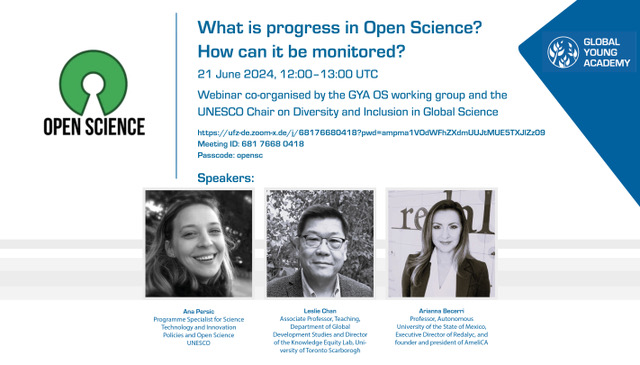
Join the Webinar: “What is Progress in Open Science? How Can It Be Monitored?”
Join the Webinar: “What is Progress in Open Science? How Can It Be Monitored?” 640 365 Open and Universal Science (OPUS) Project

The Global Young Academy and the UNESCO Chair at CWTS Leiden are excited to co-organize an insightful webinar titled “What is progress in OpenScience? How can it be monitored?” Join on June 21, 2024, from 14:00 to 15:00 (CEST) for an engaging session featuring distinguished speakers Ana Persic, Leslie Chan, and Arianna Becerril-García.

This event is part of the Open Science First Fridays lecture series, which highlights the perspectives of experts from various fields on diverse aspects of open science. The series, organized by the Global Young Academy’s Open Science group, covers topics ranging from education and data science to research and law.

Don’t miss this opportunity to deepen your understanding of open science and explore how its progress can be effectively monitored.

Register here.

Open Science: The Invisible Revolution in Your Everyday Life
Open Science: The Invisible Revolution in Your Everyday Life 850 850 Open and Universal Science (OPUS) Project

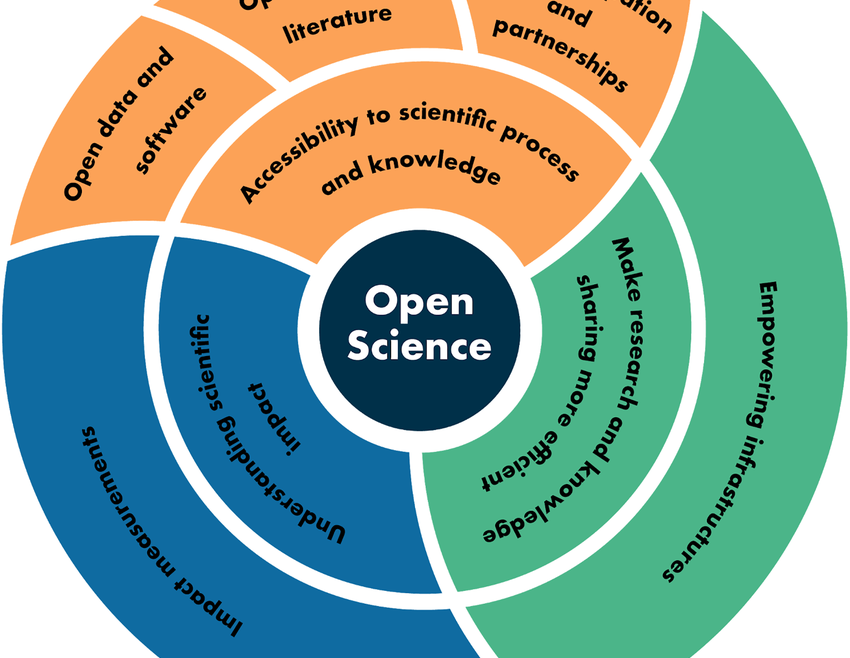
In recent years, there’s been a quiet but profound transformation sweeping through the world of research and innovation—open science. You may not realize it, but open science is likely influencing your daily life in more ways than you know. From the development of new medications to the accuracy of your weather forecast, this movement is reshaping the way knowledge is created and shared, benefiting society in subtle yet significant ways.

The Essence of Open Science

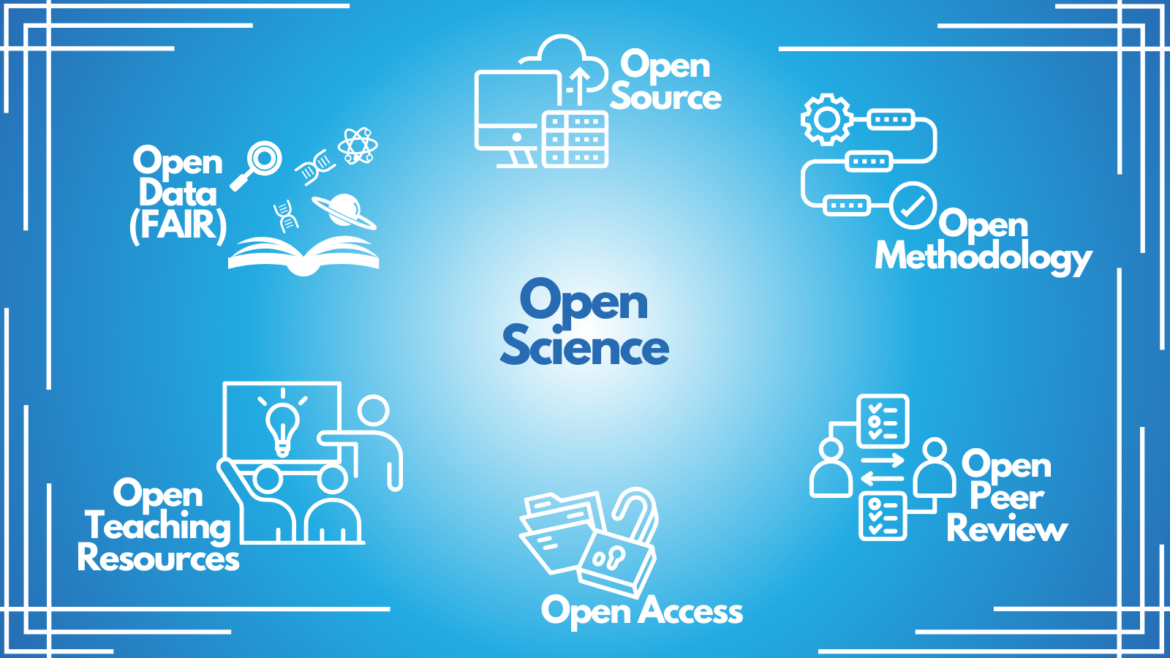
Open science is about making scientific research and data accessible to everyone. This includes sharing research papers, datasets, and methodologies freely online, enabling collaboration and transparency. The core principles are openness, accessibility, and the democratization of knowledge, ensuring that scientific progress is not confined to elite institutions or behind paywalls.

Everyday Encounters with Open Science

1. Health and Medicine: One of the most tangible impacts of open science is in healthcare. The rapid development of COVID-19 vaccines was accelerated by unprecedented levels of data sharing and collaboration across the globe. Researchers openly shared findings, genomic sequences, and clinical trial data, allowing for quicker peer reviews and iterations. This open approach continues to influence ongoing research into treatments and vaccines for other diseases.

2. Technology and Innovation: Open science fuels technological advancements that you use every day. Open-source software, a cornerstone of open science, powers your smartphones, computers, and the internet. Innovations like the World Wide Web and the Linux operating system were born from principles of openness and collaboration. Even major tech companies like Google and Microsoft contribute to and benefit from open-source projects, enhancing the tools and services you rely on.

3. Environmental Awareness: Climate science is another area where open science plays a crucial role. Researchers globally share climate models, environmental data, and findings on platforms like the Intergovernmental Panel on Climate Change (IPCC). This openness allows for more accurate climate predictions and informed policy decisions. It also empowers citizen scientists and activists to contribute to and disseminate knowledge about environmental issues.

4. Education and Learning: Open educational resources (OER) are transforming how we learn. Free access to high-quality textbooks, lecture notes, and courses from top universities is democratizing education. Platforms like Coursera, edX, and Khan Academy offer vast repositories of knowledge accessible to anyone with an internet connection, breaking down traditional barriers to learning.

5. Journalism and Media: Data journalism is another area enriched by open science. Journalists use openly available datasets to create insightful stories that hold institutions accountable and inform the public. Whether it’s tracking election results, analyzing public spending, or investigating environmental data, the availability of open data empowers journalists to produce more in-depth and accurate reporting.

The Future of Open Science

The momentum behind open science is growing, driven by both technological advancements and a cultural shift towards greater transparency. Governments and funding bodies increasingly mandate open access to publicly funded research. Institutions are adopting open data policies, and researchers are embracing preprint servers and open-access journals.

However, challenges remain. Issues of data privacy, the digital divide, and ensuring the quality and reproducibility of openly shared research need ongoing attention. The scientific community must navigate these challenges while continuing to advocate for the principles of openness and collaboration.

A New Paradigm for Progress

Open science is an invisible force that touches many aspects of our lives. It’s revolutionizing healthcare, driving technological innovation, enhancing environmental understanding, democratizing education, and enriching journalism. By breaking down barriers and fostering a culture of sharing and collaboration, open science is not just a trend but a transformative approach that promises a more inclusive and knowledgeable society. So next time you marvel at a scientific breakthrough or benefit from cutting-edge technology, remember that open science is likely playing a crucial role behind the scenes.

Photo via ResearchGate

Problematic Publishing Practices that Harm Open Science
Problematic Publishing Practices that Harm Open Science 1024 1024 Open and Universal Science (OPUS) Project

Open science is a movement aimed at making scientific research, data, and dissemination accessible to all levels of an inquiring society, amateur or professional. While the ideals of open science promote transparency, collaboration, and accessibility, several publishing practices continue to hinder these goals. This article explores some of the most problematic publishing practices that pose significant challenges to the advancement of open science.

1. Paywalls and Subscription Fees

One of the most significant barriers to open science is the prevalence of paywalls and expensive subscription fees imposed by major academic publishers. These paywalls restrict access to scholarly articles, making it difficult for researchers, particularly those from low-income institutions and developing countries, to stay updated with the latest findings. This pay-for-access model perpetuates inequality in the availability of knowledge and stifles scientific progress by limiting who can participate in the scientific conversation.

2. Article Processing Charges (APCs)

In response to the demand for open access, many publishers have introduced Article Processing Charges (APCs), which require authors to pay a fee to make their work openly accessible. While this model shifts the cost burden from the reader to the author, it still poses a significant barrier. Many researchers, especially those without substantial funding, find it challenging to afford these fees. As a result, the publication of research can become skewed towards well-funded researchers and institutions, undermining the inclusivity that open science strives for.

3. Embargo Periods

Some journals impose embargo periods, during which access to newly published articles is restricted to subscribers. After a certain period, the articles may become freely accessible, but this delay can be detrimental to the timely dissemination of scientific knowledge. In fast-moving fields, such as medical research, any delay in sharing findings can hinder progress and impact critical decision-making.

4. Impact Factor and Citation Metrics

The reliance on journal impact factors and citation metrics as measures of research quality has problematic implications for open science. High-impact journals often have restrictive access policies, and the pressure to publish in these journals can discourage researchers from choosing open access venues with lower impact factors. Moreover, the focus on citation metrics can lead to practices like self-citation and citation rings, which distort the true impact and quality of research.

5. Lack of Transparency in Peer Review

The peer review process is fundamental to maintaining scientific standards, yet it often lacks transparency. Traditional peer review is usually closed and anonymous, which can lead to biases, conflicts of interest, and a lack of accountability. Open peer review, where reviewer comments and author responses are publicly available, can enhance transparency and trust in the review process. However, the adoption of open peer review is still limited.

6. Limited Data Sharing

Many journals and researchers still do not adhere to open data practices, where the data underlying research findings are made openly available for verification and reuse. Data hoarding restricts the ability of other researchers to validate findings, reproduce studies, and build upon previous work. Encouraging comprehensive data sharing is essential for the reproducibility and reliability of scientific research.

7. Predatory Journals

The rise of predatory journals, which exploit the open access model by charging publication fees without providing legitimate peer review or editorial services, presents another significant challenge. These journals often prioritize profit over quality, leading to the dissemination of poorly vetted and unreliable research. This practice undermines trust in open access publications and harms the credibility of genuine open science efforts.

Towards a More Equitable Scientific Ecosystem

While the open science movement has made significant strides towards democratizing access to scientific knowledge, several problematic publishing practices continue to impede its progress. Addressing these issues requires concerted efforts from researchers, institutions, funders, and publishers to adopt more equitable and transparent practices. By doing so, the scientific community can move closer to realizing the full potential of open science, fostering a more inclusive, collaborative, and innovative research environment.

Photo via The Chinese University of Hong Kong Library

Information Session: Funding Call
Information Session: Funding Call 680 383 Open and Universal Science (OPUS) Project

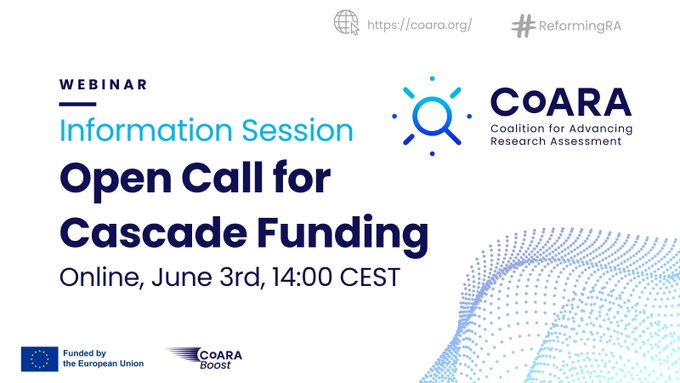
CoARA is excited to announce a dedicated one-hour Q&A online session about the first CoARA Boost Cascade Funding Programme. This informative session is designed to guide and support prospective applicants in understanding the call’s objectives and navigating the application process.

Event Details:

  • Date: June 3rd, 2024
  • Time: 14:00 – 15:00 CEST
  • Format: Online

Purpose of the Information Session

The upcoming session aims to provide potential applicants with a comprehensive overview of the funding programme. Participants will gain insights into the application requirements, the evaluation criteria, and the overall goals of the CoARA Boost Cascade Funding initiative. This is a valuable opportunity to ask questions and clarify any uncertainties directly with experts involved in the programme.

Who Can Apply for Funding?

The CoARA Boost Cascade Funding Programme is open to:

  • Research-performing institutions
  • Research funding organizations
  • Other not-for-profit institutions

These entities must be based within the European Research Area (ERA), including EU Member States and countries associated with the Horizon Europe Framework Programme for Research and Innovation. The programme seeks to support legal entities that meet these criteria.

About the Cascade Funding Programme

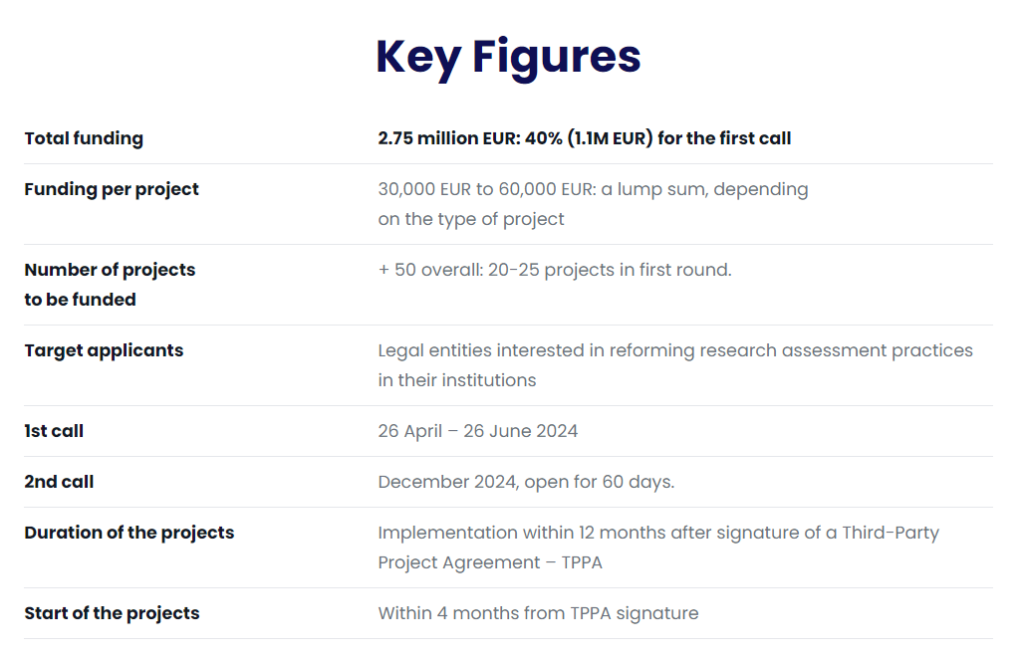
The CoARA Boost Cascade Funding Programme aims to drive institutional change through pilot projects and knowledge exchange initiatives. The first call for proposals will fund over 20 projects, each designed to:

  • Facilitate the exchange and adaptation of proven good practices within research organizations.
  • Catalyze the transformation of research assessment practices and tools, aligning them with the commitments of the Agreement on Reforming Research Assessment.
  • Support the development and testing of innovative research assessment approaches, models, and procedures.

Eligible projects are those that will contribute to lasting changes in research assessment practices across institutions within the ERA. By the programme’s end, a diverse portfolio of projects will showcase tangible outcomes that reflect the shared vision of reformed research assessment practices.

Application Details

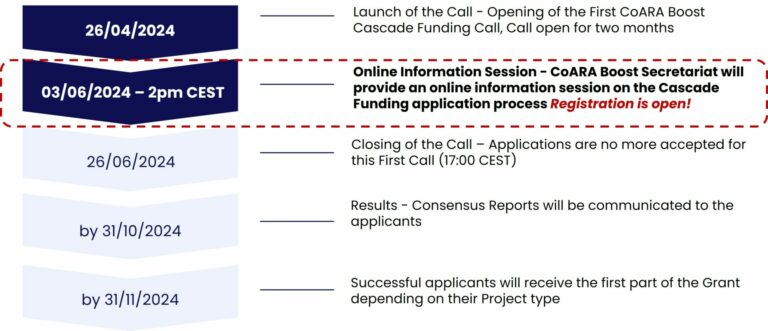
Applications for the Cascade Funding Programme are open from April 26, 2024, until June 26, 2024, at 17:00 CEST. Interested applicants are encouraged to attend the information session to gain valuable insights that could strengthen their proposals.

Register Now

To secure your spot at the information session, please register here. Don’t miss this opportunity to learn more about how the CoARA Boost Cascade Funding Programme can support your institution’s research initiatives.

Join on June 3rd to explore this exciting funding opportunity and take the first step towards making a significant impact in the research community.

For more details about the Cascade Funding Programme, eligibility criteria, and application process, please refer to the official call text available here.

Timeline of the call:

Announcing the State of Open Infrastructure 2024
Announcing the State of Open Infrastructure 2024 900 497 Open and Universal Science (OPUS) Project

Over the past year, Invest in Open Infrastructure (IOI) has conducted an in-depth investigation into the State of Open Infrastructure, examining aspects such as characteristics, funding, governance, adoption, and policy development. IOI are excited to share the results of this work today.

The report presents exclusive data and analysis on open infrastructure’s attributes and the issues affecting them, viewed through multiple lenses for a comprehensive understanding of the ecosystem.

It also includes perspectives from various stakeholders, highlighting key trends and emerging opportunities for collaboration, innovation, and investment. The report offers strategic insights and actionable recommendations to help stakeholders navigate change and complexity in research and higher education, make informed decisions, and mitigate risks.

The full report, “The State of Open Infrastructure,” is available at this link. Additionally, we offer two dashboards to explore the data:

  • Characteristics of Open Infrastructure: Analysis based on Infra Finder data, including policies, community engagement, governance, and technical information.
  • Grant Funding Data: Examination of grant funding for open infrastructure by time, geography, funder, type of support, and type of infrastructure.

Explore the full State of Open Infrastructure report.

Key Findings

  • Open Infrastructures show a strong commitment to community engagement, governance, and transparent policies and practices. Read “Characteristics of selected open infrastructures.”
  • Analysis of $415M+ in grant funding reveals that open infrastructures are cited in many awards, highlighting their significance in research and scholarship. Read “The state of open infrastructure grant funding.”
  • Procurement and IT governance processes can complicate the adoption of open infrastructure, but consortia and networks can help mitigate risks. Read “The influence of procurement and information technology governance processes on the adoption of open infrastructure” and “Trends in open infrastructure performance and adoption.”

Explore the full State of Open Infrastructure report.

Get Involved

The State of Open Infrastructure report is a snapshot at a particular time and place, and we view this as the starting point for further exploration and development.

Find out more

Open Access ‘at any cost’ Cannot Support Scholarly Publishing Communities
Open Access ‘at any cost’ Cannot Support Scholarly Publishing Communities 970 470 Open and Universal Science (OPUS) Project

Kaitlin Thaney highlights the growing momentum for “no pays” academic publishing models and the establishment of “reasonable costs” of publication, presenting opportunities to address the inequities, costs, and power dynamics that have arisen from the push towards Open Access “at any cost” over the past two decades.

The EU Council’s recent call for immediate and unrestricted access to publicly funded research has elicited strong reactions from commercial publishing giants. These companies argue that without clear details on who will cover the current publishing costs, the shift towards more equitable systems could dismantle the existing framework. This argument is not new.

Similar concerns were raised by commercial publishers following the US National Institute of Health’s 2007 mandate for federally funded research to be openly available one year after publication—a move that mirrored the open access policies and recommendations of the Canadian Institute for Health Research and the European Commission. In March 2008, PNAS convened a summit at the National Academies in Washington, D.C., where publishers expressed fears that immediate access to research would undermine their revenue models and disrupt the publishing landscape.

Despite claims that open access threatens the viability of both small and large publishers, the movement has become a significant business. During her time at Creative Commons, advocating for common use licensing practices for research, the opposition from commercial and society publishers—outnumbering open access advocates nearly 10 to 1—was intense, focusing on potential financial disruptions. The argument that taxpayer-funded research should be freely accessible to taxpayers was largely ignored.

History shows that the publishing industry can adapt to change, and fear of change should not hinder the necessary recalibration of our knowledge production and dissemination systems. Now is the time for publishers to support the communities and infrastructures that drive their profits and invest in their success.

Open Access has grown into a lucrative business, but the benefits have not fully extended to the research communities that produce and fund the research. The Budapest, Berlin, and Bethesda Open Access declarations in the early 2000s envisioned free-to-read scholarship, but the cost of publishing remains high, often unaffordable. Questions persist about what constitutes “reasonable cost” for making publicly funded research available and who should bear these costs. Ensuring equitable and inclusive access to publishing without imposing unsustainable pricing on the global research community is crucial.

The recent EU Council conclusions, along with the G7 communique, the Nelson memo from the US Office of Science and Technology Policy, and the UNESCO Recommendation on Open Science, emphasize rebalancing cost and access to promote open science. These policies aim to explore more affordable scholarly publishing avenues, addressing cost and responsibility issues that were overlooked in earlier mandates for free and open access to scientific research.

The past three decades have shown that open source adoption can support community health and vibrancy. Examples like Anaconda’s commitment to reinvest 1% of their annual revenue back into open source communities, GitHub Sponsors, Open Source Collective, and Tidelift, as well as public utilities funding models, demonstrate how businesses can share profits with the communities they rely on.

At Invest in Open Infrastructure (IOI), they are researching models that shift from extractive practices that burden researchers and institutions to those promoting accountability and reinvestment, fostering a vibrant open research ecosystem. Clear terms for “reasonable cost” and publisher contributions to supporting research communities are essential for equitable access to scholarship globally. Their upcoming research on reasonable costs for publicly funded research and our 2024 Fund aim to support researchers and institutional leaders in adopting and implementing necessary infrastructure and services for open science.

It’s time to move from preserving outdated structures to building sustainable and equitable futures. Enterprises profiting from open knowledge and research must invest in and share profits with the communities and infrastructure they depend on.

Photo via Information Matters

Original text from LSE Blog

Early Career Researchers Want Open Science
Early Career Researchers Want Open Science 1024 576 Open and Universal Science (OPUS) Project

Open Science, an initiative supported by the European Union and numerous scientific institutions, aims to make scientific research more accessible, collaborative, and reproducible. Despite the strong endorsement, the transition to Open Science is sluggish. As early career researchers, we believe it’s our responsibility to lead this transformation, adhering to Open Science principles.

The Current Landscape of Open Science

For centuries, research journals have been the primary means of disseminating scientific knowledge, providing a permanent record of study conclusions, methods, and contact information for obtaining data. However, the exponential increase in research data has rendered traditional publications inadequate for data stewardship and preservation. Even though the importance of Open Science is widely discussed, the research community has been slow to adopt practices that would ensure better data management and sharing. This lag has resulted in significant data loss, a critical issue in an era where “data is the new gold.”

Some researchers perceive Open Science and data sharing as threats, even derogatorily labeling those who utilize others’ data as parasites. Contrary to this view, we believe that embracing and enhancing Open Science tools will lead to superior scientific outcomes, enabling us to fully leverage the growing global scientific output.

The Role of Early Career Researchers

Early career scientists, often seen as more adaptable within the scientific establishment, are in a unique position to drive change. We are heavily involved in data collection and analysis and are less bound by traditional hierarchies. By training young researchers in Open Science tools, we can instigate a lasting shift in data stewardship practices.

During the 2016 LERU Doctoral Summer School on Data Stewardship, a group of us committed to three primary goals:

  1. Develop an Open Science framework to credit datasets with machine-readable metadata, provenance, and reproducible workflows.
  2. Establish training programs focused on Open Science principles and relevant tools.
  3. Ensure that we, as the first generation committed to Open Science, pass these principles on to the next generation.

Growing an Open Science Framework

An effective Open Science framework involves robust data stewardship, ensuring long-term data reusability and interoperability. This requires meticulous planning from the start of a research project. Simply publishing data and code alongside research papers is insufficient; creating detailed metadata is crucial. Such metadata can drive innovation by identifying intersecting datasets and facilitating the creation of peer-reviewed, reusable data-code environments.

Integrating data stewardship into research practices will shift the scientific culture from static research papers to dynamic, collaborative science. Additionally, developing alternative metrics for scientific impact, such as citations for code versions and datasets, will be possible.

Despite its importance, data stewardship is often neglected until the project’s end, when resources may be limited. Recognizing this, the European Commission recommends allocating 5% of research budgets to data stewardship. Adopting FAIR principles—Findable, Accessible, Interoperable, Reusable—should be an ethical responsibility, ensuring transparent and reproducible research.

A Roadmap for Early Career Researchers

  1. Training in Open Science: Early in their careers, researchers should receive standardized training in Open Science principles and tools. Programs like FOSTER (Facilitate Open Science Training for European Research) offer valuable resources for this purpose. Workshops on open access publishing and modern scientific computing practices can promote open thinking within research institutions.
  2. Avoid Reinventing the Wheel: Researchers should first explore existing sharing platforms, software, and standards before creating new ones. Utilizing established ontologies and datasets can foster collaboration and prevent redundant research efforts.
  3. Small Steps Forward: Practicing FAIR principles is a gradual process. Beginning with small steps, such as surveying team members about their views on data sharing, can initiate meaningful changes towards an Open Science environment.

Our Commitment

We pledge to be the first generation to embrace and pass on Open Science principles. Openly publishing research has been linked to higher citation rates and is becoming mandatory for many high-profile journals and funding bodies. Open practices facilitate connections with other researchers, enhancing visibility and access to new data and software resources.

Despite widespread support for open access policies, the change is slow, often hindered by entrenched practices. By committing to Open Science from the start of our careers, we can drive a cultural shift towards more transparent, reproducible, and collaborative scientific research.

Future of Transparent and Collaborative Research

The transition to Open Science requires dedication and effort from all researchers, especially early career scientists. By embracing Open Science principles and practices, we can ensure that our research is more transparent, reproducible, and impactful. The future of scientific research depends on our willingness to innovate and collaborate openly. Let’s lead the way in making Open Science a reality.

Full paper can be read here.

Photo via Marco-Bolo

Opening the Door to Open Science: Progress and Challenges
Opening the Door to Open Science: Progress and Challenges 640 426 Open and Universal Science (OPUS) Project

The first global study on trends and standards in open science has revealed a landscape marked by both promising practices and significant inequities. While there have been strides in the adoption of open science practices, data from UNESCO suggests that more work is needed to ensure that initiatives like open access publishing result in genuinely equitable access to scientific knowledge.

In 2021, UNESCO introduced an international framework for advancing open science, which was adopted by 193 countries. This framework, known as the Recommendation on Open Science, set out common values, principles, and guidelines for global implementation. At the end of last year, UNESCO released its first comprehensive global assessment of trends and standards in open science. A recent editorial in Nature discussed key findings from this report, highlighting several positive developments:

  • The European Commission has significantly increased spending on societal engagement projects from 2002 to 2020.
  • The EU Horizon 2020 programme has mandated open access publishing for research data.
  • Brazil has established a national infrastructure sharing scheme for scientific research.
  • South Africa is making progress towards a national open science policy aimed at enhancing research scrutiny, transparency, and reproducibility.

Despite these advancements, the report cautions that focusing solely on scientific outputs is insufficient. UNESCO underscores the broader mission of open science: ensuring that scientific knowledge is not only accessible but also produced in an inclusive, equitable, and sustainable manner.

Ismael Rafols, UNESCO Chair on Diversity and Inclusion in Global Science, echoes this sentiment in his blog post at Leiden Madtrics. He warns of a “streetlight effect,” where policy emphasis on measurable outputs risks neglecting the foundational principles of open science.

Another significant challenge in current open science practices is the high cost associated with some models of open access publishing. These costs can disadvantage scientists in lower-income countries. Recognizing this issue, the open access publisher eLife has established the Global South Committee for Open Science. This initiative aims to increase the representation of researchers from economically and politically marginalized regions in the global scientific community.

In light of these findings, it is imperative for all scientific stakeholders to support the principles of open science. This moment presents an opportunity for reflection on how individuals and organizations can contribute to the true spirit of the movement, fostering a more inclusive and equitable scientific ecosystem.

Original article via The Publication Plan

Open Science Monitoring Initiative
Open Science Monitoring Initiative 1024 551 Open and Universal Science (OPUS) Project

Earlier this month, the Open Science Monitoring Initiative shared a draft of Open Science monitoring principles, launching a worldwide consultation.

We at OPUS are thrilled to see this initiative take shape and fully support the efforts of PLOS and others involved, even though we are not officially participating. Drawing from our experience developing Open Science Indicators, Pilots and Incentives, we understand the importance of building upon collective knowledge and efforts. We are encouraged by the broad engagement of stakeholders from the scholarly community in this important endeavor.

Organizations that promote Open Science, like PLOS and OPUS, need effective mechanisms to monitor the adoption of Open Science practices. Context is crucial. Research is a global enterprise supported by a vast network of academic institutions, service and infrastructure providers, funders, and policy-making groups. The solutions we develop must address the priorities and answer the questions of each of these groups. So far, this has led to various monitoring solutions that are not comparable, limiting the utility of collected data and risking misalignment.

In our efforts to advance Open Science, OPUS has encountered first-hand the barriers researchers face when governing bodies lack alignment. This is why the work of the Open Science Monitoring Initiative is so vital: it will take a multi-stakeholder collaboration to create context-specific but comparable monitoring solutions that support pathways to Open Science adoption for diverse communities.

A shared foundation accelerates progress for all

UNESCO’s comprehensive recommendation on Open Science is a significant milestone towards a shared understanding and vision for Open Science. Implementing this recommendation will require the ability to monitor its adoption in ways that honor its principles.

The Open Science monitoring initiative focuses on collaboration and consultation with a wide range of stakeholders. Despite the disparate needs or motivations an institution in Kenya, a funder in the UK, and a policy-making body in France may have for monitoring Open Science, adopting common principles will help provide a global understanding of progress.

The more we share and learn from each other and study new aspects of the prevalence and effects of Open Science, the better equipped we will be to identify significant barriers for researchers, systemic challenges, structural inequities, and potential biases. With a common set of principles for monitoring, we are one step closer to establishing equitable paths to Open Science.

Open Science monitoring for better Open Science practice

When PLOS envisioned Open Science Indicators in 2022, it was with the recognition that advancing Open Science adoption requires understanding our starting point and evaluating the effectiveness of our solutions.

It was important to establish underlying principles to guide future development, communicate our goals transparently, and help others understand and use our tools and data responsibly. This same reasoning informed our support for the Open Science Monitoring initiative.

The data gathered through OSIs provides a better understanding of the current landscape of Open Science practices, helping PLOS see where interventions and solutions could be effective—or not. Since implementing OSIs, they’ve gained insights into regional differences in Open Science behaviors, differences by discipline, and the impact of policies and solutions on these behaviors.

For example, at PLOS Computational Biology, code-sharing rates rose from 53% to 87% in the first year after implementing a mandatory code-sharing policy, indicating a significant move towards this Open Science practice. We are also tracking the impact of facilitating preprint sharing and incentives that could promote better data-sharing practices.

However, journal policy is just one mechanism for changing research-sharing norms. By the time researchers are ready to share their work, many choices have already been influenced by their context and circumstances: Does their national research body support sharing more components of research? Will their institution recognize efforts towards transparency? Is there funding and infrastructure to make it easy? Do the solutions available fit the research aims?

PLOS shares their dataset and findings publicly, hoping they may benefit others, and they are always open to feedback and additional context-specific interpretations.

Working together to build a path forward

There are numerous routes researchers can take to make their work more open. At OPUS, part of our mission is to support multiple pathways to Open Science by understanding the academic landscape and researchers’ motivations.

We know from our research that Open Science monitoring is a shared need among many organizations. We have been collaborating to understand how monitoring needs align and differ between funders, institutions, and publishers.

PLOS’ collaborative work with funders and institutions, particularly with the UK Reproducibility Network (UKRN) to develop open research indicator pilots for institutions, illustrates that measuring the prevalence of Open Science practices is not enough. PLOS also needs to measure the effects or qualities of those practices to achieve the aims of greater transparency, integrity, and inclusion that are at the core of Open Science. We believe that Open Science is better science, and effective monitoring—and rigorous meta-research—can provide more evidence for this.

A systemic challenge requires a systemic solution. This must be a multistakeholder endeavor, creating a feedback loop between funders, policy-makers, institutions, infrastructure providers, researchers, and publishers. Importantly, the diversity of perspectives is critical, not only across sectors but also across disciplines, regional, and economic contexts.

At OPUS, we are committed to supporting these efforts and working collaboratively to build a path forward for Open Science. Together, we can create a more transparent, inclusive, and effective research ecosystem.

Original article

Photo via Middleware.io

LMU & MPG Open Science Summer School 2024
LMU & MPG Open Science Summer School 2024 680 680 Open and Universal Science (OPUS) Project

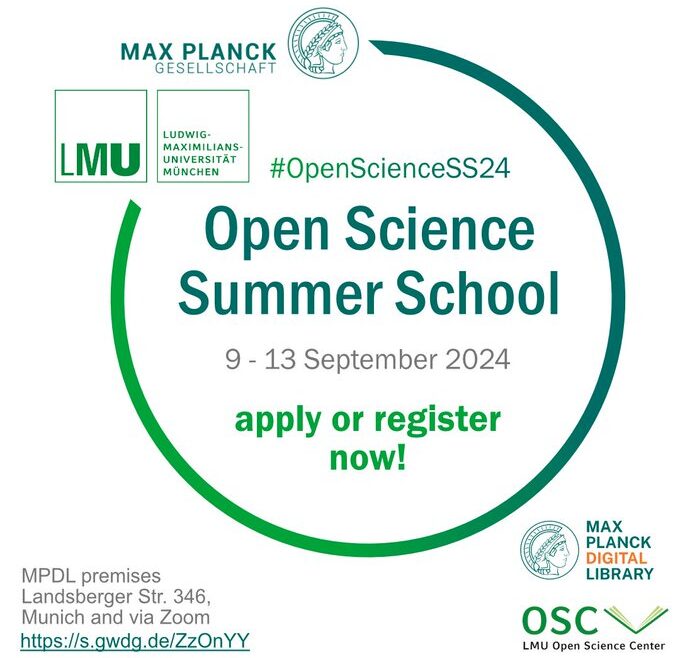
The LMU & MPG Open Science Summer School 2024, organized by the LMU Open Science Center (OSC) and the Max Planck Digital Library (MPDL), is set to provide an intensive and transformative experience for early career researchers. This 5-day event is designed to equip participants with the essential knowledge and skills to enhance the transparency, reproducibility, and credibility of their research.

What You Will Learn

By participating in the Open Science Summer School, researchers will gain insights into several critical areas:

  1. Preregistration and Data Simulation: Participants will learn to clarify their research design and set up statistical plans before data collection. This approach helps prevent biases in analyses and ensures a more robust research methodology.
  2. Computational Reproducibility: The Summer School will teach researchers how to create reproducible workflows using programming and version-controlled scripts. This skill is vital for increasing efficiency and identifying mistakes in data wrangling or analyses.
  3. Data Management and Sharing: Researchers will be trained to prepare, manage, and share their data and code effectively. This includes applying the Findable, Accessible, Interoperable, Reusable (FAIR) principles and using appropriate repositories and licenses.

By adopting these practices, participants will increase the impact of their research and ensure their contributions, as well as those of others, are properly acknowledged.

Programme Details

The complete programme for the Summer School is available online, offering a comprehensive overview of the lectures and workshops. These sessions are designed to provide both theoretical knowledge and practical skills, making the event suitable for a wide range of research disciplines.

Application and Registration

To attend the full Summer School, including both public lectures and specialized workshops for selected applicants, researchers must apply by 15 July 2024, 12:00 noon CEST. The application process ensures that participants are committed and prepared to fully engage with the intensive curriculum.

Additionally, anyone interested can register at any time before the end of the Summer School to attend one or more public lectures online. This flexible option allows a broader audience to benefit from the valuable content provided by the event.

Join the Movement Towards Open Science

The LMU & MPG Open Science Summer School 2024 offers an unparalleled opportunity for early career researchers to enhance their research practices. By focusing on transparency, reproducibility, and credibility, the Summer School aims to foster a culture of open science that benefits researchers, funding agencies, and the public alike. Don’t miss this chance to advance your research skills and make a lasting impact on your scientific community.

For more information and to apply, visit the official website.

Privacy Preferences

When you visit our website, it may store information through your browser from specific services, usually in the form of cookies. Our Privacy Policy can be read here.

Here you can change your Privacy preferences. It is worth noting that blocking some types of cookies may impact your experience on our website and the services we are able to offer.

Click to enable/disable Google Analytics tracking code.
Click to enable/disable Google Fonts.
Click to enable/disable Google Maps.
Click to enable/disable video embeds.
Our website uses cookies, mainly from 3rd party services. Define your Privacy Preferences and/or agree to our use of cookies.