#OpenScience

Improving Access to and Reuse of Research Results, Publications and Data for Scientific Purposes
Improving Access to and Reuse of Research Results, Publications and Data for Scientific Purposes 622 459 Open and Universal Science (OPUS) Project

A detailed report aligns with the Action 2 objectives of the European Research Area (ERA) Policy Agenda 2022-2024, aiming to establish an EU legislative and regulatory framework for copyright and data suited for research. The report scrutinizes barriers to accessing and reusing publicly funded research, including scientific publications and data. It evaluates current EU copyright legislation, data, and digital laws, along with national regulatory frameworks and initiatives, identifying potential areas for enhancement.

Employing a rigorous, evidence-based methodology, the study incorporates literature reviews, surveys, and interviews with legal experts and stakeholders. It suggests legislative and non-legislative measures to refine the existing EU copyright and data frameworks, aligning them with the requirements of scientific research and the principles of open research data.

Executive Summary

This report advances the objectives outlined in Action 2 of the ERA Policy Agenda 2022-2024, which seeks to propose an EU legislative and regulatory framework for copyright and data that is conducive to research. It conducts a thorough analysis of the impediments to accessing and reusing publicly funded research and innovation outcomes, including scientific publications and data. The report meticulously examines existing EU copyright regulations, data, and digital legislation, alongside related national initiatives.

The report proposes a blend of legislative and non-legislative interventions to refine the EU copyright and data legislative frameworks, making them more supportive of scientific research and open research data principles. The analysis is divided into two primary sections: the EU copyright legislation, focusing on key directives such as the Information Society Directive, the Copyright in the Digital Single Market Directive, the Software Directive, and the Database Directive, along with the research-related provisions of the Data Act Proposal. The second section examines EU data and digital legislation, including significant acts like the Open Data Directive, Data Governance Act, Data Act, Digital Services Act, Digital Markets Act, and Artificial Intelligence Act. This comprehensive evaluation extends to the European Open Science Cloud (EOSC), ensuring an exhaustive assessment of the legislative landscape affecting research and innovation in the EU.

Framework for the Study

The study employs a structured, evidence-based methodology, ensuring robust and consistent findings through data triangulation. It includes:

  1. Evaluating the Impact of EU Copyright Framework on Research: This task involves desk research, literature reviews, surveys, and interviews with legal experts and stakeholders, establishing the groundwork for further analysis and assessment of potential benefits.
  2. Identifying Areas for Improvement: Building on the findings of Task 1, this involves cross-national legal analyses, focusing on the Secondary Publication Right.
  3. Estimating Effects of Proposed Interventions: This task assesses the potential benefits of suggested interventions using data from the initial tasks.
  4. Identifying Relevant Provisions in EU Data and Digital Legislation: This includes a thorough examination of legislation affecting researchers and research organizations.
  5. Assessing Compliance and Benefits: Synthesizing findings from the previous tasks, this task evaluates the compliance and benefits of EU data and digital legislation for research entities.

Specific Methodological Approach

Literature Review

The literature review is pivotal in understanding the landscape and identifying areas for progress in copyright and EU data and digital legislation. It explores the interplay between EU copyright, data frameworks, and Open Science (OS) policies, reviewing academic evidence on the EU copyright framework’s impact on OS. It includes a comparative legal study of the EU and national copyright laws of all 27 EU Member States, highlighting the need for EU legislative action to support OS and identifying differences in national laws that affect EU-wide OS objectives.

Survey Programme

The survey programme targeted researchers, research-performing organizations (RPOs), and publishers with tailored strategies to optimize participation and data collection. Researchers from Horizon 2020 and Horizon Europe projects were surveyed, and RPOs received funds or showed interest in applying for funds from these projects. Publishers were surveyed through targeted outreach to ensure a high response rate.

Interview Programme

The interview programme gathered in-depth insights from legal experts on copyright, data, and digital legislation, focusing on legislative frameworks like the Data Act and Digital Services Act to complement the literature review findings.

Multi-Criteria Analysis

This analysis assessed four policy areas, integrating positive and negative impacts into a single framework to compare different options using qualitative and quantitative data. It examined social impacts on science, such as intellectual property rights, research quality control, scientific literature availability, research output diversity, and collaboration opportunities. Economic impacts were also considered, including sectoral competitiveness and stakeholder business conduct.

Comparative Analysis of Green Open Access Publications

This methodology compared different sources of information on Green Open Access in EU27 countries from 2011 to 2022, reviewing data from OpenAlex and OpenAIRE Graph and comparing it with trends in Open Access publications.

Analysis of Results

Cross-Analysis of Consultation Activity Results

Survey responses were segmented by researchers’ contexts and publishers’ institutional types and revenue levels. Survey results were complemented with insights from in-depth interviews.

Conclusions and Recommendations

The study proposes a combination of legislative and non-legislative measures to enhance the accessibility and reusability of research outputs. These recommendations aim to balance copyright protection with the goals of the ERA, fostering a unified, borderless market for research, innovation, and technology across the EU.

Full study can be found here.

European Commission’s Action Plan: The role of OPUS in advancing research assessment reform
European Commission’s Action Plan: The role of OPUS in advancing research assessment reform 1024 507 Open and Universal Science (OPUS) Project

The recent Action Plan by the Commission to implement the ten commitments of the Agreement on Reforming Research Assessment (ARRA) highlights the OPUS project as a particularly relevant initiative for advancing research assessment reform. OPUS will develop a set of interventions for Open Science aimed at creating a system that incentivizes and rewards researchers for adopting practices such as providing open access to research outputs, early and open sharing of research, participating in open peer review, implementing measures to ensure reproducibility of results, and involving all stakeholders in co-creation.

The Action Plan, recently published, outlines the ten commitments of the Action Plan by the Commission to implement the ten commitments of the Agreement on Reforming Research Assessment (ARRA) and highlights the ongoing actions by the European Commission (EC) to address each one, with plans for further implementation in the upcoming Framework Program for Research and Innovation (FP10). The Commission has already made strides in integrating a more comprehensive set of evaluation criteria into the Horizon Europe main Work Programme, which includes assessing Open Science practices, gender considerations, and diverse research outputs. Looking ahead, the Commission has detailed a series of steps to support and advance research assessment reform. These steps include identifying potential improvements in evaluation criteria, enhancing guidance and training for peer reviewers, and fostering mutual learning through collaborations such as the Coalition for Advancing Research Assessment (CoARA).

The Commission has already initiated the funding of projects that contribute to research assessment reforms by evaluating and piloting practices, gathering new evidence, and supporting data sharing and the development of indicators. The following Horizon Europe projects are particularly relevant: PathOS – Open Science Impact Pathways (Research and Innovation action; €1,999,990 EU contribution), OPUS – Open Universal Science (Coordination and Support action; €1,726,898 EU contribution), GraspOS – Next Generation Research Assessment to Promote Open Science (Research and Innovation action; €2,985,441 EU contribution), and SciLake – Democratising and Making Sense of Heterogeneous Scholarly Content (Research and Innovation action; €4,809,450 EU contribution).

The Commission will map the research and innovation projects, as well as other coordination and support actions, already funded through the Horizon Framework Programme that contribute to the reform of research assessment. Additionally, the Commission will identify the main contributions and recommendations from these projects for research assessment reforms and CoARA work, and will also identify potential new research and innovation actions needed.

The implementation of the ten commitments in the Agreement on Reforming Research Assessment (ARRA) will be guided by the ten principles also included in the Agreement:

  • Commitment 1: Recognize the diversity of contributions to, and careers in, research in accordance with the needs and nature of the research.
  • Commitment 2: Base research assessment primarily on qualitative evaluation, with peer review being central, supported by the responsible use of quantitative indicators.
  • Commitment 3: Abandon inappropriate uses of journal- and publication-based metrics in research assessment, particularly the inappropriate uses of Journal Impact Factor (JIF) and h-index.
  • Commitment 4: Avoid the use of rankings of research organizations in research assessment.
  • Commitment 5: Commit resources to reforming research assessment as needed to achieve the organizational changes committed to.
  • Commitment 6: Review and develop research assessment criteria, tools, and processes.
  • Commitment 7: Raise awareness of research assessment reform and provide transparent communication, guidance, and training on assessment criteria and processes as well as their use.
  • Commitment 8: Exchange practices and experiences to enable mutual learning within and beyond the Coalition.
  • Commitment 9: Communicate progress made on adherence to the principles and implementation of the commitments.
  • Commitment 10: Evaluate practices, criteria, and tools based on solid evidence and the state-of-the-art in research on research, and make data openly available for evidence gathering and research.
Who We Need in an Open Science Alliance
Who We Need in an Open Science Alliance 1000 625 Open and Universal Science (OPUS) Project

Open science, a movement advocating for transparency, accessibility, and collaboration in research, has the potential to transform scientific discovery and societal impact. However, achieving its full promise requires a concerted effort from a diverse coalition of stakeholders. Here’s a look at who we need in an open science alliance and why their roles are crucial.

1. Researchers and Scientists

Researchers and scientists are the primary drivers of open science. Their commitment to sharing data, methodologies, and findings openly is fundamental. By adopting open science practices, they enhance reproducibility, foster innovation through collaboration, and accelerate the overall pace of scientific discovery. Researchers from all disciplines, including early-career scientists and established experts, must embrace and advocate for open science principles.

2. Academic Institutions

Universities and research institutions play a pivotal role in shaping the culture of open science. These institutions can support open science by providing the necessary infrastructure, such as open-access repositories and data management services. Additionally, they can incentivize open practices through tenure and promotion criteria that recognize open publications and data sharing. Academic leaders must champion open science to create an environment that values and rewards transparency and collaboration.

3. Funding Agencies

Funding agencies have significant leverage to drive the adoption of open science practices. By mandating open access to publications and data as a condition of grant funding, these agencies can ensure that the outputs of publicly funded research are accessible to all. Organizations like the National Institutes of Health (NIH) and the European Research Council (ERC) have already taken steps in this direction, setting examples for others to follow. The continued support and expansion of these policies are critical.

4. Publishers and Journals

Traditional publishing models often restrict access to research findings through paywalls. However, publishers and journals can be pivotal allies in the open science movement by embracing open access models. By transitioning to open access publishing, journals ensure that scientific knowledge is freely available to researchers, practitioners, and the public worldwide. Additionally, publishers can adopt practices that promote data sharing and open peer review, further enhancing transparency and trust in research.

5. Technology Developers

The infrastructure of open science relies heavily on technology. Developers of open-source tools and platforms play a crucial role in enabling researchers to share, analyze, and collaborate on data and publications seamlessly. From data repositories like Zenodo and Dryad to collaborative platforms like GitHub and Jupyter Notebooks, these technologies facilitate the practical implementation of open science. Ongoing innovation and support from the tech community are essential to address evolving needs and challenges.

6. Policy Makers

Government and policy makers can create an enabling environment for open science through legislation and regulation. By enacting policies that require open access to publicly funded research and promoting data sharing standards, policy makers can institutionalize open science practices. Moreover, they can allocate resources to support the development of open science infrastructure and training programs, ensuring that researchers have the tools and skills needed to operate in an open science ecosystem.

7. Libraries and Information Specialists

Libraries and information specialists are at the forefront of managing and disseminating scientific knowledge. Their expertise in curation, archiving, and providing access to research outputs is indispensable in the open science landscape. Libraries can offer services and training to help researchers comply with open access mandates and manage their data effectively. As advocates for open access, libraries also play a critical role in negotiating with publishers and promoting institutional repositories.

8. Citizen Scientists and the Public

Engaging the public and citizen scientists in the research process enhances the impact and relevance of scientific work. Citizen science projects, where volunteers contribute to data collection and analysis, exemplify the democratization of science. Public involvement not only broadens the scope of research but also fosters a deeper appreciation and understanding of science among the general population. Encouraging and supporting citizen science initiatives is an important aspect of the open science movement.

9. Industry Partners

Collaboration with industry can amplify the benefits of open science. Companies, particularly those in technology, healthcare, and pharmaceuticals, can contribute resources, expertise, and data to open science initiatives. Such partnerships can accelerate the translation of research into practical applications and innovations. Industry stakeholders can also adopt open science principles within their research and development processes, setting an example for the broader community.

A Call to Collective Action

Building a robust open science alliance requires the active participation and collaboration of a diverse array of stakeholders. Each group brings unique strengths and perspectives that are vital to the success of open science. By working together, we can create a more transparent, inclusive, and efficient scientific ecosystem that benefits researchers, practitioners, and society at large. The open science movement is not just a vision for the future; it is a collaborative endeavor that demands our collective action today.

Photo via Marcello Ballardini

The Acceleration of Technological Findings through Open Educational and Research Material
The Acceleration of Technological Findings through Open Educational and Research Material 900 527 Open and Universal Science (OPUS) Project

In today’s digital age, the sharing of knowledge has become more accessible than ever before. With the advent of open educational resources (OER) and open access research material, the barriers to accessing valuable information have been significantly lowered. This democratization of knowledge not only benefits students and researchers but also plays a pivotal role in accelerating technological findings across various fields.

Open educational and research material refers to resources that are freely available to anyone, anywhere, without any restrictions on access or use. This includes textbooks, lecture notes, research articles, datasets, and more. By making these resources openly available, educators and researchers can contribute to the collective pool of knowledge, fostering collaboration and innovation on a global scale.

One of the most significant effects of fully available and open educational and research material is its potential to accelerate the pace of technological findings. Here’s how:

  1. Accessibility: Open educational resources allow students from all backgrounds and locations to access high-quality learning materials at no cost. This accessibility levels the playing field, providing equal opportunities for education and skill development. Similarly, open access research material enables researchers to access the latest findings and build upon existing knowledge without facing paywalls or subscription barriers.
  2. Collaboration: Openness encourages collaboration among researchers, educators, and students from different institutions and disciplines. By freely sharing educational resources and research findings, individuals can collaborate on projects, exchange ideas, and contribute to interdisciplinary research efforts. This collaborative approach fosters innovation and accelerates the development of new technologies.
  3. Innovation: Open educational and research material serves as a catalyst for innovation by facilitating the rapid dissemination of ideas and findings. Researchers can build upon the work of others, replicate experiments, and conduct meta-analyses more efficiently when access to research material is unrestricted. This leads to faster progress in technological advancements and scientific discoveries.
  4. Transparency: Openness promotes transparency in the research process, allowing for greater scrutiny and reproducibility of findings. When research material is openly available, it becomes easier for other researchers to verify results, identify errors, and validate conclusions. This transparency enhances the reliability and credibility of scientific research, laying the foundation for further advancements.
  5. Educational Impact: Open educational resources provide educators with the flexibility to adapt and customize course materials to suit the needs of their students. This personalized approach to learning can enhance student engagement and comprehension, leading to better learning outcomes. Additionally, open access to research material allows students to explore cutting-edge research topics and gain hands-on experience in their field of study.

Fully available and open educational and research material has the potential to revolutionize the way we learn, teach, and conduct research. By breaking down barriers to access and promoting collaboration and innovation, openness accelerates the pace of technological findings, paving the way for a brighter and more inclusive future. Embracing open practices in education and research is not only beneficial for individuals but also essential for driving progress and addressing global challenges.

Photo via ISHN

✨ Celebrating 1000 Followers ✨
✨ Celebrating 1000 Followers ✨ 1024 682 Open and Universal Science (OPUS) Project

Dear Followers,

We’re thrilled to announce a significant milestone: 1000 followers on both Twitter and LinkedIn! Your support means the world to us, and we’re deeply grateful for each and every one of you who has joined us on our journey advocating for open science.

In this era of rapidly advancing technology and interconnectedness, the importance of open science cannot be overstated. Open science refers to the practice of making scientific research, data, and findings accessible to all levels of society, fostering collaboration, transparency, and innovation. It’s about tearing down the barriers that hinder progress and ensuring that the fruits of scientific inquiry are available to everyone, regardless of their background or affiliation.

Why is open science crucial for mankind? The reasons are manifold:

  1. Accelerating Progress: By sharing research openly, scientists can build upon each other’s work more effectively, accelerating the pace of discovery and innovation. This collaborative approach allows us to tackle complex challenges like climate change, public health crises, and technological advancement with greater efficiency and efficacy.
  2. Fostering Transparency: Transparency is a cornerstone of the scientific method. Open science promotes transparency not only in the dissemination of research findings but also in the entire research process, from data collection to analysis. This transparency enhances the credibility and reproducibility of scientific research, fostering trust among scientists and the public alike.
  3. Empowering Global Participation: Open science democratizes access to knowledge, empowering researchers from diverse backgrounds and regions to contribute to scientific discourse. By breaking down geographic and institutional barriers, open science ensures that talent and insights from around the world can contribute to solving humanity’s most pressing challenges.
  4. Driving Innovation: Open science spurs innovation by facilitating interdisciplinary collaboration and serendipitous discoveries. When researchers from different fields come together to share ideas and data, new connections and insights emerge, leading to breakthroughs that might not have been possible otherwise.

With your unwavering support, we pledge to continue championing open science and working towards a future where knowledge knows no bounds. Together, we can build a more equitable, transparent, and collaborative research ecosystem that benefits everyone. 🌟

Thank you for being part of our community and for your commitment to advancing open science. Here’s to the next thousand followers and beyond! 🎉🥳

Photo via Creative Fabrica

Open Science = ?
Open Science = ? 1024 576 Open and Universal Science (OPUS) Project

Transformative movement, known as Open Science, heralds a new era of discovery and innovation. But what exactly does Open Science equal? Let’s delve into the multifaceted dimensions of this groundbreaking approach and explore how it serves as a catalyst for progress across various domains.

Open Science = Better Education

At the heart of Open Science lies the principle of democratizing knowledge. By making research findings freely available to all, regardless of institutional affiliation or financial resources, Open Science fosters a culture of inclusivity and lifelong learning. Students, educators, and enthusiasts alike can access a wealth of information, empowering them to deepen their understanding of complex subjects and engage in evidence-based discourse. Moreover, open access to educational materials eliminates barriers to learning, particularly in underserved communities, thereby promoting equitable access to quality education worldwide.

Open Science = Technological Advancements

Embracing the ethos of collaboration, Open Science transcends geographical boundaries and disciplinary silos. Through open sharing of data, methodologies, and tools, researchers can leverage collective expertise to tackle grand challenges and accelerate scientific breakthroughs. This collaborative ethos fuels a virtuous cycle of innovation, driving the development of cutting-edge technologies and methodologies. From artificial intelligence and machine learning to advanced imaging techniques and data analytics, Open Science catalyzes the rapid advancement of scientific capabilities, enabling researchers to push the boundaries of knowledge and address pressing societal needs.

Open Science = Improved Research

Transparency and reproducibility are the cornerstones of scientific integrity. By promoting open access to research outputs and fostering transparent practices, Open Science enhances the reliability and credibility of scientific findings. Openly sharing data and methodologies allows for independent verification of results, mitigating the risk of erroneous conclusions and enhancing the robustness of scientific inquiry. Furthermore, open peer review mechanisms encourage constructive feedback and promote accountability within the scientific community, ultimately leading to higher standards of research conduct and integrity.

Open Science = Global Collaboration

In an interconnected world, addressing complex challenges requires collective action on a global scale. Open Science transcends borders and cultivates a culture of collaboration among researchers, institutions, and policymakers worldwide. By facilitating the exchange of ideas, expertise, and resources across diverse communities, Open Science enables interdisciplinary collaboration and fosters innovation ecosystems that transcend traditional boundaries. Whether tackling climate change, global health crises, or fundamental questions about the nature of the universe, Open Science empowers researchers to pool their collective intellect and expertise in pursuit of shared objectives.

Open Science = Empowering Citizen Scientists

One of the most transformative aspects of Open Science is its capacity to engage and empower individuals beyond traditional academic circles. Through citizen science initiatives, Open Science invites members of the public to actively participate in the scientific process, democratizing research and fostering a sense of ownership over scientific endeavors. Whether monitoring environmental changes, contributing to biodiversity surveys, or analyzing astronomical data, citizen scientists play a vital role in generating valuable insights and advancing scientific knowledge. By breaking down barriers between professional researchers and the public, Open Science cultivates a culture of scientific literacy and civic engagement, empowering individuals to contribute meaningfully to collective understanding and decision-making processes.

Open Science = Ethical and Responsible Innovation

In an era marked by rapid technological advancement and ethical dilemmas, Open Science serves as a guiding principle for ethical and responsible innovation. By promoting transparency, accountability, and inclusivity, Open Science fosters ethical conduct and responsible stewardship of scientific knowledge and technologies. Open dialogue and engagement with diverse stakeholders, including policymakers, ethicists, and civil society organizations, ensure that scientific advancements are aligned with societal values and address pressing ethical concerns. Moreover, by openly sharing information about potential risks and uncertainties, Open Science enables informed decision-making and risk management strategies, thereby fostering a more ethical and sustainable approach to innovation. Ultimately, Open Science underscores the importance of integrating ethical considerations into the fabric of scientific inquiry, ensuring that technological advancements serve the collective good and contribute to a more just and equitable society.

Paving the Way Forward

In essence, Open Science represents a fundamental shift in the way we conduct and perceive scientific inquiry. It embodies the principles of transparency, collaboration, and inclusivity, laying the groundwork for a more equitable and impactful scientific enterprise. By embracing Open Science, we unlock the full potential of collective human endeavor, harnessing the power of knowledge to address the most pressing challenges facing our world today. As we journey into an increasingly interconnected future, Open Science stands as a beacon of progress, illuminating pathways to discovery, innovation, and positive societal change.

Photo via Open Sciences

Universities Pioneering Open Science Initiatives
Universities Pioneering Open Science Initiatives 673 370 Open and Universal Science (OPUS) Project

In an era where collaboration and transparency are reshaping the landscape of scientific research, universities play a pivotal role in driving forward the principles of open science. Here, we highlight some of the institutions at the forefront of this movement, showcasing their initiatives and contributions to advancing open science practices.

  1. Massachusetts Institute of Technology (MIT): MIT has been a trailblazer in advocating for open access to research findings and data. Through initiatives like the MIT OpenCourseWare project, which provides free access to course materials, and the development of the Open Access Articles Collection, MIT is committed to democratizing knowledge. Additionally, the university actively supports open-source software development and encourages faculty and researchers to publish their work in open-access journals.
  2. University of California, Berkeley: The University of California, Berkeley, has made significant strides in promoting open science through its Berkeley Initiative for Transparency in the Social Sciences (BITSS). BITSS aims to enhance the credibility and reproducibility of social science research by providing training, resources, and incentives for researchers to adopt transparent and open practices. Moreover, Berkeley’s Library Open Access Publishing Fund supports faculty in publishing their research in open-access journals.
  3. University of Cambridge: At the University of Cambridge, the Open Research at Cambridge (ORC) initiative is driving cultural change towards more open and collaborative research practices. ORC provides researchers with guidance and support on open-access publishing, data management, and open-source software development. Furthermore, Cambridge University Press has been a pioneer in open-access publishing, offering a range of open-access options for researchers to disseminate their work globally.
  4. Stanford University: Stanford University is committed to fostering an environment of openness and collaboration through initiatives like the Stanford Open Data Project. This project aims to make research data more accessible by providing infrastructure and tools for data sharing and collaboration across disciplines. Stanford also supports open-access publishing through its Stanford Digital Repository, which hosts a diverse range of research outputs, including datasets, publications, and multimedia materials.
  5. Technical University of Munich (TUM): TUM is a leading institution in Europe championing open science practices. The university’s Open Access Policy mandates that all scholarly publications resulting from TUM research must be made freely accessible. TUM also supports open research data management through its Research Data Management Service Center, which provides researchers with guidance on data management planning, sharing, and preservation.
  6. University of Amsterdam (UvA): UvA has been a strong advocate for open science through its commitment to open access publishing and data sharing. The university’s Open Science Program provides researchers with support and resources to make their research outputs openly accessible. Additionally, UvA’s Digital Academic Repository (DARE) serves as a platform for hosting and disseminating open-access research publications and data.
  7. École Polytechnique Fédérale de Lausanne (EPFL): EPFL is dedicated to fostering open science practices through its Open Science initiative. The university promotes open access to research publications and data and encourages researchers to adopt open-source software and collaborative tools. EPFL’s Open Science Fund provides financial support to researchers for open-access publishing fees and data management expenses.
  8. University College London (UCL): UCL is committed to promoting open science principles across its research community. The university’s Office for Open Science & Scholarship (OOSS) supports researchers in adopting open practices, including open access publishing, data sharing, and open-source software development. UCL’s institutional repository, UCL Discovery, provides a platform for sharing and disseminating open-access research outputs.
  9. University of Oslo (UiO): UiO is actively involved in promoting open science through its Open Research initiative. The university advocates for open access to research publications and data and provides researchers with guidance and resources on open-access publishing and data management. UiO’s institutional repository, DUO, facilitates the sharing and preservation of open-access research outputs.
  10. University of Warsaw: The University of Warsaw has made significant strides in advancing open science practices within its academic community. The university supports open-access publishing through its Open Journals of the University of Warsaw platform, which hosts a variety of peer-reviewed open-access journals across disciplines. Additionally, the university promotes open research data management and sharing through its Research Data Repository.

These universities are just a few examples of institutions that are actively promoting open science principles and driving cultural change within the academic community. By embracing openness, collaboration, and transparency, they are not only advancing the frontiers of knowledge but also paving the way for a more inclusive and equitable scientific enterprise. As the momentum for open science continues to grow, these institutions serve as beacons of innovation and progress in the pursuit of scientific discovery.

Photo via CFA Institute

Is Group Authorship a Better Way of Recognising Team-based Research?
Is Group Authorship a Better Way of Recognising Team-based Research? 1024 576 Open and Universal Science (OPUS) Project

Contemplating the hurdles and advantages of releasing research under a collective identity, Robert Thibault contends that while group authorship lacks robust support currently, it could serve as a pivotal tool in reshaping the incentives and acknowledgment system within scholarly communication.

Picture a workplace where every employee leads their own project, with occasional assistance from colleagues. Employment survival hinges solely on individual project outcomes. This scenario mirrors academia in many respects.

Efforts to enhance academic research often stress the importance of academic credit, incentives, and authorship. Discussions revolve around clearly attributing contributions in published studies, defining authorship criteria, and redefining authorship concepts. Some forward-thinking journals now mandate detailed Contributor Roles Taxonomy (CRediT) statements to delineate each author’s role.

Despite these advancements, the convention of referring to academic works by the last name of the first author persists. Even co-authors often refer to their collaborative works in this manner. It’s akin to a football player from the Argentinian national team saying “Messi’s team” won, disregarding their own contribution.

While CRediT statements function like team rosters, they often appear as an afterthought in manuscripts. To cultivate a more dynamic academic culture that champions openness, rigor, and efficiency, it’s imperative to transcend mere acknowledgment of individual contributions and prioritize collective achievements. In essence, what’s needed are teams.

In pursuit of aligning research practices with a vision for a more robust academic ecosystem, our team at the University of Bristol embarked on a series of projects utilizing a group identity (e.g., here, here, and here).

Here’s what they discovered:

What worked well?

  1. Promotion of task specialization: Group authorship facilitated the involvement of specialists in specific tasks without burdening them with unrelated responsibilities. For instance, we engaged a statistician for data analysis without involving them in the writing process.
  2. Inclusion of smaller contributions: Individuals who made valuable but non-authorship-worthy contributions were acknowledged in the CRediT statement, fostering inclusivity.
  3. Smooth project transfer: Transitioning projects between team members, such as when a PhD student moved to another research group, was seamless, avoiding authorship disputes and project stagnation.

Challenges encountered:

  1. Lack of infrastructure for group publishing: Platforms like medRxiv and conference abstract submissions often required an individual guarantor, complicating efforts to publish under a group name.
  2. Non-standard authorship handling: Authorship databases inconsistently indexed group-authored publications, leading to discrepancies in attribution.
  3. Complexity in acknowledging external collaborators: Adding “and Collaborators” to our group name to acknowledge external contributors sometimes led to requests to revert to traditional authorship practices.

Despite encountering editorial frustrations, our experiment in group authorship may inspire others to explore innovative changes in academic research practices. While not every attempt at innovation will yield immediate results, it’s essential to pilot and trial various workflows to advance the academic ecosystem in alignment with our values.

The views expressed in this article are those of the author and do not necessarily reflect those of the Impact of Social Science blog or the London School of Economics and Political Science. Please refer to their comments policy for any concerns regarding commenting below.

Original post via LSE (Robert Thibault)

Photo via WeWork

Guidance on the Responsible Use of Quantitative Indicators in Research Assessment
Guidance on the Responsible Use of Quantitative Indicators in Research Assessment 556 720 Open and Universal Science (OPUS) Project

Produced by the DORA Research Assessment Metrics Task Force:

  • Ginny Barbour
  • Rachel Bruce
  • Stephen Curry
  • Bodo Stern
  • Stuart King
  • Rebecca Lawrence

This content is available under a Creative Commons Attribution Share Alike License (CC BY-SA 4.0). Please cite this document as: DORA. 2024. Guidance on the responsible use of quantitative indicators in research assessment. http://doi.org/10.5281/zenodo.10979644 For more information, contact Zen Faulkes, DORA Program Director.

DORA Metrics Guidance 3

The term “metric” often implies a direct measurement, whereas “indicator” better reflects the indirect nature of quantities used in research assessment. Throughout this document, we use “indicator” to emphasize this distinction.

Research assessment is vital, but reliance on quantitative indicators, often assumed to offer objectivity, remains common. While such indicators are valuable in bibliometrics and scientometrics, their reductive nature necessitates careful contextualization when assessing individual researchers or projects.

DORA, known for its critique of the Journal Impact Factor (JIF), addresses other indicators here. This briefing aims to extend DORA’s principles to various quantitative indicators used in research evaluation.

DORA Metrics Guidance 4

When selecting quantitative indicators for research or researcher assessments, consider:

  • Grounding in evidence.
  • Relevance to the qualities being assessed, avoiding reliance on aggregate or composite metrics.
  • Acknowledgment of an indicator’s proxy and reductive nature.
  • Mitigation of biases inherent in quantitative indicators, ensuring transparency in assessment processes.

The Declaration on Research Assessment advocates five principles for using quantitative information in research assessment:

  • Engage research communities in rule development.
  • Publish assessment criteria for transparency.
  • Ensure reviewers understand quantitative information usage.

Additionally, indicators should ideally rely on open data and algorithms for transparency, though many common indicators still use closed data.

DORA Metrics Guidance 5

Applying these principles to indicators requires co-creation of assessment processes with the research community, setting benchmarks based on agreed values, outcomes, and behaviors. Tools like the INORMS SCOPE framework or DORA’s SPACE rubric aid this process.

The SPACE Rubric is available in the DORA Resource Library. The SCOPE framework is created by INORMS.

DORA Metrics Guidance 6

The Journal Impact Factor (JIF), often used as a quality signifier, lacks evidence supporting its efficacy for evaluating individual papers. Other journal-based indicators share this limitation, including Citescore, Eigenfactor Score, and SNIP.

DORA Metrics Guidance 7

While citations offer granular insight into individual research articles, they have limitations in assessing recent scholarship or researchers at different career stages or disciplines. Citation patterns can be skewed by author and journal reputations, leading to bias.

Citation data cannot alone determine research quality; additional context is necessary.

DORA Metrics Guidance 8

The h-index, commonly used for comparing researchers, suffers from interpretational challenges and database dependency. It lacks contextual information such as career stage or contribution type.

Organizations using the h-index should justify its relevance and consider individual circumstances.

DORA Metrics Guidance 9

Field-normalized citation indicators like FWCI or RCR attempt to correct citation variability between fields. Caution is necessary due to difficulties in defining fields and sample size impact.

These indicators are unreliable for evaluating individual researchers.

DORA Metrics Guidance 10

Altmetrics attempt to measure non-academic attention to research outputs but lack context and transparency in calculation. They do not indicate research quality but can provide insights into specific engagements with research outputs when detailed information is available.

DORA Metrics Guidance 11

This briefing note illustrates applying DORA’s principles to various metrics in research assessment. It emphasizes contextualization and transparency in using indicators. Other indicators, like grant funding income, should also be contextualized due to inherent biases and uncertainties.

For more information, contact DORA at 6120 Executive Blvd., Rockville, MD, USA or visit sfdora.org.

Knowledge Unlatched Presents Open Access Heroes 2024
Knowledge Unlatched Presents Open Access Heroes 2024 679 397 Open and Universal Science (OPUS) Project

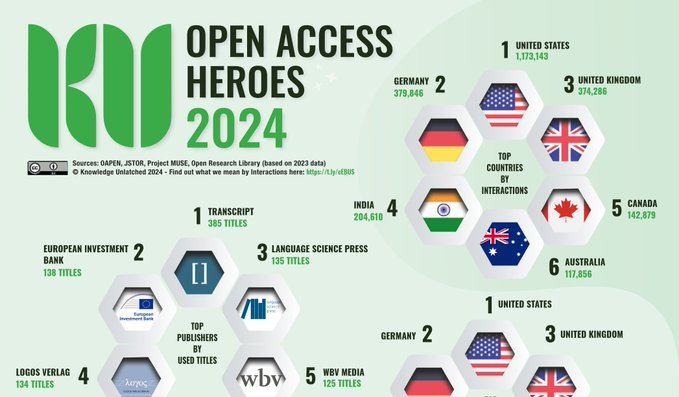
Knowledge Unlatched (KU), the global initiative for Open Access (OA), has unveiled its OA Heroes 2024, spotlighting the nations, institutions, publishers, disciplines, and scholarly works that garnered the most engagement worldwide in the preceding year. Impressively, user interactions with KU titles, encompassing downloads and views, have surged to 26 million, marking a notable 20% uptick since the last OA Heroes announcement.

With KU’s initiatives facilitating the publication of well over 4,000 OA books to date, this figure is poised to reach 5,000 titles by the close of 2024. Notably, nearly 4.5 million users worldwide engaged with KU books last year, with Business and Management Studies emerging as the top subject, attracting close to 600,000 user interactions, followed by Area Studies, Politics and International Studies, Modern Languages and Linguistics, and Social Work and Social Policy, each garnering substantial engagement.

Dr. Sven Fund, Wiley Senior Director, underscores the growing prominence of OA books in the social sciences and humanities, citing the consistent annual growth in title volume and usage since KU’s inception in 2013. This trend reflects publishers’ and librarians’ steadfast commitment to enhancing the accessibility of research findings globally.

The widespread utilization of KU books transcends geographical boundaries, with the United States leading in OA book usage, followed by Germany, the United Kingdom, India, Canada, and Australia. Notably, the top five institutions with the highest user interactions in 2022 were all UK universities: University College London, the University of Edinburgh, King’s College London, the University of Bristol, and the University of Cambridge.

In terms of individual works, the most interacted-with book in 2023 was “Myths that Made America” by transcript, followed by “A People’s History of Modern Europe” from Pluto Press, “Social Theory After the Internet: Media, Technology and Globalization” by UCL, “International Relations: A Self Study Guide to Theory” by Verlag Barbara Budrich, and “Medical Bondage: Race, Gender and the Origins of American Gynecology” by the University of Georgia Press.

As in prior years, the assessment of OA usage is based on data gathered from various hosting platforms such as the Open Research Library, OAPEN, JSTOR, and Project MUSE. An infographic consolidating the usage data is available for download from the Open Research Community website.

Photo via Knowledge Unlatched

Privacy Preferences

When you visit our website, it may store information through your browser from specific services, usually in the form of cookies. Our Privacy Policy can be read here.

Here you can change your Privacy preferences. It is worth noting that blocking some types of cookies may impact your experience on our website and the services we are able to offer.

Click to enable/disable Google Analytics tracking code.
Click to enable/disable Google Fonts.
Click to enable/disable Google Maps.
Click to enable/disable video embeds.
Our website uses cookies, mainly from 3rd party services. Define your Privacy Preferences and/or agree to our use of cookies.