Research

ABRIR Hackathon: Shaping the Future of Diversity and Inclusion in Open Science
ABRIR Hackathon: Shaping the Future of Diversity and Inclusion in Open Science 553 506 Open and Universal Science (OPUS) Project

Join the ABRIR Hackathon on October 23rd, 2024, to share your ideas on how we can collectively shape the future of diversity, inclusion, and justice in Open Science and Big Team Science for psychology researchers, particularly within the Global South.

To accommodate global participation, the event will be held in two time slots:

  • 7:00 AM UTC, hosted by ABRIR leaders from Africa and Asia
  • 3:00 PM UTC, hosted by ABRIR leaders from Europe and Latin America

You are welcome to attend either or both sessions. This is your chance to contribute to improving diversity, representation, and justice in psychological sciences.

Zoom Links:

  • 7:00 AM UTC: Join here
    • Meeting ID: 687 0092 9339 / Passcode: opensci
  • 3:00 PM UTC: Join here
    • Meeting ID: 820 7801 3868 / Passcode: opensci

Let’s work together to foster diversity and inclusion in the global psychological research community!
Webinar Announcement: The OpenAIRE Graph – An Open Resource for Open Science
Webinar Announcement: The OpenAIRE Graph – An Open Resource for Open Science 854 857 Open and Universal Science (OPUS) Project

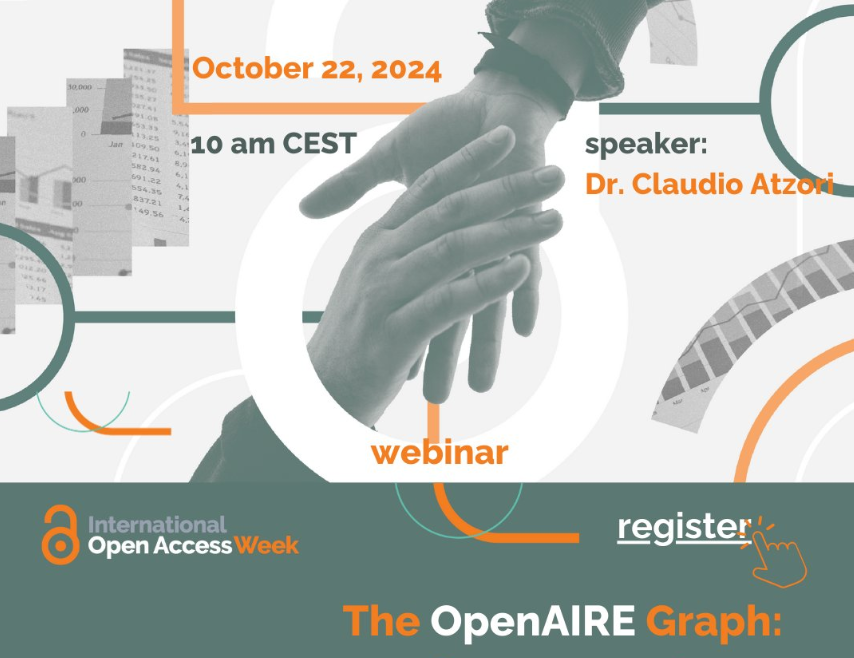
The ICM University of Warsaw’s Open Science Platform is hosting a webinar titled “The OpenAIRE Graph: An Open Resource for Open Science” on October 22nd, 2024, from 10:00 to 11:00 CEST. The event will feature Dr. Claudio Atzori, Lead Data Engineer of the OpenAIRE Graph and researcher at the National Research Council of Italy.

The OpenAIRE Graph is a free and open resource that compiles millions of metadata records from over 100,000 data sources. It integrates various research outputs, including publications, data, and software, to provide users with a comprehensive view of global research products. The tool helps researchers, institutions, and data managers track citations, link research outputs, and monitor the impact of scholarly work.

This session will cover:

  • The purpose and functionalities of the OpenAIRE Graph
  • How it collects and processes data with advanced cleaning and enrichment methods
  • Its role in fostering open science, global collaborations, and compliance with open science standards

The webinar is ideal for researchers, librarians, data stewards, repository administrators, and anyone interested in open science practices. The presentation will be held in English.

Join to explore how the OpenAIRE Graph can enhance research visibility and impact!

Register here!

Workshop for Journal Editors and Publishers on Open Access Publishing Using OJS
Workshop for Journal Editors and Publishers on Open Access Publishing Using OJS 769 445 Open and Universal Science (OPUS) Project

A workshop aimed at journal editors and publishers working in open access, whether they are already using the Open Journal Systems (OJS) platform or planning to adopt it, will be held on October 30, 2024, at 14:00 CEST.

The session will feature several examples of OJS usage from the region, offering insights into different practices. After brief presentations (delivered in Croatian and Serbian), participants will be invited to engage in discussions and share their experiences. The conversation can be conducted in the language of the participants’ choice.

This workshop provides a valuable opportunity for the exchange of knowledge and best practices among professionals in the open access publishing community.

Register here.

LERU to Present New Advice Paper on Communicating Research with Integrity
LERU to Present New Advice Paper on Communicating Research with Integrity 1024 574 Open and Universal Science (OPUS) Project

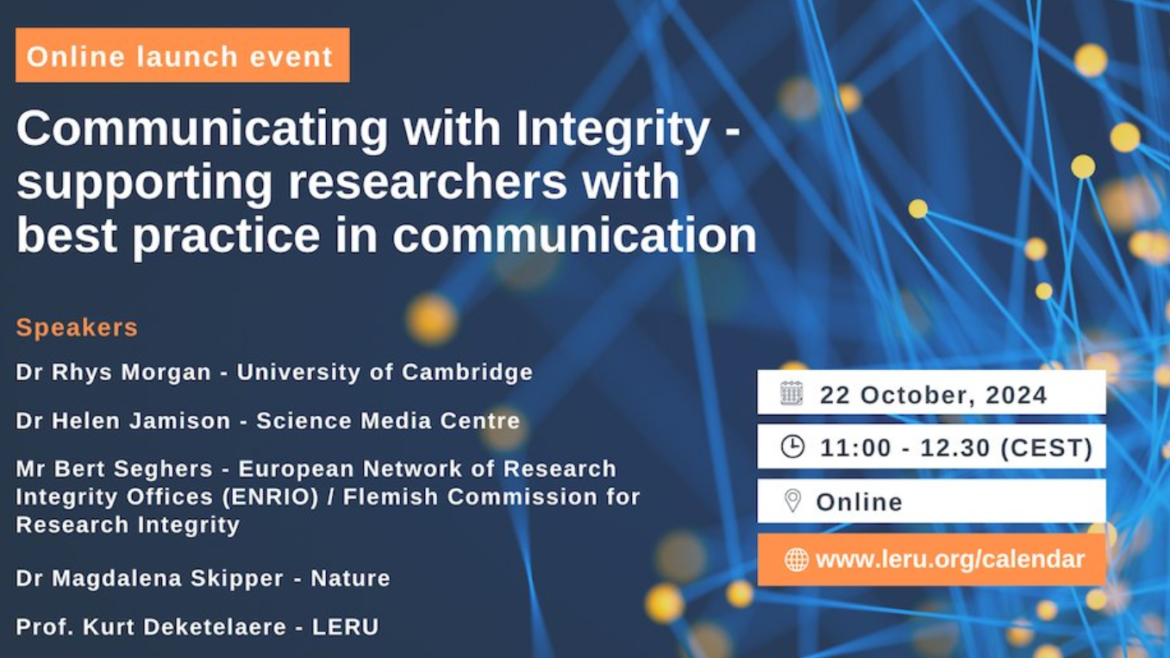
On 22 October 2024, the League of European Research Universities (LERU) will unveil its latest advice paper titled “Communicating with Integrity – Supporting Researchers with Best Practice in Communication.” This paper addresses the importance of integrity in science communication, an essential component of the mission of researchers and research institutions.

Effective communication of research findings is vital for building trust, yet poor communication—whether through lack of transparency, over-hyping results, or failing to convey uncertainty—can undermine this trust. The new advice paper offers guidance for research institutions on how to support their researchers in communicating with integrity. It also provides best practices for researchers to ensure their communications reflect openness, accuracy, and honesty.

The paper will be launched during an online event, featuring a presentation by the paper’s lead author, Dr. Rhys Morgan, Head of Research Policy, Governance, and Integrity at the University of Cambridge. Following the presentation, a panel debate will bring together experts in the field of science communication and research integrity.

Event Programme:

  • 11:00: Welcome by Prof. Kurt Deketelaere, LERU Secretary-General
  • 11:05: Presentation of the paper by Dr. Rhys Morgan, University of Cambridge
  • 11:30: Panel debate featuring:
    • Dr. Helen Jamison, Global Coordinator at the Science Media Centre
    • Mr. Bert Seghers, member of the European Network of Research Integrity Offices (ENRIO)
    • Dr. Magdalena Skipper, Editor in Chief of Nature
  • 12:10: Q&A with the online audience
  • 12:25: Conclusions by Prof. Kurt Deketelaere, LERU Secretary-General

This event will provide valuable insights for researchers, media professionals, and institutions dedicated to maintaining the highest standards of communication in science. To participate, registration for the online event is now open.

What are the Paths to Sustainable and Universal Open Access?
What are the Paths to Sustainable and Universal Open Access? 1011 845 Open and Universal Science (OPUS) Project

In celebration of Open Access Week, the Centre for Teaching and Learning’s OEP Program is hosting a special online presentation by Dr. John Willinsky, founder of the Public Knowledge Project, on Tuesday, October 22, 2024, from 1:00 to 2:00 PM (Saskatchewan Time).

Presentation Overview: Dr. Willinsky, who has spent 26 years advancing open access, will reflect on its rationale and importance. Despite the demonstrated value of open access during the pandemic, he questions why its adoption remains slow and costly. He will propose strategies to accelerate the transition to open access as a standard for sharing research and invite participants to join him in this effort.

Event Details:

  • Date & Time: October 22, 2024, from 1:00pm to 2:00pm (Saskatchewan Time)
  • Location: Online via Zoom (registration required)

Presenter Bio: Dr. Willinsky is a part-time professor at Simon Fraser University and Khosla Family Professor Emeritus at Stanford University. As the founder of the Public Knowledge Project, he developed the world’s most widely used open-source journal publishing platform. He has published several books, with his latest titled Copyright’s Broken Promise: How to Restore the Law’s Ability to Promote the Progress of Science (MIT, 2023).

Registration:
To attend, registration is required. The Zoom link will be provided upon confirmation.

Pitfalls of Demonstrating Impact in Transdisciplinary and Participatory Research
Pitfalls of Demonstrating Impact in Transdisciplinary and Participatory Research 1024 544 Open and Universal Science (OPUS) Project

On Monday, October 21, 2024, from 10:00 to 11:30, the Working Groups (AGs) “Impact” and “Participatory Health Research” of the Society for Transdisciplinary and Participatory Research (GTPF) are organizing a discussion event titled “Pitfalls of Demonstrating Impact in Transdisciplinary and Participatory Research.”

The event will feature Simon Denegri, Executive Director of the Academy of Medical Sciences and former Chair of INVOLVE (UK). Denegri will critically explore the diverse impacts of participatory research, raising key questions such as:

“In health and social care research, we are supposedly united by our desire to make a difference. But asking what this difference is, how it is achieved, with whom, and most importantly, for whom, can reveal significant differences in the priorities of research partners. In a culture where ‘He who pays the piper calls the tune,’ what is considered ‘impact’ often reflects the priorities of funders. Can participatory research navigate this debate? And how can citizens and research partners start changing the narrative?”

The event, conducted in English, is open to all interested parties and will take place online. Alongside Denegri’s presentation, there will be ample time for exchange and discussion.

Don’t miss this opportunity to engage in a thought-provoking conversation on the complexities of measuring impact in participatory research.

More info can be found here.

UNESCO Launches Global Survey to Shape the Future of Diamond Open Access
UNESCO Launches Global Survey to Shape the Future of Diamond Open Access 1024 753 Open and Universal Science (OPUS) Project

On 10th July 2024, UNESCO launched a global survey as part of its consultation process to gather insights on Diamond Open Access—a key initiative in scholarly publishing aimed at ensuring research is freely accessible to everyone. The consultation, available in English, French, Spanish, and Portuguese, invites contributions from global stakeholders to help shape a collaborative framework for Diamond Open Access.

What is Diamond Open Access? Diamond Open Access refers to a model where scholarly content is published and made available to the public at no cost, with neither subscription fees nor Article Processing Charges (APCs). It promotes inclusivity and accessibility, ensuring that researchers, institutions, and readers from all regions, including those underrepresented, have access to knowledge without financial barriers.

Why Participate in the Survey? UNESCO is encouraging researchers, institutions, librarians, and policymakers to take part in the survey. The feedback gathered will be critical in shaping a global framework for Diamond Open Access, aligning efforts to advance open science, equity in knowledge sharing, and global collaboration. The survey is designed to be easy to complete, taking approximately 15 to 25 minutes, and is available in four languages to ensure wide participation.

Next Steps: The Global Summit on Diamond Open Access The survey results will be presented at the 2nd Global Summit on Diamond Open Access, scheduled for December 2024 in Cape Town, South Africa. The summit will use these findings to guide further discussions on global strategies for advancing open access in research and may lead to regional consultations.

Data Privacy and Protection UNESCO is committed to protecting the privacy of survey participants. The survey complies with GDPR regulations, ensuring that personal data is handled with the utmost care. Only consolidated findings will be shared, and the identities of individual respondents will be fully protected.

Help shape the future of open access by participating in this important global consultation. Access the survey here.

Be part of the movement for a more open, equitable, and collaborative research environment.

Photo credit: GW

EU Researchers Combat Pushback Against Gender Equality in Politics and Society
EU Researchers Combat Pushback Against Gender Equality in Politics and Society 1024 512 Open and Universal Science (OPUS) Project

26 September 2024
By Sofia Sanchez Manzanaro

Recent EU-funded research is shedding light on the growing resistance to gender equality initiatives. This project seeks to understand the motivations behind this pushback and its societal impact, offering practical solutions to counter these challenges.

The Fight for Equality and Democracy

For Professor Zoe Lefkofridi, a leading scholar in politics and gender at the University of Salzburg, democracy and gender equality are inseparable. “There can be no true democracy without gender equality,” she argues. Despite notable progress in Europe, recent trends signal a worrying resurgence of opposition to these advancements.

“The EU has long been a champion of women’s rights, especially in the workforce,” Lefkofridi explains. “But we’re witnessing concerning developments in certain EU countries, as well as in the US.”

Lefkofridi leads PushBackLash, an EU-backed initiative launched in 2023. The project aims to delve deep into the motivations, strategies, and tactics of those opposing gender equality, while also gauging public sentiment on the issue.

Analyzing the Backlash

Team member Dr. Vera Beloshitzkaya, a gender and politics expert, highlights how anti-feminist narratives are becoming more mainstream in political discourse. “We’re seeing this backlash not just in rhetoric, but in resistance to policies that promote inclusivity,” she notes. However, to understand the extent of the pushback, Beloshitzkaya stresses the need to track where society stood before, where it is now, and what the future holds.

“It’s not enough to simply study the problem,” Lefkofridi adds. “We must act to change it.”

A Cross-European Approach

PushBackLash brings together a team of researchers from Austria, Germany, Hungary, the Netherlands, Spain, the UK, as well as NGOs from Belgium and Poland. Their work aims to assess how anti-equality campaigns are shaping public opinion and policy, and to propose strategies to counter these movements.

Beloshitzkaya’s commitment to the project is deeply personal. Raised in Belarus, she grew up in a society where authoritarianism has been on the rise since the 1990s. Her critical thinking skills were honed through grassroots activism and the establishment of debate clubs in schools.

Beloshitzkaya is clear on the distinction between legitimate policy debate and opinions that undermine pluralism and equality. She points to some political rhetoric, such as claims that “women need to return to the home,” as clear examples of backlash against women’s progress in the labor market.

Persistent Inequalities

Despite the progress made, women continue to be underrepresented in key positions of power across the EU. A 2023 report from the European Institute for Gender Equality revealed that women held only 33% of seats in the European Parliament, and just 34% of government minister roles.

The PushBackLash team is also investigating how different forms of inequality overlap to create barriers. For instance, early findings show that while acceptance of women in leadership roles has improved, there remains significant discomfort with LGBTQI+ individuals in positions of power. The COVID-19 pandemic further highlighted traditional gender roles, with women disproportionately taking on additional childcare responsibilities, particularly in countries like Austria.

Driving Change

Lefkofridi’s passion for democracy and equality stems from her family’s history. Her parents were active in the resistance against Greece’s military dictatorship from 1967 to 1974, enduring imprisonment and torture for their beliefs.

“Democracy is one of the highest values to me, something worth dying for,” she says.

Her team goes beyond data collection, working closely with policymakers and activists to foster change. They aim to develop evidence-based strategies that challenge anti-equality rhetoric and drive lasting reforms.

The team has already identified best practices from various EU organizations and governments, such as supporting female entrepreneurship, investing in girls’ education, and increasing funding for women’s advocacy groups.

Raising Awareness

In addition to traditional research methods, PushBackLash is exploring creative ways to raise awareness. They’ve launched a series of comic strips to highlight key issues and are using theatrical roleplay in universities to engage younger audiences in the fight for gender equality.

“Our goal is to ensure that activism is not just driven by passion but supported by solid evidence,” says Lefkofridi. “The reason these issues often remain in echo chambers is that ideas lack evidence. As social scientists and feminists, we must build and assess this evidence.”

Through their work, PushBackLash aims to reinforce gender equality policies and ensure that the fight for equality remains grounded in data and research.

Original article can be found here.

Transforming Research Assessment: The OPUS Project and Open Science in Europe
Transforming Research Assessment: The OPUS Project and Open Science in Europe 1024 576 Open and Universal Science (OPUS) Project

The Open and Universal Science (OPUS) project is focused on reshaping how research and researchers are assessed, developing and testing new indicators and methods. This initiative, which encourages open science practices, brings together three Research Performing Organisations (RPOs)—Nova University Lisbon, the University of Rijeka (UNIRI), and the University of Cyprus—as well as two Research Funding Organisations (RFOs) from Lithuania and Romania (RCL and UEFISCDI). Through these pilots, the institutions collaborate with external experts and engage in mutual learning exercises to refine their approaches. The primary aim of OPUS is to create a more inclusive and comprehensive framework that moves beyond traditional metrics like bibliometrics and journal impact factors. The framework aims to recognise the wide diversity of activities by researchers and incentivise and reward Open Science.

University of Rijeka: Supporting Transparency and Collaboration

At the University of Rijeka (UNIRI), open science plays a central role, focusing on making scientific research more transparent and accessible. Since adopting the European Open Science Declaration in 2019, the university has committed to ensuring that publicly funded research is publicly available. In 2021, UNIRI formalised its open science policy, outlining the steps necessary for implementation. The university is also actively involved in European initiatives, such as the Young Universities for the Future of Europe (YUFE) alliance, with five of YUFE’s nine research groups coming from Rijeka.

Embedded Video 1: UNIRI Video Interview

UNIRI’s Centre for Open Science, housed within the University Library, supports researchers through educational programmes, repository management, and collaboration with both national and international partners. A key focus is helping researchers avoid predatory journals, offering training on tools like Google Scholar, ORCID, and Research ID. These efforts aim to simplify the process for researchers to access and manage their work in the modern scientific landscape.

Embedded video 2: https://youtu.be/YOqXc19pGAY?feature=shared

Through the OPUS project, UNIRI is refining its research assessment practices by introducing new indicators and methods that align with open science principles. This is expected to foster more interdisciplinary collaboration and help position young researchers as key contributors to the open science movement.

Nova University Lisbon: Advancing Responsible and Transparent Research

Nova University Lisbon has been a long-standing advocate of open science, viewing it as essential for ensuring research is transparent, reproducible, and responsible. The university is aligning its policies with national guidelines set by the Portuguese Foundation for Science and Technology (FCT), preparing to release an updated open science policy soon.

Embedded video 1: Nova University Video Interview

As part of its commitment, Nova is preparing an Open Science Guide that will provide practical advice, aligning with recommendations from UNESCO, the European Commission, and Science Europe. Nova has also been promoting open access for more than a decade, with two-thirds of its publications freely available. By integrating its repository with the national system, Nova has streamlined the process for researchers, allowing for easier access to research outputs. The university also encourages open data and software sharing via platforms like Zenodo and GitHub.

Embedded Video 2: https://youtu.be/Bcq4VdHz6WQ?feature=shared

In addition to these efforts, Nova University is actively reforming its research assessment processes. Through OPUS, the university has launched initiatives like the Research Impact Narratives Challenge, encouraging researchers to showcase the societal impact of their work, moving beyond traditional metrics.

University of Cyprus: Promoting Engagement and Reproducibility

Open science is a priority for the University of Cyprus, which emphasises transparency and collaboration in research. Although its open science policy is voluntary, over 60% of its publications are available through open access. The university has introduced funding for open access publications and data management, helping foster a more open research culture.

Embedded Video 1: University of Cyprus Video Interview

The University of Cyprus also focuses on improving research reproducibility. Through seminars, the university equips researchers with tools and methods to ensure their work can be replicated, a critical aspect of high-quality research. Additionally, the university encourages citizen engagement in research, promoting a more participatory approach to scientific inquiry.

Embedded Video 2: https://youtu.be/q28J99tjXSo?feature=shared

Through OPUS, the University of Cyprus is enhancing its research assessment practices, introducing balanced evaluation methods that combine both quantitative and qualitative metrics. This comprehensive approach ensures that a wider range of research outputs, including those aligned with open science, are properly recognised and rewarded.

UEFISCDI: Modernising Research Assessment in Romania

The Executive Agency for Higher Education, Research, Development, and Innovation Funding (UEFISCDI) is a key player in advancing open science practices in Romania. As part of the OPUS project, UEFISCDI is testing new frameworks to encourage researchers to adopt open science principles. Since 2018, UEFISCDI has led the development of Romania’s Open Science Knowledge Hub, which provides resources to guide researchers in open science practices.

Embedded video 1: UEFISCDI Video Interview

The agency has contributed to Romania’s National Open Science Strategic Framework and the National Strategy on Research, Innovation, and Smart Specialisation (2022–2027). UEFISCDI’s involvement in European and international initiatives, such as OpenAIRE and the Research Data Alliance, further strengthens its ability to align Romania’s policies with broader European standards.

Embedded video 2: https://youtu.be/L5gTu0EDatg?feature=shared

As part of its efforts, UEFISCDI has introduced mandatory data management plans for funded projects, representing a significant step towards integrating open science into research funding processes.

Building a More Inclusive and Transparent Research Environment

The OPUS project is working to reshape research assessment by encouraging the adoption of open science practices. Institutions like the University of Rijeka, Nova University Lisbon, the University of Cyprus, and UEFISCDI are collaborating to build more inclusive and transparent research environments. Through these efforts, they are refining policies, raising awareness, and advancing the role of open science in driving meaningful progress within the academic community.

Photo credit: ACOLA

Transforming Research Assessment: The OPUS Project and Open Science in Europe
Transforming Research Assessment: The OPUS Project and Open Science in Europe 1024 487 Open and Universal Science (OPUS) Project

The Open and Universal Science (OPUS) project is working to reshape how research and researchers are assessed by developing and testing new indicators and methods. This initiative focuses on promoting open science practices across Europe and involves three Research Performing Organisations (RPOs)—Nova University Lisbon, the University of Rijeka (UNIRI), and the University of Cyprus—along with two Research Funding Organisations (RFOs) from Lithuania and Romania (RCL and UEFISCDI). Through these pilot programmes, the institutions are collaborating with external experts, engaging in shared learning, and refining their approaches. The goal is to create a more inclusive and comprehensive research assessment framework that moves beyond traditional metrics like bibliometrics and journal impact factors, recognising a wider range of contributions to open science.

University of Rijeka: Supporting Transparency and Collaboration

At the University of Rijeka (UNIRI), open science is a key focus, aimed at promoting transparency and accessibility in scientific research. Since adopting the European Open Science Declaration in 2019, the university has committed to ensuring that publicly funded research is publicly available. By 2021, UNIRI formalised its open science policy, outlining specific steps for implementation. The university’s involvement in European initiatives, such as the Young Universities for the Future of Europe (YUFE) alliance, further underscores its commitment to open science, with five of YUFE’s nine research groups coming from Rijeka.

The university has made significant progress through its Centre for Open Science, which is part of the University Library. The centre provides researchers with educational programmes, manages repositories, and collaborates with national and international partners. A focus on avoiding predatory journals and offering training on tools like Google Scholar, ORCID, and Research ID helps researchers navigate the scientific landscape more effectively.

Young researchers are seen as key players in promoting open science at UNIRI. The university offers resources and opportunities to ensure they have the support needed to engage in national and international projects, helping them gain valuable experience for their future careers.

Nova University Lisbon: Encouraging Responsible and Transparent Research

Nova University Lisbon has long been committed to advancing scientific research that benefits society. Open science is viewed as essential for ensuring that research remains transparent, reproducible, and responsible. The university is currently aligning its policies with evolving national guidelines set by the Portuguese Foundation for Science and Technology (FCT), anticipating the release of an updated open science policy.

To help researchers transition to open science, Nova is preparing an Open Science Guide. This guide will include practical advice based on recommendations from UNESCO, the European Commission, and Science Europe. Nova’s involvement in international networks such as YERUN further supports its efforts to integrate open science into its research practices.

For over a decade, Nova has been promoting open access, with two-thirds of its publications freely available. Its repository, connected to the national system, streamlines the process for researchers, allowing them to deposit their work once while ensuring broad access. Nova also encourages open data and software sharing through platforms like Zenodo and GitHub, reinforcing its commitment to open collaboration.

As the university consolidates its open science policies, it aims to release a comprehensive guide and policy document that will support researchers in navigating the challenges of open science.

University of Cyprus: Promoting Engagement, Transparency, and Reproducibility

Open science is central to the mission of the University of Cyprus, which prioritises transparency and collaboration in research. Although the university’s open science policy is voluntary, it encourages participation, with over 60% of its publications available through open access. To further support open science, the University of Cyprus offers funding for open access publications and data management.

A major focus for the university is improving research reproducibility. Through seminars, researchers receive training on tools and methods to ensure their work can be replicated—an essential aspect of quality research. The university also places importance on citizen engagement, involving the public in research to make it more transparent and impactful.

The University of Cyprus plans to further integrate open science principles into its policies and practices. Although the university acknowledges it is still in the early stages, it is making progress through initiatives like the European Open Science Cloud (EOSC) and COARA National Chapter, which support its open science efforts.

UEFISCDI: Advancing Open Science in Romania

The Executive Agency for Higher Education, Research, Development, and Innovation Funding (UEFISCDI) is an important force behind the adoption of open science practices in Romania. As one of the OPUS project’s pilot organisations, UEFISCDI is testing new research assessment frameworks to encourage and reward researchers for embracing open science. As the main funder of competitive research in Romania, UEFISCDI plays a key role in shaping national policy and promoting open science.

Since 2018, UEFISCDI has led the development of Romania’s Open Science Knowledge Hub, providing resources to guide researchers in open science practices. The agency has been involved in coordinating Romania’s National Open Science Strategic Framework and has contributed to the National Strategy on Research, Innovation, and Smart Specialisation (2022–2027). UEFISCDI has also created guidance on topics like citizen science, open access publishing, and data management.

The agency’s involvement in European and international initiatives, such as OpenAIRE and the Research Data Alliance, strengthens its ability to align Romania’s policies with broader European standards. Through the OPUS project, UEFISCDI has introduced mandatory data management plans for funded projects, representing a shift towards integrating open science into research funding processes.

Working Together to Build More Inclusive and Transparent Research Environments

The OPUS project is shaping a new approach to research assessment by encouraging open science practices. Universities like Rijeka, Nova, and Cyprus, along with research funding organisations like UEFISCDI, are working together to build more inclusive and transparent research environments. By supporting collaboration, refining policies, and raising awareness, these institutions are helping to advance the role of open science in driving meaningful progress in the academic world.

Photo credit: Stratfor/Getty Images

Privacy Preferences

When you visit our website, it may store information through your browser from specific services, usually in the form of cookies. Our Privacy Policy can be read here.

Here you can change your Privacy preferences. It is worth noting that blocking some types of cookies may impact your experience on our website and the services we are able to offer.

Click to enable/disable Google Analytics tracking code.
Click to enable/disable Google Fonts.
Click to enable/disable Google Maps.
Click to enable/disable video embeds.
Our website uses cookies, mainly from 3rd party services. Define your Privacy Preferences and/or agree to our use of cookies.