#ResearchAssessment

The Cycle of Open Science: A Revolution in Knowledge Sharing
The Cycle of Open Science: A Revolution in Knowledge Sharing 1024 668 Open and Universal Science (OPUS) Project

Science, as we know it, has undergone a profound transformation in recent years. Traditional methods of conducting research and sharing findings have given way to a more transparent and collaborative approach known as open science. This movement, often referred to as the “Cycle of Open Science,” represents a significant shift in the way knowledge is created, disseminated, and applied. In this article, we will explore the various stages of the Cycle of Open Science and its impact on the scientific community and society as a whole.

  1. Transparency and Open Data

The first stage of the Cycle of Open Science begins with transparency and open data. Researchers are encouraged to make their data and methodologies freely available to the public. This transparency allows for greater scrutiny and reproducibility of research findings, helping to ensure the integrity of scientific work. Open data also facilitates collaboration, as researchers from different institutions and disciplines can access and build upon each other’s work.

  1. Collaborative Research

One of the core principles of open science is collaboration. In the past, scientific research was often conducted in isolated silos, with limited interaction between researchers. Open science encourages interdisciplinary collaboration and the sharing of ideas and resources. Collaborative research projects bring together experts from various fields, fostering innovation and accelerating the pace of discovery.

  1. Preprints and Open Access

The next stage of the cycle involves the dissemination of research findings. Preprint servers, such as arXiv and bioRxiv, have gained popularity as platforms for sharing research manuscripts before they undergo formal peer review. This allows for rapid dissemination of knowledge and feedback from the scientific community. Additionally, open-access journals make research articles freely available to the public, removing barriers to access and democratizing knowledge.

  1. Peer Review and Quality Assurance

While open access and preprints provide rapid dissemination, the importance of peer review cannot be understated. The fourth stage of the Cycle of Open Science involves rigorous peer review to ensure the quality and reliability of research. Open peer review, in which reviewers’ comments and identities are made public, enhances transparency and accountability in the review process.

  1. Reproducibility and Verification

Reproducibility is a cornerstone of open science. Researchers are encouraged to provide detailed descriptions of their methods and data to facilitate replication by others. This stage of the cycle promotes the verification of research findings and helps weed out erroneous or irreproducible results.

  1. Continuous Feedback and Iteration

Open science is a dynamic process that thrives on continuous feedback and iteration. Researchers are encouraged to update and refine their work based on new data and insights. This iterative approach ensures that scientific knowledge remains current and relevant.

  1. Public Engagement

Open science extends beyond the scientific community. The final stage of the cycle involves engaging with the public and policymakers. By making research findings accessible and understandable to a broader audience, open science promotes informed decision-making and fosters public trust in science.

Impact of the Cycle of Open Science

The Cycle of Open Science has far-reaching implications for the scientific community and society as a whole. It accelerates the pace of discovery, promotes transparency and accountability, and democratizes access to knowledge. Here are some of its key impacts:

  1. Accelerated Innovation: Collaboration and open access to data and findings drive innovation and the development of new technologies and solutions.
  2. Improved Reproducibility: The emphasis on transparency and reproducibility enhances the credibility of scientific research.
  3. Inclusivity: Open science promotes inclusivity by breaking down barriers to access and collaboration, allowing researchers from diverse backgrounds to participate.
  4. Public Trust: Engaging with the public and policymakers builds trust in science and helps bridge the gap between research and society.
  5. Global Collaboration: Open science fosters international collaboration on critical issues, such as climate change and public health crises.

To Remember

The Cycle of Open Science represents a transformative shift in how knowledge is created, shared, and applied. By emphasizing transparency, collaboration, and accessibility, open science holds the potential to revolutionize the way we address complex global challenges. As this cycle continues to gain momentum, it is essential for researchers, institutions, and policymakers to embrace and support the principles of open science, ensuring that its benefits are realized to their fullest extent.

Photo via Foster Open Science
Science for Everyone: Why Not Open Science?
Science for Everyone: Why Not Open Science? 500 321 Open and Universal Science (OPUS) Project

Science has long been a driving force behind human progress, unraveling the mysteries of the universe, improving our understanding of the world around us, and driving technological advancements that have shaped our modern society. Traditionally, scientific research has been conducted within the confines of academic institutions, funded by governments, private organizations, or individuals, and often shielded from public view. However, there is a growing movement advocating for a more open and inclusive approach to science – Open Science. In this article, we will explore the concept of Open Science and why it is crucial for the advancement of knowledge and society as a whole.

The Traditional Model

Historically, scientific research has followed a well-defined path. Researchers, often working in isolated laboratories, conducted experiments and gathered data. They would then publish their findings in scientific journals, which were often behind paywalls, accessible only to those with subscriptions or institutional access. This traditional model, while successful in advancing scientific knowledge, has been criticized for various reasons.

  1. Limited Access: Paywalled journals restrict access to scientific knowledge, preventing many individuals, especially those in less privileged circumstances, from benefiting from the latest discoveries.
  2. Slow Dissemination: The traditional publishing process can be slow, with months or even years passing between the completion of research and its publication. This delays the application of new knowledge in the real world.
  3. Lack of Transparency: The closed nature of traditional science can foster a lack of transparency, making it difficult to verify and replicate results, a cornerstone of the scientific method.
  4. Data Hoarding: Researchers often hoard their data, fearing that sharing it will jeopardize their competitive edge or opportunities for future funding.

Open Science: A New Paradigm

Open Science is a movement that seeks to address these issues by advocating for greater transparency, accessibility, and collaboration in scientific research. It encompasses various practices and principles, including:

  1. Open Access: Making research articles freely available to the public, allowing anyone to read, download, and distribute them.
  2. Open Data: Sharing research data, methodologies, and materials openly, enabling others to verify and build upon research findings.
  3. Collaborative Research: Encouraging scientists to work together across disciplines and institutions to tackle complex problems collectively.
  4. Preprints: Sharing research findings before formal peer review, expediting the dissemination of new knowledge.

Benefits of Open Science

  1. Democratization of Knowledge: Open Science breaks down barriers, making scientific knowledge accessible to a wider audience, including students, educators, policymakers, and the general public.
  2. Faster Innovation: By sharing data and findings openly, researchers can build upon each other’s work more rapidly, accelerating the pace of innovation and problem-solving.
  3. Greater Transparency: Open Science promotes transparency and accountability, reducing the likelihood of scientific misconduct and enhancing the credibility of research.
  4. Increased Collaboration: Collaborative efforts fostered by Open Science can lead to breakthroughs and solutions to complex challenges that may have been beyond the reach of individual researchers or institutions.
  5. Engaging the Public: Open Science allows citizens to participate more actively in the scientific process, fostering a sense of ownership and trust in scientific endeavors.

Challenges and Considerations

While the Open Science movement is promising, it faces several challenges, including concerns about data privacy, the need for funding to support open access initiatives, and cultural shifts within the scientific community. However, these challenges can be overcome with concerted effort and commitment.

Conclusion

Science for everyone, through the principles of Open Science, offers a brighter and more inclusive future for scientific research and its applications. By embracing openness, transparency, and collaboration, we can accelerate scientific progress, engage a broader audience, and make knowledge a truly global and shared resource. In an age where science plays an increasingly pivotal role in addressing global challenges, Open Science is not just a choice but a necessity. It’s time to open the doors of science wide and let everyone benefit from the wonders of discovery.

Photo via Little Science

Encouraging Open Science: Strategies to Get More People on Board
Encouraging Open Science: Strategies to Get More People on Board 562 600 Open and Universal Science (OPUS) Project

Open science is a movement that aims to make scientific research more transparent, accessible, and collaborative. It’s a crucial step towards improving the quality and impact of research while fostering innovation and inclusivity. However, despite its numerous benefits, getting more people on board with open science can be challenging. In this article, we’ll explore some strategies to encourage wider participation in open science initiatives.

  1. Raise Awareness

The first step in getting more people on board with open science is to raise awareness about its importance and benefits. This can be achieved through various means, such as seminars, workshops, conferences, and social media campaigns. Researchers, institutions, and organizations should actively promote open science principles and their positive impact on the scientific community and society as a whole.

  1. Provide Training and Resources

Many researchers may be interested in open science but lack the necessary skills and resources to implement it effectively. Providing training and resources on open science practices, data management, and open-access publishing can empower researchers to embrace these principles. Universities and research institutions can play a significant role in offering workshops, courses, and online tutorials on open science topics.

  1. Foster a Collaborative Environment

Collaboration is at the core of open science. Creating a collaborative environment where researchers can easily share data, code, and findings is crucial. Institutions can facilitate this by developing open-access repositories and platforms that encourage researchers to work together. Additionally, funding agencies can require researchers to outline their plans for sharing data and collaborating openly as part of grant applications.

  1. Reward Open Science Practices

Researchers are often motivated by incentives such as career advancement and funding opportunities. To encourage open science, institutions and funding agencies should recognize and reward researchers who actively engage in open practices. This can include promoting open-access publications, providing grants for open science projects, and including open science activities in promotion and tenure evaluations.

  1. Address Ethical and Privacy Concerns

One of the common reservations regarding open science is the potential for privacy breaches and ethical issues, especially when dealing with sensitive data. To alleviate these concerns, researchers and institutions must establish clear guidelines and protocols for data sharing and ensure that data is anonymized and protected as needed. Transparency about data management practices can help build trust among researchers and the public.

  1. Advocate for Policy Changes

Advocating for policy changes at the institutional, national, and international levels can significantly impact the adoption of open science practices. Researchers, institutions, and organizations should actively engage with policymakers to promote policies that support open science, such as mandating open-access publication, data sharing, and transparent peer review processes.

  1. Encourage Citizen Science and Public Engagement

Engaging the public and citizen scientists in research projects can be a powerful way to promote open science. By involving non-scientists in data collection, analysis, and interpretation, researchers can both enhance the quality of their work and increase public understanding and support for scientific research.

  1. Showcase Success Stories

Highlighting success stories of open science initiatives and their positive outcomes can inspire others to follow suit. Sharing examples of how open science has led to groundbreaking discoveries, more efficient research processes, and increased collaboration can demonstrate its benefits and encourage broader adoption.

Summed up

Open science is a transformative movement that holds immense potential for improving the quality and impact of scientific research. To get more people on board, it’s essential to raise awareness, provide training and resources, foster collaboration, reward open practices, address ethical concerns, advocate for policy changes, engage the public, and showcase success stories. By actively promoting and implementing these strategies, we can create a more inclusive and transparent scientific community that benefits both researchers and society as a whole.

Photo via BGSMath

Navigating the Stages of an Early Career Researcher
Navigating the Stages of an Early Career Researcher 1024 800 Open and Universal Science (OPUS) Project

Becoming a successful researcher is a journey that often begins with passion and curiosity. Early career researchers (ECRs) are at the forefront of discovery and innovation, but the path to becoming an established researcher is not always straightforward. ECRs must navigate through various stages in their careers, each marked by unique challenges and opportunities. In this article, we will explore the stages of an early career researcher, shedding light on the experiences and strategies that can help ECRs thrive in their academic pursuits.

Stage 1: Education and Training

The journey of an ECR typically starts with obtaining a solid educational foundation. This stage involves completing undergraduate and graduate studies, honing research skills, and gaining exposure to the academic world. ECRs may also engage in internships, work as research assistants, or pursue master’s and doctoral degrees to specialize in their chosen field.

During this stage, it’s essential to focus on building a strong academic network, seeking out mentors, and developing expertise in a specific area. Collaborative research projects and academic conferences provide valuable opportunities for networking and skill development.

Stage 2: Establishing Research Interests

As ECRs progress in their academic journey, they begin to narrow down their research interests and formulate research questions. This stage involves exploring various subfields, conducting literature reviews, and identifying gaps in existing knowledge. ECRs should aim to publish their research findings in peer-reviewed journals and present their work at conferences to establish their credibility in their chosen field.

Additionally, seeking guidance from experienced researchers and mentors can help ECRs refine their research focus and develop a research agenda that aligns with their long-term goals.

Stage 3: Building a Research Portfolio

Building a robust research portfolio is a pivotal stage in an ECR’s career. This involves consistently producing high-quality research, securing research grants, and collaborating with other researchers. ECRs should strive to publish in reputable journals and present their work at national and international conferences to gain visibility within the academic community.

Effective time management and the ability to balance teaching, research, and administrative responsibilities become crucial during this stage. Collaboration with senior researchers can also provide valuable mentorship and access to resources.

Stage 4: Navigating the Tenure Track

For those pursuing careers in academia, the tenure track is a significant milestone. ECRs who aspire to become professors face the challenge of securing a tenure-track position, which typically includes a rigorous evaluation of their teaching, research, and service contributions. Successful navigation of this stage requires a strong research record, effective teaching skills, and active engagement in service activities within the institution and academic community.

It’s essential for ECRs to seek guidance from mentors, department chairs, and senior faculty members to understand the expectations and criteria for tenure in their specific institution.

Stage 5: Expanding Horizons

As ECRs become established researchers, they often seek opportunities to expand their horizons. This stage may involve pursuing interdisciplinary collaborations, securing larger research grants, and mentoring the next generation of researchers. ECRs can also engage in public outreach, science communication, and policy advocacy to broaden their impact beyond academia.

Have in Mind

The journey of an early career researcher is marked by several stages, each offering its own set of challenges and opportunities. While the path may vary depending on one’s field and career goals, the key to success lies in dedication, continuous learning, and effective networking. ECRs should embrace each stage of their career with enthusiasm and a commitment to advancing knowledge in their chosen field. With perseverance and the right support, early career researchers can make meaningful contributions to their disciplines and shape the future of research.

Photo via Ijird

Who Should Conduct Research Assessment and Peer Review?
Who Should Conduct Research Assessment and Peer Review? 1024 667 Open and Universal Science (OPUS) Project

Research assessment and peer review play a crucial role in maintaining the quality and integrity of scientific and scholarly work. They help ensure that published research is reliable, accurate, and contributes meaningfully to the body of knowledge. However, the question of who should conduct research assessment and peer review is a topic of ongoing debate in the academic and scientific communities. In this article, we will explore the different perspectives on this issue and consider the strengths and weaknesses of various approaches.

  1. Peers from the Same Discipline

One common approach to peer review is to have experts from the same academic or scientific discipline assess and review research papers. This approach is grounded in the belief that individuals with subject-specific expertise are best equipped to evaluate the merits and contributions of a piece of research. Researchers often argue that peers from within their field possess the requisite knowledge and familiarity with the existing literature to provide constructive feedback.

Pros:

  • Subject-specific expertise ensures a deep understanding of the research.
  • Peers are likely to be aware of recent developments and trends in the field.
  • Researchers tend to trust assessments from colleagues with similar expertise.

Cons:

  • Potential for bias or conflicts of interest within the same discipline.
  • Limited diversity of perspectives, which may stifle innovative thinking.
  • The narrow focus on subject-specific expertise may overlook interdisciplinary contributions.
  1. Interdisciplinary Panels

In contrast to discipline-specific peer review, some argue for the inclusion of interdisciplinary panels in the assessment process. These panels consist of experts from different fields who evaluate research papers from a holistic perspective. The idea is that such an approach can promote cross-pollination of ideas and encourage innovative thinking.

Pros:

  • Reduces the risk of narrow, discipline-specific bias.
  • Encourages interdisciplinary research and collaboration.
  • Can provide a more comprehensive evaluation of the research’s broader impact.

Cons:

  • May lack the depth of subject-specific expertise.
  • Coordination and communication challenges among panel members.
  • Potential for misalignment of evaluation criteria between disciplines.
  1. Public Peer Review

A more recent development in the realm of research assessment is the concept of public peer review. In this model, research papers are made publicly available for review by anyone interested, not just experts in the field. Proponents argue that this approach promotes transparency and inclusivity, allowing a wider range of voices to contribute to the evaluation process.

Pros:

  • Increases transparency and openness in the research assessment process.
  • Encourages engagement from a diverse set of stakeholders.
  • Reduces the risk of biases present in traditional peer review.

Cons:

  • Potential for uninformed or biased opinions to influence the assessment.
  • May create a burden on researchers to respond to a high volume of feedback.
  • Concerns about privacy and misuse of public reviews.
  1. Institutional and Journal Responsibility

In addition to peer review, research assessment is often conducted by institutions, funding agencies, and journals. These entities may employ experts or use metrics and indicators to evaluate the quality and impact of research. This approach can provide a more comprehensive picture of a researcher’s contributions beyond individual papers.

Pros:

  • Provides a broader perspective on a researcher’s body of work.
  • Can help identify research trends and areas of impact.
  • May be less susceptible to individual biases.

Cons:

  • Metrics-based assessments may oversimplify a researcher’s impact.
  • May not capture the nuances and quality of individual research papers.
  • Potential for undue pressure on researchers to publish in high-impact journals.

Conclusion

The question of who should conduct research assessment and peer review is a complex one with no one-size-fits-all answer. Each approach has its strengths and weaknesses, and the most appropriate method may vary depending on the context and goals of the assessment. Ultimately, a combination of approaches, including peer review by subject experts, interdisciplinary input, public engagement, and institutional evaluation, may provide the most comprehensive and fair assessment of research quality and impact. Regardless of the method chosen, the key is to prioritize transparency, integrity, and a commitment to maintaining the highest standards of research excellence.

Photo via Allea

How Open Science Unlocks Scientific Details: A Journey of Discovery
How Open Science Unlocks Scientific Details: A Journey of Discovery 900 600 Open and Universal Science (OPUS) Project

By fostering transparency, collaboration, and accessibility, Open Science has unleashed the potential for researchers to delve deeper into the heart of scientific phenomena. In this article, we will explore how Open Science is instrumental in unraveling scientific intricacies and ushering in a new era of discovery.

The Essence of Open Science

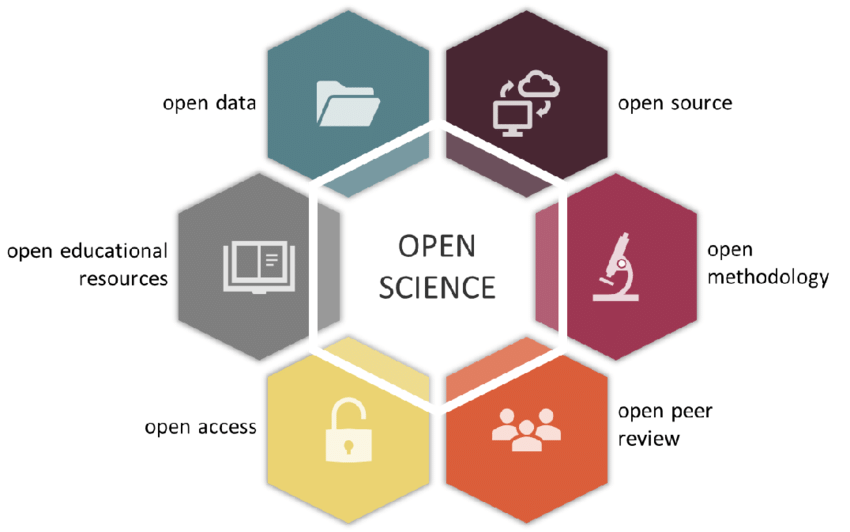
Open Science, at its core, is about opening the doors to scientific knowledge, allowing information to flow freely rather than being confined within the traditional boundaries of academia. It operates on several key principles:

  1. Open Access Publications: Scientific details become accessible to the global community through open-access journals, eliminating the paywalls that traditionally restricted access.
  2. Open Data: Researchers openly share their datasets, enabling others to scrutinize, replicate, and build upon their work. This ensures transparency and the availability of raw materials for discovery.
  3. Open Collaboration: Cross-disciplinary collaboration is encouraged, breaking down silos and fostering a collective approach to problem-solving.
  4. Open Source Software: Open-source tools and platforms are used to ensure that software used in research is transparent, adaptable, and available for others to use and improve upon.

Unveiling Scientific Details through Open Science

  1. Accelerated Discovery: Open Science expedites the pace of scientific discovery by allowing researchers to stand on the shoulders of giants. Scientific details from past research are readily accessible, enabling the rapid development of new ideas and experiments.
  2. Enhanced Reproducibility: By making research data and methodologies open and available, Open Science ensures that others can replicate and validate findings. This reduces the chances of error or false conclusions.
  3. Multidisciplinary Insights: Open Science facilitates collaboration between researchers from diverse fields. This cross-pollination of ideas often leads to fresh perspectives and novel scientific details that might have remained hidden in traditional research silos.
  4. Global Engagement: Open Science transcends geographical boundaries. Researchers from around the world can participate, share, and contribute, thereby enriching the global pool of scientific details.
  5. Feedback Loops: Open Science encourages feedback and constructive criticism from peers and the wider public. This continuous review process helps refine and improve scientific details over time.

Case Studies: Discovering Scientific Details through Open Science

  1. Genomic Research: Initiatives like the Human Genome Project have made vast amounts of genetic data openly available. This openness has led to countless discoveries, from understanding the genetic basis of diseases to uncovering human evolutionary history.
  2. Climate Science: Open access to climate data and models has allowed scientists to gain a deeper understanding of climate change. This transparency has facilitated informed policy decisions and global collaboration to address this critical issue.
  3. Drug Discovery: Open Science initiatives in drug discovery have enabled scientists to share research on potential drug candidates openly. This collaborative approach has accelerated the development of new therapies.

Challenges and Future Directions

While Open Science offers immense potential for discovering scientific details, it is not without challenges. Issues such as data privacy, intellectual property, and funding models require careful consideration. Researchers and institutions must also adapt to the cultural and incentive shifts associated with Open Science.

In conclusion, Open Science is revolutionizing the way we uncover scientific details. By promoting transparency, collaboration, and accessibility, it is reshaping the landscape of scientific discovery. As we continue to embrace Open Science, we must address challenges and create an environment where the intricate details of the natural world are unveiled for the benefit of all. Through Open Science, we embark on a journey of discovery that has the power to transform our understanding of the universe.

Photo via Bibalex

A Journey Through the History of Open Access
A Journey Through the History of Open Access 1024 731 Open and Universal Science (OPUS) Project

Open Access (OA) has revolutionized the way we access and disseminate scholarly research and information. It represents a paradigm shift in the world of academic publishing, making knowledge freely accessible to all. This article takes you on a journey through the fascinating history of open access, tracing its roots, development, and its profound impact on the global academic community.

The Birth of Open Access

The concept of open access can be traced back to the 1960s and 1970s when academics and researchers began to challenge the traditional publishing model dominated by subscription-based journals. One of the early milestones was the establishment of arXiv in 1991, a preprint server for physics that allowed researchers to share their work openly before formal peer review. This marked the beginning of a movement towards greater transparency and accessibility in scholarly communication.

The Budapest Open Access Initiative (BOAI)

In 2002, the Budapest Open Access Initiative (BOAI) played a pivotal role in shaping the open access movement. This landmark meeting led to the formulation of the Budapest Open Access Declaration, which defined open access as “the free availability of literature on the public internet, permitting any users to read, download, copy, distribute, print, search, or link to the full texts of these articles.”

BOAI also introduced two primary models of open access:

  1. Green Open Access: This model involves authors self-archiving their work in institutional or subject-based repositories. It allows researchers to share their publications openly, even if they have been published in subscription-based journals.
  2. Gold Open Access: In this model, research articles are made openly accessible on the publisher’s website immediately upon publication. Access is free to the end user, but the costs of publication are often covered by article processing charges (APCs) or institutional support.

Government and Institutional Initiatives

Governments and institutions around the world have recognized the importance of open access. In 2008, the U.S. National Institutes of Health (NIH) implemented a policy requiring that research funded by NIH grants be made publicly available through PubMed Central within 12 months of publication. Similarly, in Europe, the European Commission has been actively promoting open access through initiatives like Horizon 2020.

The Impact and Challenges

The impact of open access on the scholarly community is undeniable. It has democratized access to knowledge, increased research visibility, and facilitated interdisciplinary collaboration. Researchers from around the world can now access cutting-edge research regardless of their institutional affiliations or financial resources.

However, open access also faces challenges, including concerns about the sustainability of business models, the quality of peer review, and the need for more inclusive and equitable representation in scholarly publishing.

Keep in Mind

The history of open access is a story of transformation and progress. It has evolved from a small, idealistic movement into a global phenomenon that is reshaping the way we share and access knowledge. As we move forward, it is crucial to address the challenges and work towards a future where open access becomes the norm, ensuring that the benefits of scholarly research are accessible to all. Open access is not just a concept; it is a powerful force driving positive change in academia and beyond.

Photo via Open Access Network and Gründe für Open Access

Where is Open Science Most Needed?
Where is Open Science Most Needed? 850 532 Open and Universal Science (OPUS) Project

While open science benefits the global research community, there are specific areas where it is most urgently needed to address pressing challenges. In this article, we will explore some key areas where open science can have a transformative impact.

  1. Medical Research and Drug Development

One of the most critical areas where open science is needed is in medical research and drug development. The high cost of healthcare, limited access to essential medicines, and the need for rapid responses to emerging diseases make this field ripe for open collaboration. By openly sharing research data, methodologies, and clinical trial results, scientists and pharmaceutical companies can accelerate the development of life-saving treatments and make them accessible to a broader population.

  1. Climate Science and Environmental Conservation

As our planet faces increasingly severe environmental challenges, open science plays a vital role in addressing these issues. Climate scientists need to openly share data and research findings to improve our understanding of climate change and develop effective mitigation strategies. In addition, open science can empower citizen scientists and activists to contribute to environmental conservation efforts by sharing data on biodiversity, deforestation, and pollution.

  1. Education and Knowledge Dissemination

Open science is essential in education to ensure that knowledge is freely accessible to learners worldwide. Open educational resources (OERs) and open-access journals allow students and educators to access high-quality learning materials and research articles without prohibitive costs. This democratization of knowledge is particularly crucial in developing countries where access to educational resources is limited.

  1. Crisis Response and Public Health

The COVID-19 pandemic underscored the importance of open science in responding to global health crises. Rapid data sharing among scientists from different countries led to the development of vaccines and treatments at an unprecedented pace. Open access to research on diseases, outbreaks, and public health strategies can help us better prepare for future pandemics and health emergencies.

  1. Social Sciences and Policy Research

Open science is equally relevant in the social sciences and policy research. Openly sharing data and research findings can enhance transparency in policymaking, leading to more evidence-based decisions. Additionally, open access to social science research can foster public engagement and informed discussions on critical societal issues, such as inequality, poverty, and education.

  1. Space Exploration and Astronomy

In the realm of space exploration and astronomy, open science can fuel discoveries and innovations. Collaborative projects like the Square Kilometre Array (SKA) radio telescope rely on open data sharing to unravel the mysteries of the universe. Open access to astronomical data and research findings encourages public interest in space science and inspires the next generation of scientists.

Keep in mind

Open science is a powerful force for positive change, with the potential to address some of the world’s most pressing challenges. By fostering collaboration, transparency, and open access to knowledge, it can accelerate progress in critical areas such as medical research, environmental conservation, education, crisis response, social sciences, and space exploration. Embracing open science principles is not only a moral imperative but also a practical strategy for solving complex global problems. As we move forward, it is essential to recognize where open science is most needed and work together to make scientific knowledge a global public good.

Photo via Research Gate

How to Make Your Research Open: A Guide to Open Science
How to Make Your Research Open: A Guide to Open Science 512 512 Open and Universal Science (OPUS) Project

Making your research open not only contributes to the advancement of knowledge but also promotes accountability and innovation. In this article, we will explore the various steps and strategies to make your research open and accessible to the global scientific community.

  1. Choose Open Access Journals

One of the most straightforward ways to make your research open is to publish in open-access journals. These journals allow anyone with an internet connection to read your work without any paywalls or subscriptions. Open-access publishing ensures that your research is widely available and can be accessed by researchers, policymakers, and the general public. There are numerous reputable open-access journals across different fields, so find one that aligns with your research area.

  1. Preprints

Consider posting preprints of your research papers on preprint servers before submitting them to journals. Preprints are early versions of research papers that are made publicly available before peer review. This allows for rapid dissemination of your findings and invites feedback from the scientific community. Popular preprint servers include arXiv, bioRxiv, and SSRN, among others.

  1. Open Data and Code

Sharing your data and code is a crucial aspect of open science. Data and code sharing not only facilitate the reproducibility of your research but also enable others to build upon your work. To make your data open, consider depositing it in public repositories or data archives relevant to your field. Additionally, provide clear documentation and code repositories (e.g., GitHub) for your research code, making it accessible and understandable for others.

  1. Open Licensing

When making your research open, it’s essential to choose the right licensing options. Open licenses, such as Creative Commons licenses, allow you to specify how others can use your work. These licenses can range from fully open (CC BY, allowing for commercial use and modifications) to more restrictive (CC BY-NC-ND, which permits only non-commercial use and no modifications). Select a license that aligns with your preferences for sharing and reusing your research.

  1. Collaborate and Share

Collaboration is at the heart of open science. Engage with colleagues, both within and outside your field, to share ideas and resources. Collaborative research projects can lead to more diverse perspectives and innovative solutions. Additionally, consider sharing your research progress, data, and findings on platforms like ResearchGate or academic social networks like Academia.edu, fostering collaboration and feedback from the global research community.

  1. Citizen Science and Public Engagement

Extend the reach of your research by involving the public in your scientific endeavors. Citizen science projects encourage the participation of non-experts in research activities. Engaging with the public not only enhances your research but also promotes science literacy and public understanding. Use platforms like Zooniverse or SciStarter to create and manage citizen science projects.

  1. Advocacy for Open Science

Advocate for open science principles within your academic community and beyond. Join or support organizations and initiatives that promote openness, transparency, and accessibility in research. Encourage your peers and institutions to adopt open science practices and policies. By actively advocating for open science, you contribute to a culture of openness in research.

Sharing Open Science

Making your research open is not just a matter of publishing papers; it’s a commitment to the values of transparency, collaboration, and accessibility. By following the steps outlined in this guide, you can contribute to the open science movement and help drive scientific progress. Remember that open science is a continuous journey, and your efforts to make your research open will have a lasting impact on the scientific community and society as a whole. Embrace the principles of openness and join the global effort to make knowledge truly accessible to all.

Photo via Flaticon

Embracing Transparency and Collaboration: The Values and Principles of Open Science Encouraged in the EU
Embracing Transparency and Collaboration: The Values and Principles of Open Science Encouraged in the EU 860 551 Open and Universal Science (OPUS) Project

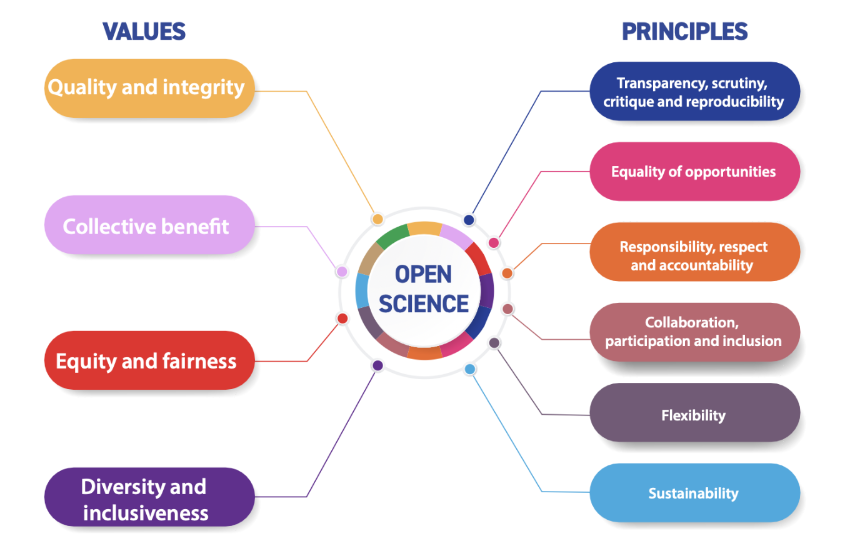
The European Union (EU) has been at the forefront of promoting these values and principles in the realm of scientific discovery. Through various initiatives, policies, and funding programs, the EU has fostered an environment where researchers, institutions, and the public can engage in a more open and inclusive scientific ecosystem. In this article, we will explore the core values and principles of open science that are encouraged in the EU.

  1. Transparency and Open Access

One of the fundamental principles of open science is transparency. In the EU, this is exemplified through policies and mandates that require publicly funded research to be openly accessible. The EU strongly encourages researchers to publish their findings in open access journals or repositories, making scientific knowledge freely available to anyone with an internet connection. This move ensures that research is not locked behind paywalls, benefiting both the scientific community and the broader public.

  1. Data Sharing and Management

The EU places a significant emphasis on responsible data sharing and management. Researchers are encouraged to share their research data and make it accessible to others. Initiatives like the European Open Science Cloud (EOSC) aim to create a trusted and accessible environment for storing and sharing research data across borders and disciplines. By fostering data sharing, the EU enhances scientific collaboration and accelerates the pace of discovery.

  1. Collaboration and Interdisciplinary Research

Open science encourages collaboration not only among researchers but also across different scientific disciplines. The EU promotes interdisciplinary research by providing funding opportunities for projects that transcend traditional boundaries. Interdisciplinary research fosters innovation and the development of holistic solutions to complex societal challenges, such as climate change, healthcare, and technology.

  1. Community Engagement and Citizen Science

The EU recognizes the importance of involving the public in scientific research. Citizen science projects, where volunteers from the public actively participate in scientific investigations, are on the rise. These initiatives not only advance scientific knowledge but also promote science literacy and engagement among citizens. The EU encourages researchers and institutions to involve the public in research processes and decision-making, making science more inclusive and accessible.

  1. Research Integrity and Ethics

Maintaining the highest ethical standards is paramount in open science. The EU promotes research integrity by emphasizing ethical conduct, responsible research practices, and adherence to strict ethical guidelines. This commitment to research ethics ensures the reliability and credibility of scientific findings, which is crucial for building trust in the scientific community.

  1. Education and Training

To support the transition to open science practices, the EU invests in education and training programs. Researchers are provided with resources and training to improve their data management, open access publishing, and collaborative skills. By equipping researchers with the necessary tools and knowledge, the EU ensures that open science becomes an integral part of scientific culture.

  1. Inclusivity and Diversity

Open science in the EU is characterized by its inclusivity and commitment to diversity. Efforts are made to involve researchers from various backgrounds, career stages, and geographic locations. By promoting diversity, the EU enriches the scientific landscape and ensures that open science benefits all, regardless of their background or affiliation.

For the End

The European Union’s dedication to the values and principles of open science has transformed the way research is conducted and shared across the continent. Through transparency, collaboration, data sharing, and engagement, the EU has created a vibrant and inclusive scientific ecosystem that benefits both researchers and society at large. As open science continues to evolve, the EU’s commitment to these values remains at the forefront of scientific progress, driving innovation, and addressing global challenges.

Photo via UNESCO

Privacy Preferences

When you visit our website, it may store information through your browser from specific services, usually in the form of cookies. Our Privacy Policy can be read here.

Here you can change your Privacy preferences. It is worth noting that blocking some types of cookies may impact your experience on our website and the services we are able to offer.

Click to enable/disable Google Analytics tracking code.
Click to enable/disable Google Fonts.
Click to enable/disable Google Maps.
Click to enable/disable video embeds.
Our website uses cookies, mainly from 3rd party services. Define your Privacy Preferences and/or agree to our use of cookies.