Open Science News

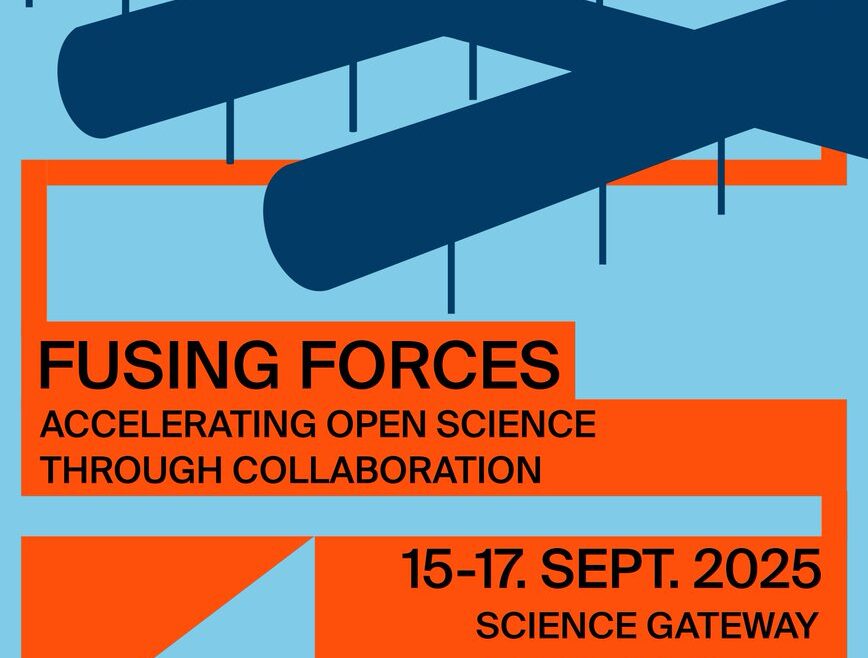
OSFair 2025: Fusing Forces to Accelerate Open Science Through Global Collaboration
OSFair 2025: Fusing Forces to Accelerate Open Science Through Global Collaboration 741 1024 Open and Universal Science (OPUS) Project

Open Science Fair (OSFair) 2025, taking place from September 15–17 at CERN in Geneva, is set to spotlight the transformative power of global, cross-disciplinary partnerships in shaping the future of Open Science. Under the theme “Fusing Forces – Accelerating Open Science through Collaboration”, this year’s event calls on researchers, institutions, policymakers, and advocates to unite in pursuit of a transparent, equitable, and globally connected research ecosystem.

A Global Call for Collective Action

As complex global challenges continue to emerge, OSFair 2025 emphasizes the need for collaborative solutions that transcend geographical and disciplinary boundaries. Through a rich program of talks, panels, and workshops, the conference will explore how shared practices and inclusive cooperation can accelerate discovery and democratize access to knowledge.

Whether you’re an Open Science veteran or just getting started, OSFair 2025 offers a dynamic platform to connect, exchange, and contribute to the advancement of open, inclusive research practices.

Conference Topics & Cross-Cutting Themes

This year’s conference will dive into a wide range of timely and impactful topics:

  • Fusing Forces – Accelerating Open Science through Collaboration
  • AI in Open Science | Policies for Equity & Inclusion

Thematic Tracks:

  • Beyond Compliance: Measuring and maximizing Open Science impact
  • Open, but at What Cost?: Research security and ethical risks in openness
  • Building the Digital Backbone: Sustaining and scaling Open Science infrastructures
  • Rethinking Research Assessment: Towards fairer, more transparent evaluations
  • Open Science for All: Training, community-building, and fostering AI literacy

Key Dates to Remember

  • Registration now open
    • Early Bird: CHF 500 (until June 30)
    • Regular: CHF 600 (until July 31)
    • OpenAIRE Members: CHF 400 (until July 31)
    • Conference Dinner: CHF 100 (until July 31)
  • Call for Contributions (Talks, Panels, Workshops)
    • Deadline: April 30, 2025
    • Notification: May 23, 2025
  • Call for Posters
    • Deadline: May 16, 2025
    • Notification: June 6, 2025

Who Should Attend?

OSFair 2025 is geared toward:

  • Research communities and infrastructures
  • Libraries and repository managers
  • Service providers, research administrators
  • Learned societies, funders, policymakers
  • Citizen science advocates, innovators in scholarly communication

Organized by OpenAIRE and CERN

An emblematic initiative of OpenAIRE, this year’s event is co-organized with and hosted by the CERN Open Science Office. OpenAIRE is a non-profit organization committed to building a sustainable, open scholarly communication infrastructure to support European and global research.

Stay Connected

Stay up to date with announcements, speakers, and opportunities via OSFair’s social media channels on LinkedIn, Bluesky, and Mastodon.

Join us in Geneva this September and help shape the future of Open Science — because when we fuse forces, we move faster, go further, and open knowledge for all.

Celebrating 12 Years of DORA: A New Guide to Responsible Research Assessment
Celebrating 12 Years of DORA: A New Guide to Responsible Research Assessment 1024 575 Open and Universal Science (OPUS) Project

As DORA (The Declaration on Research Assessment) marks its 12th anniversary, the team is thrilled to unveil a new milestone in the journey towards fairer research practices: A Practical Guide to Implementing Responsible Research Assessment at Research Performing Organizations. This new resource is aimed at helping institutions take actionable steps toward meaningful reform in research evaluation.

To celebrate the launch, DORA invites the global community to join one of three online panel discussions tailored to different time zones:

During these sessions, DORA’s Chairs will introduce the Guide, while guest speakers will explore its relevance and impact across different institutional and regional contexts.

The Guide is a response to a common challenge: while many organizations are eager to reform research assessment, they often lack the time, expertise, or a clear starting point. This practical tool outlines proven steps—such as forming leadership support, establishing working groups, and creating communication plans—based on a decade of experience working with institutions worldwide. It also highlights key moments within the research assessment process where change is most impactful.

To further inspire and guide action, the Guide includes real-world case studies from organizations in Canada, Denmark, and Japan that have successfully adopted Responsible Research Assessment (RRA) approaches.

Understanding that a one-size-fits-all solution is unrealistic, the Guide is designed to be an adaptable and inspirational tool. Through upcoming events and discussions, DORA looks forward to exploring how the Guide can be applied and evolved in diverse environments.

The Guide was co-developed with stakeholders who met in January 2025 in Maryland, USA. It is part of Project TARA, a DORA initiative supported by Arcadia, a charitable foundation dedicated to cultural heritage, nature conservation, and open access to knowledge. Together with tools like Reformscape, Building Blocks for Impact, and Debiasing Committee Composition, the Guide forms a comprehensive suite for institutions looking to drive meaningful change.

DORA invites everyone to be part of this global conversation and help shape the future of responsible research assessment.

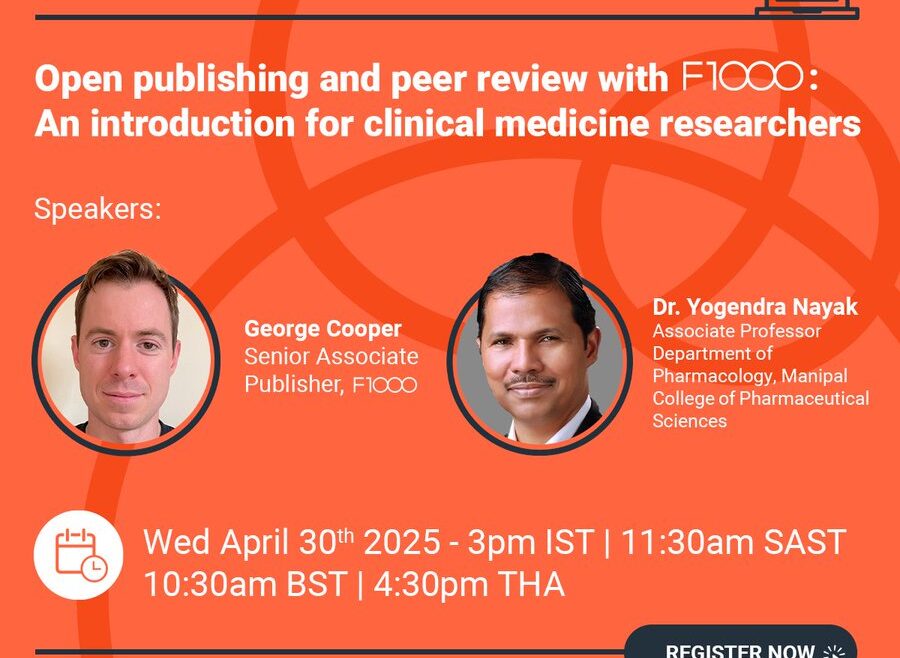
Exploring Open Publishing and Peer Review with F1000: A Guide for Clinical Medicine Researchers
Exploring Open Publishing and Peer Review with F1000: A Guide for Clinical Medicine Researchers 900 900 Open and Universal Science (OPUS) Project

Researchers in clinical medicine and allied fields are invited to explore a new way of publishing and peer review through a dedicated session introducing the F1000Research platform. This event will present the distinctive features of F1000’s open publishing model and post-publication open peer review, offering practical guidance for researchers interested in engaging with this transparent and collaborative approach to scholarly communication.

The session will feature a concise 15-minute presentation by George Cooper, Senior Associate Publisher at F1000. With over a decade of experience in academic publishing across health sciences and global development, George will explain how F1000’s model differs from traditional journals—highlighting benefits such as speed, transparency, and author control. He will also provide tips for clinical researchers on how to ensure their submissions meet the platform’s standards and navigate the peer review and revision process effectively.

Adding a valuable practitioner’s perspective, the session will include insights from Dr. Yogendra Nayak, Professor of Pharmacology at the Manipal College of Pharmaceutical Sciences, part of the Manipal Academy of Higher Education (MAHE), India. Dr. Nayak will share his experiences publishing with F1000Research, from initial submission through to final acceptance. He will also discuss how these positive experiences influenced MAHE’s decision to launch a curated Gateway on F1000Research, showcasing research from affiliated authors.

The event will conclude with a Q&A and open discussion, offering attendees the chance to ask questions and share thoughts on how open publishing could fit into their research workflows.

This session promises to be an insightful introduction for clinical researchers seeking a more open, ethical, and inclusive approach to publishing their work.

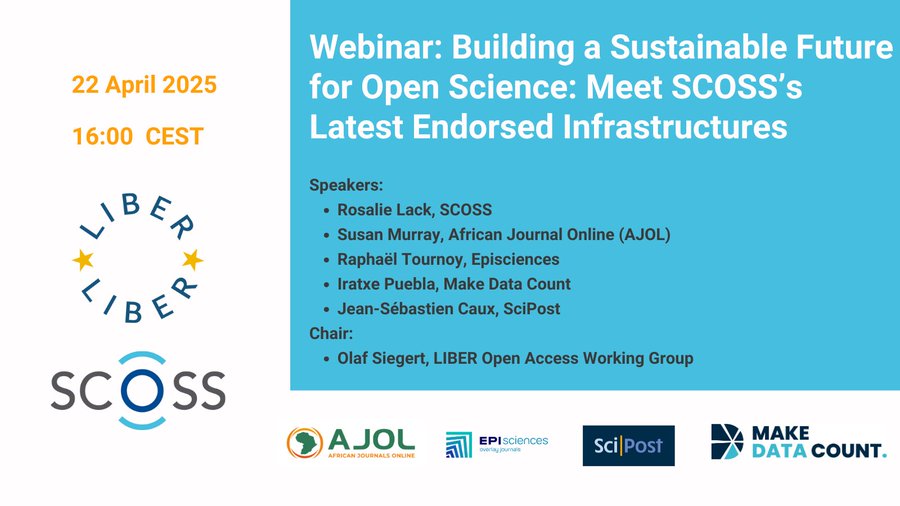
Building a Sustainable Future for Open Science: Meet SCOSS’s Latest Endorsed Infrastructures
Building a Sustainable Future for Open Science: Meet SCOSS’s Latest Endorsed Infrastructures 900 506 Open and Universal Science (OPUS) Project

As the Open Science movement gains momentum, the need for robust, community-driven, and sustainable infrastructures becomes increasingly critical. To address this challenge, the Global Sustainability Coalition for Open Science Services (SCOSS), in collaboration with LIBER, is hosting an insightful webinar that will spotlight key initiatives shaping the future of scholarly communication.

The webinar will introduce the LIBER community to SCOSS’s mission of supporting non-commercial, scholar-led services that form the backbone of Open Science. With a focus on sustainability, transparency, and equity, participants will explore how these infrastructures fill vital gaps in the global research landscape—and how institutions and individuals can contribute to their continued growth and impact.

Attendees will hear directly from leaders behind some of SCOSS’s most influential endorsed infrastructures:

  • Olaf Siegert (ZBW – Leibniz Information Centre for Economics) will discuss discipline-specific services such as EconStor, Open Library Economics, and the ZBW Journal Data Archive, all supporting Open Access and data management in economics.
  • Rosalie Lack (SCOSS Coordinator) will provide an overview of SCOSS’s strategy and its role in strengthening the Open Science ecosystem worldwide.
  • Susan Murray (Executive Director, African Journals OnLine) will share how AJOL has grown into a full-text platform for African peer-reviewed journals, providing vital visibility and access to local research.
  • Raphaël Tournoy (Head of Episciences) will highlight the overlay journal model and how Episciences promotes transparent and reproducible scientific publishing.
  • Iratxe Puebla (Director, Make Data Count) will speak on advancing data usage metrics and data evaluation practices through open infrastructure.
  • Jean-Sébastien Caux (Founder, SciPost) will discuss his efforts to create an alternative publishing model rooted in openness, with SciPost offering genuine open access solutions for scientists by scientists.

This event will not only showcase success stories but also offer practical insights on how to support and engage with sustainable scholarly infrastructures. It’s free to attend, and the session will be recorded for broader access.

Register now to join this important conversation and be part of building a more inclusive, sustainable, and innovative future for Open Science.

Note: By attending any LIBER event, participants agree to adhere to the LIBER Code of Conduct.

Exploring Research Influence Through Keywords: Upcoming Webinar on Altmetric Impact Assessment
Exploring Research Influence Through Keywords: Upcoming Webinar on Altmetric Impact Assessment 900 506 Open and Universal Science (OPUS) Project

On April 16, 2025, from 2:00 PM to 3:00 PM BST, the University of Turku will host a forward-looking webinar titled “Keyword Impact Assessment Through Altmetric Indicators,” featuring guest speaker Ashraf Maleki. This session will introduce a novel method of analyzing research impact by shifting the focus from articles and journals to the keywords that drive attention across scientific publications.

Rather than evaluating impact solely through traditional citation counts or journal metrics, this webinar delves into altmetric indicators – such as media mentions, social media shares, and policy citations—at the keyword level. By examining how specific terms and topics perform across these indicators, participants will gain insights into:

  • How citation and altmetric trends differ across scientific themes
  • Which research topics attract the most attention in academic and public spheres
  • How knowledge structures form through keyword co-occurrence networks weighted by altmetric data

The University of Turku team will present a specialized program that builds overlay maps of scientific domains, visualizing how keywords interact and influence one another based on their altmetric weight. These maps reveal patterns of dissemination and interest across the research landscape.

Attendees will walk through the methodology, explore key findings, and discover how visualization tools can enhance their understanding of research impact beyond conventional metrics. This session is especially valuable for researchers, librarians, and science communication professionals looking to expand their impact assessment toolbox.

Don’t miss this chance to explore how keyword-level analysis is reshaping how we understand the influence of research in the digital age.

Exploring the Real Impact of Open Science: PathOS Webinar on Cost Benefit Analysis Framework
Exploring the Real Impact of Open Science: PathOS Webinar on Cost Benefit Analysis Framework 900 506 Open and Universal Science (OPUS) Project

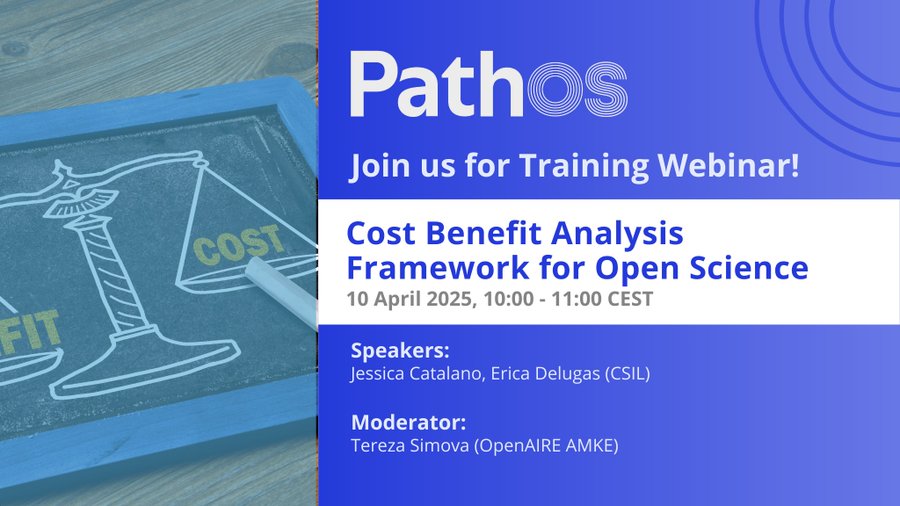
On April 10, 2025, the PathOS training series continues with a timely and insightful webinar titled “Cost Benefit Analysis Framework for Open Science”, offering researchers, policymakers, and stakeholders a closer look at how we can evaluate the true value of Open Science.

Led by Jessica Catalano from CSIL, this session will introduce participants to the Cost Benefit Analysis (CBA) framework as a tool to quantify the impacts of Open Science practices. The webinar will delve into how the CBA approach compares different scenarios — with and without Open Science implementation — to assess both the benefits and costs involved.

Participants can expect a detailed overview of the core components of the CBA framework, along with real-world applications that highlight its relevance in current Open Science initiatives. The session also aims to shed light on the practical challenges of conducting comprehensive CBAs and their significance in shaping evidence-based policies for the future.

The event will conclude with a forward-looking discussion on policy implications and potential directions for future research, followed by a live Q&A where attendees can engage directly with the speaker.

This session promises to be a valuable opportunity for anyone interested in understanding how we can effectively measure the societal and scientific returns of Open Science.

Please note: The session will be recorded, and by registering, participants agree to the recording being shared via the organiser’s official channels.

HAL: The French National Open Archive Within the Global Open Science Ecosystem – An African Perspective
HAL: The French National Open Archive Within the Global Open Science Ecosystem – An African Perspective 900 506 Open and Universal Science (OPUS) Project

April 10, 2025 – 12:00 PM (Online Session)

On April 10, 2025, the global Open Science community is invited to an engaging and insightful session featuring Bénédicte Kuntziger, Support, Trainer, and Community Engagement Lead at HAL, the French national open archive. The event will offer a unique perspective on how HAL fits within the global Open Science movement, with a special focus on its relevance and opportunities for African researchers and institutions.

Bénédicte Kuntziger will provide an in-depth overview of HAL’s multifunctional platform, highlighting how it serves researchers, research communities, and institutions through robust services and functionalities. Participants will learn about the key drivers behind HAL’s growth, the user-friendly pathways to access its rich content, and how it actively contributes to advancing Open Science values across linguistic and geographic boundaries.

A notable focus of the session will be on HAL’s role in bridging anglophone and francophone research communities, enhancing knowledge sharing and collaboration between Europe and Africa. Attendees will also explore HAL’s interoperability, enabling seamless integration with other repository systems, and its collections most relevant to African scholars.

This webinar is a valuable opportunity for anyone interested in inclusive, multilingual, and sustainable Open Science infrastructure, especially as it relates to strengthening African research ecosystems.

🔗 Click here to register!

Moving Towards FAIR Mappings: From Technical Recommendations to Common Practices
Moving Towards FAIR Mappings: From Technical Recommendations to Common Practices 900 615 Open and Universal Science (OPUS) Project

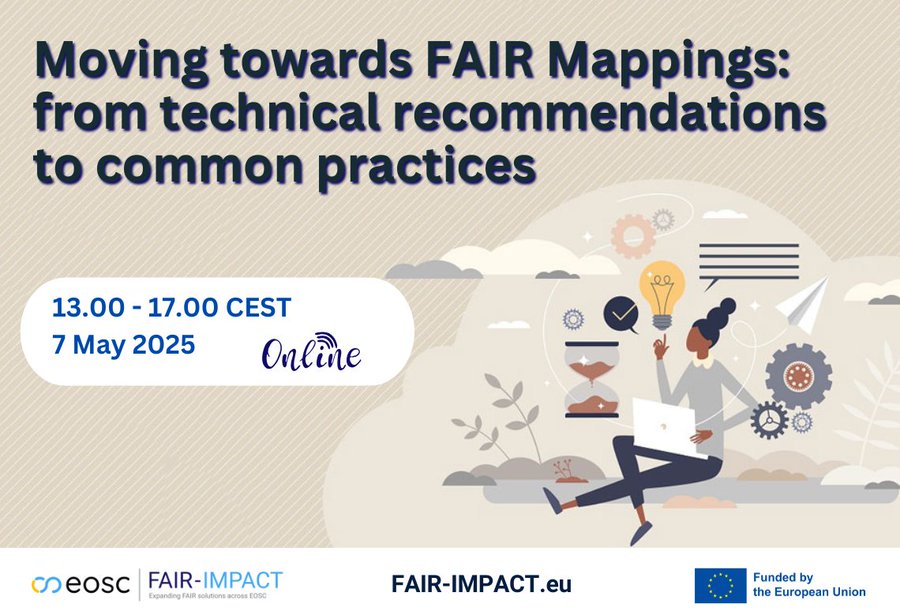
FAIR-IMPACT continues its efforts to enhance data interoperability by refining strategies for making mappings and crosswalks FAIR (Findable, Accessible, Interoperable, and Reusable). As part of this initiative, the final workshop in the series will take place on 7 May 2025, focusing on the latest version of the practical mapping framework and addressing key challenges such as sustainability and governance.

The Importance of FAIR Mappings

Semantic artefacts—such as ontologies, terminologies, vocabularies, and metadata schemas—play a crucial role in enabling data interoperability. However, as the number and diversity of these artefacts grow, creating connections between them becomes both necessary and complex. Mappings (or crosswalks) serve as a solution by linking similar concepts across different artefacts, ensuring smoother integration and reuse of data.

FAIR-IMPACT has been leading a series of workshops to explore how mappings can be standardized, sustained, and made FAIR-compliant, ensuring they become integral components of the research data ecosystem.

Workshop Series Overview

The journey towards FAIR mappings has included three previous workshops:

  1. Why Mappings Matter and How to Make Them FAIR?
    • Introduced the need for FAIR mappings and best practices.
  2. Documenting Mapping Community Practices
    • Examined methodologies for creating, curating, and maintaining mappings.
  3. Developing a Mapping Process Framework
    • Established a five-phase framework for creating and sustaining FAIR mappings.

Final Workshop: Addressing Sustainability and Governance

The fourth and final workshop will review community feedback on the initial framework, explore governance challenges, and refine the FAIR Mapping recommendations. Discussions will also focus on how mappings can be maintained for long-term accessibility and reuse.

Workshop Details

  • 📅 Date: Wednesday, 7 May 2025
  • Time: 13:00 – 17:00 CEST
  • 🌍 Location: Online (Zoom)

Agenda

Time (CEST)TopicPresenter
13:00 – 13:05Welcome & IntroductionYann
13:05 – 13:20FAIR Mapping RecommendationsYann
13:20 – 13:35Refinements in the Mapping FrameworkNick
13:35 – 13:50Governance OverviewParham
13:50 – 15:00Breakout Sessions: FAIR Mapping & Governance
15:00 – 15:15Break
15:15 – 16:15Breakout Session 2
16:15 – 16:55Summary & Future Directions
16:55 – 17:00Closing RemarksYann/Nick

Next Steps

Following the workshop, FAIR-IMPACT will publish a community-refined version of the FAIR Mapping recommendations, ensuring that best practices for mapping governance and sustainability are widely adopted.

For more details, visit the FAIR-IMPACT website.

New Online Training Course: Introduction to Research Integrity
New Online Training Course: Introduction to Research Integrity 800 272 Open and Universal Science (OPUS) Project

UKRIO is excited to announce the launch of Introduction to Research Integrity, a new online training course available to UKRIO subscribers from 21st May 2025. This course provides a comprehensive foundation in research integrity principles and practical guidance on their application in everyday research practices.

About the Course

This four-module course has been refined following a successful pilot involving nearly 9,000 participants from over 100 research organisations across the UK. It equips learners with the knowledge and skills necessary to uphold high standards of research integrity, covering key topics such as:

  • Research ethics and conflicts of interest
  • Data management and authorship
  • The role of AI in research
  • National guidelines and governance frameworks
  • Strategies for navigating research integrity challenges

Enhanced Value for Subscribers

Recognising financial pressures in the research sector, UKRIO is offering up to 1,000 free enrolments per subscriber (based on subscription tier), along with discounted rates for additional participants.

Investing in research integrity training is critical, especially as funding bodies increasingly require institutions to demonstrate their commitment to ethical research practices.

Pilot Success & User Feedback

The course has been rigorously tested by professionals across a diverse range of research institutions, including PSREs and Russell Group universities. Feedback from participants highlights its effectiveness:

  • 92% would recommend the course to others
  • 94% said it met or exceeded expectations
  • 95% found it easy to navigate

What’s New?

Based on pilot feedback, key enhancements include:

  • A refreshed, user-friendly design
  • Expanded content on ethics, conflicts of interest, data management, authorship, and AI
  • Interactive multimedia elements, including videos, case studies, and assessments
  • Updated guidance on the latest research integrity frameworks
  • A streamlined registration process for easier access
  • Improved reporting tools for institutions

Who Should Take This Course?

This course is designed for researchers at all career stages, including:

  • Early-career researchers (PhD students, postdocs, fellows)
  • Established researchers (PIs, lecturers, professors)
  • Senior research leaders (PVCs, heads of departments/centres)
  • Research support staff (technicians, project/data managers)
  • Research governance professionals (ethics, integrity, and compliance staff)

Access & Enrolment

The course is available exclusively to UKRIO subscribers on a 12-month rolling basis from 21st May 2025 to 21st May 2026. Institutions can enrol learners at any time during this period, ensuring maximum flexibility.

Subscription Tiers & Free Enrolments

  • Tier 1: 1,000 places
  • Tier 2: 700 places
  • Tier 3: 200 places
  • Additional places available at discounted rates (£5–£8 per enrolment)

For more details, check your UKRIO subscription status or contact info@ukrio.org.

Get Started

This course is part of UKRIO’s broader initiative to support research integrity through new training resources launching over the next year. Secure your institution’s place and enhance your research culture today!

For further details, download their course information pack or reach out to info@ukrio.org.

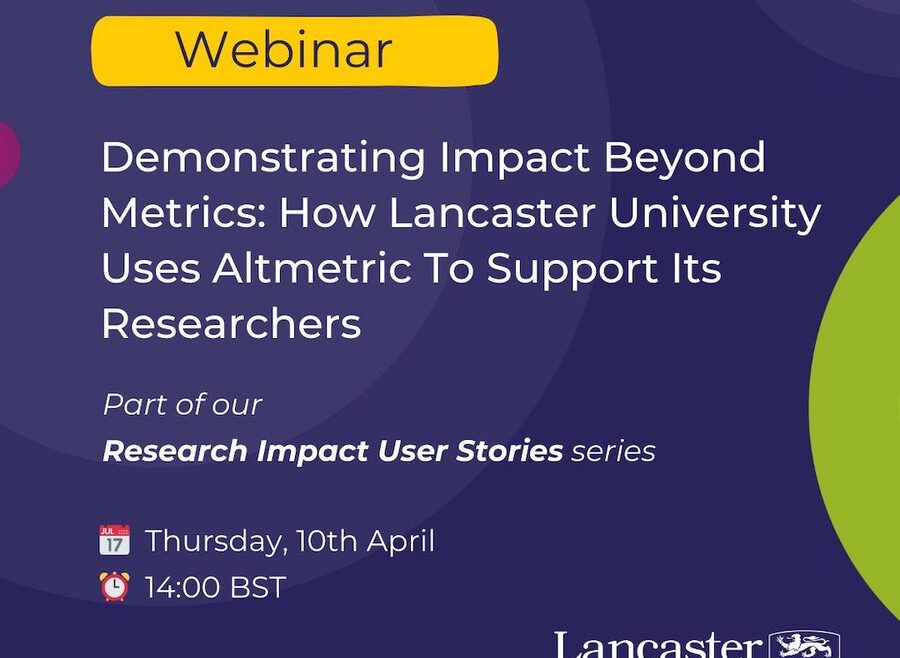
Demonstrating Impact Beyond Metrics: How Lancaster University Uses Altmetric to Support Its Researchers
Demonstrating Impact Beyond Metrics: How Lancaster University Uses Altmetric to Support Its Researchers 900 900 Open and Universal Science (OPUS) Project

Lancaster University is taking a strategic approach to research impact by leveraging Altmetric Explorer, a powerful tool that tracks the broader influence of academic work beyond traditional citation metrics. As part of the Research Impact User Stories series, this upcoming webinar will provide insights into how the university integrates Altmetric into its research ecosystem to enhance reporting, engagement, and real-world impact.

What to Expect from the Webinar

Attendees will gain valuable insights into:

  • Faculty and Departmental Reporting – How Lancaster University uses Altmetric data to support strategic decision-making.
  • Driving Research Engagement – Techniques for maximizing the visibility and influence of research beyond academia.
  • Impact Case Studies and REF Applications – Real-world examples of how Altmetric Explorer contributes to demonstrating research impact, including potential applications for the UK’s Research Excellence Framework (REF).

Guest Speaker: Nicola Wylie

Nicola Wylie, Research Intelligence Manager at Lancaster University, will lead the session. Since joining the university in 2020, Nicola has played a key role in developing the Research Intelligence (RI) Service, helping academics understand and demonstrate the global impact of their work. She also serves as the EDI Officer for the LIS-Bibliometrics Committee, further contributing to the advancement of responsible research metrics.

Event Details

📅 Date & Time: April 10, 2025, 2:00 PM – 2:40 PM (GMT)
📍 Location: Online Event
🎯 Audience: Academic institutions, researchers, and research managers

This session is an essential opportunity for institutions and researchers looking to strengthen their impact assessment strategies beyond traditional citation-based metrics. Register now to explore how Altmetric can support your research impact goals!

Privacy Preferences

When you visit our website, it may store information through your browser from specific services, usually in the form of cookies. Our Privacy Policy can be read here.

Here you can change your Privacy preferences. It is worth noting that blocking some types of cookies may impact your experience on our website and the services we are able to offer.

Click to enable/disable Google Analytics tracking code.
Click to enable/disable Google Fonts.
Click to enable/disable Google Maps.
Click to enable/disable video embeds.
Our website uses cookies, mainly from 3rd party services. Define your Privacy Preferences and/or agree to our use of cookies.